REVIEW · KYOTO
Osaka: Japanese Drum Taiko Workshop
Book on GetYourGuide →Operated by EE tour · Bookable on GetYourGuide
Taiko sounds big. It feels even bigger once you’re standing close to the drum. This Osaka Taiko workshop mixes a short cultural lesson with hands-on playing, plus a power-packed demonstration from a professional instructor. I especially like how everyone gets to play (no previous rhythm required), and how the session includes a real performance moment, not just a lecture.
One thing to plan for: it is a tight 2 hours total, including travel, and late arrivals can mean you miss the start (so arrive early and don’t aim to head back instantly afterward).
If you’re coming in from Osaka or Kyoto, the meeting is straightforward at JR Takatsuki Station (the guide is waiting at the Central Ticket Gate on the 2nd floor with a TAIKO banner). In past groups, guides have included Michiko and Naru, with the drumming instructor Aoi in at least one session, and that same energy shows up in the teaching: clear, friendly, and ready for beginners.
In This Review
- Key things to know before you go
- Where the workshop starts: JR Takatsuki Station logistics that matter
- The 2-hour rhythm: what you actually do (step by step)
- 1) A quick Taiko history and cultural meaning
- 2) Write your wish on a hachimaki
- 3) Watch a powerful professional demonstration
- 4) Learn the basic movements and techniques
- 5) Play a simple piece together as a group
- 6) Costume photo: happi and hachimaki
- Price and value: is $103 a fair deal?
- Observer question: if someone in your group only wants to watch
- Transportation tips: getting there without wasting your day
- Who this workshop suits best (and who might reconsider)
- The cultural value beyond the drum hits
- Practical checklist: how to show up ready
- Should you book Osaka: Japanese Drum Taiko Workshop?
- FAQ
- How long is the Osaka Taiko workshop?
- Where exactly do I meet the guide?
- Which Takatsuki station should I use, JR or Hankyu?
- Do I need Taiko experience to join?
- Is there an option for people who want to observe without playing?
- What languages are available during the tour?
- Are there age limits?
- What if I arrive late?
Key things to know before you go
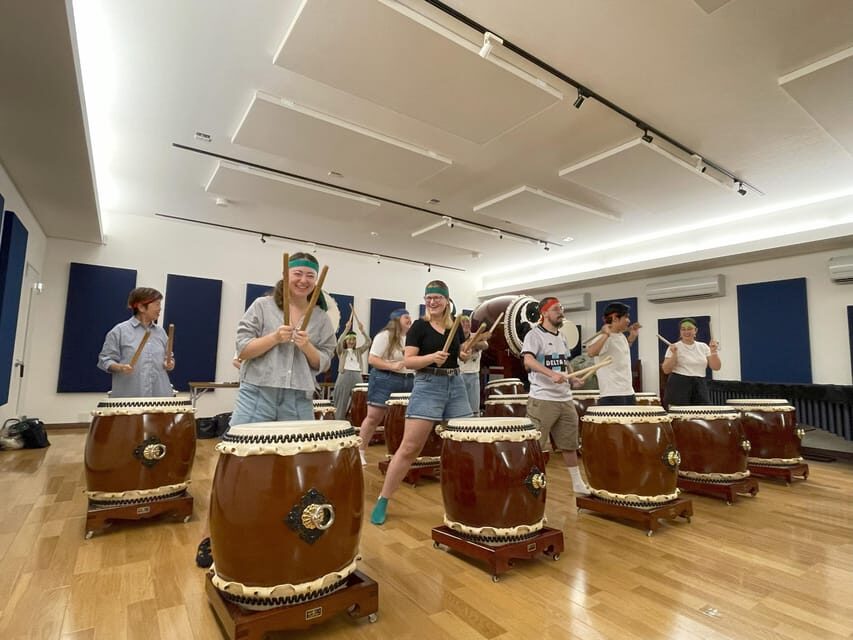
- Beginner-friendly playing: you’ll learn basics and play together, even if you’ve never touched a Taiko before.
- A pro demo you can really see: watch powerful Taiko work up close before you start your own rhythm.
- Cultural touch with the hachimaki: you’ll write a Kanji wish on a traditional headband, then wear it in costume for photos.
- A real group finish: you don’t just practice drills; you play a simple piece as a group at the end.
- Photo moment included: you’ll get a commemorative photo in traditional outfit (happi and hachimaki).
- Careful meeting-point details: there are two Takatsuki stations—make sure you’re at the JR one, not Hankyu.
Where the workshop starts: JR Takatsuki Station logistics that matter
This Taiko workshop runs out of a studio near JR Takatsuki Station, which is a sweet spot between Kyoto and Osaka. The train time is about 15 minutes from either side, so you’re not stuck with a long commute before you even start drumming.
Your meeting point is specific: JR Takatsuki Station, Central Ticket Gate, 2nd floor. You should not go downstairs. The guide will be holding a banner showing a TAIKO, Japanese drum.
That detail about two Takatsukis is not small. There is JR Takatsuki Station and Hankyu Takatsuki Station, and they’re different. If you show up at the wrong one, you’ll lose time fast, and the workshop does not wait for late arrivals. I’d rather you arrive early, take a breath, and double-check you’re at the JR gate level with the banner.
Also note that the workshop includes a car to and from the studio and Takatsuki Station. That’s one of the reasons the day stays simple: you’re not navigating local buses with a headband and drumsticks later.
A few more Kyoto tours and experiences worth a look


The 2-hour rhythm: what you actually do (step by step)
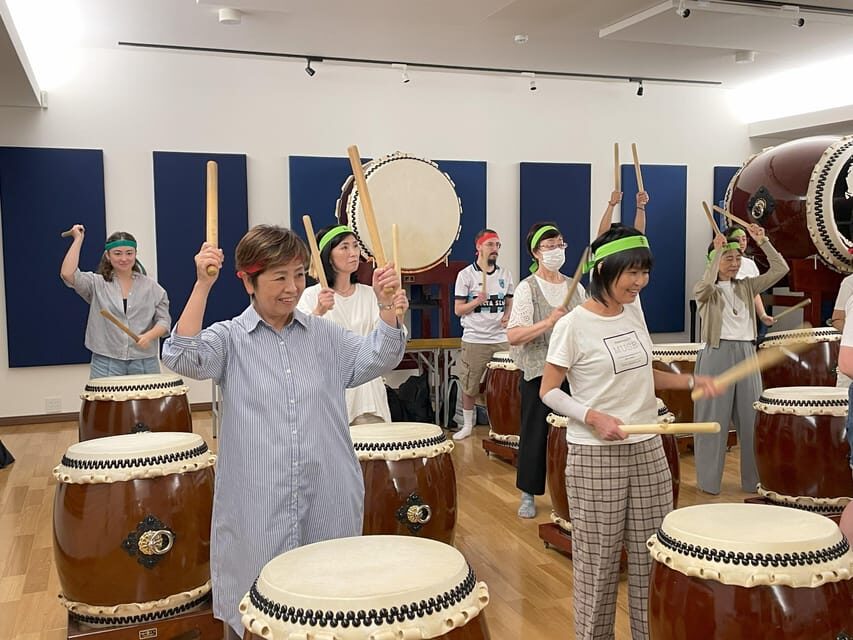
The full experience is about 2 hours total, including the travel time. That makes it ideal if you want a memorable cultural activity without turning your afternoon into a half-day project.
Here’s how the session runs, in a very logical progression from context to performance.
1) A quick Taiko history and cultural meaning
First, you get a short explanation of Taiko’s history and why it matters in Japanese life. This isn’t a textbook lecture. It’s meant to give your playing a reason to exist, so when you raise your arms, you understand what you’re doing and why the style has weight.
I like this structure because Taiko can feel like just noise if you only think of it as percussion. When you connect it to Japanese cultural rhythms and traditions, it suddenly becomes clearer how form, timing, and emotion fit together.
2) Write your wish on a hachimaki
Next comes a hands-on cultural moment: you’ll write Kanji—your wish—on a hachimaki, a traditional Japanese headband. Then you keep that headband as part of the experience.
This is one of those small acts that changes your mindset. You’re not just learning movements; you’re wearing a symbol. And later, when you’re in costume for the photo, it stops feeling like a random souvenir activity and becomes part of a coherent story.
3) Watch a powerful professional demonstration
After the intro and the hachimaki, you watch a Taiko demonstration by a professional player. This is a key part of the experience because Taiko is physical. The energy, arm angles, and body engagement matter. Seeing it live helps you copy what you’re supposed to feel, not just what you’re supposed to copy.
If you’ve ever tried to learn music from videos, you’ll recognize the difference. A live demo shows pace and power in real time.





4) Learn the basic movements and techniques
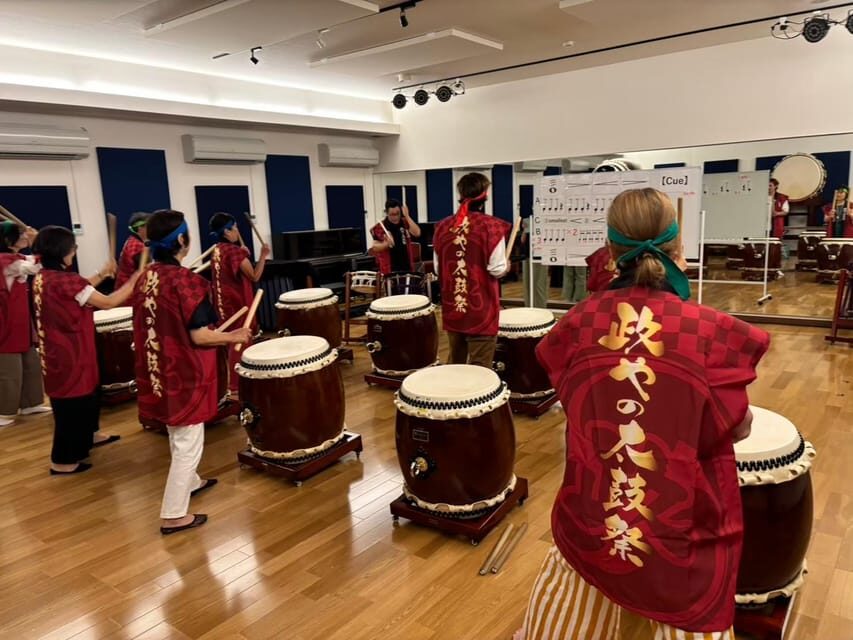
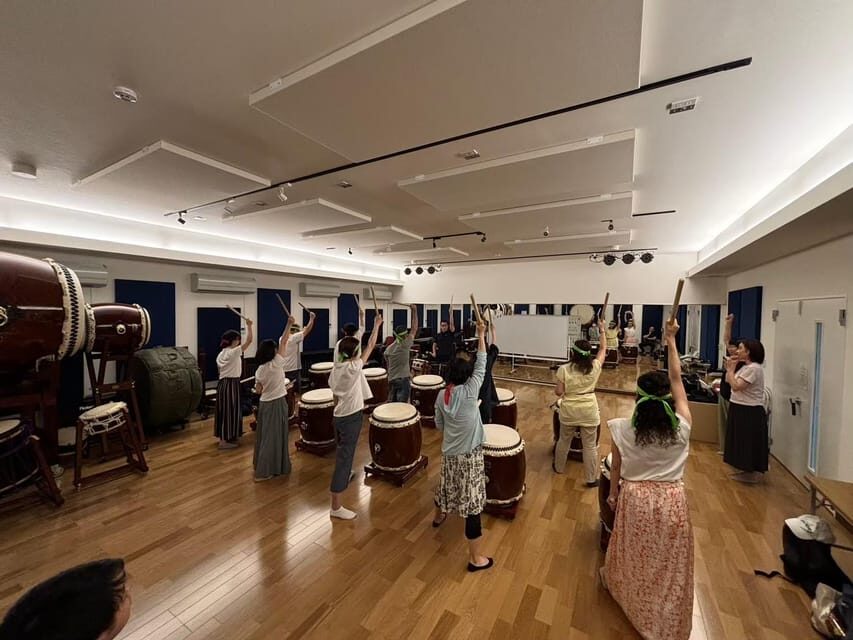
Then the instructor steps in with technique. You’ll learn the basic movements and how to hold your body to hit with control. The teaching is designed to work for beginners, so you’re not expected to perform like a long-time player.
If you have experience with other percussion instruments, you may recognize some common skills (rhythm, timing, listening). You may also notice differences in the way Taiko uses the whole body to make sound.
5) Play a simple piece together as a group
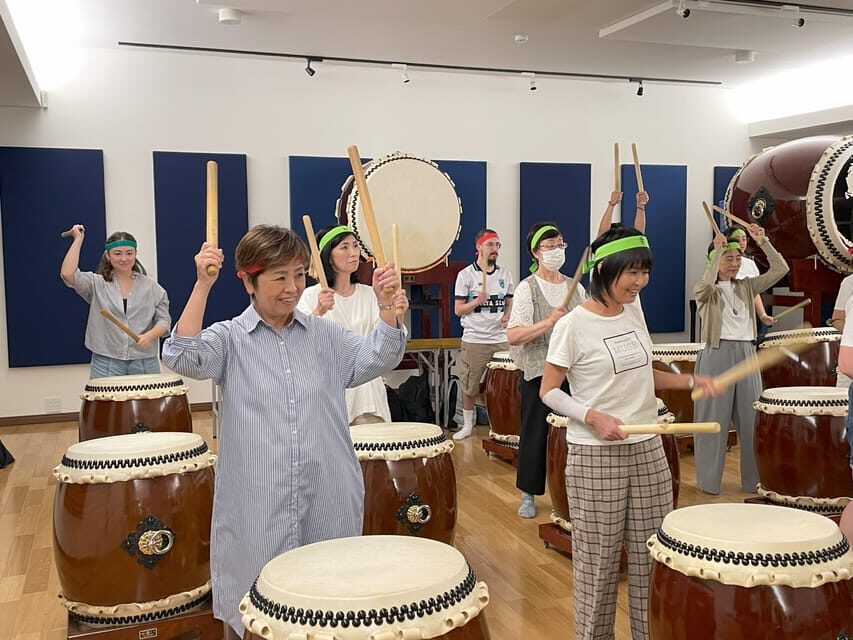
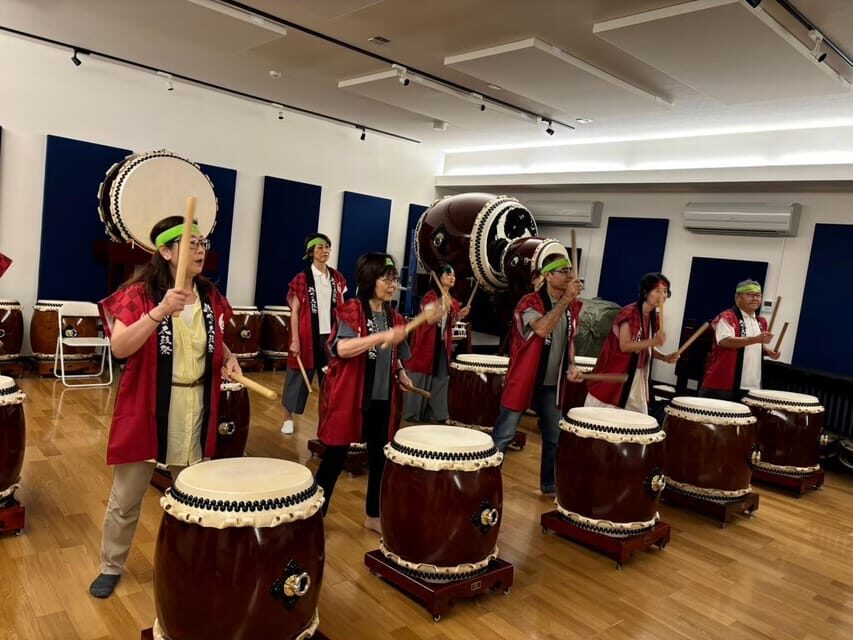
Finally, you play a simple piece of music with the other participants. This is the payoff. Drills are one thing, but Taiko hits different when you’re synchronized with people next to you.
It’s also a great way to understand group rhythm. Even if your personal hits aren’t perfect, your brain learns the pattern through teamwork.
6) Costume photo: happi and hachimaki
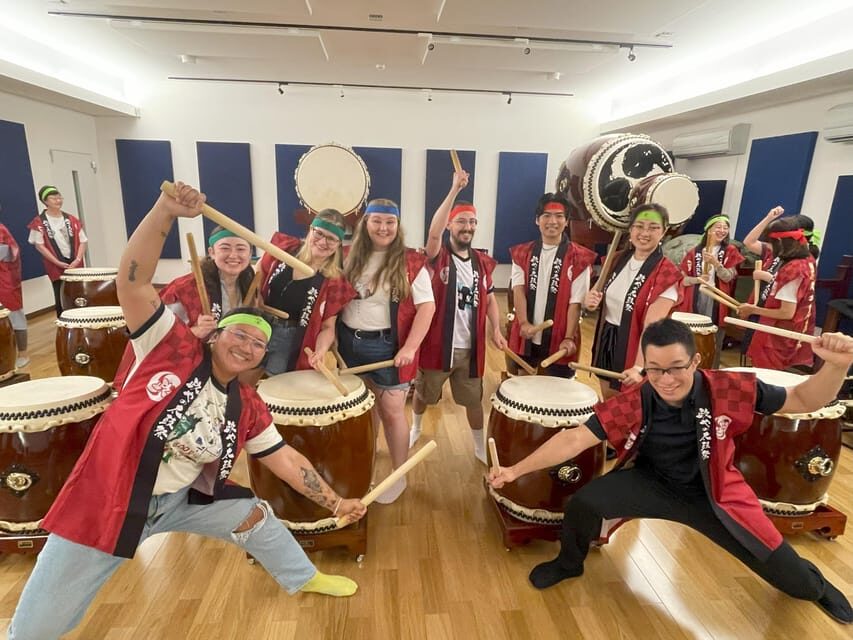
The experience ends with a commemorative photo. You dress in traditional clothing, including a happi and the hachimaki you made. Photos are part of the included experience, and in past sessions they’ve taken lots of photos so you have keepsakes beyond the single shot.
This is also a nice “bookend” for the activity. You start with history and a wish, you finish in costume with proof you actually did it.
Price and value: is $103 a fair deal?
The price listed is about $103 per person for a 2-hour guided experience. When I evaluate value in workshops like this, I look for three things: trained instruction, quality time, and something more than a short demo.
This one checks those boxes.
- You get an English-speaking guide plus an instructor who teaches you technique.
- You get both a professional performance and time to play your own rhythm.
- You receive cultural extras: the hachimaki Kanji wish, plus costume and photos.
That combination matters more than you might think. A cheaper “watch only” option exists, but it does not apply to you if you want to drum. And the workshop includes transport by car between Takatsuki Station and the studio, which reduces hassle.
If you’re the type who values hands-on experiences over passive sightseeing, this is one of those activities that tends to land in the top tier of Japan memories for the time you spend.
Observer question: if someone in your group only wants to watch
Not everyone in your party may want to drum. If someone plans to observe without participating, the cost is 8000 yen per person, paid in cash at the studio on the day of the tour.
Important practical note: you should notify the organizer in advance if you have observers. Without notice, transportation for observers may not be arranged. Since the workshop already builds in a car pickup/drop-off, you don’t want a last-minute surprise if one person decides to sit out.
If you’re traveling with kids or non-drummers, it’s worth sorting this out when you book rather than hoping it works out on arrival.
Transportation tips: getting there without wasting your day
From Osaka, the JR train to Takatsuki takes about 15 minutes. From Kyoto it’s also about 15 minutes, which is exactly why this location works.
Taxis from Osaka are not recommended here. The reason is simple: long travel time and high cost. The train keeps your schedule on track, and the included car does the rest.
Also, remember that the full duration is 2 hours including travel. Returning early is not recommended. That’s another reason you should avoid booking something tight right after—drumming makes time feel faster, but the schedule still holds.
Who this workshop suits best (and who might reconsider)
This workshop is for people who want to participate, learn, and leave with a physical memory of Japan’s performance culture.
You should strongly consider it if:
- You want hands-on culture, not only photos and temples.
- You’re okay with being a beginner and following instruction.
- You like group activities where everyone plays together at the end.
It may be less ideal if:
- You dislike structured group timing and want total freedom of pace.
- Your schedule is so tight you can’t handle arriving 15 minutes early.
- You’re traveling with very young kids. Children under 7 cannot participate.
There’s also a single-participant note: some days do not allow single bookings. If that happens on your date, you may join by booking and paying for two participants. Check your date early so you don’t get stuck with an unexpected adjustment.
The cultural value beyond the drum hits
A workshop like this can be purely entertainment if the context is missing. Here, the rhythm is paired with cultural framing: Taiko’s history and its significance in Japanese life.
The hachimaki wish writing is a clever bridge between culture and participation. It’s not just a craft. It gives meaning to the way you show up—headband on, costume later, then a group rhythm that feels like more than a performance lesson.
And the pro demo plays a role too. It reminds you that Taiko is serious craft, even if your version ends with a simple shared piece. You see the discipline up close, then you practice the basics with the same body logic, even if the final beat is beginner-level.
One more small detail from past groups: there’s special footwear involved in the drumming setup. You might find the shoe they provide helps you position and move comfortably on the floor, which is important when you’re swinging arms and shifting weight.
Practical checklist: how to show up ready
A little preparation makes the experience smoother.
- Arrive 15 minutes early. The guide can’t wait for late arrivals, and you can’t join after the start time.
- Go to JR Takatsuki Station, Central Ticket Gate, 2nd floor. Double-check you’re not at Hankyu Takatsuki Station.
- Plan for the full 2 hours including travel, and don’t schedule a tight activity right afterward.
- Bring a curious attitude. You don’t need drumming experience, but you do need willingness to follow instruction and play with others.
If you’re traveling from Kyoto or Osaka, I’d treat this workshop like an appointment: show up on time, then enjoy not having to think about logistics.
Should you book Osaka: Japanese Drum Taiko Workshop?
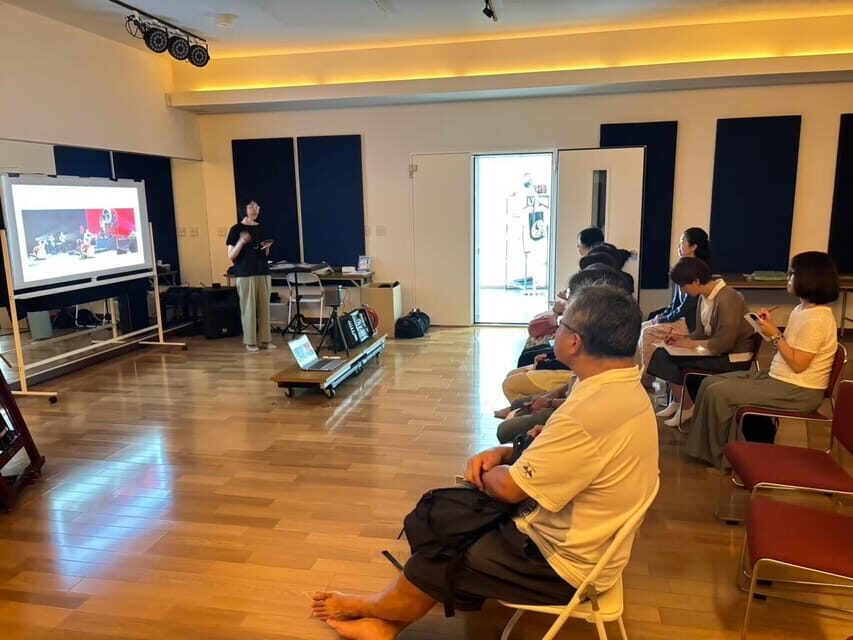
I’d book it if you want a high-energy, beginner-friendly activity that gives you both cultural context and a real moment to perform. The format is built for participation: history first, hachimaki wish, pro demo, technique practice, then a group song and a costume photo finish.
Skip it (or look closely at alternatives) if your schedule can’t handle arriving early and staying for the full timing window, or if you plan to do mostly observing without paying the observer fee in advance for transport needs.
If Taiko is on your Japan wishlist because you love music, performance, or simply want a hands-on story to take home, this workshop is a strong choice.
FAQ
How long is the Osaka Taiko workshop?
The duration is about 2 hours per person, including travel time.
Where exactly do I meet the guide?
Meet at JR Takatsuki Station Central Ticket Gate, 2nd floor. The guide will have a banner with a TAIKO drum, and you should not go downstairs.
Which Takatsuki station should I use, JR or Hankyu?
Use JR Takatsuki Station. There are two Takatsuki stations, and the meeting place is the JR one, not Hankyu Takatsuki Station.
Do I need Taiko experience to join?
No. The workshop is designed for people without prior Taiko experience, and you’ll be taught basic movements and techniques.
Is there an option for people who want to observe without playing?
Yes. Observing without participating costs 8000 yen per person, paid in cash at the studio on the day of the tour. You should notify the provider if you have observers so transportation can be arranged.
What languages are available during the tour?
The live tour guide is available in English.
Are there age limits?
Yes. Children under 7 cannot participate.
What if I arrive late?
You must arrive 15 minutes early. The provider cannot wait for late arrivals, and you cannot join after the start time.