REVIEW · OSAKA
Osaka: Mino Forest Walk and Giant Waterfall with Local Lunch
Book on GetYourGuide →Operated by Japan Exploration Tours JIN · Bookable on GetYourGuide
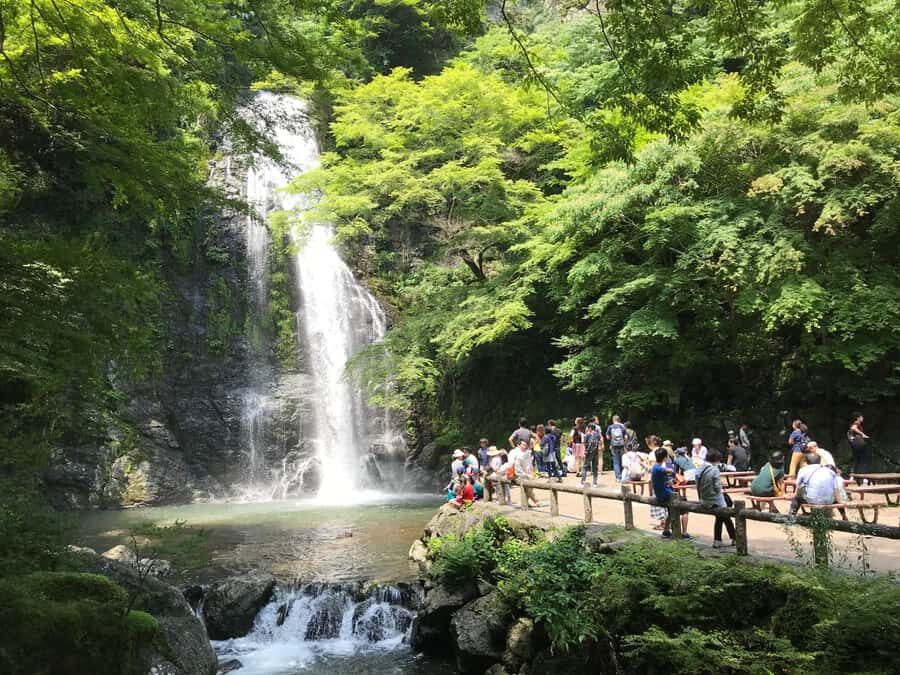
Osaka noise fades fast in Mino. In about a 30-minute local train ride, you trade neon streets for maple-and-mountain air, then end at the 33m Mino Waterfall on an organized forest hike. Guides like Kenji, Ko, Ryoma, and Honoka help you connect the walking route with what you’re seeing, from temple calm to that big waterfall payoff.
Two things I really like: you get both the quiet nature portion and the cultural side (temple, garden, and a traditional house), and you’re not left guessing what to eat or what drink to try. One possible drawback: you’ll do a moderate amount of walking on outdoor paths, so you’ll want comfortable shoes and a weather-ready mindset, especially if rain turns trails slick.
In This Review
- Key Things to Know Before You Go
- Getting to Mino: JR Osaka Station, the Midosuji North Gate, and real-world time
- A peaceful first hour in Mino: temple calm, riverside paths, and seasonal trees
- The organized hike to the 33m Mino Waterfall: what the walk feels like
- Snacks, yuzu cider, and local craft beer: the small food details that make it feel local
- Lunch at a small Mino restaurant: what you’re actually eating and why it works
- How much walking is this, really? Comfort, timing, and who it’s best for
- Price and value: is $79 fair for a half-day forest escape?
- Should you book this Mino Forest Walk and Giant Waterfall?
- FAQ
- Where is the meeting point?
- Which entrance do I use at JR Osaka Station?
- How long is the train ride from Osaka to Mino?
- What’s included in the price?
- What should I bring?
- Is hotel pickup or drop-off included?
Key Things to Know Before You Go
- A fast getaway: about a 30-minute ride from JR Osaka Station to Mino, and then the world gets quieter quickly
- Cultural + nature in one day: temple, garden, traditional house, plus riverside paths under seasonal trees
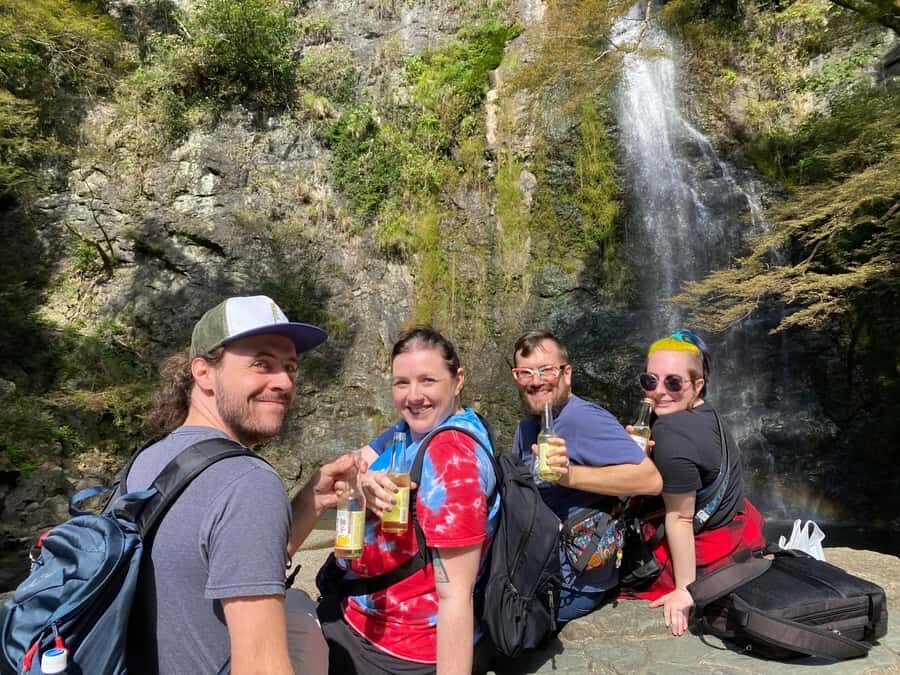
- 33m waterfall moment: the giant waterfall (33m), recognized among Japan’s top waterfalls, with a cold drink waiting after the hike
- A well-marked forest route: the hike portion is described as organized, which makes the walk feel easier
- Real local food: snacks and seasonal fruit during the walk, then lunch at a small local restaurant
- Guides help you find calmer spots: English-speaking guides aim you toward paths that are less crowded
Getting to Mino: JR Osaka Station, the Midosuji North Gate, and real-world time
This tour starts where most Osaka visitors feel their first tiny panic: JR Osaka Station. It’s a maze, in the literal sense. The good news is the directions are clear if you follow them step by step.
Go to JR Osaka Station (not Shin-Osaka, not Umeda). When you’re inside, look for Midosuji North Gate. It’s on the ground floor, not down in the subway labyrinth. If you arrive early, you can grab coffee at a nearby shop, then keep your energy for walking.
For your final pinpoint, set your phone to the Google Maps goal: Book Studio Osaka. Your guide will be waiting in front of the bookstore.
Once you find the station and get on the local train, the change is immediate. Big-city buildings give way to countryside views, so even before you reach the forest, you start feeling like you’ve escaped the city.
Practical tip: Osaka Station is easy to get wrong by accident. Double-check you’re at JR Osaka Station and not a different station name before you commit to the route.
You can also read our reviews of more walking tours in Osaka



A peaceful first hour in Mino: temple calm, riverside paths, and seasonal trees
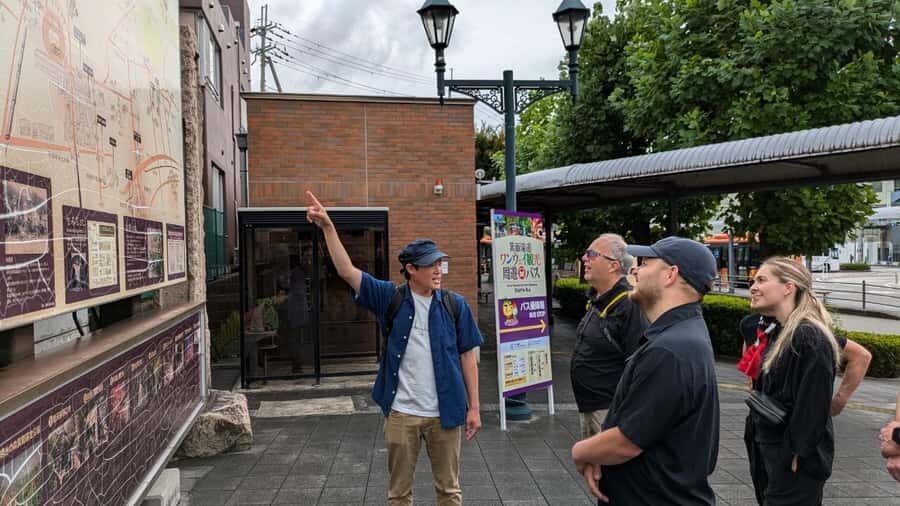
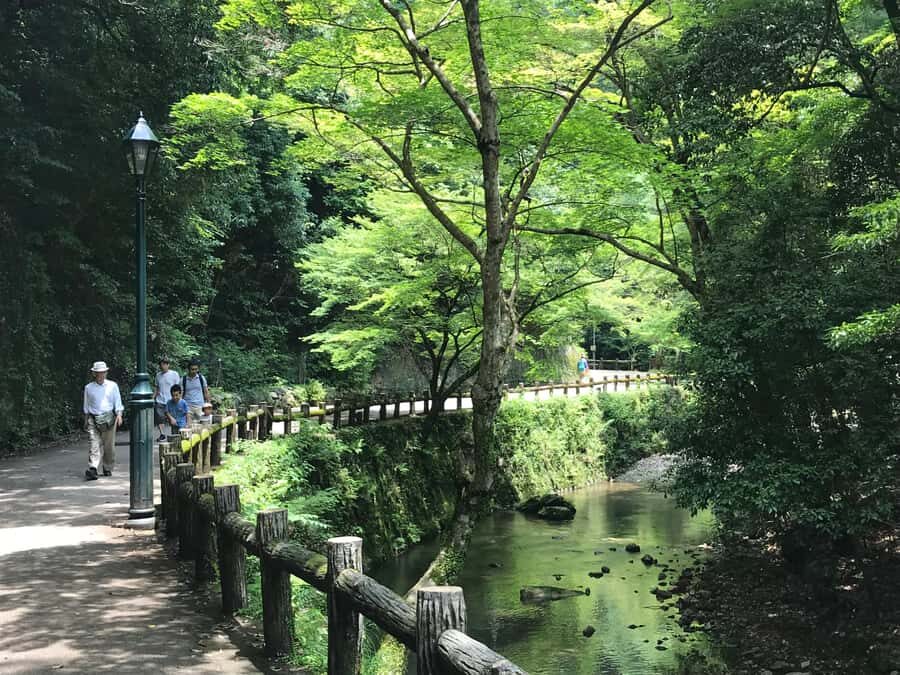
The Mino area has long been known as a resort area for important people in the past, and it still carries that low-key, local-resident vibe today. You’ll feel it right away: a slower pace, river sounds, and walking paths that cut through greenery.
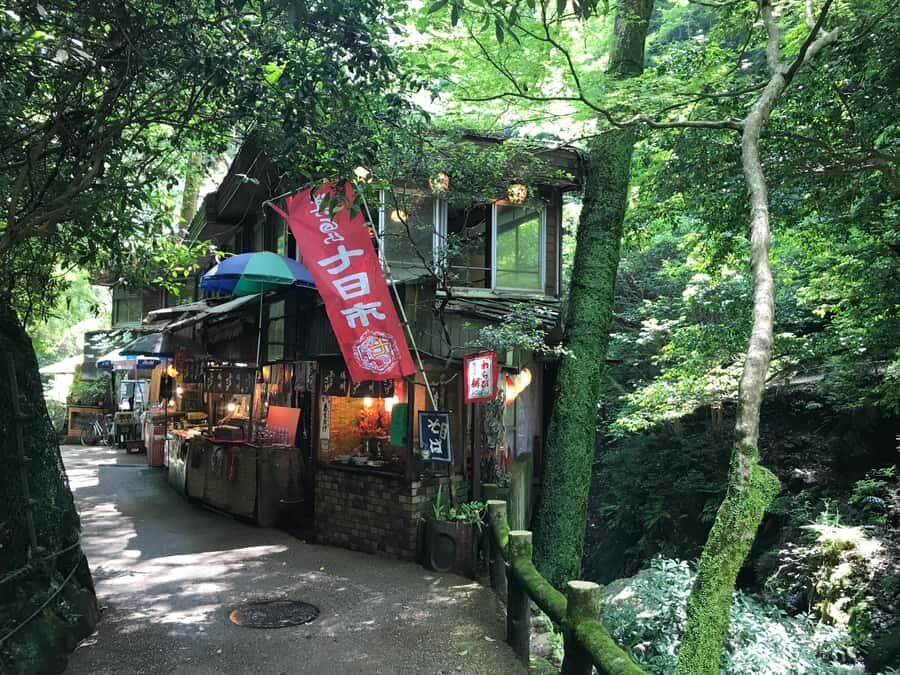
During the cultural part (about 1 hour), you’ll move along peaceful riverside routes and pass local shops, local restaurants, and hotels. This isn’t a “look, look, look” stop list. It’s more like you’re being guided through the everyday layers of Mino—where people shop, where they eat, and where the quiet corners are.
You’ll also get the chance to buy and share local snacks and seasonal fruit along the way. That matters because it sets the tone: you’re not just touring the area, you’re sampling it.
Expect some classic heritage moments too:
- a traditional house
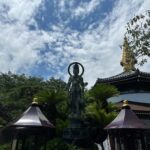
- a Buddhist temple
- a garden
- a waterfall spot connected with meditation
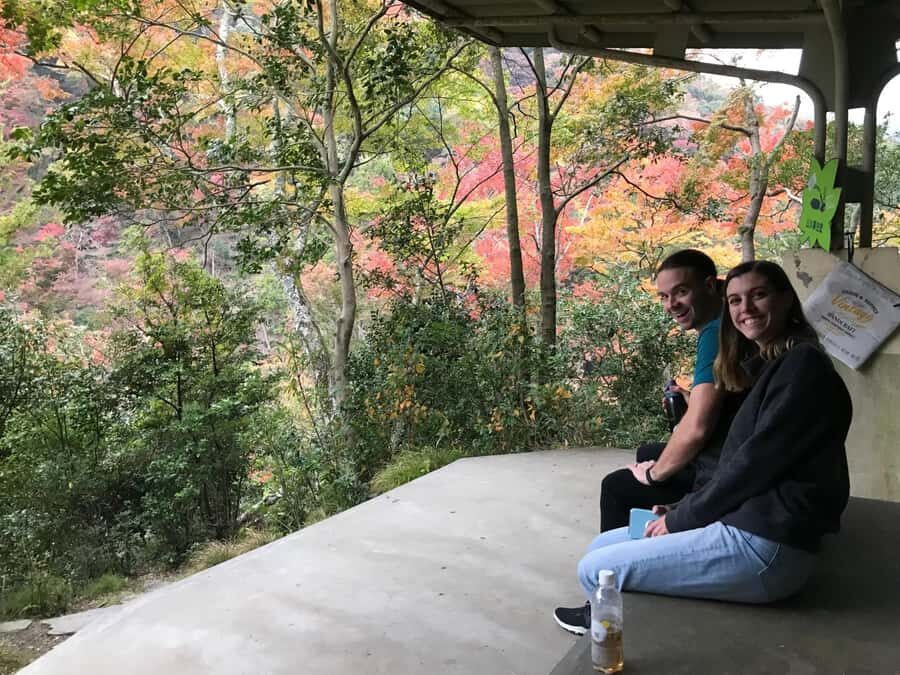
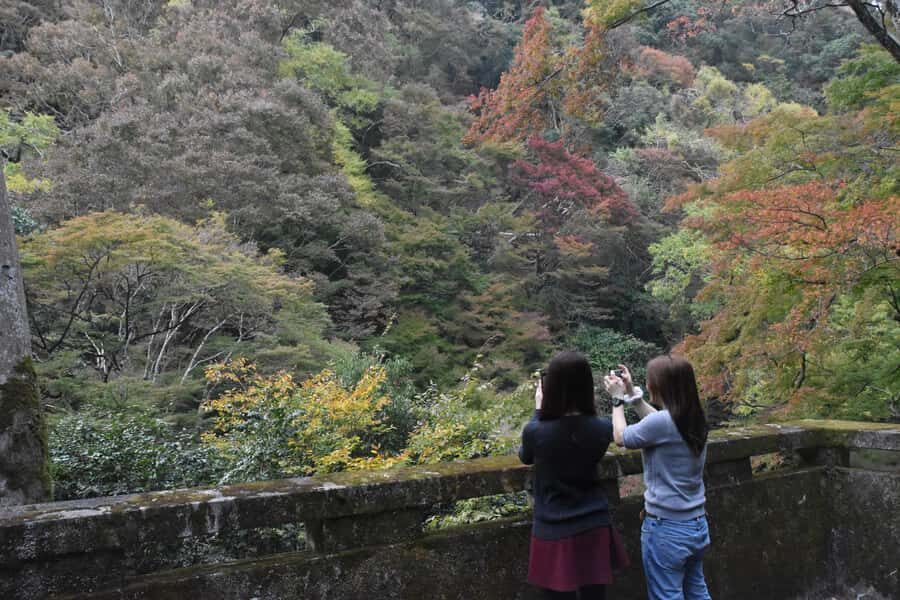
And because the route runs through seasonal trees, you’re walking under changing colors: maple, Japanese cypress, and cherry trees are all part of what you might see depending on the season.
Why I like this first block: it slows your brain down. After the Osaka grind, a temple and garden stop makes the forest portion feel like the next logical step, not a separate event.
The organized hike to the 33m Mino Waterfall: what the walk feels like
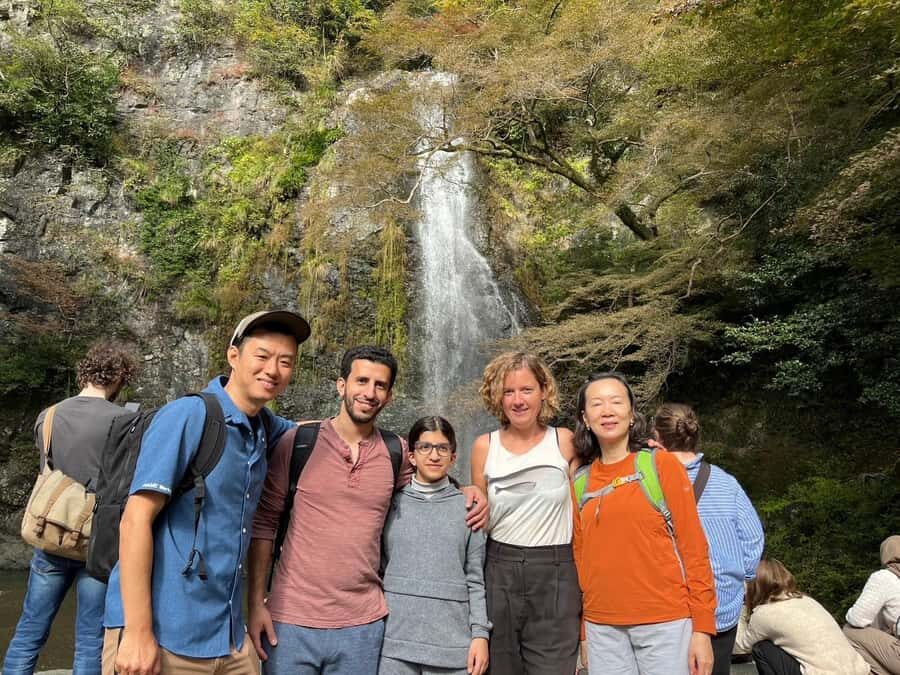
After the cultural hour, the day shifts into hiking mode. The walking into the forest is described as a very organized route, which is a big deal when you’re traveling. You don’t want to spend the best part of your day trying to interpret signage.
The hike portion is about 30 minutes, moving deeper into the trees. This is the part that feels most like a reset for your lungs. Fresh air, cooler shade, and river-adjacent scenery create the kind of break you can’t really manufacture in the middle of downtown.
And then you reach the payoff: the giant Mino Waterfall (33m). It’s also noted as one of Japan’s 100 best waterfalls, which helps explain why it’s so impressive once you’re standing close enough to feel the spray.
A nice touch is what happens right after the hike: you get time to enjoy a drink there, specifically Japanese citrus yuzu cider. If you’re a beer person, Mino local craft beer is available too.
What to watch for: the path is organized, but it’s still outdoors. If the weather is bad, take your time on footing and keep your pace steady.
If you’re the type who likes a quieter moment at viewpoints, you’ll likely appreciate that guides often take you onto paths that feel less crowded than the obvious approach.
Snacks, yuzu cider, and local craft beer: the small food details that make it feel local
It’s easy for tours to treat food as an afterthought. Here, food is part of the structure. You’ll pick up snacks and seasonal fruit early, and then you’ll get a drink at the waterfall—yuzu cider is the headline, with local craft beer as an option.
The yuzu angle is worth knowing: yuzu is a Japanese citrus known for that sharp, bright flavor. In cider form, it’s the kind of drink that feels refreshing when you’ve been walking, not heavy or sweet in a cloying way.
Even better, the snack stops aren’t framed as a museum lesson. They’re more like: grab something local, taste it, keep moving.
Also, you’re given the chance to bring your own pace to the day. You can chat with your guide, ask questions in English, and still have time to pause for photos without feeling like you’re slowing everyone down too much.
Pro tip: you’ll get some snacks, but bring a little extra water anyway. The tour itself advises carrying water and snacks for the hike.
Lunch at a small Mino restaurant: what you’re actually eating and why it works
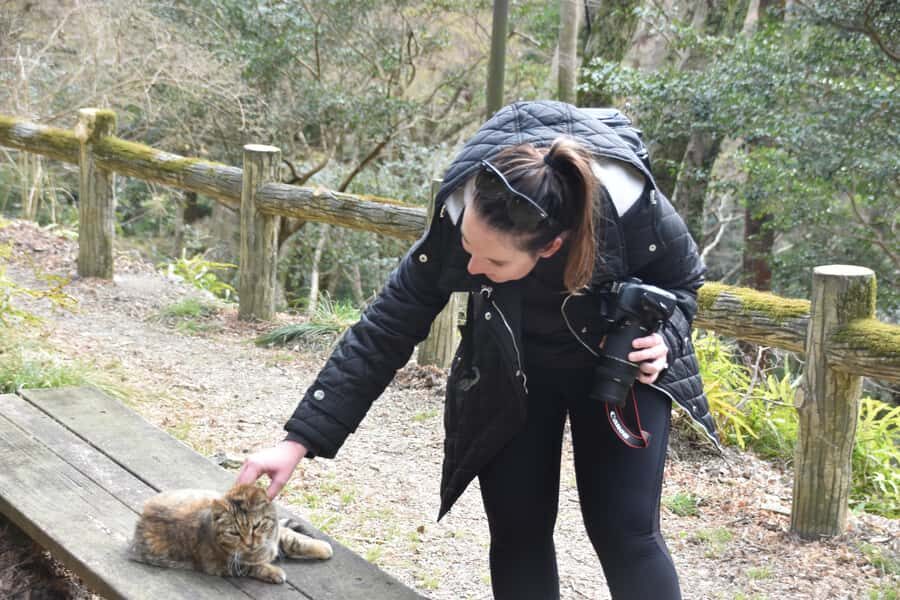
After the hike and return walk (about 45 minutes), you finish at a local restaurant for lunch (about 45 minutes). This is one of the best parts of the experience, because it’s not just “food included.” It’s food where you’re likely to eat like people in the area eat.
The exact lunch dishes aren’t listed in detail, but the noodles that show up in past lunches include comfort classics like soba and udon. That fits the setting: simple Japanese meals, warm portions, and no fuss.
Why this matters for value: tours that load you up with attractions but dump you into a random chain restaurant can feel like wasted time. Here, the meal is placed as a reward after walking, when you’re actually hungry and ready to enjoy something local.
If you’re traveling as a small group or even solo, lunch is also where you get the human side of the day. It’s easier to talk with your guide when the day isn’t moving nonstop.
A few more Osaka tours and experiences worth a look


How much walking is this, really? Comfort, timing, and who it’s best for
This experience includes a moderate amount of walking and an actual forest hike. That doesn’t mean it’s extreme, but it does mean you should plan like it’s a real day outdoors.
Here’s how I’d think about it:
- You’re on riverside paths and outdoor routes, not indoors.
- There’s a forest hiking segment that takes about 30 minutes.
- After reaching the waterfall, you return on an easier route for about 45 minutes.
- You’re also walking between cultural stops during the 1-hour cultural portion.
So this suits you best if:
- you like walking and you’re comfortable with uneven ground
- you want nature plus culture, not just one or the other
- you’d rather have structure and guidance than figure out routes alone
It may be less ideal if you need step-free access or you’re trying to minimize walking as much as possible. The walking is part of the point here.
Weather matters. Check the forecast and dress accordingly. If it’s raining, wear shoes with decent grip and plan to go slow on any damp sections.
Price and value: is $79 fair for a half-day forest escape?
At $79 per person, this tour sits in the “reasonable for a guided half-day experience” zone—especially because you’re not just paying for a guide and a viewpoint.
You’re paying for:
- the guided route through cultural sites and the forest hike
- included snacks and seasonal fruit
- drinks at key points, including yuzu cider (and craft beer availability)
- lunch at a local restaurant
- and a guide who helps you get to the right paths, including options that avoid the busiest spots
If you tried to do this on your own, you’d still spend money on train fare, food, and the time cost of figuring out what to see and where. The real value here is that the day is handled for you: meeting point clarity, timed segments, and food that matches the setting.
I also like that the guides are English-speaking, so you’re not stuck in silence with your photos.
If you’re traveling with limited time in Osaka but want a real break into nature, this price starts to make sense fast.
Should you book this Mino Forest Walk and Giant Waterfall?
If you want a day that feels like you left Osaka behind—without complicated planning—this is a strong choice. The combination of temple-and-garden calm, a proper forest hike, and a 33m waterfall payoff is exactly the kind of mix that turns a morning into a memory.
Book it if:
- you like being outdoors and you’re okay with moderate walking
- you want guided context for what you’re seeing
- you care about eating a real local lunch, not just grabbing whatever is nearby
Skip it (or choose a different style) if:
- you need minimal walking
- you’re traveling during bad weather with no flexible clothing options
- you prefer self-guided travel where you control every stop down to the minute
One last practical thought: Osaka Station is the one stressful part. If you give yourself time to find Midosuji North Gate and reach Book Studio Osaka, the rest of the day flows smoothly into a genuinely peaceful forest escape.
FAQ
Where is the meeting point?
Meet at the location labeled Book Studio Osaka on Google Maps. Your guide will be waiting in front of the bookstore.
Which entrance do I use at JR Osaka Station?
Use the Midosuji North Gate, which is on the ground floor (not underground).
How long is the train ride from Osaka to Mino?
The train ride is about 30 minutes from Osaka Station to Mino.
What’s included in the price?
The tour includes snacks and seasonal fruit, a drink such as Japanese citrus yuzu cider (local craft beer is available too), lunch at a local restaurant, and food and drinks.
What should I bring?
Wear comfortable walking shoes, check the weather forecast, and carry water and snacks for the hike. Bring a camera if you want photos.
Is hotel pickup or drop-off included?
No. Hotel pickup and drop-off are not included, and the activity ends back at the meeting point.