REVIEW · OSAKA
Osaka Walking Tour to Local Gems, Food & Culture
Book on Viator →Operated by Localized Walking & Food Tours · Bookable on Viator
Osaka clicks into place on this walk. You start in Shinsaibashi, then trace the city’s personality through temples, markets, and the shopping streets locals actually use. This is a 2.5-hour guided route designed to help you understand why Osaka feels different from the rest of Japan.
I love two things most: the mix of stops that range from quiet greenery to high-energy street scenes, and the way the guide keeps the walk practical, funny, and easy to follow. In the past groups I’ve read about, guides like Jay, Matt, Calvin, Jai, and EJ were praised for answering questions and adding context that makes the sights make sense.
One thing to consider is that this is still a walking tour. You’ll want comfortable shoes, and since snacks aren’t included, you’ll likely spend a bit while you’re near Dotonbori and Kuromon Market.
In This Review
- Key takeaways before you go
- Shinsaibashi to Namba: why this route feels like Osaka
- Timing, walking pace, and what to bring for 2.5 hours
- Stop 1: Horie Park for a calm start
- Stop 2: America-mura (Amemura) and the American Village vibe
- Stop 3: Namba Hatch, where events happen
- Stop 4: Dotonbori and Hozen-ji Temple in the same mental frame
- Stop 6: Kuromon Market, food ideas you can act on immediately
- Stop 7: Nipponbashi for electronics and anime culture
- Stop 8: Dōguya-suji (Kitchenware Street) and the chef-knife connection
- Licensed guides are the main attraction (and it shows)
- Food on your terms: how to use the guidance without a snack plan
- Price and value: is $25 worth it?
- Who this Osaka walk suits best
- Should you book this Osaka local-gems, food & culture tour?
- FAQ
- How long is the Osaka Walking Tour to Local Gems, Food & Culture?
- Where do I meet for the tour?
- Where does the tour end?
- Is this tour in English?
- How many people are in a group?
- What is included in the price?
- Are snacks included?
Key takeaways before you go
- Small group (max 12): You get room to ask questions and keep a good pace.
- Licensed guide: The route comes with stories and local context, not just stop-by-stop directions.
- Free admissions at listed stops: You’re paying for guiding time, not entry tickets.
- Food planning starts early: You’ll get ideas for what to eat next while you’re still walking.
- Eight areas in one route: Park calm, American-style street culture, temple history, markets, anime blocks, and kitchen/tool streets.
Shinsaibashi to Namba: why this route feels like Osaka
This walk is built like a shortcut to understanding Osaka. You begin in the Shinsaibashi area and end in the Namba zone, so you’re moving with the city’s flow instead of zigzagging randomly. That matters because Osaka’s neighborhoods have different vibes, and the best way to notice it is by walking the transitions.
The route also gives you a balanced mix. You’ll hit a traditional landmark (the temple), a food-and-shopping core (Kuromon Market and the streets around it), and pop-culture shopping (Nipponbashi). Then you finish with the side of Osaka that’s practical and local: kitchenware and tool shopping on a street known for where chefs buy knives.
You can also read our reviews of more walking tours in Osaka

Timing, walking pace, and what to bring for 2.5 hours
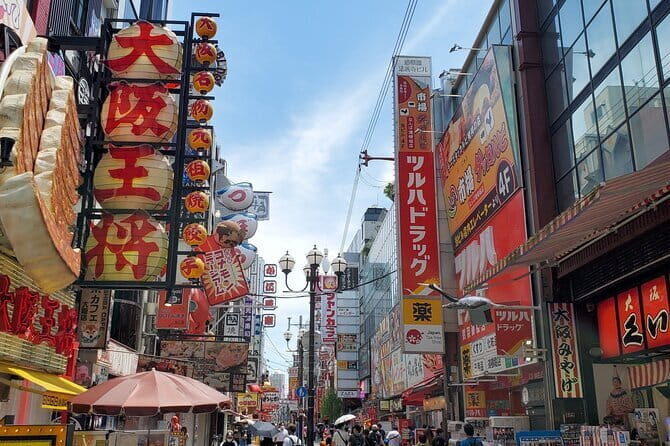
The tour runs about 2 hours 30 minutes and is designed to be manageable at a normal walking pace. The stops are short enough that you’ll stay moving, but long enough at each location to look around and ask questions.
I’d plan around three practical needs:
- Shoes: You’ll be walking for a good chunk of time.
- Water and sun/rain protection: Osaka weather can change fast, and the tour is outdoors for much of the day.
- Spending money for food: Snacks are not included, and both Dotonbori and Kuromon Market are the kind of places where you’ll see things you’ll want to try.
Good news: this tour has a mobile ticket, so you’re not messing around with paper while you’re meeting up.
Stop 1: Horie Park for a calm start
You begin with Horie Park, an urban green space that feels like Osaka taking a breath. It’s known for well-kept paths and garden-style calm, which makes it a great first stop when you’re still orienting yourself.
Why I like this opener: it prevents the whole walk from turning into one long rush. You get a moment to slow down, regroup, and reset your senses before the tour moves into louder, more crowded areas.
Possible drawback: if it’s hot or rainy, even a park can feel like a waiting room. Still, it’s a smart choice for setting the tone.
Stop 2: America-mura (Amemura) and the American Village vibe
Next comes America-mura, also called Amemura. This area lives in a trendy, youth-forward space, with shops and casual food spots that feel more experimental than the traditional lanes elsewhere.
This stop helps you understand a key Osaka idea: the city isn’t only about old temples and formal streets. It also has subcultures and style scenes that change faster than you’d expect. Walking through Amemura gives you a feel for the “side streets” Osaka is famous for.
What to watch for here: the mix of storefronts and the way the neighborhood feels made for browsing. Even if you don’t buy anything, you’ll start learning how Osaka shopping zones are organized.
Stop 3: Namba Hatch, where events happen
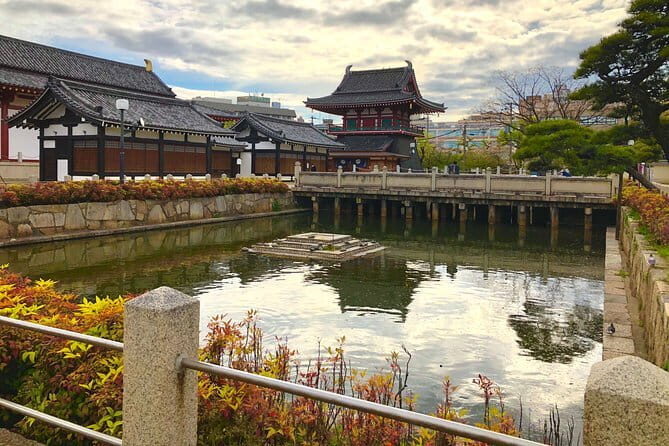
Then you move to Namba Hatch, a venue used for live music and performances. It’s described as holding around 1,200 people, which makes it the kind of place you can imagine packed without needing a huge theater complex.
This is a short stop, but it’s a useful one. It shows how entertainment culture is embedded into the everyday streets here, not parked in one isolated district.
If you’re in Osaka for concerts or you just like how cities “sound,” this stop gives you a reference point for where those nights take shape.
You can also read our reviews of more food & drink experiences in Osaka


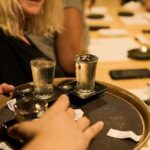
Stop 4: Dotonbori and Hozen-ji Temple in the same mental frame
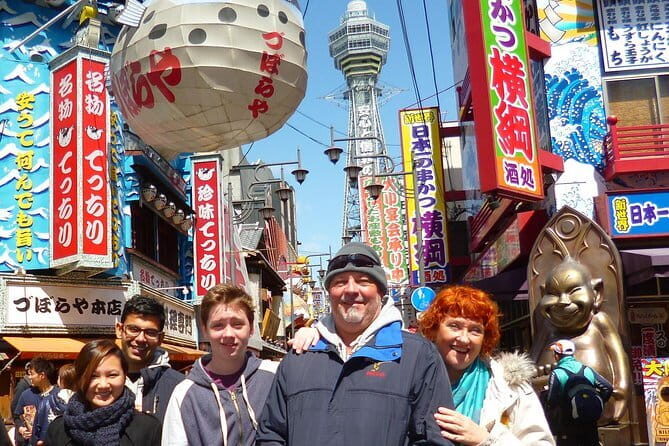
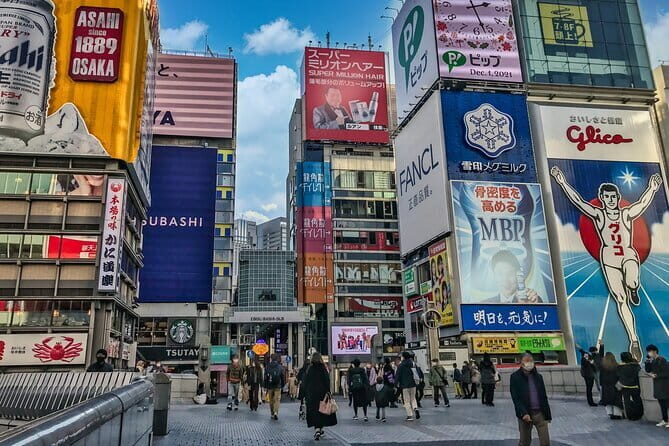
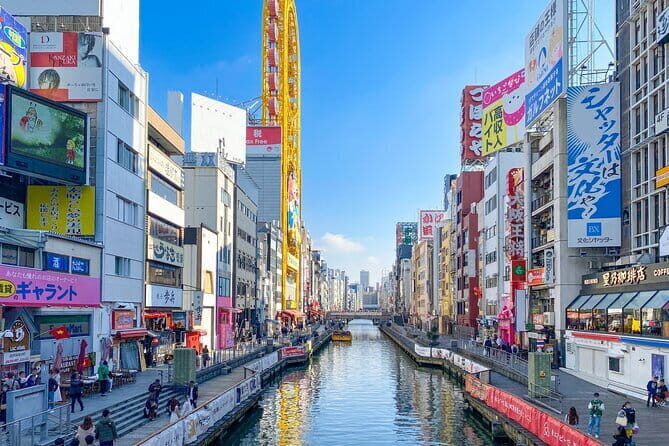
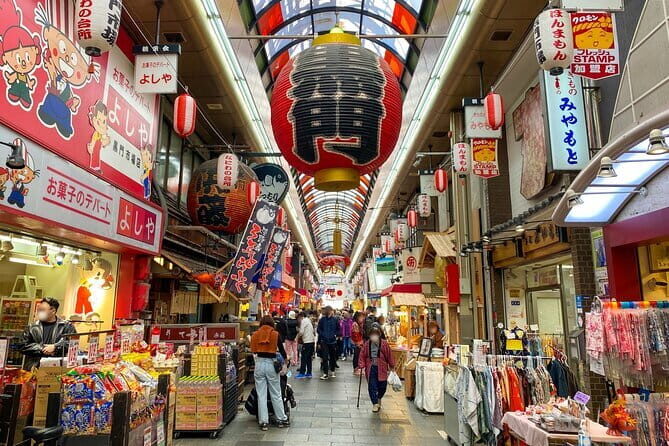
After Namba Hatch, the route hits Dotonbori District. This canal-side area is known for neon lights and the kind of street energy you can feel from blocks away. It’s also a food magnet, and you’ll be surrounded by the cues that tell you where people go to eat.
What I appreciate about this stop is how it tees you up for the temple right after it. You don’t just jump from entertainment to history. You see how they sit next to each other in Osaka’s downtown rhythm.
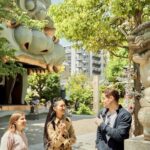
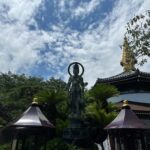
Then you’ll reach Hozen-ji Temple (法善寺), founded in 1637. The standout detail here is the famous moss-covered statue of Fudō Myōō, a fierce deity. Even if you don’t know the whole religious background, the visual impact is the point.
Why this pairing works: Dotonbori gives you Osaka’s public face. Hozen-ji shows the spiritual anchor hiding in plain sight, close enough that you can look up from neon and still feel the age of the place.
Stop 6: Kuromon Market, food ideas you can act on immediately
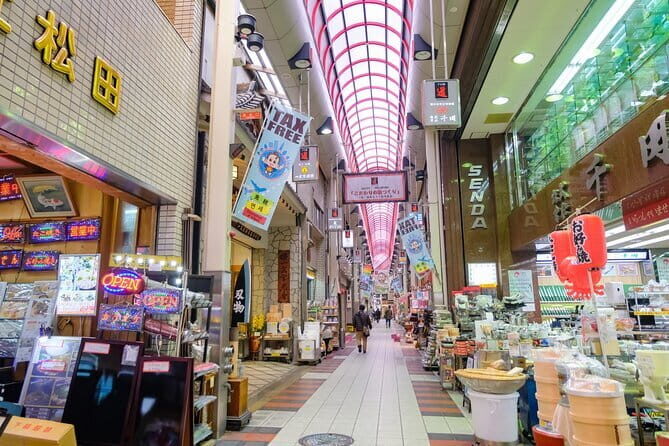
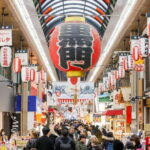
Next is Kuromon Ichiba Market (黒門市場). This is one of Osaka’s best-known places to wander for ingredients and quick bites. The market is described as having a wide variety of fresh seafood, produce, and local delicacies.
This stop is where I’d tell you to slow down. Take the time to look at how stalls are laid out and how people move through the aisles. Then, use what you see to decide what you want to eat next on your own.
Practical tip: because snacks aren’t included, treat the market as your “choose your own adventure” segment. Ask your guide what’s sensible for your tastes and timing, then plan your purchase while the options are in front of you. That beats trying to remember later.
Possible drawback: markets can get crowded, so if you’re sensitive to tight spaces, keep your expectations flexible.
Stop 7: Nipponbashi for electronics and anime culture

After Kuromon, you step into Nipponbashi, the area tied to electronics and anime/otaku culture. This is where Osaka shifts from food-and-tools to pop-culture shopping blocks.
If you’re the type of person who enjoys browsing, Nipponbashi is ideal. You’ll see how Japanese fandom is built into real retail streets, not just online communities. Even if anime isn’t your thing, it’s a strong snapshot of how industries shape neighborhoods.
This stop is short, so focus on what matters to you: a quick sweep for things you recognize, then ask your guide where to go if you want more.
Stop 8: Dōguya-suji (Kitchenware Street) and the chef-knife connection
Your final stretch leads to Dōguya-suji (道具屋筋), often described as a kitchenware and tool-focused shopping street. Expect shops packed with items for home kitchens and practical use.
The standout local detail here is the link to chefs: this is described as the street where many chefs in town buy their knives. That gives the whole street a different feel than a normal souvenir lane. It’s functional. It’s trade-focused. It’s about tools people rely on.
If you enjoy culinary gadgets, cookware, or just watching how specialty shops operate, this is the best “wow, Osaka is real” ending. You’ll walk away with ideas even if you don’t buy anything.
Licensed guides are the main attraction (and it shows)
The tour’s quality comes down to the person leading you. This is a licensed guide experience, and the guide’s job isn’t just to narrate. It’s to connect dots across neighborhoods so you don’t feel like you’re collecting unrelated postcards.
In the feedback provided, guide styles kept coming up:
- Humor plus context: Several guides like Jay and Matt were praised for bringing history and culture into the conversation in a way that didn’t feel like a lecture.
- Question-friendly: People highlighted guides who answered questions clearly and stayed communicative.
- Language comfort: One group specifically mentioned a guide who spoke both English and Japanese well.
- Pace management: There were mentions of guides working around heat, rain, and group needs while keeping the tour moving.
One practical note: because the group size is capped at 12, you’re less likely to get lost in the shuffle. That makes it easier to ask, reroute slightly when needed, and actually learn something as you walk.
Food on your terms: how to use the guidance without a snack plan
You won’t be handed a fixed meal here. Snacks aren’t included, and that’s not a dealbreaker. It can actually be better, because Osaka food is varied and personal—what you crave may not match what someone else wants.
So here’s what I recommend:
- Use Dotonbori and Kuromon as your decision points.
- Ask your guide what to try that fits your comfort level and budget.
- Plan to eat after key stops, not before you get ideas. You’ll get better results when your choices are made with everything in front of you.
Also, if you’re traveling with teens or picky eaters, this setup can help. Market areas and street-food zones usually offer options, and the guide can point you toward what’s easiest to order and enjoy.
Price and value: is $25 worth it?
At $25 per person, this is priced like a short guided orientation, not a full-day paid itinerary. The value comes from what’s included:
- A licensed guide
- All fees and taxes
- A route that hits multiple major and side areas
- Free admission at the listed stops
- A mobile ticket
- A small-group limit of 12
When you break it down, you’re paying for guided time across multiple neighborhoods. You’re not paying for entrance fees, and you’re not locked into expensive meals as part of the ticket. If you go in on your first day or your first time in central Osaka, the cost can feel especially fair because you’ll know where to return later on your own.
If you’re hoping for a tour that includes food tasting as part of the price, this isn’t that. But if you want smart direction and a plan, it’s strong value.
Who this Osaka walk suits best
I think this tour fits best if you want:
- A first-time Osaka overview that goes beyond the obvious highlights
- A route that mixes culture, shopping, and food planning
- A guide who can answer questions and keep the walk fun
- A manageable time window (about 2.5 hours)
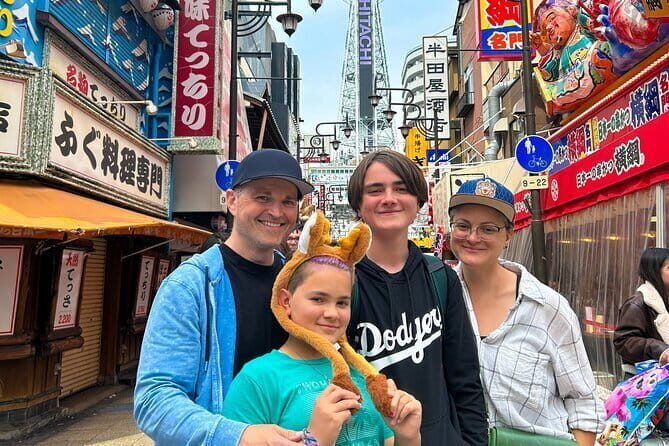
It’s also a good match for families with older kids. One group specifically mentioned a family with teens enjoying the pace and learning more about Osaka culture along the way.
If you’re someone who hates walking or refuses to navigate crowded areas, you might find parts of this route tiring. But the structure is designed so you’re never walking alone through an empty city.
Should you book this Osaka local-gems, food & culture tour?
I’d book it if you want a guided way to connect the dots between Osaka’s different neighborhoods—parks, downtown streets, a major temple near the action, a market, anime/electronics retail, and a chef-focused kitchen tool street. The small group size, licensed guides, and free admission stops make it a low-risk way to get oriented fast.
Skip it only if you want guaranteed snack tastings included in the price, or if you know you’ll struggle with 2.5 hours of walking in busy areas.
If this sounds like your style—walk, look, ask questions, then eat where it makes sense—I think you’ll get your money’s worth.
FAQ
How long is the Osaka Walking Tour to Local Gems, Food & Culture?
The tour runs for about 2 hours 30 minutes.
Where do I meet for the tour?
The start point is listed as Apple 心斎橋 Japan, 542-0086 Osaka, Chuo Ward, Nishishinsaibashi, 1-chōme55 アーバンBLD心斎橋.
Where does the tour end?
The end point is Namba Grand Kagetsu, 11-6 Nanbasennichimae, Chuo Ward, Osaka, 542-0075, Japan.
Is this tour in English?
The tour is led by a licensed guide, and guides have been noted as speaking English well in the feedback you provided.
How many people are in a group?
The tour has a maximum group size of 12 travelers.
What is included in the price?
The price includes all fees and taxes, plus a licensed guide.
Are snacks included?
No. Snacks are not included.