REVIEW · TOKYO
Private Customizable Car and Mini Van Tour in Tokyo
Book on Viator →Operated by Hello! Tokyo Tours · Bookable on Viator
Tokyo in a car feels like a cheat code. You still get the big sights, but without the long haul between them. This private, customizable driving tour lets you hop in and out as often as you want, and you get help from a real guide plus a driver who knows how Tokyo works.
I especially like the hotel pickup/drop-off and the fact that service animals are welcome. I also like that the day is built around short, focused stops, so you can match it to your interests. The one consideration: with lots of landmarks packed into 4 to 8 hours, you’ll need to choose where to linger, especially at high-demand spots.
The guide side matters here. In the experiences I reviewed, guides such as Keiko, Miko, Yasu, and Paiva stand out for warm personalities and strong English, plus the ability to adjust when families (including kids who have big energy) need a different rhythm. The driver experience also comes up again and again, including smooth handling even in rain.
In This Review
- Key highlights worth planning around
- Why this Tokyo car tour works when you do not want the long walk
- What $513 per person buys you in a Tokyo day out
- How the day flows: the rhythm of short stops (and how to use it)
- Shibuya Crossing, Hachikō, and Harajuku street energy
- Shibuya: fashion, crowds, and the famous crossing
- Harajuku: next to Meiji Shrine, and built for browsing
- Meiji Jingu’s forest stillness and Shinjuku’s neon height
- Meiji Jingu Shrine: Shinto in a huge forest space
- Shinjuku: entertainment district energy and optional skyline views
- Asakusa and Senso-ji: old Tokyo you can feel in your feet
- Asakusa’s traditional lanes and Nakamise-style shopping
- Senso-ji Temple: Tokyo’s oldest temple moment
- Akihabara, Nihonbashi, and Yanaka: three different flavors of Tokyo
- Akihabara: anime, manga, games, electronics
- Nihonbashi: where trade began, plus food and craft shops
- Yanaka: nostalgic downtown and traditional tea
- Tsukiji outer market and the food-world feeling
- Tsukiji Fish Market: tuna auction history, outer market today
- Marunouchi and the Imperial Palace East Gardens
- Marunouchi: sleek business district with landmark architecture
- Imperial Palace East Gardens: Edo Castle ruins and moat walls
- Tokyo Skytree, Tokyo Tower, and Shibuya Sky: choosing your skyline add-on
- Luggage, van size, and when this tour is a smart fit
- When you might not love this tour
- Should you book this private customizable Tokyo tour?
- FAQ
- How long is the Private Customizable Car and Mini Van Tour in Tokyo?
- Is hotel pickup and drop-off included?
- Is this tour private?
- Are observation deck tickets included for Tokyo Skytree, Tokyo Tower, or Shibuya Sky?
- What attractions are typically included on the route?
- Is food included in the tour price?
- Are service animals allowed?
- What is the cancellation policy?
Key highlights worth planning around
- Private door-to-door pickup so you start the day already relaxed
- Customizable itinerary that follows your interests instead of a group script
- Short landmark stops (often 20 to 45 minutes) that keep the day moving
- Iconic neighborhoods in one ride: Shibuya, Harajuku, Asakusa, Akihabara, and more
- Observation deck options you add only if you want the skyline bill
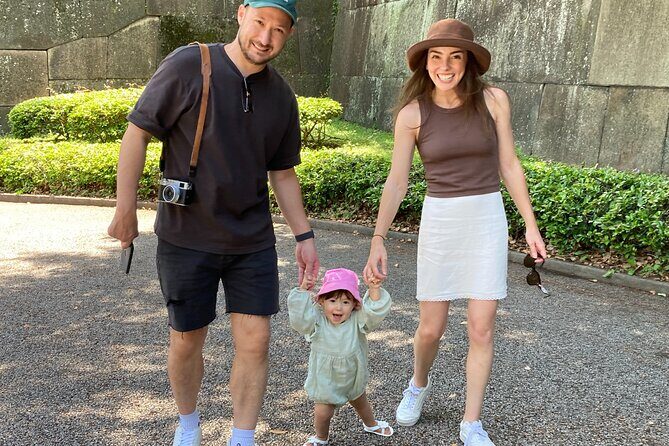
- Family-friendly setup with free kids (11 and under) and van luggage capacity limits
Why this Tokyo car tour works when you do not want the long walk
Tokyo is fantastic, but it can be punishing on tired legs. This tour is designed for people who want the best neighborhoods without doing a marathon between train lines or dragging luggage around stations.
The big win is control. You’re not stuck waiting for the slowest walker in a group. You can step out for a quick photo, a viewpoint, or a short stroll, then return to the comfort of the car when it’s time to move on. Your guide helps you make sense of what you’re seeing, which is handy in a city where even the streets can feel like a maze.
Also, it’s truly private. Only your group rides together, which makes it easier to keep kids, grandparents, or anyone with mobility limits comfortable. And because the guide and driver are part of your “team,” you can ask for adjustments on the fly—like swapping the order of two areas or spending longer where your group is most interested.
You can also read our reviews of more private tours in Tokyo


What $513 per person buys you in a Tokyo day out
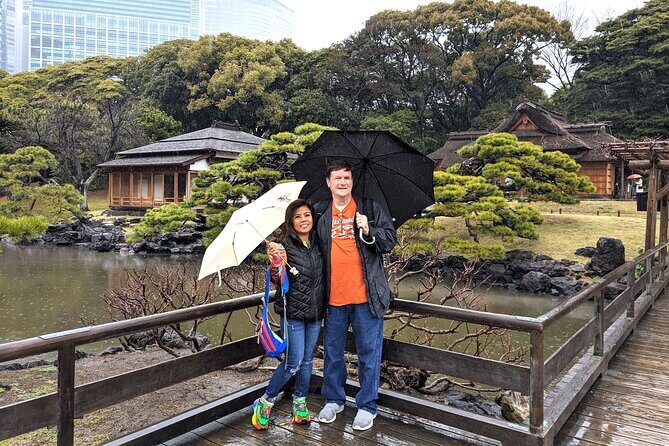
At $513 per person, this is not the cheapest way to see Tokyo. But you’re buying several things at once:
- Transport in a private car or mini van for a 4 to 8 hour window
- Hotel pickup and drop-off, which can save you time and stress
- A professional guide to interpret the sights
- A professional driver to handle navigation and traffic
- A private format that keeps your group together
If you were to pay for multiple taxis plus a guide separately (and keep everyone synchronized), costs can climb quickly. This option is basically a time-saving package: you spend more money, but you buy back hours of energy.
One more value point: many of the included stops are free to enter. The itinerary lists admission as free for major highlights like Shibuya Crossing, Meiji Jingu, Senso-ji, and Akihabara-area wandering. Paid additions are mostly observation decks, and you can decide later if you want that level of skyline.
How the day flows: the rhythm of short stops (and how to use it)
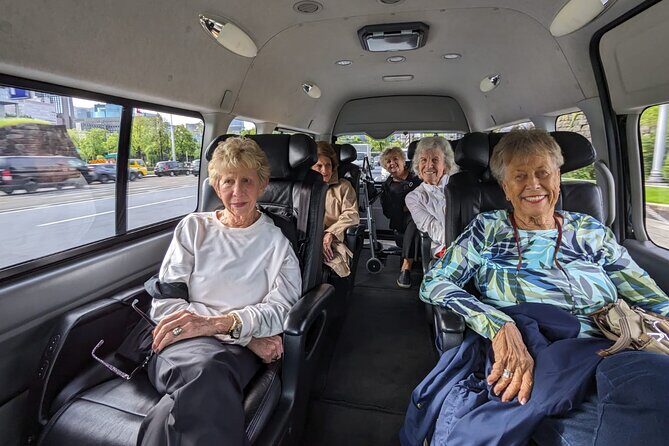
Expect a “layer cake” day. You’ll cover multiple districts, but each stop is usually a focused block—often 20 to 45 minutes. That format works well in Tokyo because neighborhood-to-neighborhood travel can eat time, and walking can add fatigue.
Here’s how to make it work in your favor:
- Pick 3 to 5 must-dos first. If you try to “do everything,” you’ll end up rushing.
- Use the short stops strategically: one photo landmark, one key street, one quick temple moment.
- Decide in advance whether you want skyline time (Skytree, Tokyo Tower, Shibuya Sky). Observation decks can become the day’s anchor.
- If your group includes kids, teenagers, or anyone who gets bored in silence, ask your guide to steer you toward sensory districts (like Harajuku or Akihabara) and street-level food streets.
In the reviews I saw echoed strong satisfaction with flexibility, especially for families. Guides such as Miko and Yasu are praised for adjusting the pace and keeping the mood easy, not rigid.
Shibuya Crossing, Hachikō, and Harajuku street energy
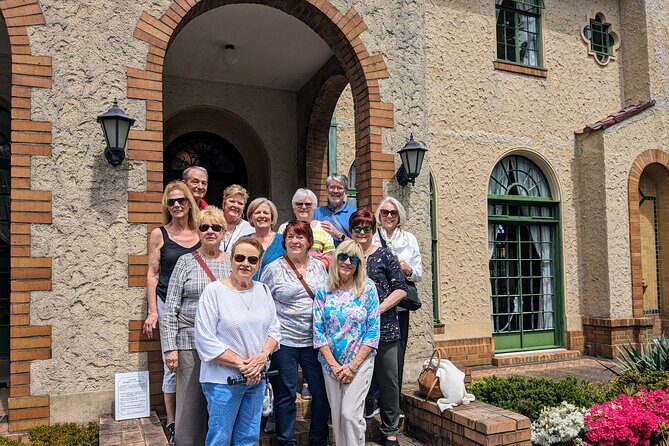
Shibuya: fashion, crowds, and the famous crossing
Start in Shibuya, the modern fashion center where the city feels almost electric. The plan typically includes crossing Shibuya Crossing—described as the busiest pedestrian crossing in the world. Even if you only spend about 30 minutes, that brief window can still help you get your bearings fast.
You’ll also encounter the bronze statue of Hachikō, a popular meeting point tied to loyalty and local storytelling. It’s one of those places where the “meaning” helps you enjoy the photo more than you might expect.
Possible downside here: Shibuya is crowded. If your group wants quiet, you might prefer to pair Shibuya with another calmer area right after, instead of lingering.





Harajuku: next to Meiji Shrine, and built for browsing
Harajuku sits beside Meiji Shrine and acts like a youth fashion playground. Expect street art, quirky styles, and plenty of Instagram-friendly food options. The stop is often around 30 minutes, which is ideal for a quick wander down side streets without getting stuck in endless loops.
If your group loves pop culture, Harajuku is a great match. If you hate crowds, treat this stop like a sample menu: walk a few streets, take photos, then move on.
Meiji Jingu’s forest stillness and Shinjuku’s neon height
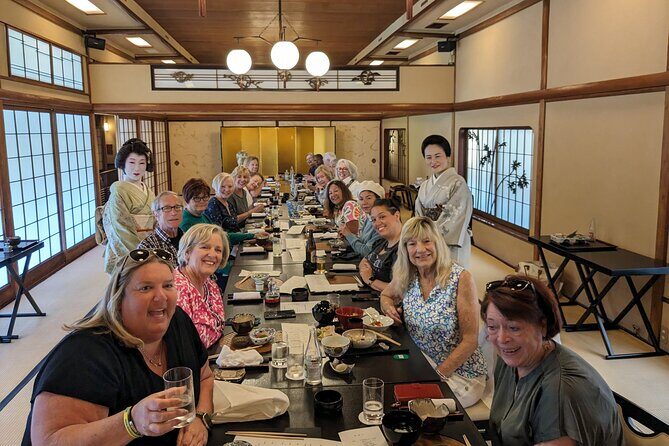
Meiji Jingu Shrine: Shinto in a huge forest space
Meiji Jingu is one of Tokyo’s most restful moments. The setting is a massive forest area—about 700,000 square meters—which helps explain why the shrine feels like a world away from nearby traffic.
The guide’s job here is to connect dots: you’ll learn about Shintoism as the indigenous religion and understand what you’re looking at beyond just the photo ops. You typically get around 30 minutes, so aim to focus on the shrine atmosphere rather than trying to read every sign.
Practical tip: This is a good place to plan restroom time and a short sit-down break if your group needs it before the next big district.
Shinjuku: entertainment district energy and optional skyline views
Shinjuku is the neon and tall-building chapter of the day. Expect a packed visual mix of bright signs and tall structures, then optional time for a viewpoint. The itinerary lists a stop that includes a ride up to an observatory on the 45th floor of the Tokyo Metropolitan Government Building.
This is a strong choice if you want a city view without paying observation-deck prices. In Tokyo, that can save money while still giving you perspective.
If you want the extra skyline ticket: You can also add Shibuya Sky, which offers a 360-degree observatory, but admission isn’t included by default.
Asakusa and Senso-ji: old Tokyo you can feel in your feet
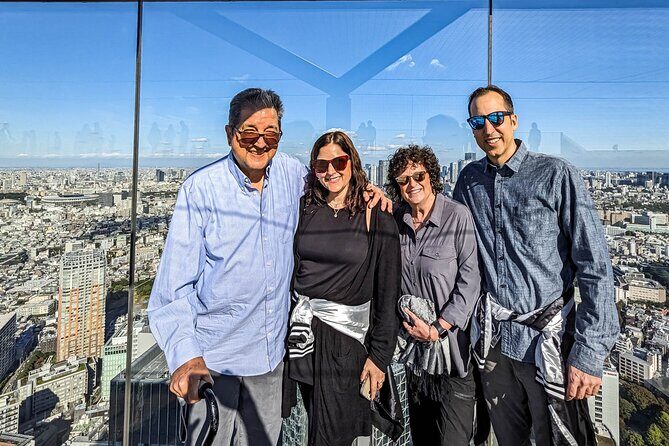
Asakusa’s traditional lanes and Nakamise-style shopping
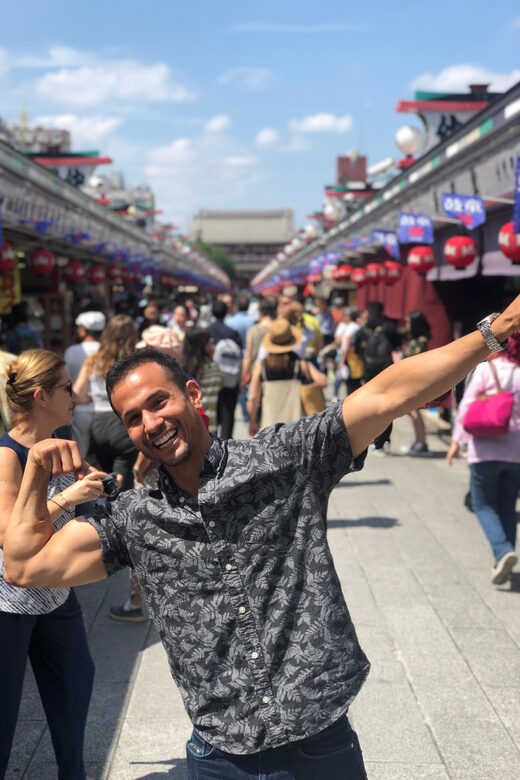
Asakusa is the historic core, and it’s where Tokyo starts to feel handmade. The plan usually includes time for traditional craft shops and a walk along Nakamise Shopping Street—about 250 meters of stall-style browsing leading toward the temples.
This is where you’ll find classic souvenirs, snacks, and the vibe of older Tokyo commerce. Since entrance is free for the stops here, your “spend” can stay optional—mostly food and souvenirs, not tickets.
Senso-ji Temple: Tokyo’s oldest temple moment
Senso-ji is highlighted as Tokyo’s oldest temple dating back to 628. That alone gives the place a gravity. You’ll also get context around Buddhism and how the temple functions within Japanese religious life.
The stop is often around 30 minutes. That’s long enough for the main approach and a respectful look, but not long enough to treat it like a half-day museum. If your group has a real temple focus, ask your guide to adjust the timing.
Akihabara, Nihonbashi, and Yanaka: three different flavors of Tokyo
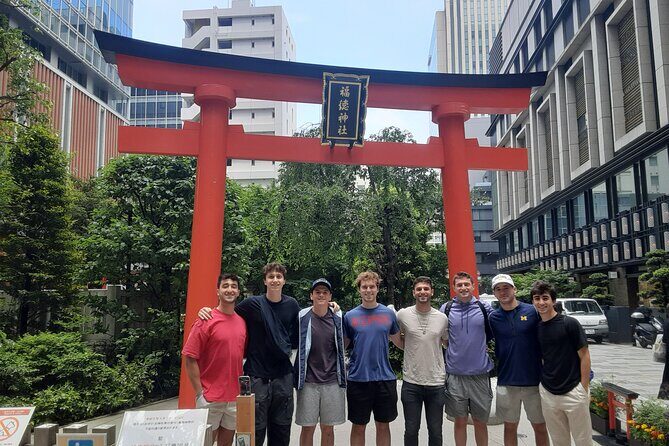
Akihabara: anime, manga, games, electronics
Akihabara is for people who love tech and pop culture in physical form. Think anime, manga, video games, and electronics—all in one district. The itinerary frames it as a sensory overload, which is exactly right.
The typical stop is brief (around 20 minutes), so it’s more about sampling: one electronics street, one themed shop peek, then out. For shoppers who want longer browsing, this is a place to trade time from less-interesting stops.
Nihonbashi: where trade began, plus food and craft shops
Nihonbashi is the original center of trade and commerce from the Edo period (1603 to 1868). It’s also tied to the foundation of Japanese cooking, which can make the area more interesting than it sounds on paper.
You’ll get about 30 minutes. In that time, you can experience the traditional shop atmosphere without needing a full itinerary around food history. It’s a good “slow-down” moment compared to Shibuya and Harajuku.
Yanaka: nostalgic downtown and traditional tea
Yanaka is a quieter district with temples and a more old-fashioned feel. It’s also highlighted as having sweets and a traditional tea house experience, including a tea ceremony.
This stop pairs well with families who want something gentle after the big-city energy. It also works if you want a change of pace from the crowded sightseeing route.
Tsukiji outer market and the food-world feeling
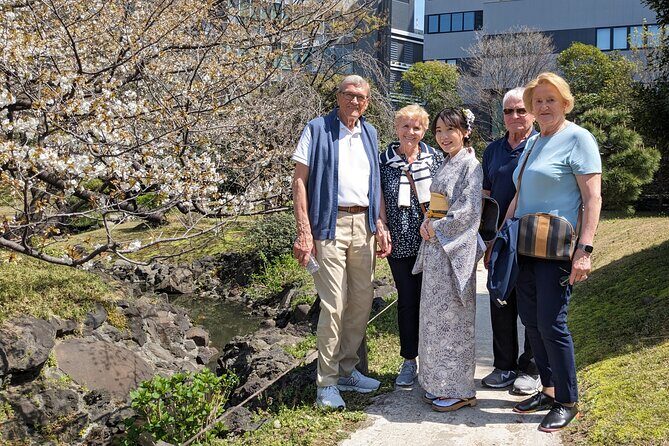
Tsukiji Fish Market: tuna auction history, outer market today
Tsukiji is best understood through the changeover story: the inner market and tuna auction have moved to Toyosu, but the outer market remains. That means you still get the classic street-level fish market experience, including fresh fish and food browsing.
The stop is typically around 30 minutes. You won’t do a full culinary tour, but you can absolutely taste your way through the vibe: quick bites, smells, and the “market in action” atmosphere.
Good use of time: Ask your guide where to look for short lines and quick purchases, then keep moving so the rest of your day stays on track.
Marunouchi and the Imperial Palace East Gardens
Marunouchi: sleek business district with landmark architecture
Marunouchi sits around the Imperial Palace area and is known for impressive architecture. The itinerary specifically calls out Tokyo International Forum and Tokyo Station as architectural highlights.
This is a great transition area if you want something more structured after the chaos of entertainment districts. It also makes a nice “reset” for your group—wider sidewalks, a calmer pace, and lots of photo angles without everyone feeling like they’re shoulder-to-shoulder.
Imperial Palace East Gardens: Edo Castle ruins and moat walls
The East Gardens stop gets you up close to remnants of Edo Castle, including moat walls. This is one of the more “place-based” history moments in the route.
You get around 30 minutes, which is enough to walk the key areas and understand how the old defensive layout connects to the present-day landscape. It’s also an excellent choice if your group likes history but hates long museum days.
Tokyo Skytree, Tokyo Tower, and Shibuya Sky: choosing your skyline add-on
The route includes three big skyline options, and it’s smart to treat them like a menu:
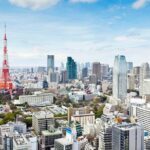
- Tokyo Skytree: the world’s tallest tower at 634 meters. Observation deck tickets can be added; admission isn’t included by default.
- Tokyo Tower: completed in 1958 and the tallest structure until 2012, when Skytree surpassed it. Observation deck tickets can be added; admission isn’t included by default.
- Shibuya Sky: a 360-degree observatory with ticket add-on; admission isn’t included by default.
How to choose:
If your group loves iconic Tokyo silhouettes, pick the one that matches your neighborhood theme. Shibuya Sky fits the Shibuya chapter. Skytree fits a more modern “height brag” angle. Tokyo Tower fits classic post-war identity storytelling.
One practical note: Observation deck time can expand into a money and time sink if lines form. If you’re traveling with kids or anyone who gets restless, choose one skyline stop, not all three.
Luggage, van size, and when this tour is a smart fit
This tour comes with transport in a car or mini van, and luggage capacity is listed:
- Alphard: up to 4 suitcases with up to 3 people
- HiAce: up to 8 suitcases
If you’re traveling as a family with strollers and bags, that matters. You don’t want to play “where does the suitcase go?” in a tiny sedan.
It also helps that the experience allows service animals. And children aged 11 and under are free of charge if you tell the provider they are coming. That’s a real advantage for multi-kid families.
This is also a good match for people who do not want the stress of constant ticket machines, station navigation, and crowd timing. Your guide helps steer you, and your driver handles the routes.
When you might not love this tour
This tour shines when you want a curated Tokyo highlights day with comfort and flexibility. But you might want to think twice if:
- Your group wants long museum-style stays at a single place. The stops are timed.
- You hate crowds and want fewer districts. The route is built for variety, which can mean movement through busy areas.
- You plan to add multiple paid observation decks. Tickets are not included, and stacking them can raise your total day cost.
Should you book this private customizable Tokyo tour?
Book it if you want a Tokyo sampler that respects your energy. The mix of private vehicle comfort, hotel pickup/drop-off, and a guide who can adjust the route makes this a strong choice for families, people with limited mobility, and anyone who hates the logistics side of travel.
I’d book it especially if your priorities include landmark neighborhoods like Shibuya, Harajuku, Meiji Jingu, Asakusa/Senso-ji, and Akihabara, plus a chance to decide later about skyline tickets. Guides such as Keiko, Miko, Yasu, and Paiva are repeatedly described as warm and adaptable, including for groups with kids and active schedules.
Skip it (or at least scale your expectations) if you want an unhurried, deep, single-area dive. This is about getting around Tokyo efficiently, not spending half the day in one spot.
If that sounds like your kind of day, you’ll likely love the balance: short stops, big variety, and a driver who keeps the rhythm going while you enjoy the ride.
FAQ
How long is the Private Customizable Car and Mini Van Tour in Tokyo?
The tour runs for about 4 to 8 hours.
Is hotel pickup and drop-off included?
Yes, hotel meet-up and drop-off are included.
Is this tour private?
Yes. It’s a private tour/activity, so only your group participates.
Are observation deck tickets included for Tokyo Skytree, Tokyo Tower, or Shibuya Sky?
No. Tickets for Tokyo Skytree, Tokyo Tower, and Shibuya Sky can be added on, but admission is not included by default.
What attractions are typically included on the route?
The route includes stops in areas such as Shibuya, Harajuku, Meiji Jingu Shrine, Shinjuku, Asakusa and Senso-ji, Akihabara, Marunouchi, the Imperial Palace East Gardens, Nihonbashi, Tsukiji Fish Market (outer market), and Yanaka, with optional skyline deck stops.
Is food included in the tour price?
No. Food and drinks are not included.
Are service animals allowed?
Yes, service animals are allowed.
What is the cancellation policy?
The information provided is inconsistent: one section states cancellations more than 7 days in advance receive a full refund, 7 to 2 days receive 50%, and less than 48 hours are non-refundable. Another section says it is non-refundable and cannot be changed. Check the cancellation terms on your booking confirmation.