REVIEW · TOKYO
Private Memorable Tokyo Tour with English Speaking Driver
Book on Viator →Operated by Sluzeb Tours · Bookable on Viator
Your Tokyo checklist needs one private day. This private tour with an English-speaking driver is built to hit the key sights with far less hassle than trains, and it’s timed for a single long day of contrasts. I like the comfort and flexibility of having a car for the whole route, and I like that most major stops cost nothing to enter—then you pick the paid upgrades like Skytree or teamLab if you want.
One thing to think about: this is often more chauffeur-style than a full guided museum lesson. Some drivers provide detailed explanations (I’ve seen names like Wahab, Mazar, Ryan, David, Abdul Waheed, and Irfan mentioned for exactly that), but if you want deep narration at every stop, you should arrange for an added guide.
In This Review
- Key things to know before you go
- How the Shinjuku Pickup and 10-Hour Private Plan Works
- Tsukiji Fish Market: Start With Tokyo at Its Most Sensory
- Senso-ji and Asakusa: Old-School Tokyo in a Single Hour
- Tokyo Skytree Views: What You Pay for and How to Use the Time
- Imperial Palace East Garden: Free Time With One Important Rule
- Akihabara in Half an Hour: Electronics and Pop Culture at Speed
- Meiji Jingu, Shibuya Crossing, and Takeshita Street: Where Tokyo Switches Gears
- Meiji Jingu Shrine: a calm pocket inside the city
- Shibuya Crossing: the world’s famous chaos, on your schedule
- Takeshita Street: youth fashion and sweet stops
- Tokyo Tower Plus Odaiba Extras: Two Modern Photo Moves
- Statue of Liberty replica (optional, if time allows)
- teamLab Planets TOKYO (optional, not included)
- English Speaking Driver vs. True Guide: How to Get What You Want
- Price and Value: What $600 Per Group Buys You
- Should You Book This Private Tokyo Tour?
- FAQ
- Where is the meeting point and do we return there?
- How long is the tour, and is it only for my group?
- Are the attraction tickets included?
- Is this a guided tour or a chauffeur service?
- Can I cancel for free?
- What are the optional stops if there is time?
Key things to know before you go
- One private group, up to 5 people: you won’t be squeezed into a big bus day.
- Shinjuku pickup and return: your day starts and ends where most visitors already plan to be.
- A “great hits” route: Asakusa temple time, then Skytree views, then Imperial area, then Shibuya/Harajuku energy.
- Paid options only when you have time: Tokyo Tower is quick, while Skytree and teamLab Planets TOKYO can be optional upgrades.
- Schedule may shift for traffic or crowding: you’re not locked into a rigid sequence.
- Guided or not depends on setup: a driver may explain—or may mainly drive—so plan accordingly.
How the Shinjuku Pickup and 10-Hour Private Plan Works
This is a 10-hour private day with pickup offered in Shinjuku City, and the tour ends back at the same meeting point. That matters because Shinjuku is a major hub, so it’s usually easier to line up your hotel logistics. You’re also not spending your best energy on navigation, transfers, and timing public transport during a day when you want to see a lot.
Your driver handles the car and route, and the day is designed to move across Tokyo in a way that would be annoying on foot or with multiple train changes. The tour is described as including commuting time, so you get a realistic sense of what you can cover without pretending you’ll do marathon distances between far-flung neighborhoods.
Two practical notes I’d keep in mind:
First, the itinerary can be adjusted. Traffic congestion or long waits can cause stops to be skipped or swapped. Second, the experience is noted as weather-dependent, so if conditions are rough, your provider may offer a different date or a full refund.
If you’re traveling as a small group—up to five—this kind of private timing often makes the day feel calmer. You can also stop for small breaks without turning the whole day into a stressful timing game.
You can also read our reviews of more private tours in Tokyo



Tsukiji Fish Market: Start With Tokyo at Its Most Sensory
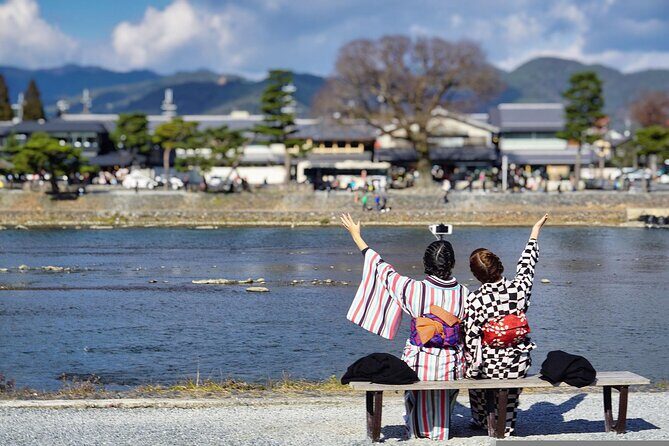
The day opens at Tsukiji Fish Market for about 45 minutes. The big draw here is that it’s described as the largest fish market in the world and an attraction that has become especially “authentic and special” over time. Admission is free, so this is one of the best starts for first-time visitors who want a quick, high-impact experience without paying extra entry fees.
In a limited half-day window, 45 minutes is short—but that can be a feature, not a bug. You’re not forced to linger in a place that can get crowded and active. Instead, you can get the feeling fast: seafood sights, quick bites if you’re in the mood, and the sense that Tokyo runs on a different tempo before 10 a.m.
A smart way to use this stop is to decide your goal before you arrive. If you want photos, go early and aim for a few focused scenes. If you want food, plan for a snack rather than a full meal. Either way, you’ll get your bearings for the rest of the day because you’ll understand what “old Tokyo” energy looks like before you head into more modern stops.
Senso-ji and Asakusa: Old-School Tokyo in a Single Hour
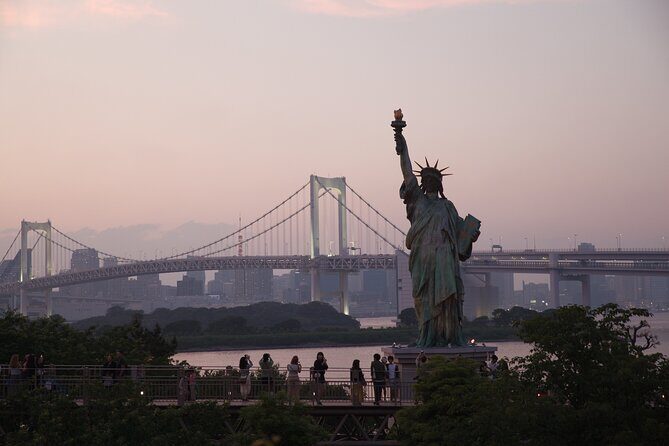
Next up is Senso-ji (Asakusa Kannon) for about 1 hour, with free admission. It’s described as Tokyo’s oldest religious building and one of the city’s most colorful and popular places. With roughly 20 million annual visitors, it’s not a quiet hidden corner—so your time management matters.
For me, the value of Senso-ji on a private day is simple: you get the landmark without the guesswork of planning how long it will take to reach, what entrance to use, and where the key views are. Your driver can also help you navigate so you spend less time detouring around bottlenecks.
What to watch for: the area around Senso-ji is a major shopping and temple district, so the experience naturally includes street life, not just buildings. If you’re the type who loves atmosphere, this stop gives you that instantly. If you prefer clean, calm sightseeing, treat it like a “hit the main area, then move on” stop so you don’t burn your energy stuck in crowds.
Tokyo Skytree Views: What You Pay for and How to Use the Time
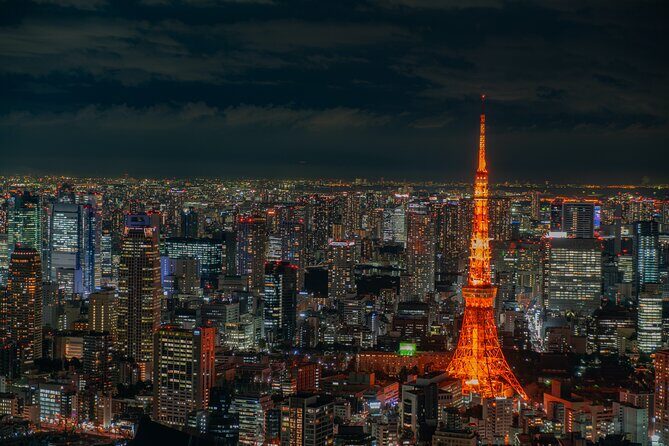
Then comes Tokyo Skytree for about 1 hour, and here’s the catch: admission isn’t included. The observation decks are described as located on the 45th floor, reaching 202 meters above the ground. From there, you can see major landmarks, including Meiji Jingu and Tokyo Tower, depending on visibility.
Skytree is one of those stops where timing and patience matter more than souvenirs. If you go in expecting a quick photo grab, you might feel rushed. If you go in expecting views and a slow scan of the city, the hour works well.
Because the paid ticket isn’t included, I’d think of Skytree as your “choose-your-own-upgrade” moment. If you do it, plan to enjoy the viewpoint rather than treating it as a checkbox. On a day with so many free stops, paying for one big viewpoint can make the whole itinerary feel balanced.
Imperial Palace East Garden: Free Time With One Important Rule
The next stop is the Imperial Palace area, specifically the East Garden for about 45 minutes, with free admission for that garden area. The residence of Japan’s Imperial Family is the headline, and the site also connects back to the Edo Castle era, when it served as the seat of the Tokugawa shogun.
Here’s the key consideration: while you can explore the East Garden without booking, entering the palace interior requires a prior reservation. So if you’re hoping for full access beyond the garden, plan for that ahead—or accept that today’s focus will be on the park-like grounds.
One review-style takeaway I’d treat as practical advice: the East Garden can be a long walk, and some people may feel they didn’t know what to look for during the trek. If you’re short on time or prefer more “point-and-shoot” sights, you might want to keep a realistic mindset: this is a chance for calmer scenery, not rapid landmark hopping.
A few more Tokyo tours and experiences worth a look


Akihabara in Half an Hour: Electronics and Pop Culture at Speed
Akihabara gets about 30 minutes. Admission is free, and it’s famous as a shopping hub for electronics—from small stalls to big department stores. It’s also a strong stop for fans of manga, anime, and video games, with lots of niche stores packed into a walkable area.
Thirty minutes is enough for a quick feel and a couple of shop stops, but it’s not enough to “finish Akihabara.” That’s okay. On a private day like this, the goal is to sample the neighborhood character rather than treat it like a full shopping day.
How to make it work for you:
Pick what you want—electronics browsing, anime goods, or just street scenes—and tell yourself you’re going to do that and move on. With a private driver, you can stay focused instead of spending half the time trying to find where you are and where to go next.
If shopping is a priority, this is where you’ll likely want to spend a little extra time—just keep an eye on the rest of the day because the itinerary can be shortened or reshuffled due to traffic and waiting lines.
Meiji Jingu, Shibuya Crossing, and Takeshita Street: Where Tokyo Switches Gears
This part of the day is all about contrast.
Meiji Jingu Shrine: a calm pocket inside the city
You’ll spend about 30 minutes at Meiji Jingu Shrine. It’s described as a Shinto shrine in a lush green area in central Tokyo, dedicated to Emperor Meiji and Empress Shōken. It’s a welcome break after busier streets because the setting is a literal “green pause” in the middle of the metropolis.
This is the stop that makes the tour feel like more than a list of monuments. It helps you reset your pace and senses, and it gives Tokyo a spiritual and natural side you might otherwise miss if you only bounce between skyscrapers and shopping areas.
Shibuya Crossing: the world’s famous chaos, on your schedule
Then it’s Shibuya Crossing for about 20 minutes. The crossing is described as one of the world’s busiest pedestrian intersections, with as many as 3,000 people crossing at a time. It’s quick, it’s iconic, and it’s a great place to see the city’s “flow” in action.
On a private tour, the benefit isn’t just skipping transit—it’s timing. A 20-minute window can work perfectly if your goal is to see it from the right angle and get a few photos without getting stuck for an hour.
Takeshita Street: youth fashion and sweet stops
Finally, you’ll have about 1 hour at Takeshita Street in Harajuku. This is youth-driven fashion territory with colorful shops, plus a big sweets scene. Crepes are specifically called out, so if you want that classic Tokyo snack, plan for it here.
This stop is ideal if you like quirky street culture and want a little fun built into the day. Just remember: it can get crowded, so keep your shopping goals practical.
Tokyo Tower Plus Odaiba Extras: Two Modern Photo Moves
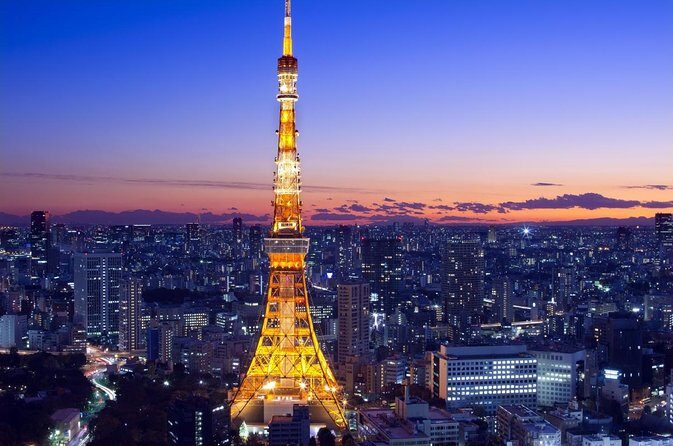
The tour includes Tokyo Tower for about 10 minutes. It’s free to view, and it’s described as a communications and observation tower based on the Eiffel Tower design, completed in 1958, reaching 634 meters. Ten minutes is short, so treat it as a photo-and-viewpoint stop rather than a slow hang.
Some people may feel the earlier time at the palace gardens could be used differently, and that’s where Tokyo Tower can benefit. If you’re choosing where the day’s minutes go, Tokyo Tower is quick payoff: stand, look up, and move on.
Statue of Liberty replica (optional, if time allows)
There’s also a stop labeled as optional: a photo-op at the Statue of Liberty replica on Odaiba’s waterfront, plus the Rainbow Bridge in the background. It’s described as an 11 m tall replica and available since 1998. Admission is listed as free, and the note says it’s possible to visit if you have time.
teamLab Planets TOKYO (optional, not included)
The biggest optional modern stop is teamLab Planets TOKYO for about 30 minutes, with admission not included. The experience is described as walking through water and a garden where you become one with the flowers. It includes four massive exhibition spaces and two gardens.
Because it’s an optional add-on, you’ll want to decide early whether you care about it enough to trade time. On a packed day, 30 minutes can feel just right for a first-time experience, but only if you don’t spend your day in line marathons.
If you’re the type who hates paying surprise extras, you might skip teamLab and keep your day focused on free icons. If you want one “wow” modern experience, teamLab is the clearest choice.
English Speaking Driver vs. True Guide: How to Get What You Want
One of the most important realities of this tour style is the difference between a driver and a guide.
This experience is described as a private tour/activity, but it’s also stated that it is not a guided tour by default. A guide can be arranged on request for an additional cost. That means your experience can range from:
- A driver who mainly chauffeurs you and provides minimal context, to
- A driver who gives real explanations and helps you understand what you’re looking at.
The good news is that many drivers seem to lean into the explanation side. Names that came up include Wahab, praised for being polite and for explaining everything in very strong English. Mazar was noted as patient, not rushing, and for explaining time expectations at attractions. Ryan was mentioned as friendly and for tailoring the day to the group’s interests. David was described as easygoing and flexible. Abdul Waheed and Irfan were also praised for courtesy and for making the day smooth.
My practical advice: if your top priority is story and context—how Japan got from Edo-era power centers to today’s tech hubs—ask for the added guide option before you go. If you just want to see the big sights with comfortable logistics and a driver who can point out the basics, you’ll likely be happy with the standard setup.
Price and Value: What $600 Per Group Buys You
The price is listed as $600 per group for up to 5 people. It’s also noted that the tour is commonly booked about 40 days in advance, which suggests it’s in demand—especially for one-day planning when people are short on time.
So what do you actually get for that money?
You’re buying time saved and stress removed:
- A private vehicle for roughly 10 hours (including commuting time).
- A route that hits major areas without you managing transit connections.
- Multiple stops with free admission (many of the headline attractions don’t require a ticket cost).
- The ability to adjust if traffic or crowds slow things down.
Where the value can dip a little is in what you expect from “guide” content. If you want deep explanations at each location and you get a chauffeur-only service, the day can feel pricey compared with simply paying for taxis. The fix is simple: arrange the added guide option if that matters to you.
Also think about your travel party. For a group of friends or a family of four or five, the per-person cost drops, and the private format becomes much easier to justify. For a solo traveler or couple, it can still be worth it if your alternative is spending the whole day hopping transit or buying multiple paid tours to cover everything.
Should You Book This Private Tokyo Tour?
Book it if:
- You have one day and want the big Tokyo highlights without transit fatigue.
- Your group is small (up to five) and you value comfort and flexibility.
- You’re okay with a day that mixes temples, shopping streets, and modern photo stops rather than one neighborhood done slowly.
Consider not booking—or booking with the added guide—if:
- You strongly want a full narrated experience at every site. This can vary depending on the person driving, and the default setup isn’t guaranteed to be a guided tour.
- You dislike longer walking segments. The East Garden can take time, and some people may feel it didn’t add enough to their day.
If the weather is good and your priority is to get your bearings fast, this is the kind of private day that can help you enjoy Tokyo instead of just surviving it.
FAQ
Where is the meeting point and do we return there?
The tour starts in Shinjuku City, Tokyo at 9:00 am, and it ends back at the same meeting point.
How long is the tour, and is it only for my group?
It’s about 10 hours including commuting time, and it’s private, meaning only your group participates.
Are the attraction tickets included?
Some stops are listed as free admission (like Tsukiji Fish Market, Senso-ji, and Meiji Jingu). Tokyo Skytree and teamLab Planets TOKYO are listed as not included in admission. Entry into the Imperial Palace interior requires a reservation, though the East Garden can be explored without booking.
Is this a guided tour or a chauffeur service?
It’s described as not a guided tour by default (more like a chauffeur/driver service). A guide can be arranged on request for an additional cost.
Can I cancel for free?
Yes. There is free cancellation available if you cancel at least 24 hours before the experience start time for a full refund.
What are the optional stops if there is time?
Statue of Liberty (replica) on Odaiba and teamLab Planets TOKYO are listed as possible stops if you have time.