REVIEW · TOKYO
Private Omiya Bonsai Village Tour with Licensed Guide
Book on Viator →Operated by Japan Guide Agency · Bookable on Viator
Bonsai villages feel like living art. This private 4-hour Tokyo-area outing takes you from your hotel toward Omiya Bonsai Village to explore six bonsai gardens with a licensed English-speaking guide, plus time at the nearby Omiya Bonsai Art Museum. Along the way, you can ask questions freely and get help moving between stops.
I especially like two parts. First, your guide makes the day feel personal, with room for questions and on-the-spot context that most people miss when they go on their own. Second, the gardens are set up for good browsing and photos, and there’s time to consider buying a souvenir bonsai plant to take home.
One potential drawback: the Omiya Bonsai Art Museum has a renovation closure from Nov 5, 2024 to Mar 20, 2025, so your museum stop may be affected depending on your travel dates.
In This Review
- Key things to know before you go
- Why Omiya Bonsai Village is more than a pretty stop
- Getting from Tokyo: the round-trip timing that keeps it sane
- A private guided circuit through six bonsai gardens
- Photo spots and the souvenir bonsai question
- Omiya Bonsai Art Museum: what you’ll gain if it’s open
- What the licensed guide adds to the experience
- Price and value: is $107.50 fair for a private bonsai day?
- How to plan your day around the 4-hour window
- Who this tour suits best
- Should you book this Private Omiya Bonsai Village Tour?
- FAQ
- What is the duration of the tour?
- Is this tour private?
- Is hotel pickup available?
- Who provides the guide, and what language is it in?
- Are admission fees included in the price?
- How long do you spend at Omiya Bonsai Village?
- Is the Omiya Bonsai Art Museum open year-round?
- Can I get a full refund if I cancel?
Key things to know before you go
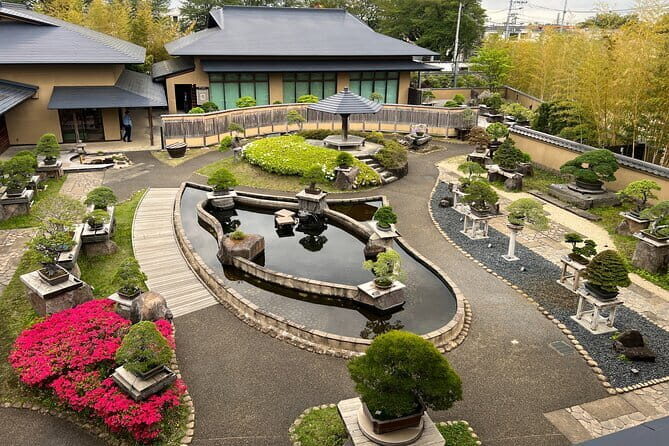
- Six gardens in one half-day at Omiya Bonsai Village, so you see more than just one corner of the area
- Licensed English-speaking guide who can answer questions as you walk and look
- Hotel-area pickup option plus a simple Tokyo-to-Omiya round trip timing built into the tour
- Souvenir bonsai plant time, useful if you want a living reminder of the visit
- Museum closure window (Nov 5, 2024 to Mar 20, 2025), which you should double-check before booking
Why Omiya Bonsai Village is more than a pretty stop
Omiya Bonsai Village sits in Saitama, just outside Tokyo, and it’s known for a very specific reason: bonsai pioneers relocated there about 100 years ago. That history matters, because you’re not only looking at trees—you’re walking through a place that became a hub for how bonsai culture took root and grew.
I like that this tour gives you structure. You’re not left to wander six separate gardens on your own, hoping you’ll “get” what you’re seeing. With a licensed English-speaking guide, you can ask the practical questions—why one tree is trained a certain way, how gardeners think about style and age, and what makes Omiya’s approach distinct.
And because it’s private, the pace can match you. If you want extra time for photos, you can lean into it. If you’re the type who wants to understand the basics first, you can slow down and get explanations as you go.
You can also read our reviews of more guided tours in Tokyo


Getting from Tokyo: the round-trip timing that keeps it sane
The Tokyo-to-Omiya Bonsai District transfer is about 1 hour each way, which means roughly 2 hours of travel time total. That’s one reason this tour works well as a half-day plan: you’re not stuck in transit for most of the experience.
You can meet your guide at your hotel or another desired place in Tokyo. The tour also offers pickup, so you don’t have to figure out the whole routing yourself before you even reach the gardens. Once the tour is done, your guide brings you back to Tokyo.
A small but important detail: the stops include a “Tokyo” meet-and-return block before and after the bonsai time. So while the experience is labeled about 4 hours, expect that portion to be travel plus visits—not just garden strolling.
A private guided circuit through six bonsai gardens
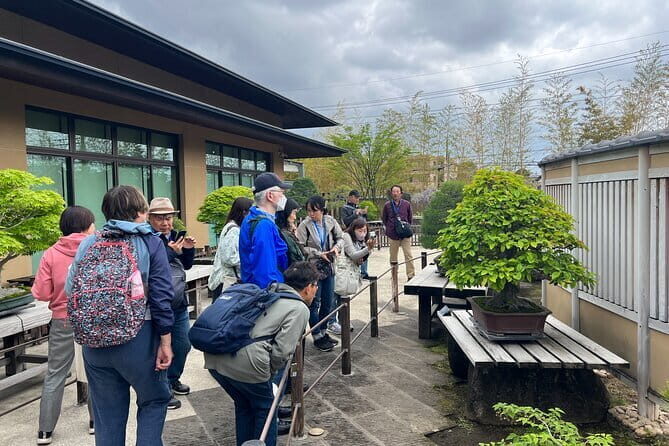
The heart of the day is the Omiya Bonsai Village section in Saitama, where the bonsai-mura concept (the bonsai village) is built around multiple gardens. You’ll spend about 1 hour 30 minutes here, and the big payoff is variety: six distinct gardens, each with its own look and feel.
This is the part you’ll feel immediately when you arrive. Bonsai isn’t one “style.” It’s a method of training, shaping, and maintaining living trees so they communicate age and character in a compact form. When you see multiple gardens back-to-back, you start noticing patterns: how arrangements guide your eye, how pruning choices show up visually, and how the garden layout changes what stands out.
The time window matters. With only about a half-day, you won’t get endless browsing, but you also won’t feel rushed through a single site. It’s a strong format for people who want a full taste of Omiya without turning the day into a long production.
Also, the tour is built for questions. Instead of trying to interpret things on your own, you can ask your guide what you’re looking at and why it’s arranged that way. That kind of real-time explanation is exactly what turns “nice trees” into a memory that sticks.
Photo spots and the souvenir bonsai question
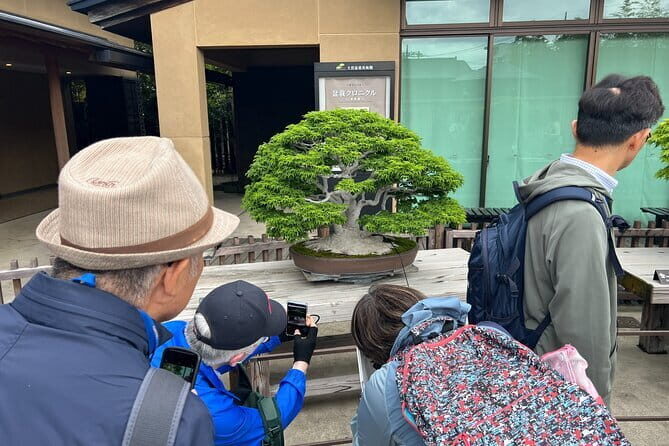
One of the highlights is that the gardens are a good spot to snap unique souvenir photos. That might sound obvious, but bonsai photography is its own challenge: you’re dealing with careful shapes, small details, and scenic framing inside a garden environment. Having a guide who understands the flow helps you know where to pause and what to focus on.
Then there’s the second big element: time to purchase a souvenir bonsai plant. This is a practical add-on for plant lovers and people who want more than photos as a takeaway.
Here’s how I’d think about the souvenir decision. A bonsai plant is a living item, so you’ll want to consider practicalities like transporting it home and whether you’re ready for ongoing care. The tour gives you the chance to buy, but you still get to decide based on your comfort level and travel situation.
If you’re traveling light or short on storage, you might skip it and focus on the experience. But if you’ve been hoping for a bonsai-based memory you can keep, this is one of the only ways to do it in a structured half-day.
Omiya Bonsai Art Museum: what you’ll gain if it’s open
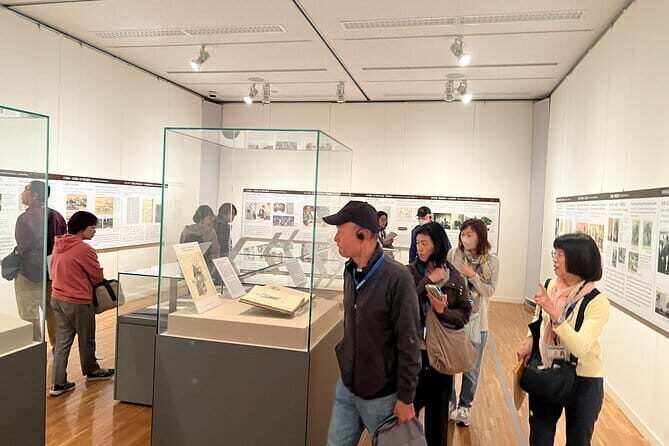
The Omiya Bonsai Art Museum sits right at the edge of Omiya Bonsai Village, and it’s built to help you learn more about the history of this Japanese horticultural art form. You’ll have about 30 minutes there.
The layout is described as logical, which is a nice way of saying you’re likely to get the story in a sensible order rather than random exhibits. That matters because bonsai history connects craft, culture, and generations of caretaking. Even in a short visit, a logical exhibit flow helps you connect what you saw outdoors with what you’re learning indoors.
One specific detail that stands out from the guide experience around the museum: there’s a mention of a thousand-year-old ezo spruce. That kind of exhibit detail can change how you see everything in the gardens. Suddenly, you’re thinking in timescales much longer than “how it looks today.”
Important timing note: the museum is closed for renewal from Nov 5, 2024 to Mar 20, 2025. If you’re traveling during that window, the museum stop may not be available the way you expect, so you’ll want to plan around it.
You can also read our reviews of more private tours in Tokyo



What the licensed guide adds to the experience
A private tour lives or dies on the guide. Here, you’re getting a licensed English-speaking guide, and the format is designed for questions. That means you can treat the gardens like a living lesson rather than a sightseeing checklist.
I also appreciate that the guide role isn’t only “talking.” In at least one case, Kahori (an example of the kind of guide you may encounter) has helped guests with an extra creative break—teaching origami sculptures on the train. That kind of small, friendly interaction makes the trip feel less like commuting and more like a shared experience.
In other groups, guides such as Miyuki are described as accommodating and knowledgeable about bonsai history and bonsai in general. The practical point for you: if your interest level ranges from curious to serious, a good guide can steer the explanations so you still feel like you’re getting value.
Price and value: is $107.50 fair for a private bonsai day?
At $107.50 per person for a private tour, you’re paying for more than transportation. You’re paying for time savings (hotel-area meeting and the Tokyo-to-Omiya routing handled), language support through a licensed English-speaking guide, and the structured flow of six gardens plus a museum stop.
It’s also a value question with a built-in tradeoff. The tour price does not include admission fees for the gardens and museum. That means your final spending will likely be a bit higher once you add entry charges.
But the private format still tends to be good value if:
- you want multiple stops in a short window,
- you care about understanding what you see (not just snapping pictures),
- and you want someone to help with navigation between garden areas.
The good news is the tour also has a mobile ticket, group discounts, and pickup offered. Those factors can make the experience feel smoother and less stressful—especially if your Japanese is basic or you don’t want to spend your only good time navigating transit.
How to plan your day around the 4-hour window
This is a half-day plan, about 4 hours total, with roughly:
- transfer time from Tokyo to Omiya district and back (about 2 hours round trip),
- about 1.5 hours in the bonsai village across six gardens,
- and about 30 minutes at the bonsai museum.
That timing is why the tour works best as a focused activity, not something to stack with too many other plans in the same time block. You’ll want a calm start and buffer time when you return to Tokyo, since traffic and meeting logistics can affect exact arrival moments.
Booking also seems to be timed by demand: it’s often booked around 52 days in advance. If Omiya Bonsai Village is on your must-do list, I’d treat it like a popular cultural outing and lock it in early rather than waiting.
Who this tour suits best
This tour is a strong match for:
- people who like plants and want to see how bonsai culture is shaped by place,
- anyone who enjoys photo opportunities but doesn’t want to guess where to focus,
- couples or small groups who want a private pace instead of a larger group schedule.
If you’re strictly budget-first and don’t care about explanations, you might prefer a self-guided visit to Omiya. But if you want context and a smooth route through six gardens plus the museum, the private guide role is the value engine.
And if you’re visiting during the museum closure window (Nov 5, 2024 to Mar 20, 2025), the tour is still potentially worth it for the gardens, but your museum expectations should be flexible.
Should you book this Private Omiya Bonsai Village Tour?
If you want a calm, structured way to see six bonsai gardens plus a museum stop, and you like asking questions instead of decoding everything yourself, I’d book it. The private format, licensed English-speaking guide, and hotel-area meeting option make it feel efficient without turning it into a rushed “drive-by.”
The main “don’t skip thinking” item is the museum renovation closure dates. Check your travel dates first. After that, decide whether you’ll likely buy a souvenir bonsai plant and whether you’re comfortable with extra admission fees for the gardens and museum.
If both the timing and your budget work for you, this is a very smart half-day add-on to a Tokyo trip—especially for anyone who wants something quiet, specific, and genuinely different from the usual big-city checklist.
FAQ
What is the duration of the tour?
The tour lasts about 4 hours.
Is this tour private?
Yes. It’s a private tour, so only your group participates.
Is hotel pickup available?
Pickup is offered, and you can meet your guide at your hotel or your desired place in Tokyo.
Who provides the guide, and what language is it in?
The tour includes a licensed English-speaking guide.
Are admission fees included in the price?
No. Admission fees are not included for the bonsai village gardens or the Omiya Bonsai Art Museum.
How long do you spend at Omiya Bonsai Village?
You’ll spend about 1 hour 30 minutes at Omiya Bonsai Village.
Is the Omiya Bonsai Art Museum open year-round?
No. It is closed for renewal from Nov 5, 2024 to Mar 20, 2025.
Can I get a full refund if I cancel?
Yes. You can cancel up to 24 hours in advance for a full refund.