REVIEW · KYOTO
Golden Pavilion, Nijo Castle, & Nishiki Market Half day tour
Book on GetYourGuide →Operated by Kyoto Guide · Bookable on GetYourGuide
Gold leaf in the morning hits different. This half-day gives you more than big sights: you get the Edo Period story behind the Shogun and samurai power at both Kinkaku-ji and Nijo Castle, plus guided iPad explanations that make the architecture and symbolism easier to grasp. The only real catch is it’s rain or shine and you’ll be walking—so wear shoes that can handle temple paths.
I traveled with Kyoto Guide Roberto (Kyoto City Certified Tourist Guide) and the vibe is practical and personal, even though it’s a shared schedule. The tour runs English or Spanish, you can ask questions the whole time, and you can take as many pictures as you want—just remember some indoor areas have photo rules. If you’re not comfortable with steps and a solid walking pace, you may want a gentler Kyoto option.
In This Review
- Key Things You’ll Notice About This Half-Day
- Your 8:30 AM Start: Built for a Smart Kyoto Morning
- Kinkaku-ji (Golden Pavilion): Why Gold Leaf Meant Power
- Nijo Castle: Samurai Politics You Can Walk Through
- The “Nightingale Floors”
- Architecture you can actually notice
- Nishiki Market at 12:30: Turn History Into Lunch
- Price and Value: $90 for 4 Hours of Real Guidance
- What I’d Pack (and Who Should Skip This)
- What to bring
- What to expect physically
- Not a fit for everyone
- Basic rules to remember
- Finding Roberto on the Day: The Little Details That Matter
- Should You Book This Golden Pavilion, Nijo Castle, Nishiki Market Tour?
- FAQ
- Where do we meet?
- How long is the tour?
- Is this a private group?
- What languages are offered?
- Are entrance fees included?
- Can I take photos?
- Is the tour walking-heavy?
Key Things You’ll Notice About This Half-Day
- Roberto’s Edo Period explanations: the Shogun-versus-samurai conflict helps Kinkaku-ji and Nijo Castle click.
- iPad visuals made for understanding: not just facts, but context you can remember.
- Nijo Castle’s nightingale floors: early security tech, explained in plain language.
- You finish inside Nishiki Market for lunch choices: food-first timing works well on a morning tour.
- A real photo-friendly guide: you’re encouraged to take pictures, within the temple rules.
Your 8:30 AM Start: Built for a Smart Kyoto Morning
This tour is timed for the part of the day that’s most useful for first-time orientation: you start at 8:30 AM and wrap up around 12:30 PM. You begin at a very easy meeting point—in front of the door of the 7-Eleven Heart-In at JR Kyoto Station (Bldg. 1F)—and the Kyoto Tower side exit is the key way to reach it. Roberto meets you holding an iPad and a red card marked RBRT, so it’s hard to miss.
From there, you hop around Kyoto using public transit. The travel legs are short enough that the focus stays on the sights, not the commute. The tour keeps its pace: you’re out for about four hours total, but it still feels substantial because both major temple stops come with guided time built in.
One practical thing I like: the guide doesn’t treat this as “stand in front of the photo spot and go.” You’ll get explanations that set you up to understand what you’re seeing before you’re standing there.
You can also read our reviews of more shopping tours in Kyoto
Kinkaku-ji (Golden Pavilion): Why Gold Leaf Meant Power
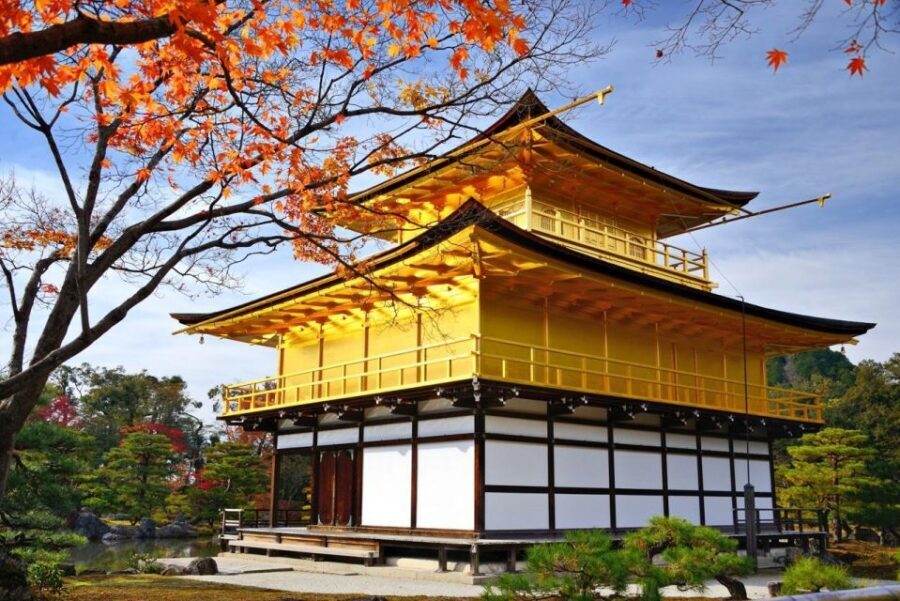
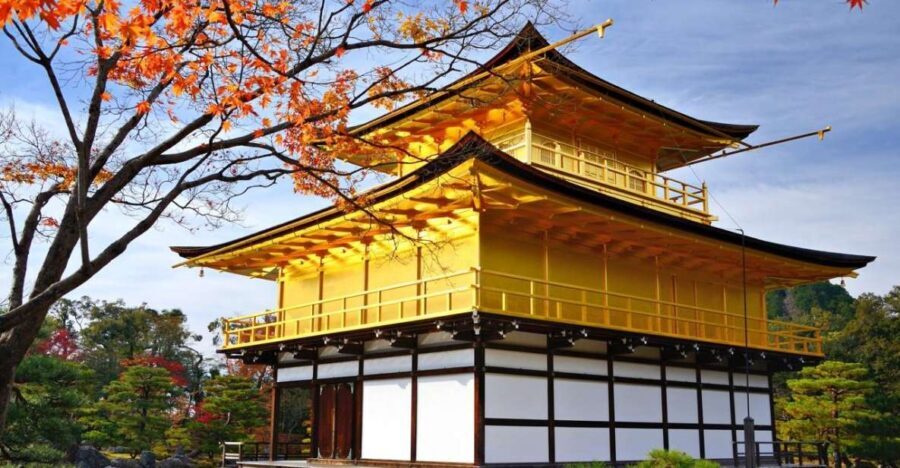
The first big stop is Kinkaku-ji, also known as the Golden Pavilion. It’s a Zen Buddhist temple in northwest Kyoto and a UNESCO World Cultural Heritage site, but the best part is how quickly you understand why it became so famous.
You spend about 1.5 hours there with guidance. The pavilion was originally built as a villa for Ashikaga Yoshimitsu in the 14th century, which is your first “aha” moment: this wasn’t built as a museum piece. It grew out of the political world that shaped Kyoto long before today’s tourist crowds.
Then there’s the gold leaf. Yes, it’s real. The top two floors are covered with gold leaf, used to show wealth, power, and devotion. Here’s what that means for you on the ground: the gold isn’t just decoration. It’s a visual statement about authority and belief, designed to read immediately from far enough away—and even more dramatic when reflected in the surrounding pond.
Roberto’s explanations (including the iPad visuals) help you connect the look of the place to the period behind it. You’ll also hear the wider Edo Period framing—how Japan’s political structure shaped culture—and you’ll start seeing the “why” behind the architecture instead of just the “wow.”
Photo tip: temples have areas where pictures aren’t allowed, so watch for signs and listen for the guide’s cue on where photography is permitted.
Nijo Castle: Samurai Politics You Can Walk Through
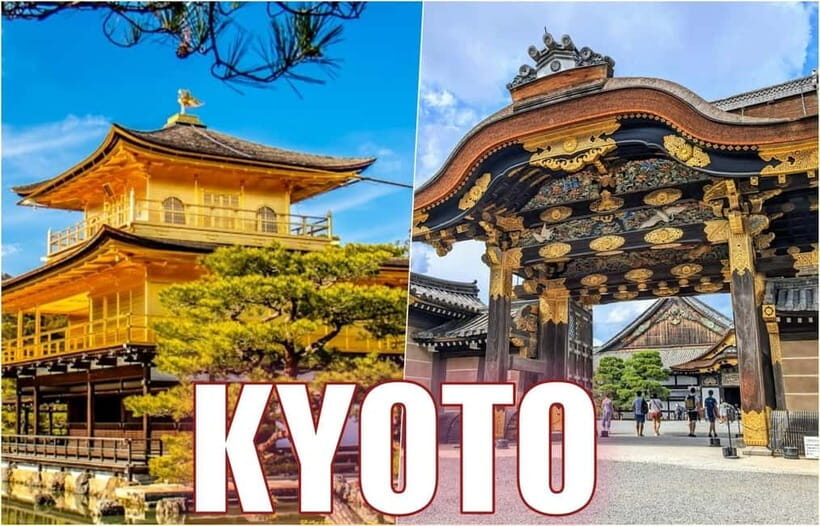
Next comes Nijo Castle, another UNESCO World Cultural Heritage site, and the stop that turns Kyoto from scenery into story. You spend about 95 minutes here, and the emphasis is political and cultural rather than only architectural.
Nijo Castle is especially meaningful because it’s tied to the power struggles between samurai, feudal lords, and control by the Shogun—the military dictator who sat at the top of the system. If you’ve ever felt like samurai history is just names on a timeline, this is where it becomes practical. You walk through spaces that reflect the world that produced those conflicts, and the guide helps you understand what the Edo Period looked like for real people.
The “Nightingale Floors”
One standout feature is the nightingale floors, the floors that chirp when walked upon. The tour frames them as an early security concept—an ingenious way to detect movement. Standing where the sound is triggered makes the idea feel less theoretical.
Architecture you can actually notice
You also get time to look at Edo period architecture, including detailed woodwork and intricate design. Even if you’re not an architecture person, you’ll find yourself noticing the craft because the guide points out what to look for and why it mattered.
A balanced note: Nijo Castle is still a historic site, so expect the normal “temple/castle pacing” of walking and pausing. It’s not a slow stroll through gardens; it’s a guided walk with meaning, and it rewards attention.
A few more Kyoto tours and experiences worth a look

Nishiki Market at 12:30: Turn History Into Lunch
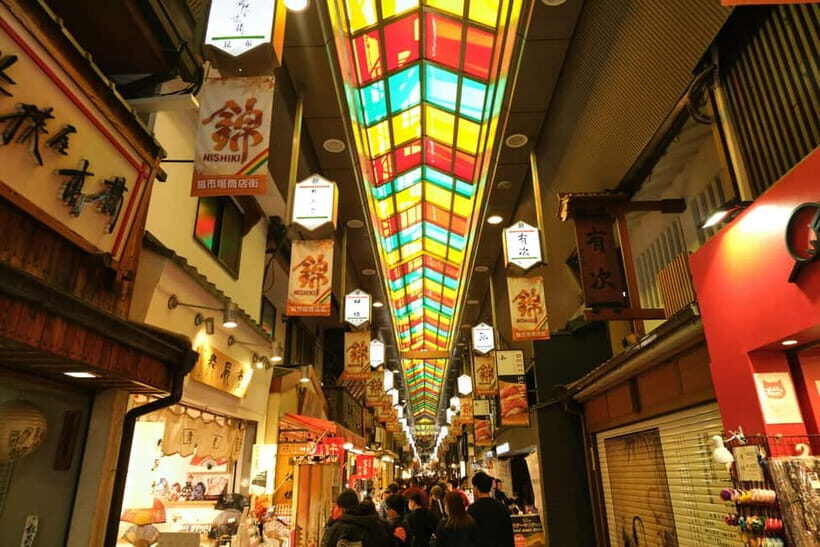
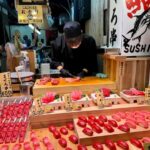
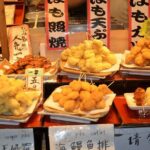
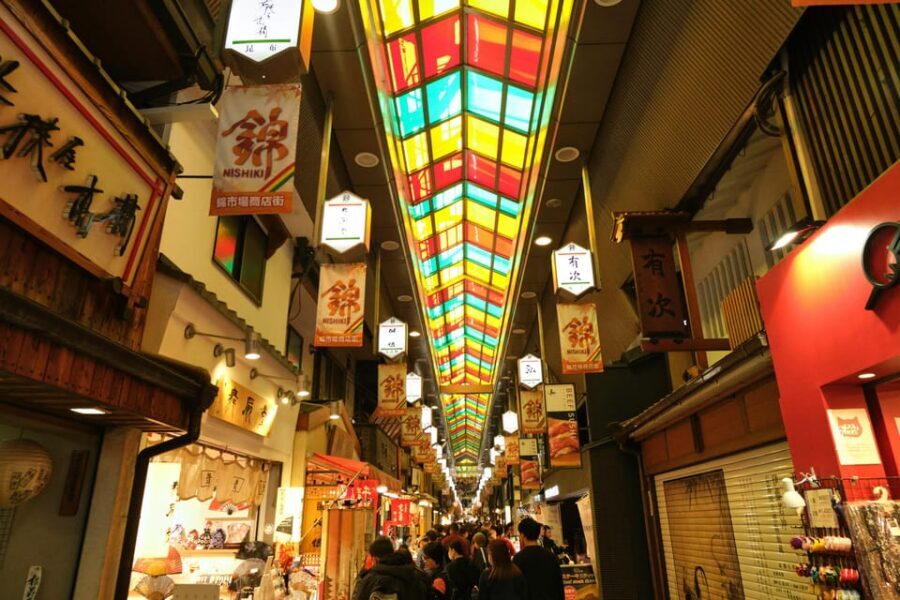
The tour finishes at Nishiki Market, close to the entry area. This is where the morning’s learning pays off in a very real way: you can choose your own lunch immediately among dozens and dozens of food-focused shops and restaurants.
Nishiki Market is often nicknamed Kyoto’s kitchen, and it earns that label. You’ll find lots of food-related goods—things like fresh produce, seafood, knives, and cookware—plus ready-to-eat options. The market is busy in a casual way: it feels like a real shopping street, not a staged food hall.
Roberto also explains the market’s origins, so when you start scanning menus and stalls, you have context for what you’re seeing. And because the tour explanations are in English for foreign visitors, you can keep your questions simple and get straight answers while you decide where to eat.
If you’re hungry (which you will be), this ending time is smart. By the time you’re out, lunch choices feel plentiful rather than “we’re too late” stressful.
Price and Value: $90 for 4 Hours of Real Guidance
The listed price is $90 per person for a 4-hour private group tour. For Kyoto, that’s positioned as a value option because it’s not only “a guide with a timer.” You’re paying for:
- a Kyoto City Certified Tourist Guide
- guided time at both UNESCO sites
- an explanation style supported by iPad visuals
- a route that uses public transit so you’re not burning time negotiating trains and buses
Important costs to know: the entrance fee to Golden Pavilion is about 500 yen, and the entrance fee to Nijo Castle is about 1,300 yen. Those are not included in the tour price.
One more note worth checking before you book: the details list a transportation fee as not included, even though the tour clearly uses public bus/subway legs. In practice, you’ll want to confirm with your booking page what you personally pay versus what’s covered in the tour price.
Still, even with the entrance tickets added, the value feels strong because you’re getting a half-day that helps you understand the Edo Period and Japanese power structures—without needing a separate museum visit.
What I’d Pack (and Who Should Skip This)
What to bring
- Comfortable shoes. You’ll be walking on and around temple/castle grounds.
What to expect physically
This is a walking tour, rain or shine. It’s not built for very long stairs, and you won’t be climbing mountains, but you do need a reasonable walking condition.
Not a fit for everyone
The tour data says it’s not suitable for:
- pregnant women
- people with back problems
- wheelchair users
- people prone to seasickness
- people with low level of fitness
If any of those apply, it’s better to choose a lighter itinerary so the day stays enjoyable.
Basic rules to remember
- No baby strollers
- No luggage or large bags
- Some areas inside temples restrict photography
Finding Roberto on the Day: The Little Details That Matter
I like that the meeting instructions are clear. You meet at JR Kyoto Station at the 7-Eleven Heart-In, JR Kyoto Station building 1F, using the Kyoto Tower side exit. Roberto holds an iPad and a red card that says RBRT—it’s an easy visual cue.
Once you’re with the group, the tour runs in a way that feels coordinated: the transit segments are planned, and the guide uses the visuals to keep you oriented. If you want a guide who can answer real questions—without rushing—you’ll probably appreciate Roberto’s approach. Based on the guide’s past style, he’s also willing to help with extra materials like a short final video for your trip, so you can remember what you learned after the morning is over.
Should You Book This Golden Pavilion, Nijo Castle, Nishiki Market Tour?
Book it if you want a Kyoto morning that teaches you how the country’s power and culture connected—fast. Kinkaku-ji is stunning, but the real payoff is pairing it with Nijo Castle and the Edo Period Shogun story, then finishing with food options at Nishiki Market.
Skip it if you’re traveling with mobility challenges, you hate walking on uneven temple grounds, or you’re trying to avoid crowds and transit. This tour uses public transit and covers two major sites in a short window.
If your goal is to get your bearings in Kyoto and come away with more than just photos, this one is a strong choice—especially with a guide who uses iPad explanations to turn gold leaf and security floors into something you actually understand.
FAQ
Where do we meet?
You meet in front of the door of the 7-Eleven Heart-In at JR Kyoto Station Central Entrance (JR Kyoto Station Building 1F). Use the Kyoto Tower side exit. The guide holds an iPad and a red card with RBRT.
How long is the tour?
It runs about 4 hours, from 8:30 AM to 12:30 PM.
Is this a private group?
Yes, it’s a private group tour.
What languages are offered?
The live tour guide provides English and Spanish.
Are entrance fees included?
No. Entrance fees are not included: Nijo Castle (1,300 yen approx.) and Golden Pavilion (500 yen approx.).
Can I take photos?
You can take pictures as you wish, but there are places inside temples where photography is forbidden.
Is the tour walking-heavy?
Yes, it’s a walking tour. You’ll need comfortable walking ability. It will take place rain or shine, and it doesn’t involve climbing mountains or very long stairs.