REVIEW · TOKYO
Private Outstanding Nikko Tour with English Speaking Driver
Book on Viator →Operated by Sluzeb Tours · Bookable on Viator
Nikko is an easy win if you’re short on time. This private full-day trip is built to check off the big sights around Nikko in about 10 hours, with an English-speaking driver handling the driving and photo support along the way. I especially like that you get a smooth route out of Tokyo plus stop-to-stop help for pictures. The one drawback to plan for is that admission tickets are not included for several major stops, so your final spend will depend on what you choose to enter.
You’ll start at 8:00 am and focus on the Nikko highlights most people come for: Toshogu Shrine, Shinkyo Bridge, Kegon Falls, and Lake Chuzenji. Because this is private, you’re not stuck with a rigid group pace, and the driver can adjust the flow if traffic or crowds slow things down. A practical consideration: if you want a specific entry time or you’re sensitive to timing changes, this kind of day trip may feel a little less predictable.
In This Review
- Key things I’d focus on before you go
- Why Nikko Works as a One-Day Escape from Tokyo
- Private Transportation: What You Gain with a 10-Hour Day
- Your 8:00 am Start and How the Timing Usually Feels
- Toshogu Shrine Complex: Color, Carvings, and the Best Time Slot
- Shinkyo Bridge and Narabi Jizo: Short Stops with Real Atmosphere
- Tamozawa Imperial Villa Park, Akechidaira Deck, and Kegon Falls
- Lake Chuzenji Views: Sea of Happiness in a Calm Time Slot
- Tickets, Comfort, and the Part That Can Surprise You
- Price Value: $580 for Up to 5, and When It’s Worth It
- Driver Quality Matters: Managing a Private-Day Risk
- Who This Tour Suits Best (and Who Should Skip It)
- Should You Book This Nikko Day Trip from Tokyo?
- FAQ
- What time does the Nikko tour start?
- How long is the tour in total?
- Is this a guided tour?
- How many people are in a group?
- Where does the itinerary stop?
- Are admission tickets included?
- Is pickup available?
- Can the schedule change during the day?
- What happens if the weather is bad?
Key things I’d focus on before you go
- Private, up to 5 people: You’re sharing one vehicle, not a bus full of strangers.
- Photo assistance: The driver helps you get your bearings and takes picture moments seriously.
- Toshogu first: Two hours gives you real time for the shrine complex instead of rushing.
- Fast-hit nature stops: Akechidaira, Kegon Falls, and Lake Chuzenji are paced for views, not long hikes.
- Some stops are free: Narabi Jizo and Lake Chuzenji don’t list an admission charge.
- Weather matters: The tour notes you need good conditions for the day to run well.
Why Nikko Works as a One-Day Escape from Tokyo
Nikko is the kind of place you can feel immediately. The air changes as you leave the city, and suddenly you’re surrounded by river valleys, forested slopes, and that famous shrine atmosphere. The big win here is that this day trip is designed for people who don’t want to plan lodging or split travel days.
In plain terms, you get a “greatest hits” loop without the stress of navigating trains, transfers, and schedules on your own. If you’re coming from Tokyo and your time is tight, a structured day is often the most efficient way to get the full Nikko experience—shrines, bridges, and the dramatic falls-and-lake scenery.
You can also read our reviews of more private tours in Tokyo


Private Transportation: What You Gain with a 10-Hour Day
A private car changes the day. It’s not only comfort; it’s decision-making. You can spend time where you care and move on before you lose the whole schedule to crowds or detours.
This tour is listed as private with an English-speaking driver, and the driver also provides photo assistance. That matters more than it sounds. Nikko’s highlights are busy, and getting good angles is hard when you’re fumbling with directions. Having someone who understands where to position you can save you time and frustration—especially around Toshogu and the viewpoints.
You’ll also see that pickup is offered (and the meeting point is near public transportation). That’s helpful if you’re staying in a hotel area that’s easier to reach by car than by multiple train connections.
Your 8:00 am Start and How the Timing Usually Feels
You’ll meet at 8:00 am, and the tour duration is about 10 hours including commuting. That’s a full day, but it’s not a weird one. It’s built for first driving hours, then a cluster of stops without a long break.
Here’s how to think about the pacing:
- Toshogu is your anchor stop (2 hours).
- Then you do shorter hits (30–60 minutes) that don’t demand long walking plans.
- The nature viewing points (Akechidaira, Kegon Falls, and Lake Chuzenji) are timed so you can see the scenery without turning it into a hiking day.
Also keep in mind there’s a stated possibility to change the itinerary or skip stops if traffic congestion or overcrowding makes the schedule break down. That’s not a failure—it’s how the day stays usable.
Toshogu Shrine Complex: Color, Carvings, and the Best Time Slot
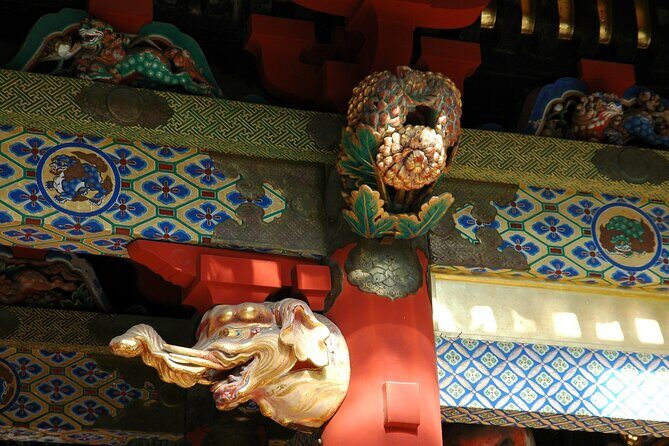
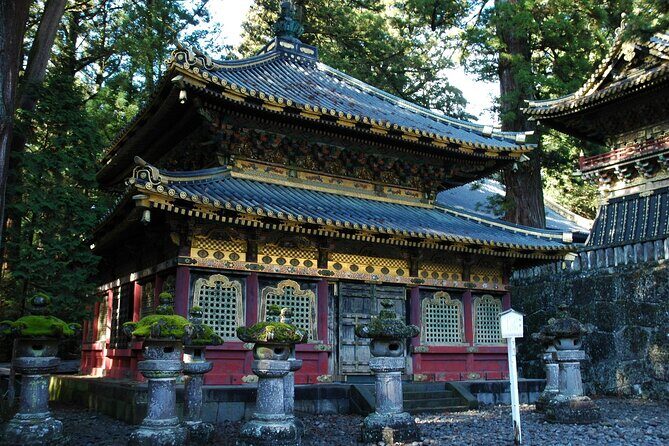
Stop 1 is Nikko Tosho-gu (Toshogu Shrine Complex) for about 2 hours. This is the most famous sight in Nikko, and the reason people travel here is right in the description: the shrine is packed with bold, colorful buildings and heavy carving details.
Two hours is a smart allocation for Toshogu because you need time to do more than “look from a distance.” You’ll want to:
- Walk through the main areas at a steady pace
- Take photos from angles that show off the architecture and carvings
- Decide what you want to linger at (the details can pull you in)
Admission is not included for this stop, so plan on paying entry separately. If you’re trying to control costs, this is where you’ll feel the difference most.
Shinkyo Bridge and Narabi Jizo: Short Stops with Real Atmosphere
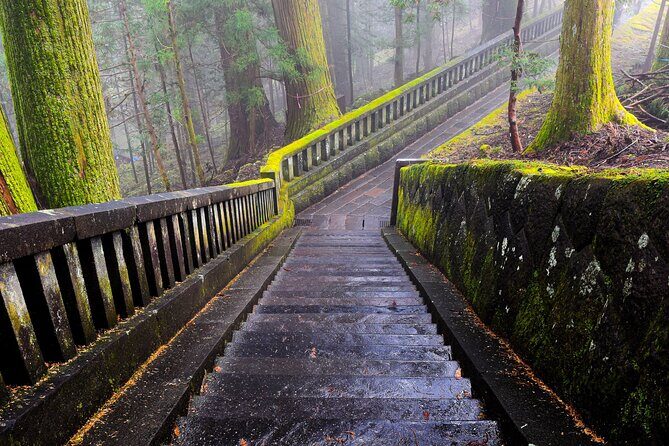
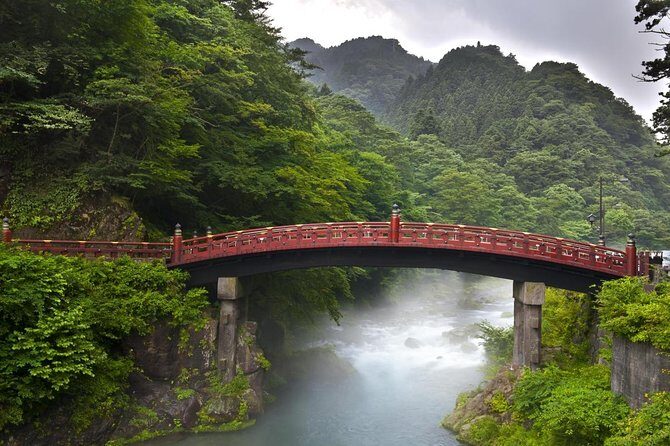
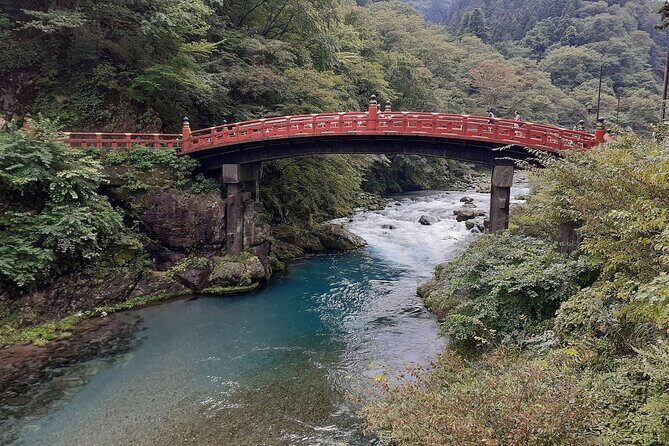
Stop 2 is Shinkyo Bridge for about 1 hour. The bridge is described as a sacred crossing associated with the nearby Futarasan Jinja Shrine. It’s one of Nikko’s best-known photo spots, and the arc over the Daiya-gawa River is the star.
One hour sounds short, but it can be enough if your driver helps position you and you’re ready to move quickly between viewpoints. If you’re the type who likes to take multiple angles and then pause to enjoy the view, you’ll appreciate having a full stop instead of a quick walk-by.
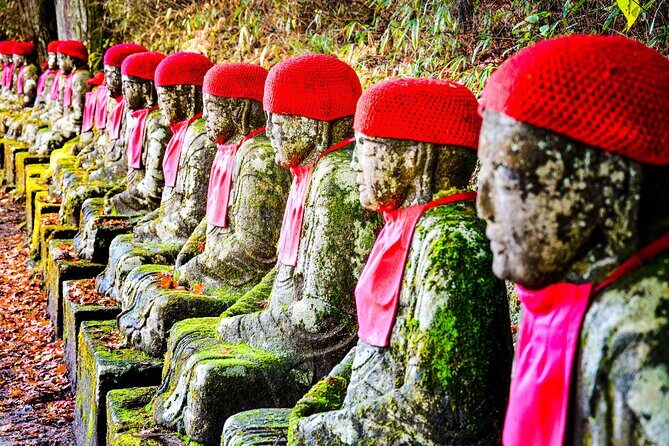
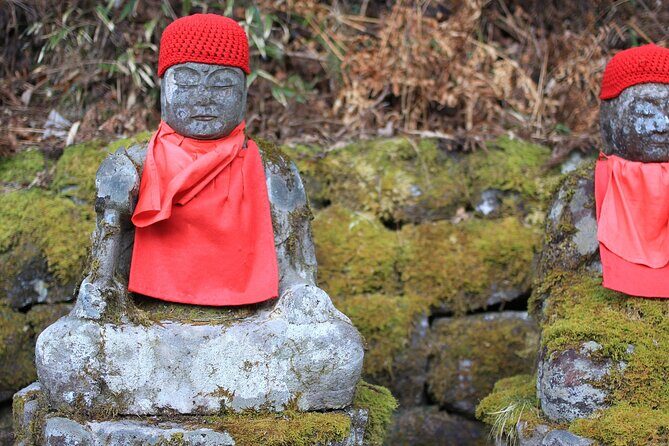
Then you jump to Stop 3: Narabi Jizo for 30 minutes. This one is a calmer change of pace. Jizo statues are made in the image of Jizo Bosatsu, described as a guardian deity of children and travellers. They’re also called the earth bearer, which is why the statues are traditionally stone. The tour lists free admission here.
This combo works well: Toshogu gives you the big ceremonial spectacle, Shinkyo gives you the iconic postcard structure, and Narabi Jizo slows things down in a more personal, quiet way.
A few more Tokyo tours and experiences worth a look

Tamozawa Imperial Villa Park, Akechidaira Deck, and Kegon Falls
After those shrine-area stops, the day starts mixing in Nikko’s different “moods.”
Stop 4 is Nikko Tamozawa Imperial Villa Memorial Park for about 30 minutes. This retreat was built for Emperor Taisho, and it blends architectural styles from the late Edo, Meiji, and Taisho periods. Even if you’re not a building-nerd, the value here is variety. You see a different side of Nikko than temple and bridge.
Admission is not included for this stop, so again, budget for separate entry if you choose to go inside or explore fully.
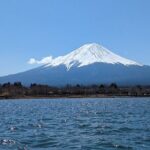
Stop 5 is Akechidaira Observation Area for 30 minutes. This deck is best for panoramic views of Kegon Falls, Lake Chuzenji, and the scenery around Mt. Nantai. The description also notes it’s famous for autumn leaves, which matters if you’re visiting during peak foliage season—views can be stunning, and timing will help.
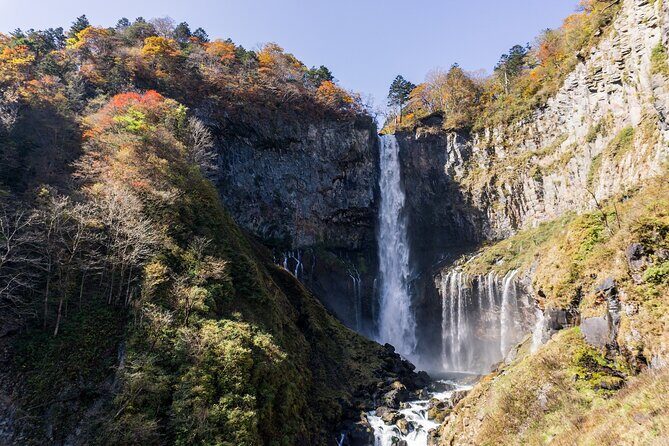
From Akechidaira, you head to Stop 6: Kegon Falls for about 30 minutes. The tour notes the falls are at Lake Chūzenji in Nikkō National Park and that the falls were formed when the Daiya River was rerouted by lava flows. That’s a cool detail because it explains why the geography feels so dramatic. It’s not just a pretty waterfall; it’s a “how the land got shaped” moment.
Admission is listed as not included, so pay attention to what you plan to enter versus view from outside areas.
Lake Chuzenji Views: Sea of Happiness in a Calm Time Slot
Stop 7 is Lake Chuzenji for 30 minutes, with free admission listed. The lake is also called the Sea of Happiness, and it was created about 20,000 years ago when Mt. Nantai erupted and blocked the river. That kind of origin story adds context to the scenery. The lake isn’t just there—it’s the result of a major geologic event.
This is also where the pacing helps. After Toshogu, bridges, and falls, you’re usually ready for a calmer final stop. Thirty minutes gives you time to take in the water and surroundings without turning the day into an overlong marathon.
And if you’re planning photos, this stop pairs nicely with Akechidaira. The deck gives you the “big picture,” and the lake gives you the closer human-scale feel.
Tickets, Comfort, and the Part That Can Surprise You
One thing you should budget for: admissions aren’t included for several stops. The tour explicitly lists admission as not included for:
- Nikko Tosho-gu
- Shinkyo Bridge
- Nikko Tamozawa Imperial Villa Memorial Park
- Akechidaira Observation Area
- Kegon Falls
Meanwhile, it lists free admission for:
- Narabi Jizo
- Lake Chuzenji
So the final cost is really the base tour price plus the entry fees you decide to pay for the paid stops. If you’re traveling as a cost-conscious group, you’ll want to treat this as part of your trip planning, not an afterthought.
On the comfort side, the tour includes private transportation, which usually helps with a long day. In at least one account tied to this experience, the group appreciated the air-conditioned car for the ride. Even if comfort varies by vehicle and season, private transport is still the right call for a day like this.
Price Value: $580 for Up to 5, and When It’s Worth It
The price is $580.00 per group (up to 5). That matters because per-person value changes a lot with your group size.
- If you’re a full group of 5, it effectively comes to about $116 per person for the whole day of private driving and photo help.
- If you’re only 2 people, it becomes closer to $290 per person, which starts to feel more like a special-occasion day.
So this is best value when:
- You’re traveling with friends or family
- You can comfortably fill most of the vehicle capacity
- You care about not spending your time planning transit
Also remember what you’re getting: private transport out of Tokyo, an English-speaking driver, and a structured route that hits Toshogu, Shinkyo, Kegon Falls, and Lake Chuzenji in one go. For many visitors, that saves time and reduces decision fatigue.
This tour is also noted as commonly booked around 39 days in advance on average. That’s a good sign: if you have a specific date, earlier planning increases your odds.
Driver Quality Matters: Managing a Private-Day Risk
Because this is private, your experience depends heavily on the driver. That’s the trade.
In one negative account provided with this experience, a group described the driver as having poor driving competence and they chose to return to Tokyo rather than finish. That’s serious, even if it’s not the common story.
Here’s how you can manage that risk in a practical way:
- If something feels off early, trust your instincts and communicate quickly.
- Ask for clear expectations at the start: your priority stops, the photo-pacing style you prefer, and a rough idea of the order you want.
- If you’re booking for a tight schedule, confirm that the route can be adjusted due to traffic congestion or overcrowded situations, since the tour notes changes are possible for those reasons.
On the positive side, some groups have had a driver named David, described as friendly and eager to help. Having a personable driver can make the difference between seeing sights and actually enjoying the day.
Who This Tour Suits Best (and Who Should Skip It)
This is a strong fit for you if:
- You’re short on time in Tokyo and want a one-day Nikko hit
- You prefer private logistics over train transfers
- You care about photo assistance and want help positioning at key spots
- You want a mix of shrine and nature without turning it into a long hike
It might not be ideal if:
- You hate the idea of a schedule that can shift due to traffic or crowd levels
- You’re traveling solo and paying the full per-person share without group value
- You’re hoping admissions are handled for you (they’re not included for many stops)
If you want full control down to the minute, you might prefer an itinerary you design yourself. But if you want a day that stays focused and doesn’t swallow your energy in transit, this format is hard to beat.
Should You Book This Nikko Day Trip from Tokyo?
I’d book it if your goal is a high-impact, low-planning Nikko day and you can use private transport valuefully (especially if you’re 3–5 people). The stop order hits the big Nikko names and viewpoints: Toshogu, Shinkyo Bridge, then the falls-and-lake scenery that people remember.
But I’d also go in with realistic expectations: admissions are partly on you, and timing can adjust when roads or crowds get heavy. If you’re flexible and you want an efficient day, this private setup is a very practical way to see Nikko without turning your trip into a logistical project.
FAQ
What time does the Nikko tour start?
The tour start time is 8:00 am.
How long is the tour in total?
The tour lasts about 10 hours, including commuting time.
Is this a guided tour?
It is not a guided tour by default, but a guide can be arranged on request for an additional cost.
How many people are in a group?
This is a private tour for your group, priced per group up to 5 people. Groups over 5 can be facilitated for an additional cost.
Where does the itinerary stop?
The listed stops are: Nikko Tosho-gu, Shinkyo Bridge, Narabi Jizo, Nikko Tamozawa Imperial Villa Memorial Park, Akechidaira Observation Area, Kegon Falls, and Lake Chuzenji.
Are admission tickets included?
No. Admission tickets are listed as not included for several stops (including Toshogu, Shinkyo Bridge, Tamozawa, Akechidaira, and Kegon Falls). Narabi Jizo and Lake Chuzenji are listed as free.
Is pickup available?
Yes, pickup is offered, and the meeting point is near public transportation.
Can the schedule change during the day?
Yes. The itinerary can be changed or stops skipped due to traffic congestion or to avoid long waiting times in overcrowded situations.
What happens if the weather is bad?
The tour requires good weather. If it’s canceled due to poor weather, you’ll be offered a different date or a full refund.