REVIEW · TOKYO
Professional Japanese Anime Voice Acting Workshop in Tokyo
Book on Viator →Operated by Beauty of Japan · Bookable on Viator
Your voice actor dream starts with one line.
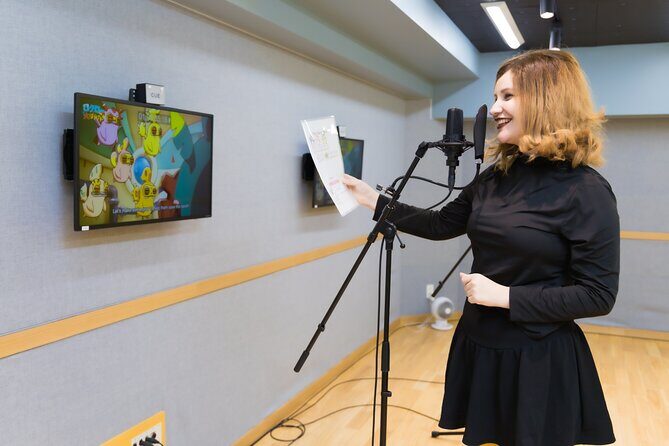
This workshop in Ikebukuro is hands-on, taught by working professional voice actors, and built around the real nuts-and-bolts of dubbing: reading a script, timing your words to animation, and performing through a microphone in a studio setting.
I especially like that it’s beginner-friendly without making you feel unprepared. You get an English-speaking guide who helps you understand what to do, and you’ll practice the lines together before recording. Even if your Japanese is limited to greetings and snacks, you’re set up to participate.
The main thing to consider: you will be recording in Japanese. That’s true even though the materials are designed for English speakers, so if you want a purely English performance, this may not match your expectations.
In This Review
- Key highlights to know before you go
- Ikebukuro, a microphone, and the job you never knew you’d love
- What the “voice acting” part really involves (not just reading lines)
- English support and the human side of coaching
- Your recording day plan (how the 2 hours tend to unfold)
- The keepsake: what you get after the class
- Price and value: is $172.65 worth it?
- Who this workshop fits best
- A couple practical notes (so your day goes smoothly)
- Should you book this voice acting workshop?
- FAQ
- How long is the Japanese anime voice acting workshop?
- Do I need Japanese to participate?
- Where do I meet for the workshop?
- What time does it start?
- What do I get after the workshop?
- Are drinks included?
Key highlights to know before you go
- Studio recording with real anime-style timing (you sync to animation, not just read aloud)
- Professional coaching from voice actors who currently work in Japan’s scene
- English support and simple scripts for people with limited Japanese
- Ikebukuro location in Tokyo’s subculture hub, near the Animate area
- Your audio file as a keepsake sent by email after the workshop
- Small groups (max 10) so you get real attention, not a crowd vibe
Ikebukuro, a microphone, and the job you never knew you’d love
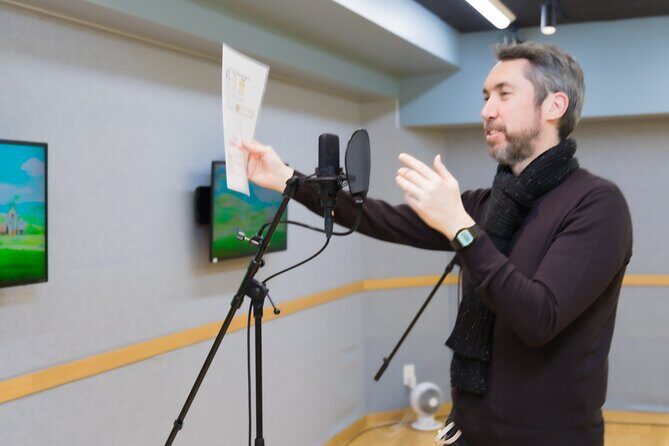
Tokyo has anime experiences that are mostly about looking: stores, streets, photos, souvenirs. This one is different. You’re not just watching the craft from the outside. You’re doing it. In about 2 hours, you’ll go from blank-page anxiety to speaking like a character, with guidance from people who actually do this work.
The setting matters. You meet around Animate Ikebukuro (Animate Ikebukuro main store area) at 2:45 pm. That timing is smart: you’re not fighting the late-night rush, and you’re close to a pocket of Tokyo that’s made for pop-culture wandering. Before class, you can usually grab a snack nearby and get your bearings fast. Then you head into the studio space and switch modes from fan to actor.
And yes, it’s fun. But it’s also practical. The workshop is built around the core skill voice actors use every day: getting emotion to land through speech, while your mouth movements and timing match what the animation needs.
A few more Tokyo tours and experiences worth a look



What the “voice acting” part really involves (not just reading lines)
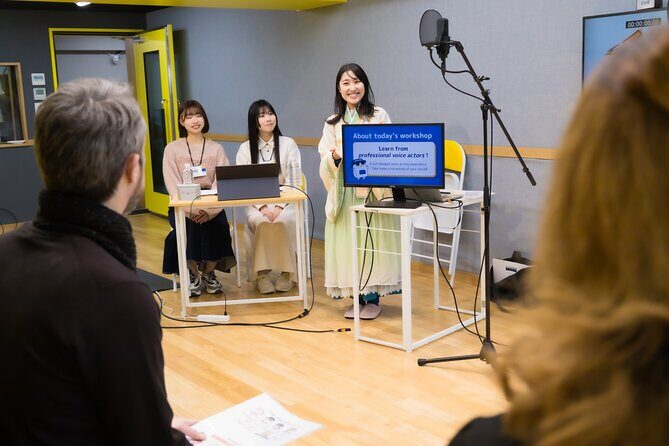
Here’s the part you’ll feel in your body, not just your brain. The workshop doesn’t treat voice acting like a karaoke cover. It’s structured around a few repeatable techniques:
First, you’ll practice the basics of performing in front of a microphone. Microphone technique sounds technical, but it’s mostly about control: volume, breath, pace, and clarity. The goal is to give your engineer a clean take, not to shout at the booth like you’re trying to win a basketball game.
Second, you’ll work with a script. Importantly, the script is made to be approachable for English speakers, even if your Japanese is limited. You’ll get time to go over the lines and practice together before any recording starts. That makes a big difference. It reduces the classic beginner problem: panicking because you don’t know what you’re about to say.
Third, the workshop focuses on synchronization with silent animation. That’s where voice acting stops being “speaking with emotion” and becomes acting with timing. You learn how the emotion changes minute-to-minute to fit the character’s moment—when they’re calm, when they snap, when they hold back.
When you put those pieces together, you start to understand what professionals are doing: they’re not only voicing words. They’re shaping timing, intention, and sound quality so the performance feels believable.
English support and the human side of coaching
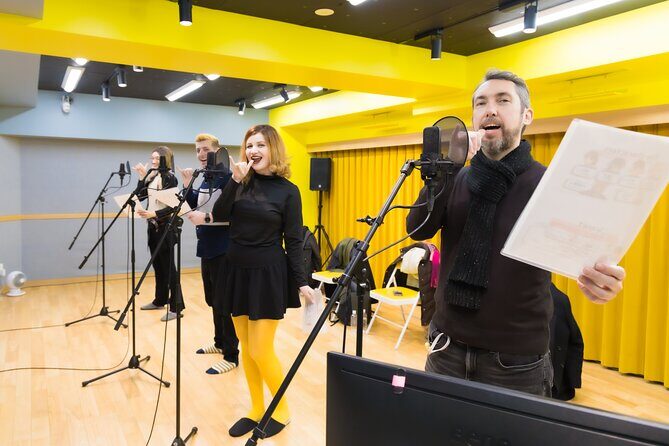
A big reason this class works for non-Japanese speakers is the English-speaking guide. You’re not left to guess. You’ll get translation support throughout the workshop, and the team will explain what you should focus on.
In the experience, translators and instructors show up by name in some sessions—like Yuri and Yamamoto—plus instructors such as Yume-sensei. That’s a good sign. It usually means the workshop isn’t run by someone reading off a manual. It’s run by people who know how to teach.
What I like most is the tone. Even when you’re nervous, the coaching is designed to get you through the steps without embarrassment. You’ll repeat lines a few times, because that’s how you improve. The repetition isn’t punishment. It’s standard process.
And one more detail: you don’t just get told to act. You get specific guidance on how to deliver. For example, pronunciation and emotional expression are part of the teaching, not optional extras.
Your recording day plan (how the 2 hours tend to unfold)
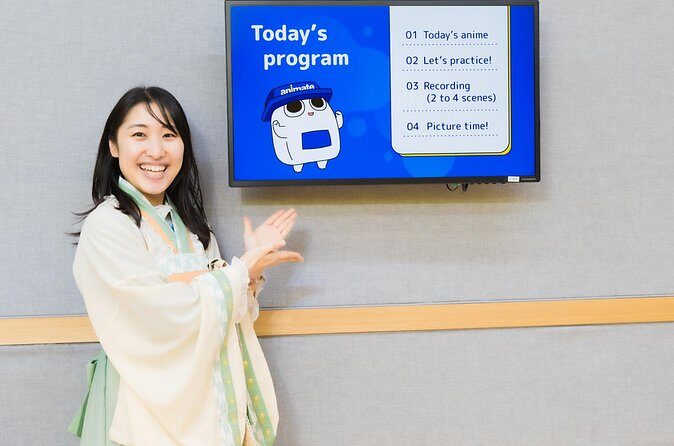
Time is tight, which is good. This isn’t a long course you can “someday” complete. It’s a focused workshop.
At 2:45 pm, you meet at 1-chōme-20-7 Higashiikebukuro, Toshima City (the Animate Ikebukuro area). You’ll arrive with your mobile ticket ready. After that, the studio workflow starts quickly.
From there, you can expect the workshop to move through a predictable rhythm:
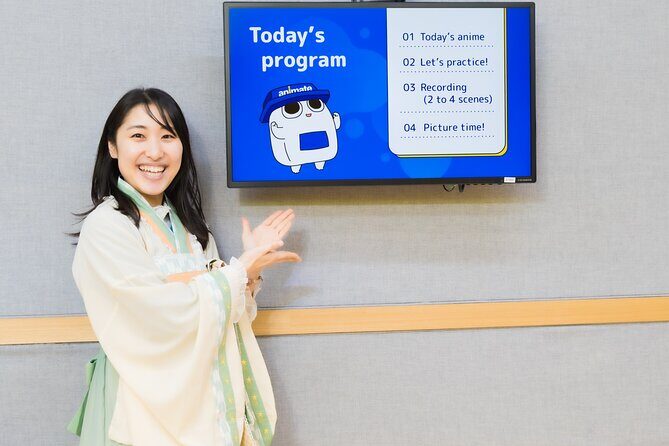
1) Warm-up and instruction
You’ll be briefed on the microphone setup and how the booth session works. You’ll also get clarity on how to handle the script and the recording process.
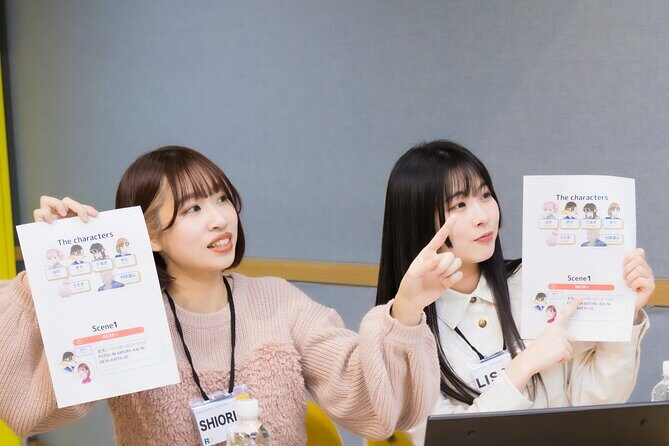
2) Script practice together
The team practices the lines with you before you record. This matters for non-Japanese speakers because it reduces surprises. You’re not walking in cold and hoping for the best.
3) Assignment of a character role
You’ll pick a character part (or receive a role to perform). Then you work that personality: emotion, pace, and intensity.
4) Record in Japanese to animation timing
Now you’re in the real task: dubbing to silent animation. This is where your coaching turns into a performance.
5) Leave with your takes as a digital keepsake
You get the recording data afterward. The audio is sent by email later, so you don’t have to worry about plug-ins or devices right there.
6) Return to the meeting point
The activity ends back where you started. That keeps things simple if you want to keep exploring Ikebukuro after.
Even if your Japanese isn’t strong, the workshop is built to keep the process moving and supportive.
The keepsake: what you get after the class
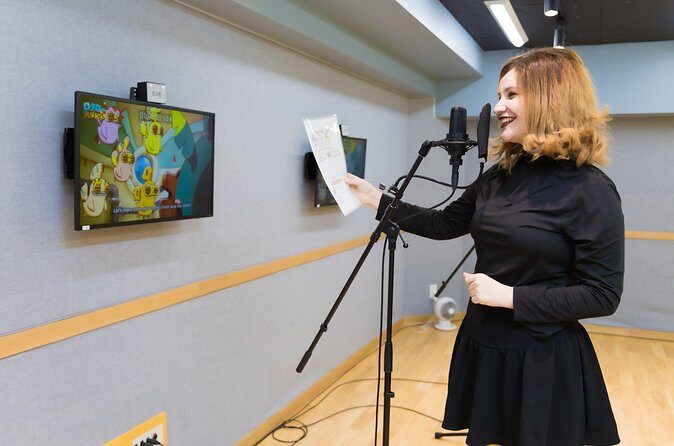
This is one of the best value pieces. You don’t just leave with a memory and a certificate. You get your recording data: the workshop includes audio data with animation, delivered later by email.
That means you can actually listen back and hear what you did. You’ll pick up patterns fast: where you rushed, where you over-emoted, and where timing clicked.
If you’re an anime fan, this is the difference between watching voice acting and understanding it. You’ll hear the role shaped by timing and coaching. And if you want to practice later, having your take makes it easier to improve.





Price and value: is $172.65 worth it?
At $172.65 per person, it’s not the cheapest “anime thing” in Tokyo. But it’s also not just a photo stop or a museum ticket.
You’re paying for a combination that adds up:
- Professional voice actor instruction
- Studio time (that’s real overhead)
- A recording session with guidance
- Materials designed for English speakers with limited Japanese
- Audio keepsake sent later
- Small group size (max 10), which usually means you don’t get ignored
Also, the class is short. Two hours can sound like “only a little,” but for this kind of skill-based session, short is effective. You don’t waste time. You learn a method, apply it, and walk away with a recorded result.
If your alternative is a generic language class, this is far more fun and more specific to the craft you want. If your alternative is another anime tour, this gives you something you can bring home that isn’t just a shopping bag.
Who this workshop fits best
This is one of those activities that can surprise you. I think it’s especially good for:
- Anime fans who want real practice instead of just visiting locations
- Beginners who are curious but nervous about speaking Japanese
- People who like acting, improv-style energy, and trying different emotions
- Couples or small groups who want a shared activity with an actual output
Because the materials are designed for English speakers, you don’t need to study Japanese for months first. You do need to show up willing to try, repeat, and take coaching seriously for your next take.
If you love behind-the-scenes crafts—like dubbing, animation timing, or performance voicework—this will feel like a direct hit.
A couple practical notes (so your day goes smoothly)
Bring drinks, since drinks aren’t included. In a voice session, dry mouth is a real issue. Even a small bottle of water helps you keep your voice steady.
Also, treat this like a performance rehearsal, not a sightseeing break. You’ll want a calm, focused headspace when you arrive. If you show up exhausted, the microphone + timing practice can feel harder than it needs to.
Finally, remember that recording in Japanese is part of the point. Even with a script built for you, you’re still doing a real dubbing task, not just “acting in English.”
Should you book this voice acting workshop?
If you want an anime experience that gives you an actual performance output, I’d book it. The studio recording, professional coaching, English support, and keepsake audio add up to strong value for the price.
Don’t book it if your main goal is to avoid Japanese entirely. You can participate as a beginner, but you’ll still record in Japanese. And if you hate the idea of repeating lines until they sound right, the process might stress you out.
One more reality check: it’s non-refundable and can’t be changed, so pick your date carefully.
If you can handle that, this is a memorable Tokyo activity that turns fandom into skill—one character role at a time.
FAQ
How long is the Japanese anime voice acting workshop?
It runs for about 2 hours.
Do I need Japanese to participate?
No. The workshop is designed for English speakers with limited Japanese, and you’ll get an English guide to support you. You’ll use a script and practice the lines beforehand.
Where do I meet for the workshop?
You meet at animate Ikebukuro main store, located at 1-chōme-20-7 Higashiikebukuro, Toshima City, Tokyo 170-0013.
What time does it start?
The workshop starts at 2:45 pm.
What do I get after the workshop?
You’ll receive audio data with animation, sent to you later by email.
Are drinks included?
No. Drinks aren’t included, so it’s recommended you bring your own.