REVIEW · TOKYO
Tokyo Private Art Tour in Kagurazaka Shinjuku with Licensed Guide
Book on Viator →Operated by Tokyo Licensed Guide Volunteer Group · Bookable on Viator
Tokyo’s art story starts with dots. This private tour uses a licensed guide to connect famous Tokyo art to everyday streets, focusing on Tokyo/Edo influences while moving through Kagurazaka and the Shinjuku area. You get a planned route with short stops, plus just enough time at each place to understand what you’re looking at.
I especially like two parts: the Yayoi Kusama Museum stop with admission included (plus your guide explains her background), and the chance to see Akomeya Tokyo, a building designed by Kengo Kuma, up close. Between those, you also pass a modern-feeling shrine and end the tour near a samurai-era heritage area.
One possible drawback is that the whole thing is only about 2.5 hours, so you’ll feel the pace. Also, since this is a people-powered tour, the quality can swing a bit depending on how your guide frames the art, not just what sites you visit.
In This Review
- Key Highlights You Should Care About
- Price and what $46.05 buys you in real life
- Start in Shinjuku, end near Idabashi: the route logic
- Stop-by-stop: what you’ll get from Yayoi Kusama Museum
- Akomeya Tokyo and Kengo Kuma: architecture you can read quickly
- Akagi Shrine: when tradition looks modern
- Kagurazaka’s Edo atmosphere with a Paris-style feel
- Ushigome Mitsuke: samurai-era heritage at the finish
- Why a licensed guide changes the whole experience
- How the stops fit together (and what kind of day you’re booking)
- Practical planning tips for your 2.5-hour route
- Who should book this tour?
- Should you book Tokyo Private Art Tour in Kagurazaka Shinjuku with Licensed Guide?
- FAQ
- How long is the Tokyo Private Art Tour in Kagurazaka Shinjuku?
- Where do I meet the guide and where does the tour end?
- Is this tour private?
- Is a mobile ticket used?
- What’s included for admission tickets?
- Can I cancel for a refund?
Key Highlights You Should Care About
- Yayoi Kusama Museum with admission included, plus a guide’s story about her life
- Kengo Kuma’s Akomeya Tokyo as a quick architecture moment you can actually walk through
- Akagi Shrine presented as a modern, sophisticated shrine you may not expect
- Kagurazaka’s Edo-meets-everyday vibe, a neighborhood where mood matters as much as facts
- Ushigome Mitsuke as a samurai-era heritage stop, ending near Idabashi on the JR line
Price and what $46.05 buys you in real life

At about $46.05 per person for roughly 2.5 hours, this tour sits in the “worth it if you like guidance” category. You’re paying for two things: a private experience with a licensed guide and a set route that bundles multiple art/architecture/cultural stops into one afternoon.
A lot of self-guided wandering in Tokyo can be great, but you’d still be piecing together meaning: why Kusama’s work lands the way it does, why a shrine can feel modern, or what “Edo-era traces” really means when you’re standing in the street. Here, the guide is the shortcut to that context.
Value also comes from which admissions are included. The Kusama Museum entry is listed as included, while the other listed stops are free. That alone helps your money go farther than a tour that only hands you guided time.
You can also read our reviews of more guided tours in Tokyo

Start in Shinjuku, end near Idabashi: the route logic
You start at FamilyMart Evergrace Haramachi in Shinjuku City, then the tour ends near Edo Castle Ushigome-Mitsuke close to Idabashi Station on the JR line. Start time is 2:30 pm, and each stop is designed for short walking segments between spots.
This layout is handy because it doesn’t trap you in one neighborhood. You get Kagurazaka and the wider Shinjuku/Idabashi area feel in one go, and the finish near a major station can make it easier to roll into dinner plans without backtracking.
Stop-by-stop: what you’ll get from Yayoi Kusama Museum
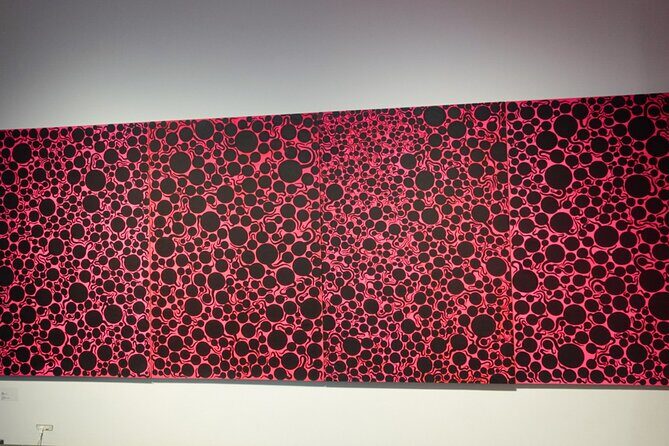
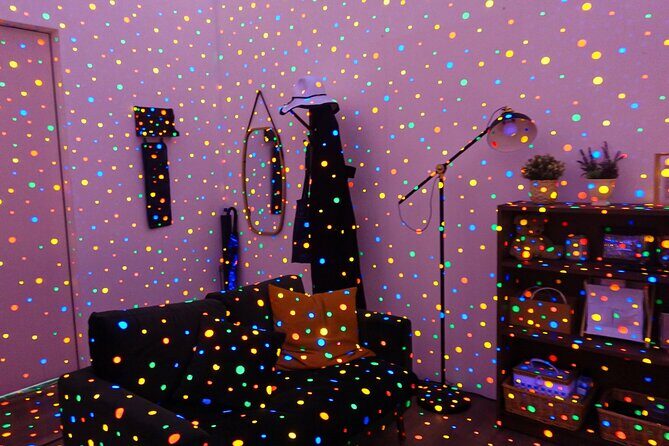
Your first stop is the Yayoi Kusama Museum, where you get about 1 hour and admission is included. If you’re a Kusama fan, this is the anchor of the tour. If you’re not, it’s still a strong entry point because Kusama is so recognizable that you’re not just seeing art—you’re learning how her world is built.
Your guide explains her bio, which matters. Without that, a museum visit can turn into a good-looking photo session. With context, you start noticing patterns—repetition, obsession themes, and how a personal history becomes an art language. That shift from seeing to understanding is the whole point of paying for a guided route here.
What to watch for: since you only have an hour, don’t spend the whole time trying to “see everything.” Instead, pick a few key rooms or works that catch your eye first, then let the guide’s explanation guide what you look for next.
Akomeya Tokyo and Kengo Kuma: architecture you can read quickly
Next comes Akomeya Tokyo, about 20 minutes, and admission is free. This stop is specifically tied to the fact that the building was designed by Kengo Kuma, a famous architect.
Kuma’s name is a signal. It means you’re not just browsing shops or looking at a random modern façade—you’re seeing architecture treated as part of the experience. Even in a short time, you can focus on the idea of how materials, light, and structure affect the way a space feels.
A consideration: twenty minutes is short. You’ll get a taste and some guidance, but you probably won’t feel satisfied if you want a full architecture deep-study. If your heart is set on architectural details, treat this stop like a sampler and save a longer independent visit for later.
Akagi Shrine: when tradition looks modern
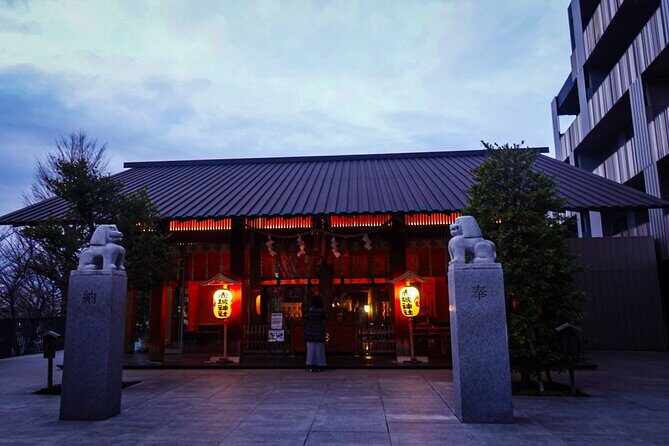
Then you move to Akagi Shrine for about 20 minutes. The description frames it as very modern and sophisticated, and that’s exactly the reason this stop works on a walking art tour.
Shrines in Tokyo can feel like quiet time. But when a shrine is presented as modern, it challenges the common expectation that “old Japan” must look the same everywhere. A guided visit helps you connect what you’re seeing to the bigger idea of how Tokyo/Edo history continues to shape what’s built today.
Practical tip: bring a calm pace. These short shrine moments reward you if you slow down your eyes. Look for the transition from street life into the shrine setting, and notice how that change affects your mood.
You can also read our reviews of more private tours in Tokyo




Kagurazaka’s Edo atmosphere with a Paris-style feel
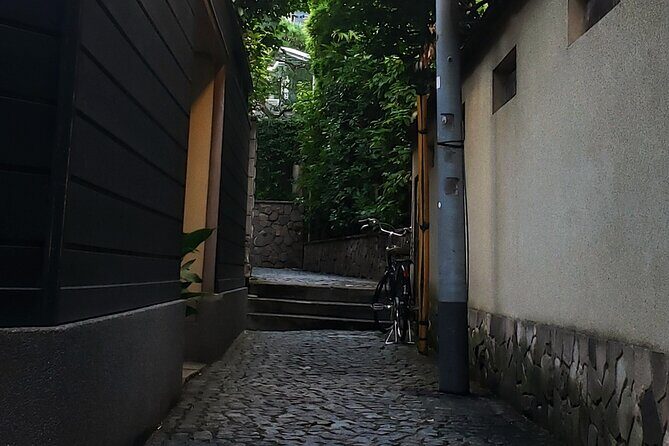
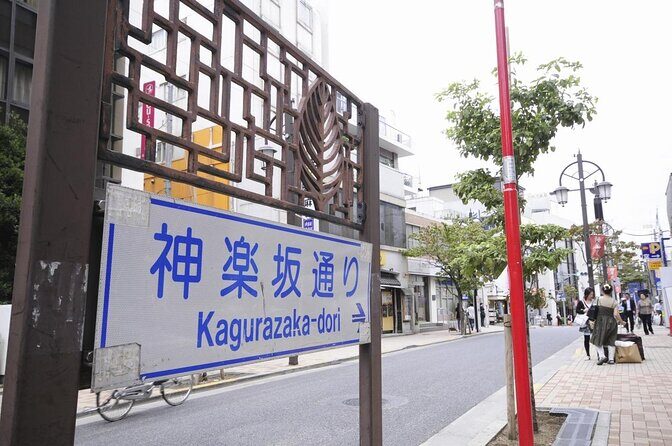
You then spend about 30 minutes in Kagurazaka, described as a place where an Edo-period atmosphere meets a sophisticated Paris-like vibe. That “both things at once” feeling is the whole point of this neighborhood stop.
Kagurazaka is a great place to get something you can’t screenshot: atmosphere. The neighborhood has enough Edo traces to feel historical, but it also carries a more refined, styled sense of place. On a guided tour, you’ll get help reading the street layout and the cultural signals that would otherwise be easy to miss.
What you’ll likely enjoy most here is the rhythm. This isn’t a museum stop where you finish one room and move on. It’s a walking pause where your guide’s explanations help you slow down and notice details in the streets and corners.
Ushigome Mitsuke: samurai-era heritage at the finish
Your final stop is Ushigome Mitsuke (about 20 minutes) described as one of the samurai-era heritage points. Your licensed guide explains what you’re looking at, and the tour ends near Edo Castle Ushigome-Mitsuke by Idabashi Station.
This ending is smart because it turns your afternoon from “art viewing” into “Tokyo/Edo understanding.” Kagurazaka gave you atmosphere; Ushigome Mitsuke connects that feeling to a more grounded historical thread. If you like Edo references, seeing them tied to a real spot you can locate on the map makes the whole tour click.
A practical note: since you’re near a station at the end, you can keep your momentum going after the tour. You’re not stuck scheduling your next leg in the middle of nowhere.
Why a licensed guide changes the whole experience
This tour is designed around the idea that Tokyo art isn’t just paintings in a frame. It’s also architecture, shrines, and the historical neighborhoods where those influences linger. A licensed guide is how you turn those dots, buildings, and gates into a story you can follow.
The guide name Nao is mentioned as a standout in the information you provided, with praise for being easy to talk with and keeping the tour interesting. That kind of guide style matters because art tours can either feel like a lecture or a conversation you can actually respond to.
That said, one caution is worth taking seriously. If you care a lot about art interpretation (instead of just site-hopping), ask your guide early what they’ll focus on. Your goal should be clear: understand what you’re seeing, not just walk past it.
How the stops fit together (and what kind of day you’re booking)
This tour mixes two kinds of value: big-name art and smaller neighborhood meaning. The order matters too. You start with a single artist’s world at the Kusama Museum, then you broaden into architecture with Kengo Kuma, then you shift into cultural space with Akagi Shrine, and finally you land in neighborhoods and heritage with Kagurazaka and Ushigome Mitsuke.
It works best if you like a guided story more than a checklist. You’ll get the most from it if you’re willing to accept short stops and let the explanation do the heavy lifting. If you want a long sit-down museum day with time for reading every label, you might find the pacing a bit tight.
Practical planning tips for your 2.5-hour route
- Wear shoes you can walk in comfortably. Even with short stops, Tokyo sidewalks add up.
- If you’re a Kusama fan, go in with one question: what parts of her bio are most connected to the work you’ll see? Your guide will help you connect the dots.
- Expect a mix of art types: museum art, architecture, shrine setting, and Edo-era heritage all in one afternoon.
- Keep your next activity close to Idabashi Station. The tour ends near there, so you won’t fight transit.
Who should book this tour?
I think this is a strong match if you:
- want a private, guided way to understand Tokyo/Edo art connections
- enjoy Yayoi Kusama and want help turning recognition into understanding
- like architecture and cultural streetscapes, even if you don’t have time for a full-day plan
- would rather spend 2.5 hours with context than spend the whole afternoon figuring things out on your own
If you’re mainly hunting for free time, long museum wandering, or a deep architecture study session, you may prefer a longer specialized tour or a self-guided museum day.
Should you book Tokyo Private Art Tour in Kagurazaka Shinjuku with Licensed Guide?
If you like guided art interpretation and want a smart sampler of Tokyo/Edo influences, I’d book it. The included Kusama Museum admission and the Kengo Kuma architecture stop give it a good “hit list” feel, but the real advantage is how the guide ties it together: dots in a museum become meaning in shrines and streets.
If you’re very picky about art explanations and you need a certain teaching style, do a quick check when you arrive. Ask what the guide will focus on early so you’re not stuck with a tour that feels more like walking with labels than learning the story behind the art.
FAQ
How long is the Tokyo Private Art Tour in Kagurazaka Shinjuku?
It runs for about 2 hours 30 minutes (approx.).
Where do I meet the guide and where does the tour end?
You start at FamilyMart Evergrace Haramachi, 1-chōme-13-13 Haramachi, Shinjuku City, Tokyo 162-0053, Japan. You end at 2 Chome-9 Fujimi, Chiyoda City, Tokyo 102-0071, Japan, near Edo Castle Ushigome-Mitsuke close to Idabashi Station on the JR line.
Is this tour private?
Yes. It’s a private tour/activity, so only your group participates.
Is a mobile ticket used?
Yes, the tour features a mobile ticket.
What’s included for admission tickets?
Admission to the Yayoi Kusama Museum is included. The other listed stops (Akomeya Tokyo, Akagi Shrine, Kagurazaka, and Ushigome Mitsuke) are listed as having free admission for this tour.
Can I cancel for a refund?
Yes. You can cancel up to 24 hours in advance for a full refund.