REVIEW · TOKYO
Tokyo: Rice Ball Making Class
Book on GetYourGuide →Operated by Tokyo Rental Bicycle · Bookable on GetYourGuide
Rice, seaweed, and Tokyo street scenes. This small-group experience pairs onigiri making with an easygoing neighborhood bike tour, so you leave with both a meal and a new way to see the city. I love how the instruction is hands-on, covering the seasoning and shaping details, and I love the payoff: you eat your own rice balls at Hamarikyu Gardens.
One thing to consider: this is not a sit-and-watch class. You’ll need to feel comfortable riding a bicycle, because biking is part of the plan and the tour isn’t suitable for people who can’t ride or who have certain mobility or fitness limitations.
In This Review
- Key highlights you’ll care about
- Onigiri Class First: Shaping Rice Like a Japanese Snack Pro
- From Bench to Bike: Why the Small-Group Ride Works So Well
- Hamarikyu Gardens Picnic: Warm Onigiri by Saltwater Ponds
- Riding Tokyo’s Layers: Tokyo Tower, the Imperial Palace, and Zozoji
- Price and What You Actually Get for $51
- Who This Tokyo Onigiri + Bike Tour Fits (and Who Should Skip It)
- What to Bring and How to Dress for a Comfortable Day
- Should You Book This Tokyo Onigiri Making Class + Bike Ride?
- FAQ
- How long is the Tokyo onigiri making class and bike tour?
- What is included in the price?
- Is the tour guided in English?
- How big is the group?
- Where do I meet the guide?
- What should I bring?
Key highlights you’ll care about
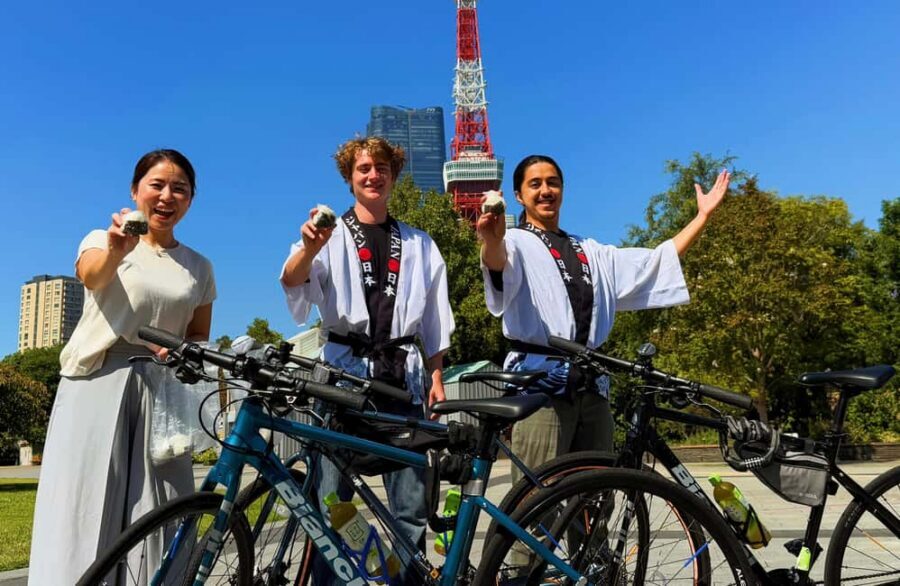
- Hands-on onigiri skills: season, shape, and pack classic fillings with expert help
- Small group (up to 6): more attention and less waiting around
- Warm picnic in Hamarikyu Gardens: saltwater ponds and teahouses, with Tokyo Bay nearby
- Bike ride through real neighborhoods: backstreets plus riverside paths instead of only big viewpoints
- Easy English-guided flow: a live English guide keeps the pace friendly and clear
Onigiri Class First: Shaping Rice Like a Japanese Snack Pro
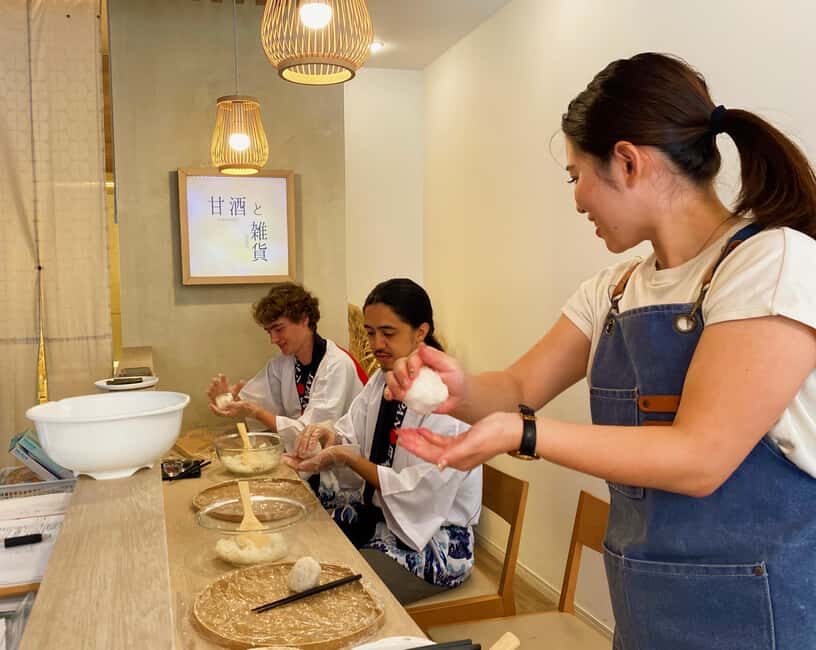
If Tokyo has a comfort-food superpower, it’s onigiri. This class starts with the heart of the snack: freshly steamed rice, seasoned and handled until it becomes moldable. You’ll work with ingredients that are included, and you’ll learn how to make onigiri in the way locals do, not just by following a loose recipe.
What I like most is that you’re not simply making something you’ll eat later. You’re building a skill. You’ll learn how to pack rice so it holds together, how to add fillings without making a mess, and how to shape each rice ball so it looks right and eats even better. The class also lets you experiment with classic options, including savory salmon, tangy pickled plum, and creamy tuna-mayo. Those choices matter because they show you how different flavors behave inside the same basic rice structure.
Expect the class to be active and sensory. You’ll smell the rice as it’s steamed, feel the texture as it cools just enough to handle, and watch how the rice changes when you season and compress it. It’s the kind of food-making that sticks with you because you’re doing the steps, not just watching them.
One practical note: you’ll want to be ready to get a bit hands-on. You’ll be shaping by hand as part of the learning, and the pacing is designed for a small group. That’s good for attention, but it also means you shouldn’t show up late or rushed.
A few more Tokyo tours and experiences worth a look

From Bench to Bike: Why the Small-Group Ride Works So Well
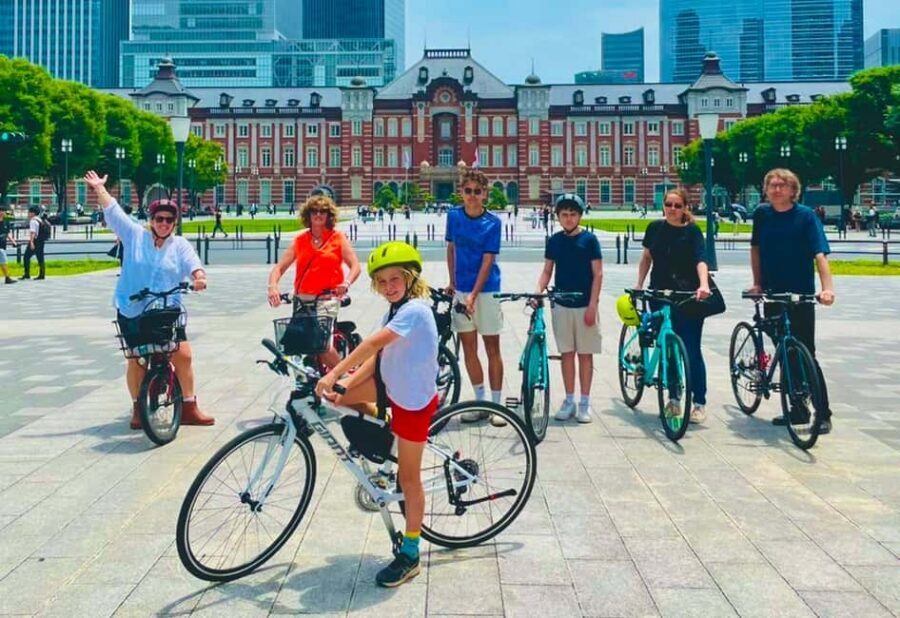
After you make your onigiri, the tour shifts gears. You’ll get on a bicycle and go exploring with a local bike tour guide. Because the group is limited to 6 participants, it stays manageable—no chaotic bunching, and you don’t feel like you’re constantly waiting for the slowest rider.
The bike portion is set up to feel like Tokyo in layers. You start through backstreets and quieter routes, then move toward riverside paths and broader waterfront lanes. That route design is smart for first-timers, because it mixes “everyday life” streets with skyline moments you’ll recognize. You’re not locked onto only one area of town.
You’ll also get the kind of guidance that helps you enjoy the ride rather than stress about it. The guide’s job is to lead the route, and the tour includes the bike itself. Reviews mention guides who speak clear English, and one guide named Sho stood out for being fun and informative during the bike portion. That’s exactly the right mix for this kind of tour: someone who can explain what you’re seeing while keeping the ride moving at a comfortable tempo.
The main trade-off is effort. This isn’t a casual stroller-friendly stroll. The tour is built around cycling, and it’s specifically not suitable for people who can’t ride a bike or who have mobility issues (and it also lists restrictions for people with certain health conditions and low fitness). If you’re comfortable on a bike and dressed for movement, you’ll likely find this section one of the best parts of the day. If you’re not, it’s the part that could feel stressful rather than fun.
Hamarikyu Gardens Picnic: Warm Onigiri by Saltwater Ponds
Then comes the payoff moment: you carry your homemade onigiri into Hamarikyu Gardens and eat a simple picnic while it’s still warm. This stop is special for two reasons. First, you’re eating right where you’d normally wander slowly as a visitor. Second, you’re tasting your own food in a place that feels calm, almost like a pause button in Tokyo.
Hamarikyu Gardens is described as a historic landscape by the bay, where city energy meets water and quiet paths. The garden includes saltwater ponds, strolling areas, and seasonal flowers. You’ll also see the classic contrast people come for: traditional teahouses alongside the modern skyline. That blend is exactly why this stop works with onigiri. It turns a street snack into a “sit and savor” moment.
There’s a natural logic to the picnic setup. Your onigiri is made during the class, then you bike over and eat it shortly after, so you get that warm, freshly-made quality rather than an already-cold snack. That’s the difference between doing this as an experience versus just buying onigiri and calling it a day.
One thing to keep in mind is that you’re responsible for your own comfort at the picnic. The tour includes the garden entrance, but extra snacks and drinks at the shop aren’t included. So if you like having options, plan to bring something beyond your onigiri. At minimum, the tour asks you to bring water, and I agree with that advice. Even in milder weather, you’ll likely feel thirsty after the cycling.
If the weather turns unpleasant, the garden setting still gives you something to enjoy—paths, ponds, and teahouses—but how comfortable your picnic is will depend on conditions. In Tokyo, that’s just part of smart planning.
Riding Tokyo’s Layers: Tokyo Tower, the Imperial Palace, and Zozoji
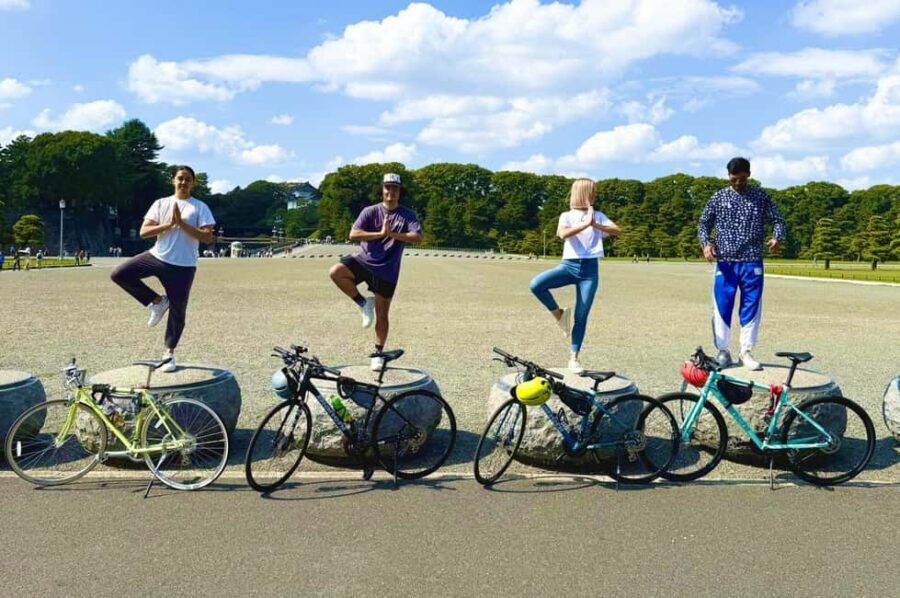
Once you’ve had your picnic break, you ride again. This second leg is about variety and recognition. Your route is described as a carefully chosen mix of backstreets and scenic riverside paths, designed to show Tokyo beyond the usual highlights.
As you move along waterfront lanes, you’ll get panoramic views of Tokyo Bay. That’s a big reason cycling feels good here: you’re close enough to notice details, but moving fast enough that long views happen naturally. Along the route, you’ll catch sights of famous landmarks from a distance, including Tokyo Tower, the Imperial Palace, and Zozoji Temple. Even when you’re not stopping for photos, seeing these structures appear and disappear as you ride gives you a sense of where you are in the city’s geography.
This is also why I think the “neighborhood” element matters. The tour isn’t only about landmark spotting. It’s about the rhythm of daily life in smaller streets, then shifting into wider waterfront stretches where the city opens up. That change of pace makes the ride feel like an experience rather than a transfer.
The guide’s role is important here. If you’ve ever tried to bike in a new area without local help, you know how quickly it can become work instead of fun. Here, you’re following a planned route, and the guide is there to keep things smooth in real time. Reviews back up that the guide experience can be friendly and highly informative, with one guide specifically noted as Sho.
The drawback, again, is that you’ll be pedaling. People with low fitness, those with back problems, or anyone not confident on a bike may find the physical demands outweigh the scenery. If you’re in good enough shape to ride comfortably, you’ll likely enjoy how the route tells Tokyo’s story in motion.
Price and What You Actually Get for $51
At about $51 per person, this tour looks straightforward on paper, but the value comes from the mix. You’re paying for three things that often cost separately in Tokyo: a guided onigiri making class, the included ingredients, and a guided bike tour with the bike plus admission to Hamarikyu Gardens.
The ingredients point matters more than you might expect. A lot of cooking experiences include instruction but not enough ingredients value to make the result feel complete. Here, you’re provided what you need to make your onigiri and actually eat it during the garden picnic. That means the class isn’t just a demo. It’s meal + skill.
You’re also getting a small group experience, limited to 6 participants. In food-making classes, small groups usually translate into better guidance—more correction when shaping rice, and less time waiting. And in bike tours, small groups tend to keep the pace safer and more relaxed.
What’s not included: extra snack and drinks at the shop. That isn’t a deal-breaker, but it’s good to know so you’re not surprised later. If you want tea, bottled drinks, or additional bites beyond your onigiri, you’ll need to plan for that on your own.
Finally, there’s a practical booking advantage that matters for trip planning: there’s free cancellation up to 24 hours in advance, and you can reserve now and pay later. For a short, 1–3 hour experience, that flexibility can be useful if your schedule or weather shifts.




Who This Tokyo Onigiri + Bike Tour Fits (and Who Should Skip It)
This tour is best for people who want hands-on food learning and don’t mind cycling. It’s also designed for a specific kind of traveler: comfortable with short physical activity and happy to spend time outdoors in a garden and on roads/paths.
It is not suitable for children under 12, people with back problems, people with mobility impairments, wheelchair users, those who can’t ride a bike, visually impaired people, and people with high blood pressure. The tour also notes people over 70 and those with low fitness may not be good candidates. That list is pretty clear, and I’d take it seriously. The tour structure depends on cycling, not just optional sightseeing.
If you’re a fit adult who can ride a bike confidently, you’ll likely enjoy the flow. The class part is a learning session that ends with food you eat right away. The garden part is a calm break that gives you a reason to stop and slow down. Then the ride continues so you can experience Tokyo beyond one neighborhood.
Who this feels especially right for:
- First-time visitors who want more than a single viewpoint
- Food lovers who like learning techniques, not only trying dishes
- People who want a short day activity that doesn’t turn into a half-day commitment
Who might hesitate:
- Anyone hoping for a walking tour instead of cycling
- Anyone who prefers fully indoor activities
- People who don’t like weather-dependent picnic plans
What to Bring and How to Dress for a Comfortable Day
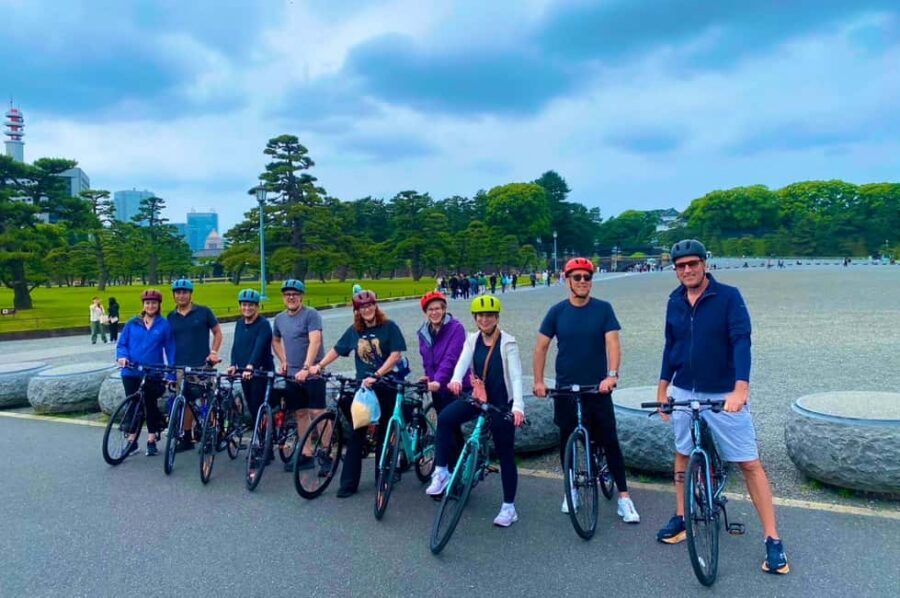
You’ll be moving through the morning/afternoon with a cooking session followed by cycling and a garden picnic. The basics are simple, but they matter.
Bring:
- Water (the tour explicitly recommends it)
- Comfortable clothes you can ride in
Wear:
- Comfortable shoes suitable for walking in and out of the garden areas and for standing while biking if needed
- Layers if you’re sensitive to Tokyo’s seasonal temperature swings
The tour also says baby strollers aren’t allowed. That’s worth noting if you’re traveling with little ones, because the age suitability already starts at 12+.
Should You Book This Tokyo Onigiri Making Class + Bike Ride?
You should book if you want a Tokyo experience with real skill-building and an easy, enjoyable way to see more of the city in a short time. The strongest reasons are learning onigiri making from a friendly English-speaking guide and then eating it warm at Hamarikyu Gardens—a pairing that feels thoughtful instead of random. Add the small-group size, and the experience becomes more personal.
Skip it if you don’t ride bikes comfortably or if the physical demands could be an issue for your body. In that case, the tour’s biggest selling point becomes the biggest risk.
If you’re the type who likes practical experiences—food you make, places you stop, and routes you can picture later—this one is a good bet.
FAQ

How long is the Tokyo onigiri making class and bike tour?
The duration is listed as 1 to 3 hours. Starting times depend on availability.
What is included in the price?
It includes the onigiri making class with an expert, onigiri ingredients, a local bike tour guide, the bike itself, and entrance to Hamarikyu Gardens.
Is the tour guided in English?
Yes. The tour has a live guide who speaks English.
How big is the group?
The group is small, limited to 6 participants.
Where do I meet the guide?
You meet your guide at the onigiri making class.
What should I bring?
The tour recommends bringing water, and wearing comfortable clothes for the cycling.