REVIEW · TOKYO
Tokyo Spectacular View Day-Cruise in 90 Minutes
Book on Viator →Operated by ジールクルージング 東京 · Bookable on Viator
Tokyo looks different from the water. This 90-minute cruise gives you big-deck photo time and on-board stories about what you’re seeing. I especially like the photo-friendly open-air/top deck (when conditions are right) and the way the crew explains the architecture and landmark background. One thing to keep in mind: it’s a short ride, and the top deck can get breezy/cool at night, plus you may want to bring a layer for comfort.
If you want Tokyo views without the photo-chaos of standing in a crowded viewpoint, this format makes sense. You’ll get passes by famous spots like Rainbow Bridge, Tokyo Tower, Tsukiji/Toyosu area, and Odaiba, with the boat’s movement doing the “tour” part for you. The downside is also the upside: you’re moving along a route and you won’t have long time to linger at any single stop.
In This Review
- The Real Draw: Skyline Photos From the Water (Not a Crowded Viewpoint)
- Key Highlights You’ll Actually Notice
- Where the Cruise Starts: Tennozu Yamatsu Pier and a Simple Boarding Flow
- Rainbow Bridge: The Signature Pass-Under Moment
- Tokyo Tower From the Bay: Turning a Landmark Into a Photo Subject
- Kachidoki Bridge and the Mechanics of Waterfront Japan
- Tsukiji’s Legacy and the Shift to Toyosu
- Eitai Bridge: A Fire-Linked Engineering Story (Yes, Really)
- Odaiba Seaside Park and the Cannon-Era Backstory
- On Board: Comfort, Seating, and Photo Setup
- Food and Drinks: What’s Included vs What You’ll Buy
- Price and Value: Is $65.89 for 90 Minutes Worth It?
- Who Should Book This Cruise (and Who Should Skip It)
- A Simple Booking Strategy for Best Results
- Should You Book This Tokyo Spectacular View Day-Cruise?
- FAQ
- How long is the Tokyo Bay cruise?
- Where does the cruise start, and does it return to the same place?
- What major landmarks will we see or pass?
- Is there an area on board for photos?
- Are drinks and snacks included?
- Do I need to print my ticket?
- What happens if weather is bad?
- Can I cancel for a full refund?
The Real Draw: Skyline Photos From the Water (Not a Crowded Viewpoint)
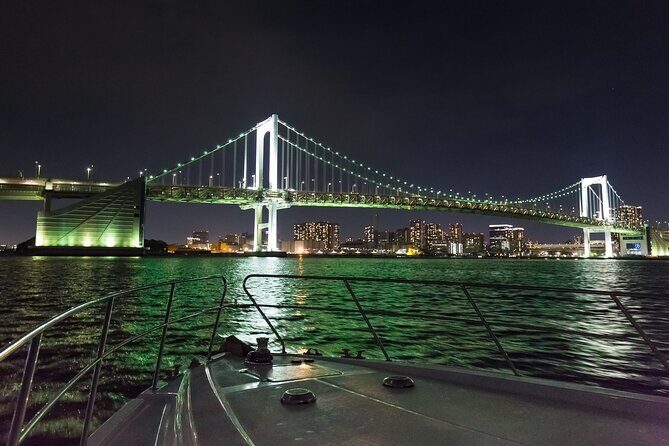
What you’re buying here is simple: a clean, moving vantage point on Tokyo Bay in just 1 hour 30 minutes. From the water, landmarks feel bigger and more “placed” in the city. And because you’re afloat, you can often line up photos without fighting for elbow room or recalculating where everyone else is standing.
The best part is how the cruise is set up for two modes. There’s a top deck area that works well for photos, and there’s also a downstairs area that feels more comfortable when you want to warm up. The ride itself is described as smooth, and that matters—on a short cruise, you don’t want motion sickness or a bumpy experience cutting into the views.
The crew adds context along the way. Instead of you staring out the window wondering what that bridge or waterfront district is, you get guided commentary about what’s coming up next and why it’s notable. English communication is repeatedly praised, which makes a difference when you’re trying to connect the names to what you see outside.
Key Highlights You’ll Actually Notice
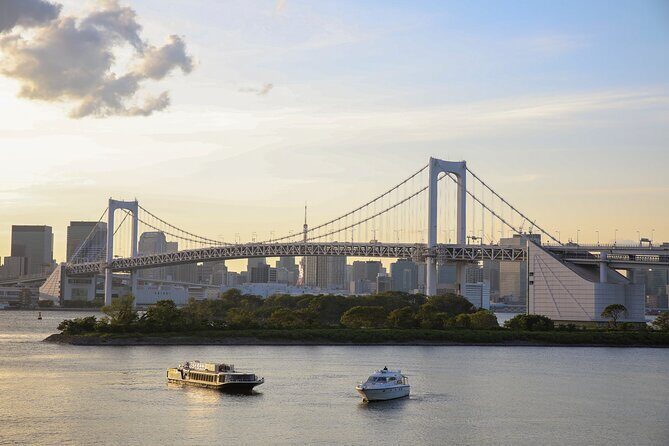
- Photo time from the open deck with views of the skyline framed by bay water and bridges
- Guided explanations of landmark architecture and background from the crew during the cruise
- Onboard comfort basics like a restroom and seating downstairs with tables
- Night lighting potential since you’ll be on the water when the city turns on its lights
- Route passes close to major sights including Rainbow Bridge and Tokyo Tower
- Small group size with a maximum of 57 people on board
You can also read our reviews of more boat tours in Tokyo

Where the Cruise Starts: Tennozu Yamatsu Pier and a Simple Boarding Flow
The meeting point is Tennozu Yamatsu Pier in Shinagawa (Tennozu Yamatsu Pier 1-chōme-39-21, Higashishinagawa). The listing notes it’s near public transportation, which is what you want in Tokyo—easy to reach, minimal hassle.
You’ll have a mobile ticket, which is convenient. In a city where trains and schedules can already feel like a game, saving yourself the paper ticket step is underrated.
There’s also an air-conditioned vehicle listed as part of what’s included, plus a boarding fee. That combination suggests the experience is designed to reduce friction from “getting there” to “being on board.” If you’re pairing this with other Tokyo stops, this practical setup makes it easier to stay on schedule.
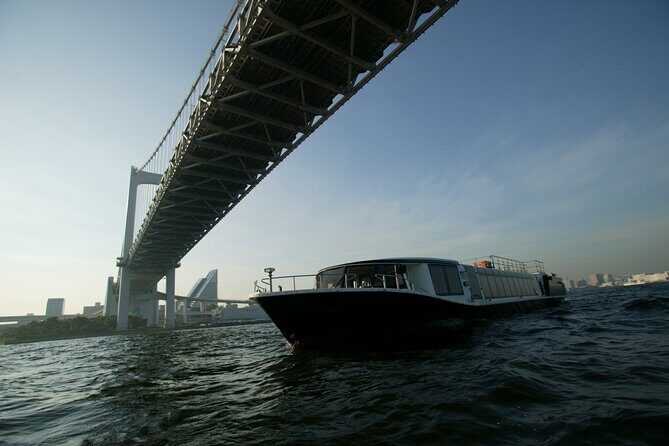
Rainbow Bridge: The Signature Pass-Under Moment
One of the main set pieces is Rainbow Bridge, one of Tokyo’s big connections linking Shibaura and Odaiba. You’ll pass through the area under the bridge, and the details matter here: the height between the bridge and sea level is approximately 50 meters.
On a photo trip, that kind of “underpass” moment is useful. You don’t just see the bridge in the distance—you see how it dominates the water line and how the skyline layers behind it. If you’re photographing at night (or twilight), bridges like this also tend to catch light in a way that feels more cinematic than a street-level view.
Practical tip: if you want pictures with minimal glare, aim for the moments when the boat is positioned so reflections don’t fight your lens. Keep your camera ready when the crew calls attention to what’s ahead.
Tokyo Tower From the Bay: Turning a Landmark Into a Photo Subject
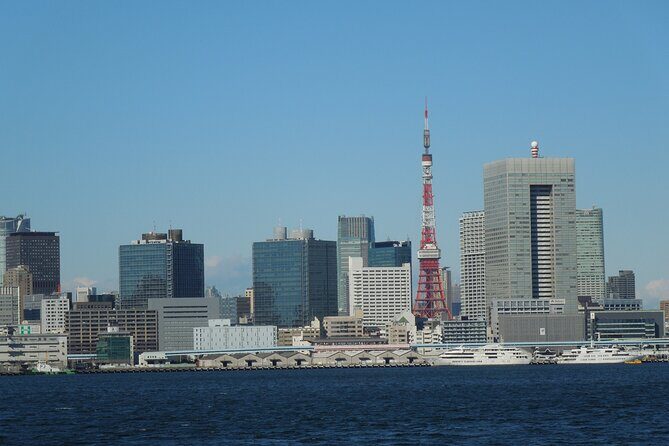
You’ll also pass a place with Tokyo Tower in view. It’s not just a famous tower—there’s a built-in story to it that the crew covers. Tokyo Tower was the largest television tower in Japan from 1958 to 2011, and today it remains a landmark, with glittering night lighting.
From the water, Tokyo Tower reads differently. From street viewpoints, Tokyo Tower is often just one element inside a dense background of buildings. On the bay, it becomes a clearer focal point, with skyline and water helping you frame it.
If you’re choosing between day and night, I’d lean toward night for this stop. The listing explicitly notes the illuminated look at night, and that lines up with what you’re likely trying to capture: skyline lights and reflections.
Kachidoki Bridge and the Mechanics of Waterfront Japan
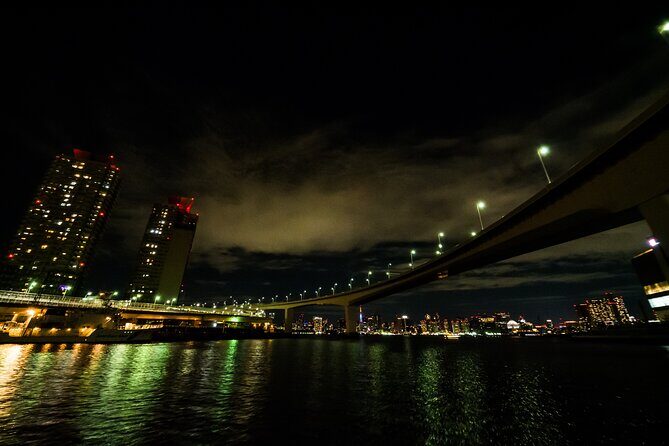
Another stop involves passing Kachidoki Bridge, and this is where the cruise becomes more than sightseeing—it becomes a mini lesson in how Tokyo’s infrastructure works. Kachidoki is noted as one of the few bascule bridges in Japan, which is the kind of detail you don’t usually get unless someone tells you what to look for.
The waterfront is full of engineering decisions like this, tied to shipping routes and how the city moves goods. If you like the “why” behind what you’re seeing, this part is a good value add.
On the photo side, bridges are naturally graphic: straight lines, angles, and repeating structures. Even if you’re not a “bridge person,” it’s often one of the easiest things to photograph well from a moving boat.





Tsukiji’s Legacy and the Shift to Toyosu
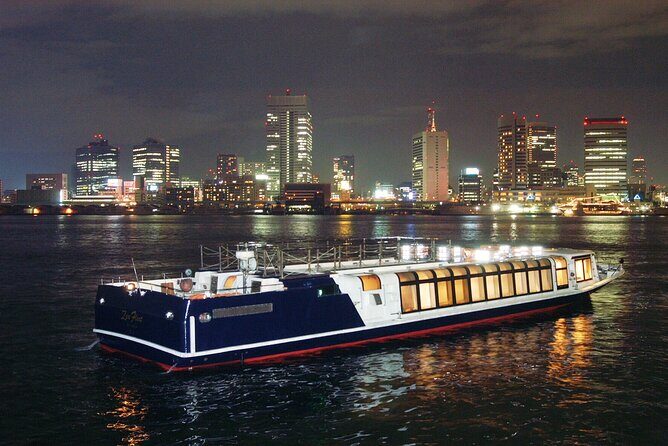
You’ll pass a place connected to Tsukiji. Tsukiji was once Japan’s largest central market, but the story is that wholesale functions moved elsewhere due to the building aging and that shift is now reflected in the Tokyo market landscape.
What’s especially helpful is that you don’t just hear the name. You’re told what changed: the wholesale functions moved to Toyosu. If you’ve walked through Tsukiji’s area on your trip and felt like something was “different now,” this cruise gives you the missing context.
You’ll also pass another bridge area associated with the replacement wholesale market concept. The new building is described as having an original shape, and you can see the whole thing from the sea route. That’s exactly the kind of viewpoint you usually can’t get easily on foot.
Practical tip: if you care about modern Tokyo industry and how the city keeps updating itself, this sequence is more interesting than it sounds on paper.
Eitai Bridge: A Fire-Linked Engineering Story (Yes, Really)
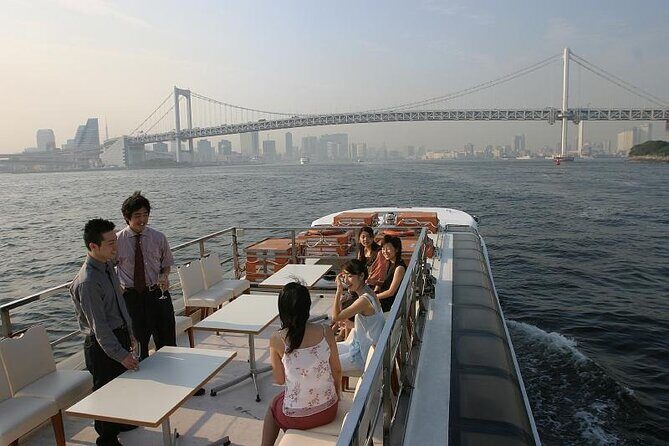
Next up is Eitai Bridge, built in 1926. The narration includes a surprising early engineering detail: in 1897, iron was used for the first time in Japan for a road bridge, but it was destroyed by fire because it had a wooden floor.
It’s a small segment, but it’s the kind of story that makes a bridge view feel less generic. You stop looking at it as only a landmark and start seeing it as part of a timeline—materials, design choices, and the hard lessons learned.
From a practical traveler perspective, I like this because it gives you something to listen for while you’re on a moving boat. You don’t have to strain to “entertain yourself.” The crew’s commentary gives structure to the time.
Odaiba Seaside Park and the Cannon-Era Backstory
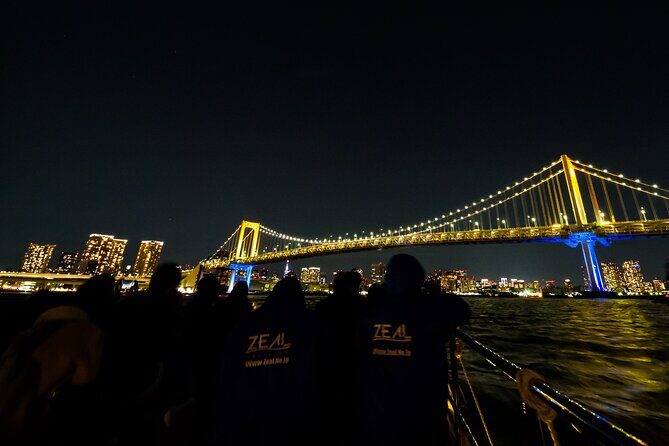
You’ll pass through Odaiba Seaside Park. The narration includes a historical note about the word “Daiba”: it refers to a place where a cannon was placed. During the late Edo period, the Tokugawa shogunate became worried about foreign ship threats, and those defensive points helped protect against that concern.
This is a good moment for understanding why Odaiba feels the way it does today. Even if you’re not planning to do deep sightseeing on Odaiba itself, the cruise gives you a quick reason for the area’s defensive roots and how Tokyo’s coastline has always been part of strategy, not just scenery.
If you’re traveling with people who prefer city history but don’t want a museum day, this is a nice compromise.
On Board: Comfort, Seating, and Photo Setup
Here’s what you can count on onboard based on the experience info:
- Restroom onboard
- Air-conditioned comfort below deck
- Seating available on the downstairs level, with tables
- Chairs for children are also available
- Mobile ticket (no paper fuss)
The photo setup is also a big deal. The top deck/open-air portion is repeatedly described as perfect for photos, especially at night when the skyline lights pop. At the same time, one review suggested that blankets would be a nice touch for people sitting up top. That’s a hint to bring your own layer if you’ll be outside for long stretches.
Also, one small request showed up: having the crew use a microphone clearly so everyone can hear. Translation: if you’re sensitive to audio, try to be where you can hear well, and don’t plan on reading everything from subtitles—just treat it as a bonus story, not a lecture.
Food and Drinks: What’s Included vs What You’ll Buy
Important for planning: alcoholic beverages and snacks are not included. The experience lists onboard sales for both, meaning you can buy them during the cruise, but they’re not part of the base ticket.
What this means for you: decide whether you want to travel light or plan a budget for onboard purchases. If your main goal is the views and the narration, the ticket price still covers the experience and basic onboard comfort. If you want a relaxed “treat night” with drinks, you’ll likely add some spending onboard.
Price and Value: Is $65.89 for 90 Minutes Worth It?
At $65.89 per person, you’re paying for a focused experience: a timed ride, prime photo angles from the water, and narration while you move past multiple landmarks. In Tokyo, that can be worth it because you’re buying convenience and access to a vantage point you’d otherwise spend time and effort assembling.
Here’s the real value angle: you’re not just viewing one landmark. You’re getting a sequence of major sights—Rainbow Bridge, Tokyo Tower, and multiple bridge/waterfront districts—in about 1.5 hours. If you price out time and energy for trying to replicate that by hopping between viewpoints, the cruise often feels like the easier route.
It’s not a long boat ride, so it won’t replace an entire evening of Tokyo wandering. Think of it as a high-impact segment of your day: the “photo and lights” chapter.
Who Should Book This Cruise (and Who Should Skip It)
This tour is a strong fit if you:
- Want night skyline photos with fewer crowds fighting you for angles
- Like city landmarks explained with simple context while you watch them glide by
- Prefer short, efficient activities that don’t swallow half your itinerary
- Travel with mixed interests, from sightseeing to light engineering/history stories
You might think twice if you:
- Only want long time to explore one neighborhood (this is a passing-route cruise)
- Get cold easily and don’t want to plan for wind and chill on the open deck
- Expect a fully amplified audio experience (a microphone was suggested as something that could be improved)
A Simple Booking Strategy for Best Results
This experience runs with a maximum group size of 57, which usually helps keep things orderly. One tip for getting the most out of it: pick the sailing that matches your main goal.
If your goal is photos with strong lighting, prioritize the night option when Tokyo Tower and the skyline lighting are part of the experience. If you prefer something calmer and less chilly, choose a day sailing for easier comfort and clearer sightlines.
Also, plan your clothing like you’re going to be near wind off the water. Even if you don’t end up freezing, being comfortable will help you stay focused on what you came for: the views.
Should You Book This Tokyo Spectacular View Day-Cruise?
My take: yes, if you want a short, well-structured way to see Tokyo’s waterfront landmarks from the water with photo-friendly deck time. The price isn’t cheap, but you’re paying for exactly that vantage point plus a guided narration that turns “pretty sights” into “I know what I’m looking at.”
Book it especially if you’re trying to end a trip with a memorable Tokyo lights moment without dealing with dense crowds on land. If weather is rough, this kind of cruise can require good conditions, and you should be ready to switch dates if offered.
If you want a simple night highlight that’s efficient and scenic, this is one of the more straightforward ways to do it.
FAQ
How long is the Tokyo Bay cruise?
The cruise is about 1 hour 30 minutes.
Where does the cruise start, and does it return to the same place?
It starts at Tennozu Yamatsu Pier in Shinagawa and ends back at the meeting point.
What major landmarks will we see or pass?
You’ll pass by Rainbow Bridge and Tokyo Tower, and you’ll also get scenes tied to Tsukiji/Toyosu and Odaiba Seaside Park, plus bridge passes including Kachidoki Bridge and Eitai Bridge.
Is there an area on board for photos?
Yes. There’s a top deck/open-air area for scenic photos, and there’s also seating indoors/downstairs if you want to warm up.
Are drinks and snacks included?
Alcoholic beverages and snacks are not included. Onboard sales are available.
Do I need to print my ticket?
No. The tour uses a mobile ticket.
What happens if weather is bad?
The experience requires good weather. If it’s canceled due to poor weather, you’ll be offered a different date or a full refund.
Can I cancel for a full refund?
Yes. There is free cancellation if you cancel at least 24 hours before the start time, with a full refund.