REVIEW · TOKYO
Tokyo: Traditional foot-kneaded Udon noodles class
Book on GetYourGuide →Operated by Izusha's WASHOKU Kitchen · Bookable on GetYourGuide
A foot-on-the-dough cooking class sounds odd, until it works. In West Tokyo, you’ll learn Musashino udon the traditional way (yes, with your feet) in the kitchen of a normal Japanese home, then make the essential dashi stock that powers a warm noodle dip. I like how hands-on it is, and I like that you’re not just watching—you make your own noodles step by step with Izumi.
One thing to consider: the process includes stepping on dough, so if you’re squeamish about that style of food prep, you’ll want to think it through (and bring any dietary needs up early).
In This Review
- Key Points at a Glance
- Foot-Kneading Musashino Udon in Izumi’s Home Kitchen
- Quick reality check before you go
- From Dough to Noodles: Tools, Rolling, and Cutting the Right Way
- What you’ll actually be eating later
- Mastering Dashi: The Stock That Drives the Whole Flavor
- The Udon Meal: Cold Noodles, Hot Soup Dip, and How to Enjoy It
- Matcha and Wagashi: A Casual Tea Ceremony Finish
- Price and What You’re Really Paying For
- Who Should Book This Udon Class (and Who Might Skip)
- Consider skipping (or ask questions first) if
- Getting There: Pickup From Higashimurayama Station
- Should You Book This Foot-Kneaded Udon Experience?
- FAQ
- How long is the Tokyo traditional udon class?
- Where does the class take place?
- What’s the group size?
- What will I make and eat during the class?
- Is there a vegetarian or vegan option?
- What’s included in the price?
- What should I do if I have food allergies?
Key Points at a Glance
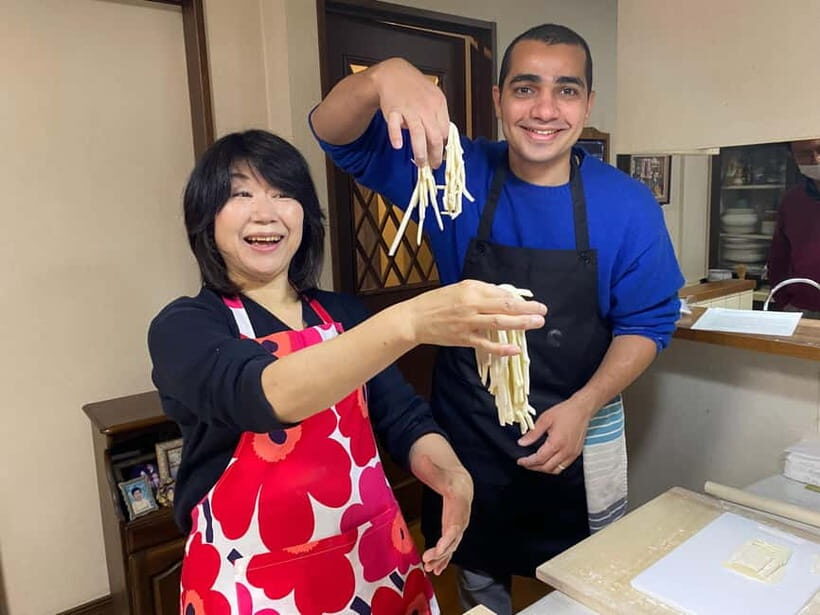
- Foot-kneading udon dough using special tools in a home-kitchen setup
- Dashi fundamentals: learn how this stock shapes Japanese flavor
- Your hands, your noodles: you roll, cut, and take the result to the table
- Cold udon with hot soup dip for a satisfying temperature contrast
- Casual matcha and wagashi to close out the class
- Small group (up to 4) for more real interaction with Izumi
Foot-Kneading Musashino Udon in Izumi’s Home Kitchen
This class happens in Musashino, a greener, more residential part of West Tokyo. Historically, wheat farming was common around the area, and the local udon tradition has been around for about four centuries. That matters because it explains why the class focuses on Musashino-style udon instead of generic “Japanese noodles 101.”
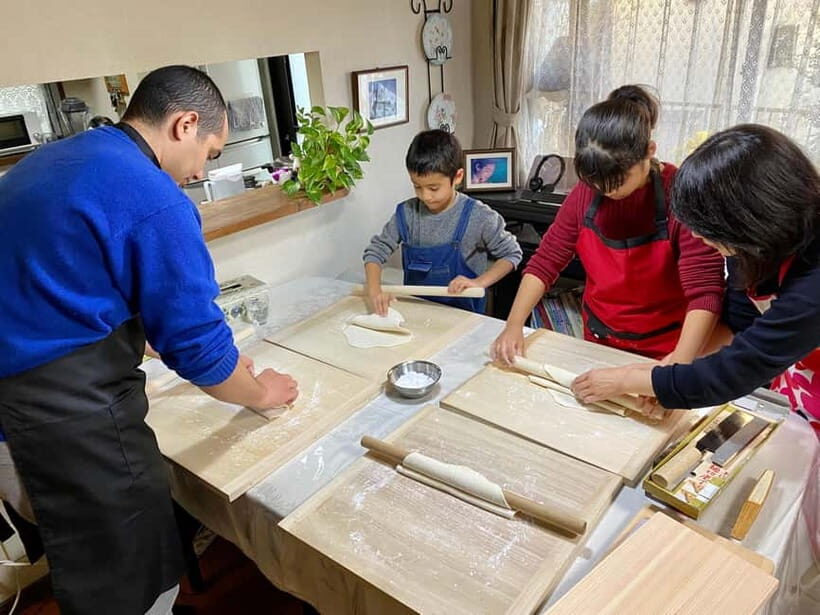
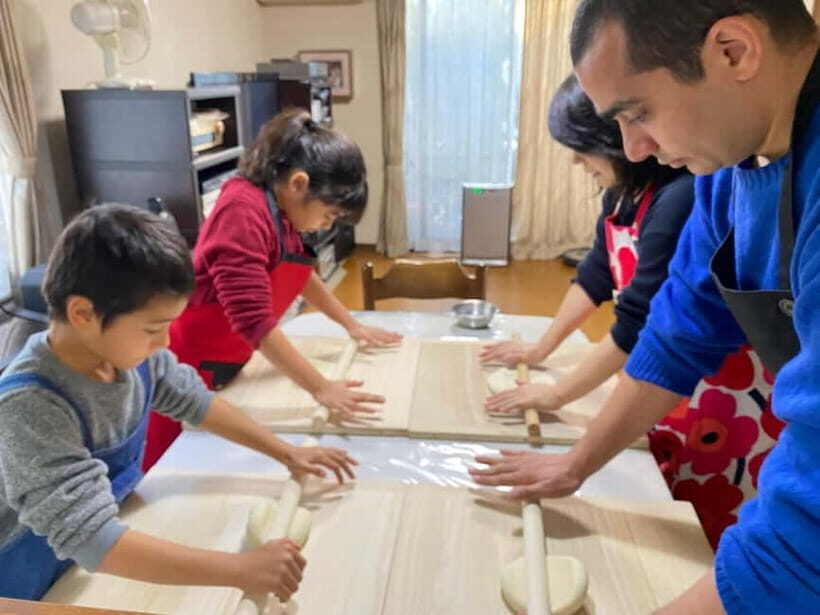
You start in a kitchen that feels lived-in, not staged. You’ll mix and prepare udon dough, then learn the key idea behind the texture: kneading is not just a step, it’s the whole deal. The utensils are traditional and very specific—a large wooden kneading board, a long rolling pin, and a big bowl for working with the dough. It’s a setup that lets you feel the dough change as you work it.
Then comes the signature part: you’ll step on the dough with your feet. It’s playful, but it’s also practical. Foot pressure kneads evenly and efficiently, and it turns a sticky mass into something smooth and elastic. Expect laughter and a bit of music in the background; one recent highlight was a soundtrack that ranged from Queen to Fuji Kaze, which helps keep the energy light.
Two big upsides for me here:
- You’re not just learning a technique. You’re learning the reason technique matters, because you’re doing the kneading yourself.
- The class keeps a local feel, so it doesn’t feel like a conveyor belt experience.
A few more Tokyo tours and experiences worth a look

Quick reality check before you go
The food part isn’t vegetarian by default. You’ll make a pork soup for dipping your noodles. There is an optional vegetarian/vegan lesson, but you should tell the host ahead of time if you avoid certain foods or have allergies—don’t wait until you arrive.
From Dough to Noodles: Tools, Rolling, and Cutting the Right Way
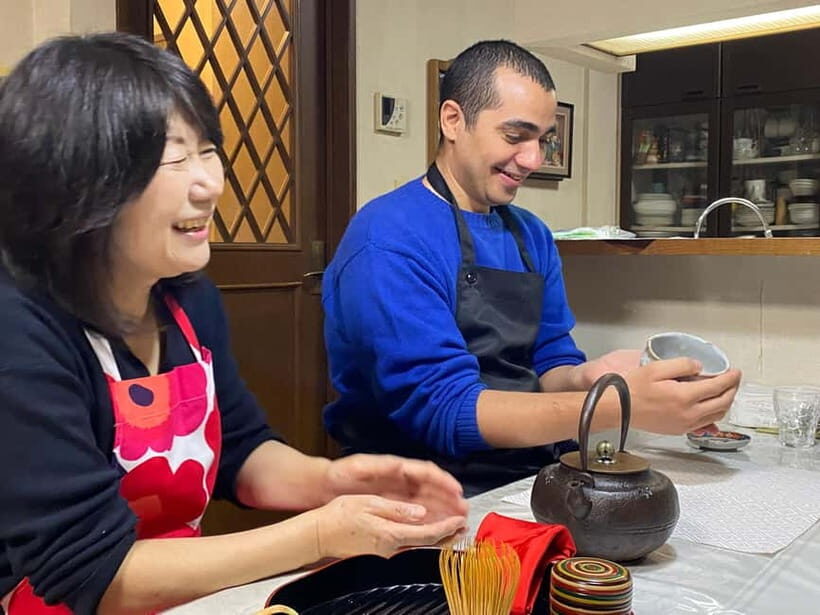
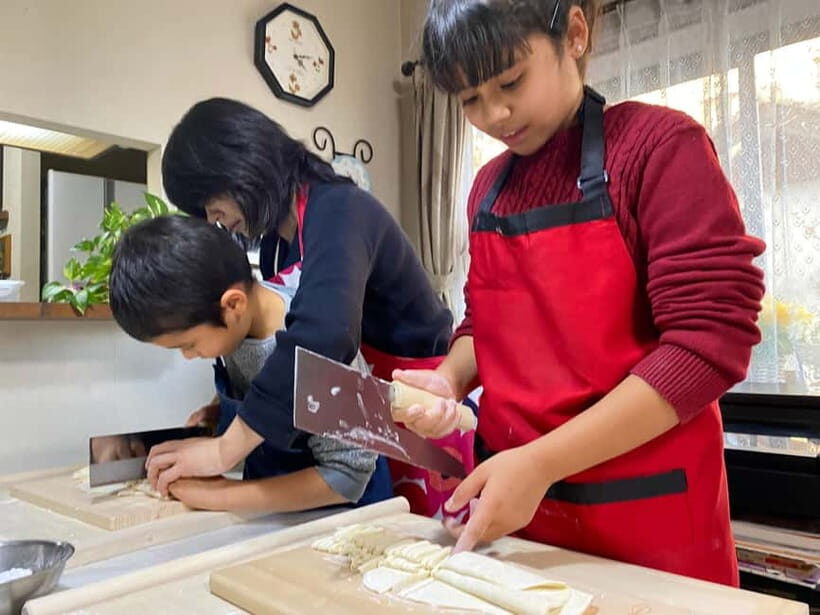
After the dough is prepared and kneaded, the work turns precise. You’ll learn how to roll the dough into a sheet and cut it into noodles. This is where your effort pays off, because the shape affects how the noodles handle the soup.
You’ll use a special udon knife for cutting—this isn’t a random kitchen knife moment. The goal is consistent thickness and clean edges. If you’ve ever had restaurant udon that seems springy and just the right chew, this is the part that helps explain why. Even without being a cooking expert, you can see how small differences in rolling and cutting change the final bite.
One of the underrated parts of a class like this is that you get a feel for timing. The dough handling has a rhythm: work it, rest it as needed, roll it into sheets, then cut. When you do it right, you end up with noodles that cook and eat with the texture you expect from real udon—not gummy, not mushy, just right.
What you’ll actually be eating later
Your final meal is built around what you make. You’ll get freshly made cold noodles and pair them with a rich hot pork soup that works as a dipper. That pairing is classic for the style: you get contrast right away—cool noodles against warm, savory broth. It’s the kind of meal that feels simple, but the flavor comes from correct dashi and good noodle texture.
Mastering Dashi: The Stock That Drives the Whole Flavor
Most people think Japanese cooking is all about soy sauce. Then you learn dashi, and it all makes more sense.
In this class, you’ll learn how to prepare dashi, the essential stock that shows up across Japanese home cooking. Even if you’re not memorizing the ingredient science, you’ll leave with a practical understanding of what dashi does: it adds a deep savory base that lets simple ingredients taste complete.
Then you apply that dashi to make a traditional pork soup used as the hot dipping component for your udon. The broth is where the class goes from fun “activity” to real food learning, because dashi is a skill you can reuse at home for other dishes later.
If you care about getting Japanese flavors right, dashi is a high-value takeaway. It’s the difference between tasting broth that feels flat and broth that tastes like it has a backbone.





The Udon Meal: Cold Noodles, Hot Soup Dip, and How to Enjoy It
The reward phase is the moment you’ll likely remember: your own noodles on the table.
You’ll eat freshly made cold udon noodles alongside the hot pork soup dip. The contrast is key. The noodles cool down enough to feel clean and springy, while the soup brings warmth and depth to every bite. It also makes the experience feel complete—half cooking lesson, half meal you can taste immediately.
Here’s a practical way to think about it when you’re eating:
- Treat the noodles and soup as a duo, not two separate items.
- The soup should flavor the noodles, so don’t drown them.
- Pay attention to texture changes as the noodles pick up warmth from the broth.
This is one reason I like classes like this: you learn techniques, then you eat in a way that makes those techniques obvious.
Matcha and Wagashi: A Casual Tea Ceremony Finish
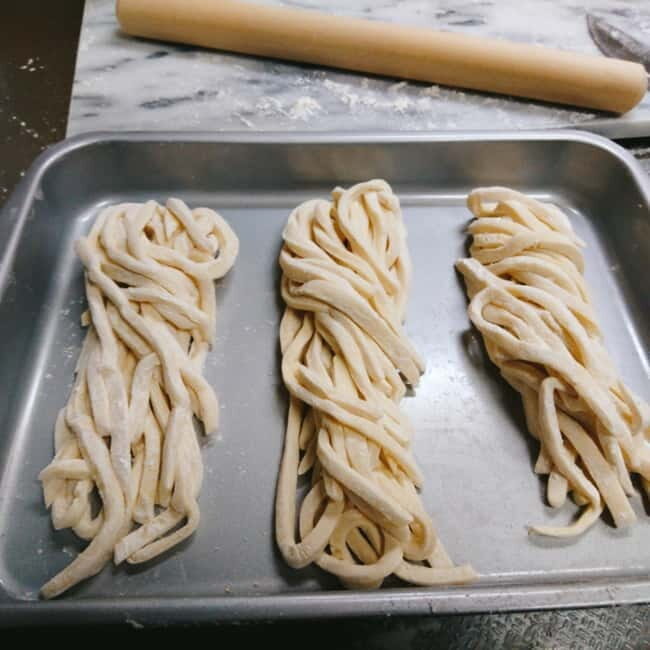
After the meal, you shift gears into something calm and Japanese: a casual matcha tea ceremony experience with wagashi (traditional Japanese sweets).
This part isn’t a formal, silent performance. It’s more like a gentle cultural breather that fits the rhythm of cooking. You’ll get matcha and wagashi, then you can slow down after the hands-on work—especially after foot-kneading, which is fun but also a full-body activity.
Why this matters for your trip:
- It connects the meal to Japanese food culture, where tea is part of the overall dining experience.
- You get a moment to reset before you head back out into the city.
And since you’re in a home setting, it feels personal rather than like a scripted demo.
Price and What You’re Really Paying For
At $70 per person for about 150 minutes, this isn’t a budget workshop—and it doesn’t claim to be. The value comes from several things you don’t always get in cooking classes:
- Small group size: limited to 4 participants, which usually means more attention while you knead, roll, and cut.
- Hands-on instruction: you make your own udon, instead of just helping with one small step.
- Dashi + soup learning: you’re learning a foundational flavor technique and applying it to the final meal.
- Included food culture extras: matcha tea ceremony and wagashi are part of the package.
- Gear and ingredients provided: utensils, ingredients, apron, and recipes are included.
- Pickup from Higashimurayama station: the host gives you a ride to the venue.
The only cost you should plan for is transportation to the meeting point, since public transportation to the station is not included.
If you’re trying to get the most value from your Tokyo time, this class is a strong pick when you want:
- an authentic, home-style experience, not a crowded production
- something tactile and memorable (foot-kneading)
- a meal you can reproduce later using dashi and udon know-how
Who Should Book This Udon Class (and Who Might Skip)
This works best if you like cooking that’s physical and step-by-step. You don’t need to be a “food person.” The class is structured so you can succeed even if it’s your first cooking class.
It’s also great if you enjoy small-group cultural learning. With only up to 4 participants, you’ll likely get more real interaction with Izumi, including storytelling about the history of udon and community connections. One standout theme from the experience is that the atmosphere is lively and joyful, with a teacher who explains clearly and keeps things warm and human.
Consider skipping (or ask questions first) if
- you don’t feel comfortable stepping on dough
- you need strict dietary handling and haven’t already notified the host about allergies or restrictions
- you’re short on time and want something extremely fast (this is 2.5 hours)
If you’re traveling as a vegetarian or vegan, there is an option for that, but you should confirm details with the host in advance so the food portion makes sense for you.
Getting There: Pickup From Higashimurayama Station
The meeting setup is simple. You’ll meet at Higashimurayama station, and Izumi will pick you up and drive you to the venue. That helps a lot because Musashino is West Tokyo and can be annoying to reach on your own if you’re using trains only.
Plan to budget for any cost to get yourself to the station, since that public transportation fee isn’t included. Once you’re at the meeting point, the rest is handled.
Should You Book This Foot-Kneaded Udon Experience?
Yes, if you want a Tokyo food day that feels local, hands-on, and memorable. This class does three things well: you make real Musashino udon, you learn dashi (a transferable skill), and you finish with an actual meal plus matcha and wagashi.
Book it if:
- you like active cooking, including the foot-kneading part
- you want small-group attention and a home-kitchen feel
- you care about learning dashi, not just tasting food
Skip it if:
- the idea of stepping on dough makes you uncomfortable
- you have complicated dietary needs and haven’t planned to message the host first
FAQ
How long is the Tokyo traditional udon class?
The experience lasts 150 minutes (about 2.5 hours).
Where does the class take place?
It’s held in Musashino, a suburb in West Tokyo. The host will pick you up from Higashimurayama station and drive you to the venue.
What’s the group size?
It’s a small group limited to 4 participants.
What will I make and eat during the class?
You’ll make Musashino udon noodles, learn how to prepare dashi, and enjoy a meal with cold noodles and a hot pork soup dip. You’ll also have matcha tea and wagashi.
Is there a vegetarian or vegan option?
Vegetarian and vegan lessons are optionally available, including a vegetarian udon lesson option.
What’s included in the price?
All ingredients and kitchenwares, recipes, the matcha tea ceremony experience, an apron, and pickup from Higashimurayama station are included.
What should I do if I have food allergies?
Let the host know in advance if you have any allergies or cannot eat certain ingredients.