REVIEW · TOKYO
Traditional Japanese Knife Sharpening Class
Book on Viator →Operated by Japanese Knife Sharpening · Bookable on Viator
Sharpening a Japanese knife feels like magic. This hands-on class gives you both the technique and the why behind it, with instruction from guides like Charlie and Timothy, plus a clear path to follow at home. I especially liked learning whetstone grit basics and getting a real feel for how Japanese knives are meant to be sharpened. The only drawback is simple: you’ll leave with a freshly sharpened blade, so plan how you’ll safely pack and transport it.
In a group that maxes out at 6 people, the lesson stays personal. You work at a steady pace, ask questions as they come up, and you’re not stuck watching from the side. And yes, the class starts you off with a knife that’s genuinely dull, then ends with results you can test right there.
By the time the ~2 hours are up, you’ll take home the knife you sharpened, which makes it more than a one-time demo. It’s also a useful skill. If you care about cooking tools, this is one of those experiences that actually follows you home.
In This Review
- Key highlights you’ll remember
- Tokyo Skytree area start: easy to make this part of a real Tokyo day
- What happens in the 2-hour sharpening class (and what you actually learn)
- You start by learning the setup and the goal of sharpening
- Then you work through whetstones of different grits
- You finish with a real edge you can test
- Whetstones, steel types, and theory that makes your next sharpening session easier
- How grit fits into the bigger picture
- Why the instruction style helps
- Bringing it all home: your sharpened knife as a keepsake and tool
- Real value in the take-home part
- Price and value: $98.53 for a small-group skill session
- Who this class suits best (and when it might not)
- You’ll probably love it if you…
- You might hesitate if…
- Practical tips to get the most from your session
- Should you book this Traditional Japanese Knife Sharpening Class?
- FAQ
- Where does the class start and end?
- How long is the Japanese knife sharpening class?
- How much does it cost?
- Is there a limit on group size?
- Do I need to bring sharpening equipment?
- Can most people participate?
- When do I get confirmation, and how does cancellation work?
- FAQ
- Is it mainly a demonstration or do I sharpen the knife myself?
- What will I learn about besides the sharpening steps?
- Do I get to take anything home?
- Will there be a crowd?
- How do I get there?
- Is there a mobile ticket?
- What should I do if I’m worried about fitting it into my schedule?
Key highlights you’ll remember
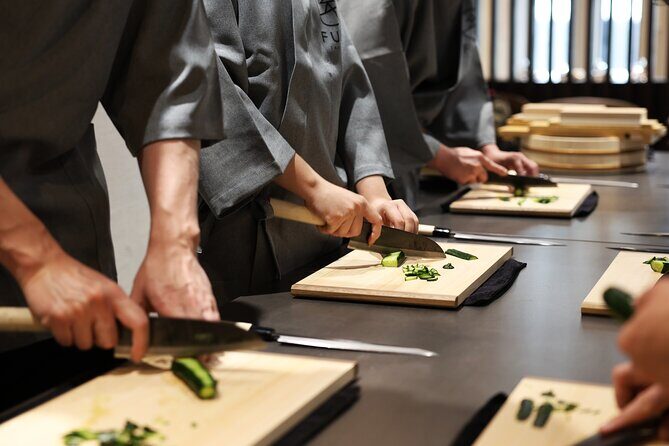
- Small group up to 6 means you get real attention, not just a crowd experience
- Tools are provided, so you do not have to hunt down whetstones or accessories before you arrive
- Multiple whetstone grits help you understand how sharpness builds, not just how to copy a step
- Knife history and sharpening theory connect the craft to the steel and the edge goals
- Take-home keepsake: you leave with the knife you sharpened yourself
- Clear English instruction from guides like Charlie and Timothy, with time for questions
Tokyo Skytree area start: easy to make this part of a real Tokyo day
The class meets at 1-chōme-9-8 Nishiasakusa, Taito City, Tokyo 111-0035, an area that’s practical for getting around. It’s also close enough to Tokyo Skytree that you can pair this with a broader sightseeing day without needing complicated logistics.
You’ll start and end right at the meeting point, so you’re not signing up for a long, wander-around scavenger hunt. That matters because it keeps the focus where it should be: on learning a hands-on skill in a short window of time.
One small consideration: if you’re trying to cram this between far-apart stops, give yourself a little buffer for transit. The class itself is short, but getting to the meeting point smoothly will make the whole thing feel calm.
A few more Tokyo tours and experiences worth a look


What happens in the 2-hour sharpening class (and what you actually learn)
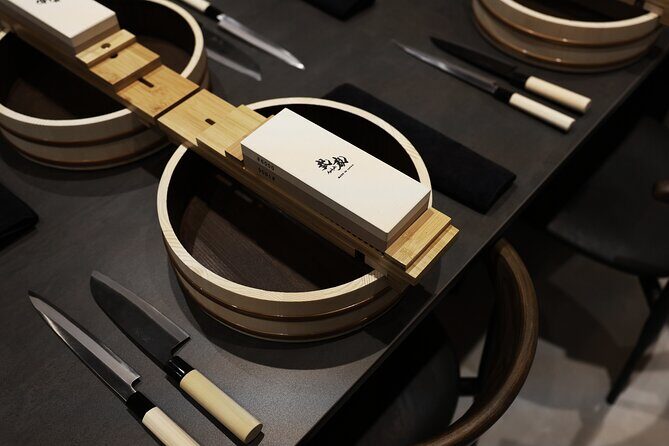
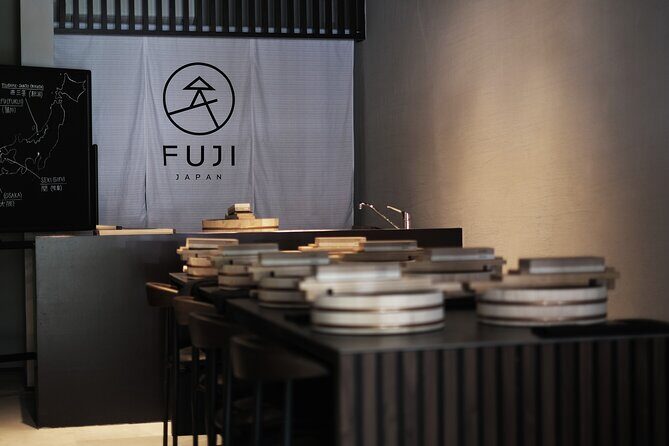
This is a traditional Japanese knife sharpening class built around doing, not watching. The structure is straightforward: first you learn the basics, then you apply them to the blade in front of you.
You start by learning the setup and the goal of sharpening
You’ll learn about knife sharpening in a way that’s practical for real kitchens. Instead of treating sharpening like a magic trick, the class explains the basics of how the edge is shaped and why the process matters. That becomes the foundation for everything you do next.
Then you work through whetstones of different grits
The core hands-on portion focuses on sharpening with whetstones and different grits. The idea is that you use coarser and finer stones for different stages of bringing an edge back. You’re not just getting one level of sharpness; you’re learning how sharpening progresses.
This is exactly why the class is more valuable than a quick tutorial. You leave knowing what the stones are for and how the process changes as grit changes.
You finish with a real edge you can test
The most convincing part is the transformation. People in the class talk about starting with a knife so dull it struggles to cut paper, then ending with a blade that can slice through tough paper tests with confidence. You’ll feel the difference, and you’ll understand why it happened.
That is the big win: you’re not just impressed by the before-and-after. You learn what to repeat later so you can get similar results.





Whetstones, steel types, and theory that makes your next sharpening session easier
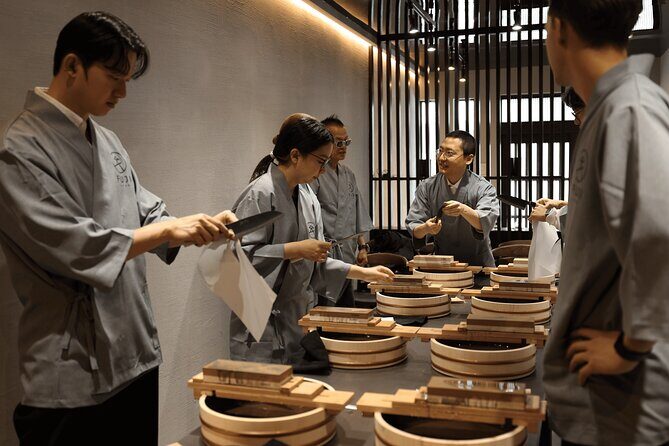
What I liked most is that you don’t just get instructions. You get context. The class includes insights about knife history and Japanese sharpening theories, plus discussion of different types of steel.
That combination matters because different knives behave differently. Even if two blades look similar, the way they respond to stone work can vary. Learning the theory helps you stop guessing when you’re back at home staring at your own knife and wondering what went wrong.
How grit fits into the bigger picture
The class uses whetstones with varying grits, so you can connect grit choice to the edge outcome. At home, that means you’re less likely to rely on random trial-and-error. You have a framework.
If you’ve ever sharpened once and ended up with an edge that feels sharp but not reliable, this framework is what helps you correct the process. The class aims to turn sharpening from a chore into a skill you can actually control.
Why the instruction style helps
Guides like Charlie and Timothy are repeatedly praised for clear explanation and detailed guidance. That matters because sharpening is part technique, part feel. If you’re missing one key detail, the stone work can feel right but still not produce the edge you want.
You also get room for questions during the session. In a class like this, questions can save you time later because you’re learning the reasons behind the moves, not just the moves themselves.
Bringing it all home: your sharpened knife as a keepsake and tool

The class ends with you taking home a freshly sharpened knife that you sharpened during the session. That is more than a souvenir grab. It’s a practical tool you can use, because the edge is already set.
In Japanese knife culture, the edge is part of the relationship with the tool. The class helps you understand that sharpening is not just maintenance. It’s part of how the knife performs.
Real value in the take-home part
At $98.53 per person, you’re paying for a structured, instructor-led experience, not just stone time. The take-home knife is a big portion of that value because it gives you something tangible and immediately useful. Even if you don’t plan to sharpen constantly, having a knife that you know how to maintain makes the learning feel worth it.
One practical consideration: you’re leaving with a sharp blade. If you’re traveling light or relying on carry-on only, think ahead about packing and safe transport. It’s not a dealbreaker, just a smart planning point.
Price and value: $98.53 for a small-group skill session

This class costs $98.53 per person. On paper, that’s not cheap for a 2-hour activity. But here’s where the value comes from.
You get:
- A small group (max 6 people), which usually means more direct coaching
- All equipment provided, so you’re not adding surprise costs for stones or gear
- Instruction that covers technique plus theory, including steel types and sharpening concepts
- A take-home knife sharpened by you
If you’ve ever bought a Japanese knife and realized sharpening is harder than it looks, this is the kind of lesson that can prevent wasted money and frustration later. The skill you learn is reusable, and the theory helps you adapt to different knives.
Who this class suits best (and when it might not)
You’ll probably love it if you…
- Are a cooking enthusiast who wants sharper performance
- Own a Japanese knife or plan to buy one
- Enjoy hands-on crafts and want a skill you can repeat at home
- Prefer smaller, calmer classes over big-group tours
You might hesitate if…
- You’re uncomfortable packing or transporting a sharpened knife
- You want a purely sightseeing experience rather than a workshop
- You dislike focused instruction and hands-on work (since you’ll actually sharpen your own blade)
If you’re the type who likes understanding how tools work, this class hits the sweet spot.
Practical tips to get the most from your session
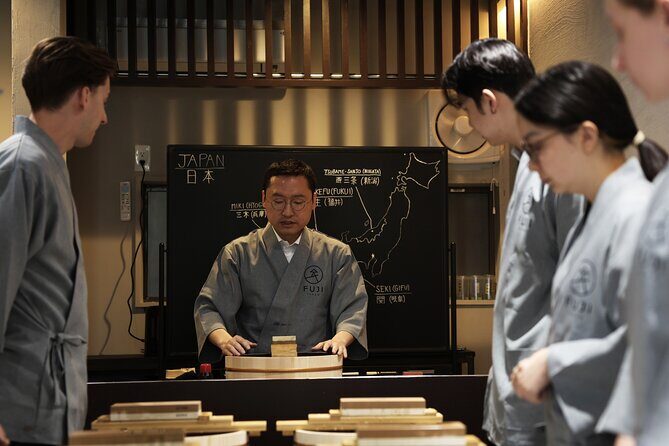
You’ll get the best outcome by showing up ready to work with your hands. A few things that help:
- Ask questions early, especially if you’re unsure about grit choice or sharpening goals. The instruction is designed to answer those doubts.
- Watch your instructor closely at the start, then copy the method carefully. Sharpening is sensitive to small changes.
- Treat the session like practice. You’re building a repeatable routine, not chasing perfection in one shot.
Also, since the class uses multiple whetstone grits, pay attention to how the feel and progress changes as you move through stones. That’s where the skill becomes transferable.
Should you book this Traditional Japanese Knife Sharpening Class?
Yes, if you want a real skill in Tokyo, not just a one-time cultural stop. This is one of the better-value workshop styles because you get guided technique, a learning framework (history, steel types, and sharpening theory), and a result you can literally take home.
Book it if you’re:
- A cook who cares about tool performance
- Curious about Japanese craftsmanship beyond buying a product
- Happy to spend ~2 hours learning and practicing with whetstones
Skip it if your trip style is mostly sightseeing and you don’t want hands-on instruction, or if you’re not set up to safely transport a sharpened knife afterward.
FAQ
Where does the class start and end?
The activity starts at 1-chōme-9-8 Nishiasakusa, Taito City, Tokyo 111-0035, Japan, and it ends back at the meeting point. The experience includes Tokyo Skytree as part of the session.
How long is the Japanese knife sharpening class?
The duration is about 2 hours.
How much does it cost?
The price is $98.53 per person.
Is there a limit on group size?
Yes. This activity has a maximum of 6 travelers.
Do I need to bring sharpening equipment?
No. The class provides everything you need, so you do not have to source equipment.
Can most people participate?
The information says that most travelers can participate.
When do I get confirmation, and how does cancellation work?
You receive confirmation at the time of booking. Cancellation is free up to 24 hours in advance for a full refund.
FAQ
Is it mainly a demonstration or do I sharpen the knife myself?
You learn the sharpening process and then sharpen your own blade during the session.
What will I learn about besides the sharpening steps?
You’ll learn knife history, sharpening theory, steel types, and how to sharpen using whetstones of varying grits.
Do I get to take anything home?
Yes. You take home the knife you sharpened as a keepsake.
Will there be a crowd?
No, it’s designed as a small-group experience, not a crowded event.
How do I get there?
The meeting point is near public transportation, and you’ll get confirmation after booking.
Is there a mobile ticket?
Yes. The experience includes a mobile ticket.
What should I do if I’m worried about fitting it into my schedule?
Because it’s about 2 hours and starts and ends at the same meeting point near Tokyo Skytree, it’s easier to slot into a Tokyo day than activities with long travel or changing locations.