REVIEW · OSAKA
1-Day walking tour in Osaka:Castle, temples and Ukiyoe
Book on GetYourGuide →Operated by Machinovate Japan Ltd. · Bookable on GetYourGuide
Osaka gets a whole day, in one loop. I like how this Osaka walking tour strings together the city’s big landmarks—castle, temples, and street life—without making you plan a single transfer. You start at JR Osaka Station, move by train, then do the walking parts that actually connect the stories.
Two things I really like: the focus on culture you can feel, not just photos. You get a guided look at Ukiyoe and you also hear the temple context at Shitennoji, which helps the stops click instead of turning into a checklist.
One consideration: it’s an outdoors day with plenty of walking and waiting between spots, so if you want a super relaxed pace, plan to take it slow and wear shoes that forgive you.
In This Review
- Key highlights you’ll feel right away
- Enter Akatsuki Plaza: start your day at JR Osaka Station
- Osaka Castle Museum: 1597 pride, destruction, and a 1995 rebuild
- Shitennoji Temple: Japan’s first Buddhist temple with real backstory
- Kuromon Ichiba Market lunch time: eat first, then wander smarter
- Dotonbori and the Ukiyoe experience: Osaka’s street theater meets Japanese art
- Shinsaibashi: a long shopping street and a billboard photo moment
- Trains + walking: how the pace really feels on a one-day route
- Price and value: what $136 covers (and what it doesn’t)
- What you’ll learn, beyond the postcard facts
- Who this tour suits best (and who should reconsider)
- Packing tips for an outdoor day with trains
- Should you book this Osaka tour?
- FAQ
- Where do I meet the tour?
- What time does the tour start?
- What places does the tour visit?
- Is this tour walking-only?
- What is included in the price?
- Is lunch included?
- Are train tickets before and after the tour included?
- How long is the tour?
- Does the tour include free time?
- What should I wear or bring?
Key highlights you’ll feel right away

- Osaka Castle Museum with the 1597-to-1995 story so the rebuilding actually makes sense
- Shitennoji Temple context that links Buddhism’s journey from India and China to Japan
- Kuromon Ichiba Market time built in for lunch and browsing (food is on you)
- Ukiyoe experience tied to Osaka’s street scene and Japanese art history
- Dotonbori + Shinsaibashi so you end with downtown energy and photo stops
- English guide support, with Winki praised for being patient and answering questions
Enter Akatsuki Plaza: start your day at JR Osaka Station

Your day starts at 09:25 at Akatsuki Plaza (暁の広場) inside JR Osaka Station. The key detail is finding it quickly: it’s on the first floor of the North Gate Building, near the North Central Exit, and you’ll see the meeting sign with SNOW MONKEY RESORTS.
Also, don’t get pulled into the escalators. They’re there on both sides, but you’ll want to stay on the first floor and wait at the meeting area. It sounds small, but it saves you stress while everyone else is arriving.
You can also read our reviews of more walking tours in Osaka


Osaka Castle Museum: 1597 pride, destruction, and a 1995 rebuild

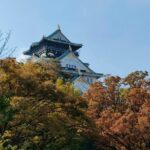
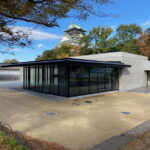
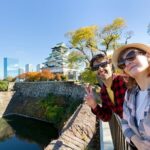
The first main stop is Osaka Castle, reached after about an hour of transit time. From the start, you’re guided into the Osaka Castle Museum and given the history behind the place—not just the view from the moat.
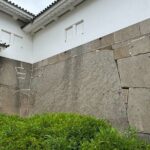
Here’s the part that makes this stop worth doing with a guide: the castle you see isn’t a single, continuous “original.” It was completed in 1597, then destroyed multiple times, and the modern rebuilding was done by the Japanese government in 1995. Your visit helps you understand why the current look feels different from what people might imagine when they hear castle and shogun-age.
Time in and around the castle is about one hour, which is enough to absorb the big story and then take in the grounds without rushing. If you’re the type who likes viewpoints, build in a few minutes for photos—but don’t skip the museum, since that’s where the context lives.
Shitennoji Temple: Japan’s first Buddhist temple with real backstory

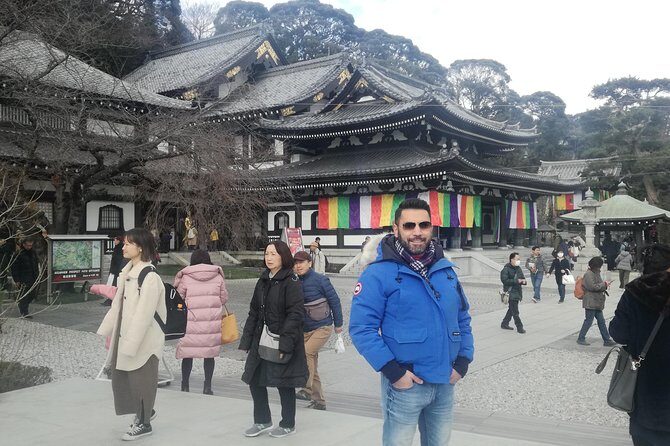
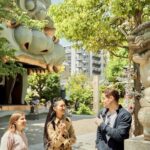
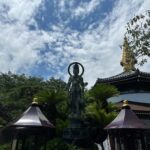
Next comes Shitennoji, one of the most important religious sites in Osaka. This stop is short enough to keep the day moving, but focused enough to matter: you get a guided visit of about 50 minutes.
Shitennoji is described as the first Japanese Buddhist temple in Japan. More importantly, your guide explains how Buddhism traveled from India to China, then arrived in Japan thousands of years ago. That chain-of-movement lesson changes how you look at the site. Instead of thinking of it as just an old building, you start seeing it as proof of cultural transmission.
During the visit, you may also hear temple chanting and learn about ceremonies associated with the place. One review notes hearing monks during prayer and being able to go up to the top area of the temple to pay respects to a relic. That kind of moment is exactly what you miss when you only do a self-guided walk.
Kuromon Ichiba Market lunch time: eat first, then wander smarter

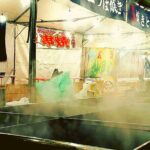
After the temple, you shift gears to Osaka’s food-and-life side at Kuromon Ichiba Market. The tour gives you about one hour here, including lunch time and free time to explore.
Kuromon is one of Osaka’s best-known market areas, with roughly 150 stores in the zone (about 580 meters south of Sennichimae). You’ll find fresh seafood, vegetables, fruits, food and beverages, and even some clothing options. The point of this stop on a guided day isn’t that you’ll eat everything—it’s that you’ll understand what the market does for locals: it’s a place to browse, snack, and then build lunch from what looks best that day.
Food and drinks are not included, so I’d treat this hour like your “choose-your-own-adventure” window. If you’re picky, go with simple items you can point at and eat on the move. If you like variety, use your guide’s cues to pick a few things and keep going.
Dotonbori and the Ukiyoe experience: Osaka’s street theater meets Japanese art

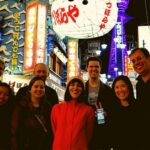
Dotonbori is where Osaka stops acting like a museum and turns into a living street scene. The tour sets aside about two hours here, with guided context plus time to explore.
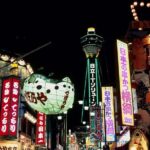
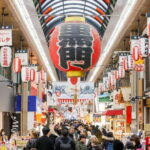
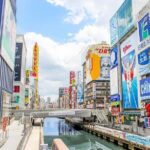
Dotonbori is described as the symbolic downtown area of Minami Osaka, lined with huge three-dimensional billboards. That’s your visual hook: it’s flashy, loud, and made for photos. But the tour doesn’t only push you toward food. It also includes a traditional Japanese art experience: Ukiyoe.
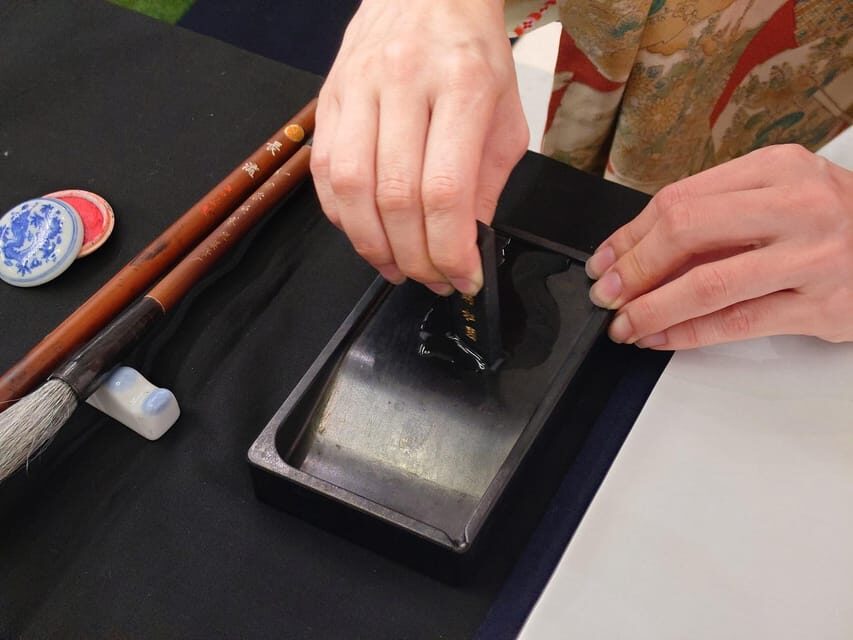
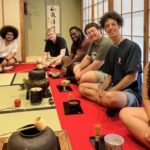
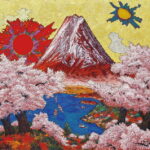
Ukiyoe is tied to the culture of Edo-era street life—exactly the kind of “everyday Japan” art that feels connected to places like Dotonbori. The tour includes the art-history framing too, with earliest ukiyoe works found in the 1670s and the style flourishing from the 17th to the 19th century. Doing an Ukiyoe activity here helps the billboards make more sense. You’re seeing how Japan turned daily life and popular entertainment into art people could reproduce.
One practical tip: wear shoes you can stand in. Dotonbori’s energy is great, but your legs will notice if you treat the area like a quick stop. Take short pauses when you can, then keep moving.
A few more Osaka tours and experiences worth a look
Shinsaibashi: a long shopping street and a billboard photo moment

Your final downtown stop is Shinsaibashi, visited for guided time and a walk of about 30 minutes. This area is described as a popular shopping street with a long history as a regional commercial center.
What I like about ending here is that it matches the day’s arc. You start with structured history (castle and temple), move into food culture (Kuromon), then hit street visuals and art (Dotonbori and Ukiyoe), and finally you close at a shopping street where you can keep your momentum or slow down and just browse.
The tour also includes a specific photo moment: you pass the famous billboard in Osaka and you can pose and take photos. It’s a nice “last big memory” stop before you head back to JR Osaka Station together to finish the loop.
Trains + walking: how the pace really feels on a one-day route

This is not a walking-only tour. It uses public transportation between major clusters, with walking time at each stop area. That’s a smart setup for a one-day itinerary because it keeps distances reasonable while still letting you experience each neighborhood.
The schedule is also fairly structured: castle first, then temple, then market lunch, then Dotonbori, and finally Shinsaibashi. That structure is helpful if you’re short on time and want to see key Osaka highlights without doing guesswork.
Still, do expect walking and outdoors time. Comfortable shoes are non-negotiable here, and you’ll want sun protection or rain protection depending on the season. The tour specifically recommends being ready for weather since you spend hours outside.
Price and value: what $136 covers (and what it doesn’t)

At $136 per person, the value is strongest when you think in terms of what the tour handles for you. Included are:
- Entrance fees for each stop
- Train tickets required for the tour
- Ukiyoe experience fee
- Guided tour with an English-speaking guide
Not included:
- Food and drinks
- Train tickets before and after the tour
So you’re paying for the “guided connections” and the paid parts of the sites, not for the actual meals. If you like guided history and cultural context, that’s where the money shows up. If you only want to self-explore and snack on your own plan, you might feel the cost more.
For a first-time Osaka day, I think the price is reasonable because you’re bundling multiple paid entries, public transit within the loop, and an activity (Ukiyoe) that’s hard to recreate last-minute. And since your guide is actively teaching—Winki is specifically praised for being patient and answering questions—this isn’t just someone walking you between stops.
What you’ll learn, beyond the postcard facts

The biggest benefit isn’t any single place. It’s the way the day links themes.
- At Osaka Castle, you learn why the castle exists in its current form and how repeated destruction shaped what stands today.
- At Shitennoji, you get the “how Buddhism arrived” explanation, which turns the temple visit into a story of movement across Asia.
- At Kuromon, you see local food culture in action through the sheer scale of the market area.
- At Ukiyoe, you get art history connected to daily life and popular imagery—then you end in Dotonbori where that visual language still feels alive.
- At Shinsaibashi, you close with a neighborhood that’s built for strolling, shopping, and photos.
That balance is why the tour tends to work for both adults and kids. One family review highlights that their 5-year-old enjoyed the guide’s company and even wanted to see her again the next day.
Who this tour suits best (and who should reconsider)
This experience is a good fit if you:
- have one day in Osaka and want a plan that covers major highlights
- enjoy guided history and want explanations that help you connect the places
- like a mix of culture, food time, and street scenes
- want an English-speaking guide who answers questions (Winki gets high marks for this)
It might be less ideal if you:
- dislike structured schedules and prefer to roam entirely on your own
- want minimal walking and zero outdoor time
- don’t want to pay for guided entrances and an art activity
If you fall in the middle—curious but not trying to sprint—this is a strong one-day option.
Packing tips for an outdoor day with trains
Even with trains between stops, you’re outside for several hours. Bring:
- comfortable shoes
- weather protection (the tour recommends sunshade and rain protection if needed)
- clothing that works for walking, standing, and market browsing
Also, for meeting success, show up early enough to orient yourself inside JR Osaka Station. The meeting area is inside the station, and you don’t want to waste your first 10 minutes hunting for the north gate levels.
Should you book this Osaka tour?
If you’re trying to make the most of a limited Osaka stay, I’d book this tour. It’s not just “go see famous stuff.” You get museum context at Osaka Castle, a guided story at Shitennoji, a real market food stop at Kuromon Ichiba, and an Ukiyoe art experience that connects directly to the street visuals of Dotonbori. Add in the fact that the English guide is praised as patient and responsive—especially by families—and the day feels guided in a way that saves time and improves the payoff.
If your ideal day is totally unstructured or you want a super slow pace, consider a shorter or more neighborhood-focused option. But for most first-time visitors, this one-day circuit is a smart use of time.
FAQ
Where do I meet the tour?
Meet at Akatsuki Plaza (暁の広場) inside JR Osaka Station on the first floor of the North Gate Building, near the North Central Exit.
What time does the tour start?
The tour starts at 09:25.
What places does the tour visit?
You’ll visit Osaka Castle, Shitennoji Temple, Kuromon Ichiba Market, Dotonbori, and Shinsaibashi, then return to the meeting point.
Is this tour walking-only?
No. It’s a walking tour that also uses public transportation (trains) between areas.
What is included in the price?
Included are entrance fees for the stops, train tickets required for the tour, the Ukiyoe experience fee, and a guided English-speaking tour.
Is lunch included?
Lunch time is included as free time at Kuromon Ichiba Market, but food and drinks are not included.
Are train tickets before and after the tour included?
No. Train tickets before and after the tour are not included.
How long is the tour?
It’s a 1-day tour (duration listed as 1 day).
Does the tour include free time?
Yes. There is free time, including time at Kuromon Ichiba Market.
What should I wear or bring?
Wear comfortable shoes and bring sunshade and rain protection if necessary, since the tour takes you outdoors for hours.