REVIEW · KYOTO
2 Hour Night Walking Tour Throughout Gion with snack
Book on Viator →Operated by Tour Kyoto · Bookable on Viator
Gion at night feels like a movie. This 2-hour walk strings together Kyoto’s most important shrine stop, the geisha streets you’ve seen in photos, and the Kamogawa River night vibe, with local context and a traditional snack along the way. The guide (Simon) keeps it moving, but also slows down when it matters.
I like two things a lot: the geiko vs maiko explanation on Hanamikoji Street, and the practical restaurant suggestions around Kiyamachi when you want food plans for the rest of your trip. You’re also getting a small Kyoto-themed treat in the mix, including a geisha chocolate.
One possible drawback: Gion gets very crowded in the evening, and the route can feel a bit fast if you fall behind. If you want a calm stroll where you can stop for every shop window, this may test your patience a little.
In This Review
- Key highlights to know before you go
- Gion After Dark in 2 Hours: what you’ll see (and why it works)
- Meeting at the Disney Store: easy start and a phone-friendly ticket
- Yasaka Shrine stop: a 30-minute reset with real context
- Hanamikoji Street: geiko vs maiko without the confusion
- Kiyamachi Street: the entertainment district, plus practical food leads
- Kamogawa River: the short stop that changes the mood
- Snack, geisha chocolate, and what the food part adds
- Pacing and crowds: how to keep up (and not lose the moment)
- Price and value: is $32.58 for 2 hours worth it?
- When this tour is a great fit (and when it’s not)
- Should you book this Gion night walk?
- FAQ
- How long is the Gion night walking tour?
- Where does the tour start and end?
- What stops are included during the walk?
- Is admission included for the sights?
- What food is included on the tour?
- What if the weather is poor?
Key highlights to know before you go
- Yasaka Shrine in a short 30-minute window with history and photo time, and it’s listed as free to enter
- Hanamikoji Street with clear geiko vs maiko context so the district names don’t blur together
- Kiyamachi Street for food leads off the busiest paths, including suggestions that don’t require reservations
- Kamogawa River at night for the “soundtrack” feel where people and entertainers gather
- Small-group feel (max 10 people) that helps you keep up, even when the streets pack in
Gion After Dark in 2 Hours: what you’ll see (and why it works)
This tour is built for the first night in Kyoto—or for that “I only have a short window” moment. You get a compact route through the Gion area that balances classic Kyoto symbolism with the kind of street energy you can’t learn from a map.
The rhythm is simple: shrine first, then geisha-street context, then the entertainment district streets, and finally a short stop at the Kamogawa River where the night atmosphere is the whole point. Because it’s only about two hours, you’re not stuck in a long tour that turns into a slow shuffle.
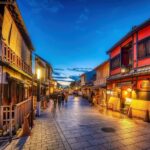
Also, the walking at night helps you see Gion in a more atmospheric way. The lantern-lit streets change the mood, and the sounds of people along the river make it feel like a real neighborhood, not just a set of photo spots.
You can also read our reviews of more walking tours in Kyoto

Meeting at the Disney Store: easy start and a phone-friendly ticket
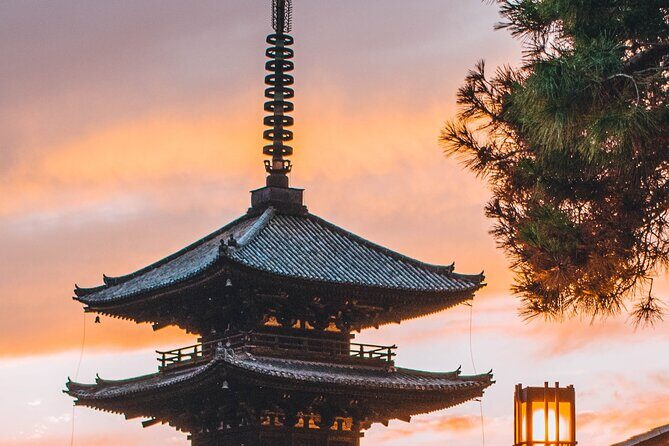
You meet at the Disney Store – Kyoto Shijo-Kawaramachi area in Shimogyo Ward (at the north-east corner of 四条通河原町, the Kotocross Hankyu Kawaramachi area, 1F/2F). It’s a pretty easy landmark to find, especially on your first night when Kyoto still feels like a puzzle.
You’ll have a mobile ticket, which keeps things smooth once you’re standing there and trying not to drop your phone in the canal drainage. This is also described as near public transportation, which matters because you’re likely arriving by transit rather than taxi hopping.
One more practical thing: the tour is set up for most people to join, and service animals are allowed. And with a maximum of 10 travelers, the group stays small enough that you’re not constantly dodging shoulders.
Yasaka Shrine stop: a 30-minute reset with real context
The first stop is Yasaka Shrine, and the planned time is about 30 minutes. You’re not being rushed through it like a checklist. The guide takes time to explain the history behind the shrine, then you get a break to walk around and take photos.
This is a smart opening. Yasaka Shrine anchors the whole experience. If you start at a street without that background, Gion can feel like scenery. Starting here makes the later geisha district details click into place faster.
A small tip for this stop: treat it like your first “set your eyes” moment. After you’ve seen the shrine atmosphere up close, the street scenes later feel less random and more connected.
Hanamikoji Street: geiko vs maiko without the confusion
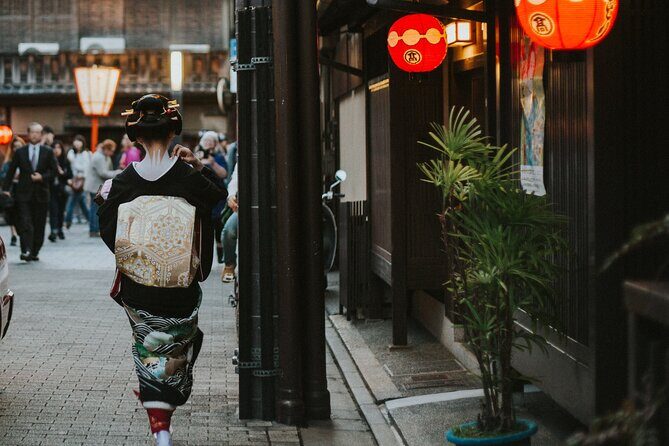
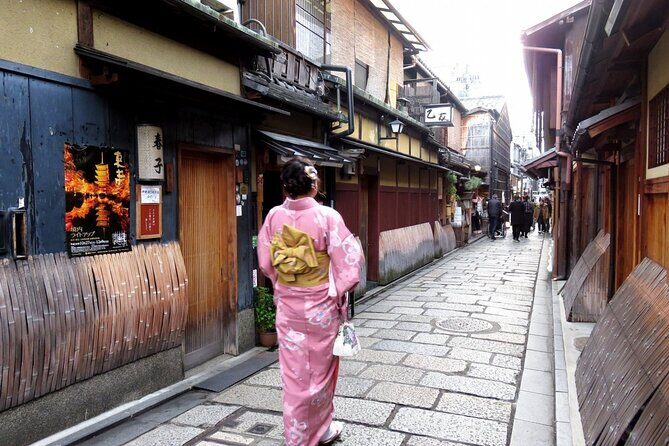
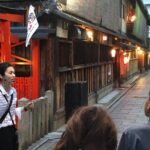
Next up is Hanamikoji Street for about 40 minutes. This is one of the older areas of a hanamachi (the geisha entertainment districts), and it’s where you’ll get the guided version of what you see.
The big value here is that the guide explains the difference between geiko and maiko. Most visitors know the district “look,” but they don’t always know what the labels mean, or why the roles matter. Getting that explanation while you’re standing in the right streets saves you from guessing later.
You also spend enough time here to actually walk the street and absorb the details. The point isn’t just to say you were at Hanamikoji; it’s to understand the district’s rhythm and the people-related traditions that shape it.
If you’re hoping for a purely photo-based stop, note that this is also an information stop. The photos happen, but they’re tied to what the guide is pointing out.
Kiyamachi Street: the entertainment district, plus practical food leads
After Hanamikoji, the tour moves to Kiyamachi Street for another 40 minutes. This is described as Kyoto’s modern entertainment district area, and the guide uses that time to recommend restaurants off the busiest paths.
Here’s what makes this useful: you don’t just get historical talk. You get next-step planning. The tour explicitly includes restaurant recommendations that you may be able to visit without needing a reservation.
A common trip problem in Kyoto is realizing too late that your dinner plan requires bookings you didn’t know you needed. This stop helps you avoid that scramble.
One caution: if the evening is busy, you may feel like you’re weaving through crowds. Keep your attention on your guide and the group, and use the restaurant recommendations to build a shortlist for later rather than trying to make instant decisions while walking.
You can also read our reviews of more evening experiences in Kyoto


Kamogawa River: the short stop that changes the mood
The final featured stop is Kamogawa River, with about 10 minutes planned. It’s brief by design, because the goal is atmosphere, not a long nature detour.
This is where the tour leans into sound and energy: people hang out here, and entertainers gather around the river area. Even in a short window, it can feel like the heart of the entertainment-district feeling in Kyoto.
If you’re the type who likes to pause and listen, this is your spot. Just remember you’ll be in motion again quickly, so don’t drift too far from the group.
Snack, geisha chocolate, and what the food part adds
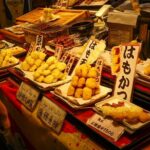
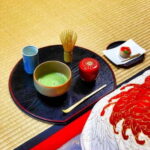
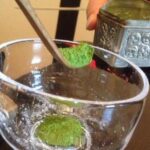
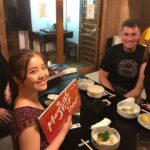
The tour includes a traditional Japanese snack, plus a geisha chocolate described as a nice extra. That might sound minor, but it does something important for a walking tour: it gives you a small reset break without turning the outing into a meal.
Food in this kind of cultural route also helps you stay present. When you’re moving through streets with big visual impact, a snack gives your brain an anchor point. You’re not only seeing Kyoto—you’re tasting a part of the experience.
This isn’t dinner. So if you’re going out hungry, plan for a proper meal after. The tour is two hours, and the food is there as a bonus, not a substitute.
Pacing and crowds: how to keep up (and not lose the moment)
The route is about 2 hours total, but the streets you’re walking through can be crowded. That means pace matters. If you tend to lag behind to stop and read every sign or shop window, keep an eye on the group.
Based on the tour’s feedback patterns, the main frustration isn’t the route itself—it’s that busy evenings can make it easy to feel rushed or hard to navigate. A small group helps, but it doesn’t turn Gion into a quiet lane.
My practical advice:
- Wear comfortable shoes. You’ll be walking in a tight area with lots of stop-and-go.
- Stay close during transitions between streets. That’s when people stretch out.
- If your goal is photos, pick one or two priority moments instead of trying to capture everything at once.
Also, for those extra-busy nights, remember the guide is managing a group first. So if you’re waiting for perfect framing, you may spend more time behind than alongside. Stay with the plan, then shoot during the designated photo breaks.
Price and value: is $32.58 for 2 hours worth it?
At $32.58 per person for about 2 hours, you’re paying for three things: a guided route, cultural context, and a small food package (snack + geisha chocolate).
What makes the value feel fair is that you’re not just getting someone to point at streets. You get explanations tied to what you’re seeing—especially the geiko vs maiko difference on Hanamikoji. That kind of context is hard to “self-teach” while you’re standing in the middle of a busy district.
You’re also getting a practical bonus: restaurant recommendations around Kiyamachi that help you plan meals without turning dinner into a last-minute stress event. Even a single “good dinner lead” can feel like it pays for the tour.
Two value notes to keep it balanced:
- It’s not a private tour. With up to 10 people, you’re sharing attention.
- It’s also not a slow, linger-by-everything stroll. You’ll be moving.
If your priority is a guided orientation that helps you understand what you’re seeing and where to go next, this price makes sense. If your priority is total freedom and no group pace at all, you might prefer self-guided wandering.
When this tour is a great fit (and when it’s not)
This tour fits best if you:
- want a first-night orientation to Gion in a short time
- like learning what you’re seeing rather than just taking photos
- appreciate practical local guidance for food options later
- enjoy a guide who adds humor and answers questions (the tour format supports back-and-forth)
You might skip it if you:
- want a slow, silent walk where you choose every stop without group timing
- get overwhelmed by crowds and tend to move too far from your group
- need a guaranteed long food experience (this is snack-based, not dinner)
Also, if you’re coming during peak busy periods, go in knowing the streets can be hectic. Bring patience. Your reward is that you’ll leave with a clearer mental map of Gion and what the labels mean.
Should you book this Gion night walk?
I’d book it if you want a time-efficient way to connect Kyoto’s big traditional signals (Yasaka Shrine) with the street-level reality of Gion (Hanamikoji, Kiyamachi, and the Kamogawa River). The combo of cultural explanation plus snack and geisha chocolate makes the 2 hours feel purposeful rather than random.
I’d think twice if you hate group pacing in crowded areas or you expect a long, unhurried night stroll. In Gion, the streets set the pace for you.
If you do book, plan to arrive a few minutes early at the Disney Store – Kyoto Shijo-Kawaramachi meeting point, keep your group close during busy transitions, and treat the restaurant suggestions as planning fuel for the rest of your trip.
FAQ
How long is the Gion night walking tour?
It runs for about 2 hours.
Where does the tour start and end?
It starts at the Disney Store – Kyoto Shijo-Kawaramachi meeting point and ends back at the same meeting point.
What stops are included during the walk?
Yasaka Shrine, Hanamikoji Street, Kiyamachi Street, and the Kamogawa River.
Is admission included for the sights?
The listed admissions for the stops are marked as free.
What food is included on the tour?
You’ll receive a traditional Japanese snack and a geisha chocolate.
What if the weather is poor?
The tour requires good weather, and if it’s canceled due to poor weather you’ll be offered a different date or a full refund.