REVIEW · TOKYO
Asakusa Kimono Photography Tour
Book on GetYourGuide →Operated by MagicalTrip · Bookable on GetYourGuide
Kimono photos in Asakusa are a whole vibe. I love that this tour pairs authentic costume time with a real shooting plan, so you’re not just walking around guessing where to stand. You’ll also get a guide-photographer who can shift from directions to history on the fly, and in recent tours the support has included photographers like Gota Murakami—the kind of calm, patient energy that helps first-timers feel comfortable.
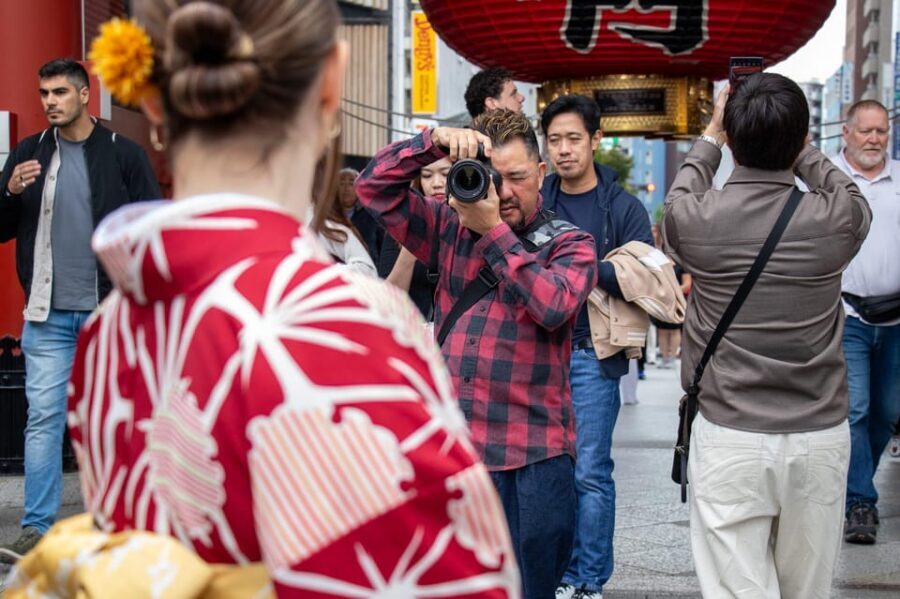
My second favorite part is the photo focus built into the experience: you start at 1:30 PM to catch Asakusa before it gets packed later, then you move through well-chosen stops while your guide helps with poses, etiquette, and story cues. The kimono itself is part of the show too—women can pick their favorite look and get help with hair and accessories, not just the clothing.
One thing to plan around: food and drinks aren’t included, and you’ll be in a costume for about 150 minutes of walking and posing. If you’re the type who runs on snacks, grab a bite before you meet your guide so you don’t feel rushed.
In This Review
- Key points before you go
- Why Asakusa at 1:30 PM makes your photos better
- Meeting point at Seven-Eleven Tobu Asakusa Station-mae (and how to spot the sign)
- Choosing your kimono and getting styled without panic
- The photo walk: viewpoints, pose coaching, and staying comfortable
- Asakusa stories you can connect to the streets
- What photos you get back (raw plus edited) and how to use them
- Price and value: what $122 covers (and why it can be fair)
- Who this tour fits best (and who might skip)
- Quick planning tips so you get the best shots
- Should you book this Asakusa Kimono Photography Tour?
- FAQ
- What time does the tour start?
- How long is the Asakusa kimono photography tour?
- Where do I meet the guide?
- Is the tour offered in English?
- What’s included in the price?
- Do I receive both raw and edited photos?
- Are children allowed to wear kimonos?
- Are food and drinks included?
Key points before you go
- 1:30 PM start helps you shoot Asakusa with fewer crowds before the rush ramps up later.
- Kimono rental + styling for women (and professional help getting dressed) makes first-timers feel confident.
- English guide-photographer who directs photos and adds context as you walk.
- Raw and edited photos so you get both options for quick sharing and final keepsakes.
- Walk-based tour through Asakusa, with a set return to the meeting point.
Why Asakusa at 1:30 PM makes your photos better
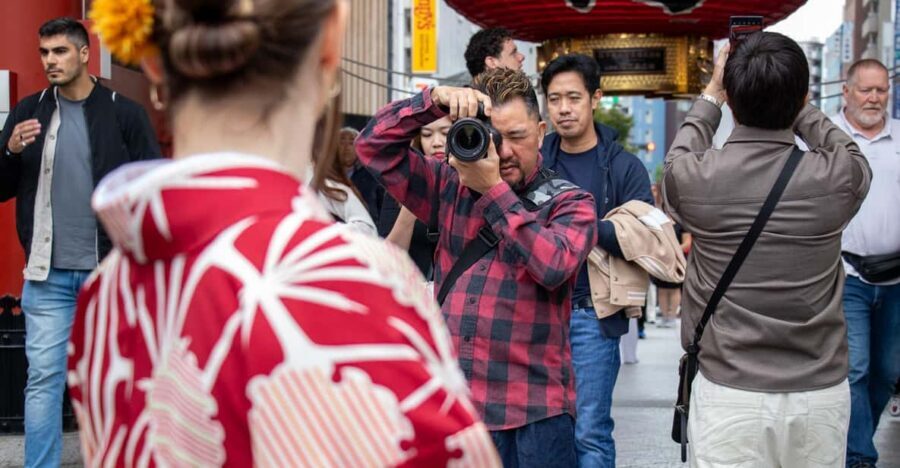
Asakusa is one of those Tokyo neighborhoods where the streets look great no matter what time you go. But photos improve fast when you avoid the heaviest crowd waves. Starting at 1:30 PM is a smart compromise: you still get daylight for clean shots, yet you’re not dealing with the same density you’ll see later in the day.
What I like about this timing is that it changes your whole experience. When there are fewer people, your guide can take a little longer at each spot, you can pose without feeling like you’re blocking a stream of visitors, and your images tend to look more timeless. You get the street energy, not the photo-bomb chaos.
Also, you’re in a kimono or yukata. That means the costume does what it’s supposed to do: it turns the location into the story. In a packed crowd, it can feel like an added pressure. In lighter conditions, it feels like you’re participating in the neighborhood instead of just visiting it.
You can also read our reviews of more photography tours in Tokyo


Meeting point at Seven-Eleven Tobu Asakusa Station-mae (and how to spot the sign)
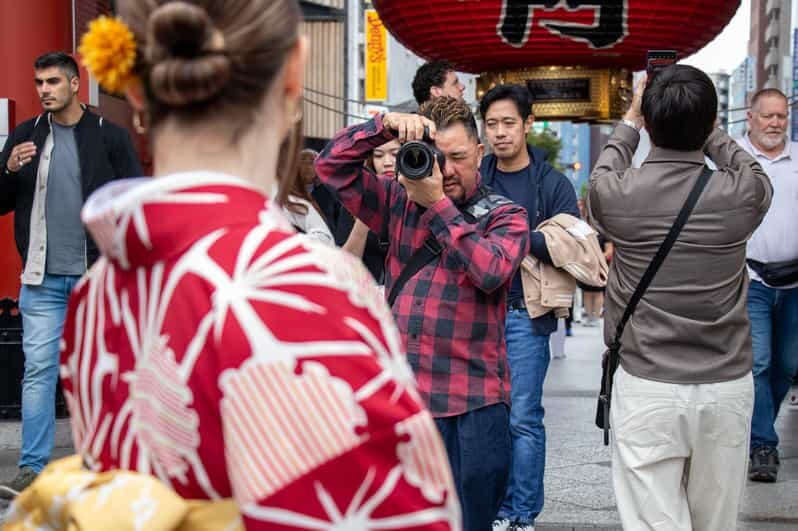
You meet right in front of Seven-Eleven (Tobu Asakusa Station-mae store). It’s easy to reach on foot from transit: about 1 minute from the Tobu Line Asakusa Station Main Ticket Gate and about 2 minutes from the Ginza Line Asakusa Station Exit A5.
The guide will be holding a red/orange MagicalTrip sign, and that detail matters more than you’d think on a busy station street. If you show up a few minutes early, you’ll have time to orient yourself and not scramble when you see the sign.
Practical tip: treat the meeting spot like a “photo zone.” People will be moving quickly nearby, and you’ll be in a fresh kimono setup. When you’re early, you keep the morning-stress (even though it’s afternoon) out of your day.
Choosing your kimono and getting styled without panic
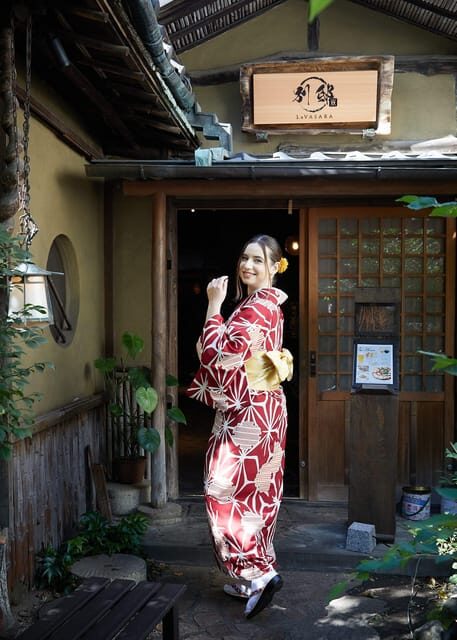
This tour isn’t just renting a robe and pointing you toward a shrine. You choose a kimono (or yukata in summer), and for women, you also get hairstyle and accessories. That’s a big deal because “costume photos” often fail when the outfit looks incomplete. Here, the styling effort shows up in the final look.
If you’ve never worn a kimono before, the comfort part is key. You’ll have professional assistance for getting dressed, and the guide will make sure you’re set up well enough to walk and pose. That removes the biggest beginner fear: feeling like you’re going to tug at your sleeves the whole time.
You’ll also get kimono etiquette tips. That sounds like a lecture until you realize what it actually means in practice—how you hold yourself, how you move, and what to be mindful of while taking photos. The result is less “performing” and more “natural you,” which is exactly what you want on camera.
One note for families: children’s kimono options are available for ages 3 to 10. Children above that are treated as adults, so the outfit and styling approach follows the adult setup.
The photo walk: viewpoints, pose coaching, and staying comfortable
The heart of the experience is a guided photo walk that lasts about 2.5 hours, with stops along the way. Your guide (the same person who photographs) leads you to the photo points and also keeps the session moving so you’re not standing around waiting for direction.
Here’s what makes this style of tour work: you’re not left to figure out camera angles while also wearing unfamiliar clothing. Your guide suggests poses and helps you make small adjustments that improve the whole frame—hand position, body angle, where to look, and how to stand without feeling stiff.
And it’s not only about pretty photos. It’s about lowering friction. In real feedback, people specifically mentioned feeling at ease even if they’re shy. That matters because being comfortable gives better images. Your face relaxes, your posture improves, and the photographer isn’t chasing you around for shots.
Since the tour involves walking, choose shoes you can trust. You don’t want to spend the whole tour thinking about your feet. Think practical: you’ll get good time in the street, and your body should be happy enough to enjoy the moment.
Asakusa stories you can connect to the streets
You’re guided by an English-speaking local who shares Asakusa context while you’re walking. This is more useful than “standing there and hearing facts,” because you’re seeing the neighborhood while you learn.
The best part is that the tour blends famous spots with lesser-known corners. That mix is what turns your photos from generic into personal. When a street has a story behind it, it feels less like a backdrop and more like something you understand.
In recent experiences, people highlighted how the guide didn’t just take pictures—he also connected the area to history and quieter details you might otherwise miss. Even if you know Asakusa already, this kind of guided framing helps you notice different textures: street patterns, how areas evolved, and what people still do today.
If you like travel that feels like a conversation rather than a checklist, you’ll probably enjoy the rhythm here: walk, pause, shoot, learn, repeat.






What photos you get back (raw plus edited) and how to use them
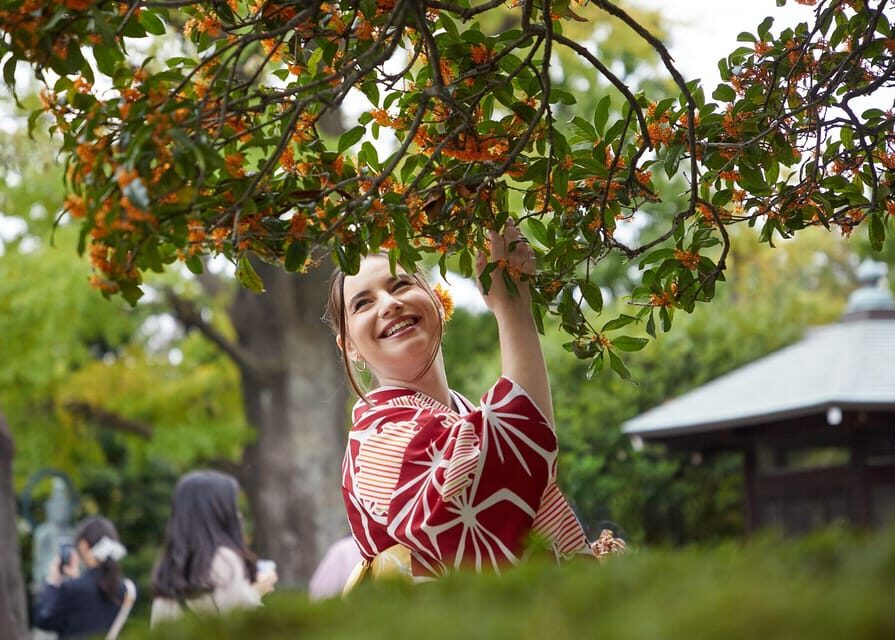
You’ll receive raw and edited photos as part of the package. That matters because raw files can be useful for your own edits, while edited photos are the “ready to share” option.
So you get two benefits at once:
- Immediate impact: edited images for your social posts and prints.
- Creative control: raw files if you want to fine-tune exposure or color yourself.
Your guide also includes instructions, which helps you make the most of your results. That might sound small, but when you’re taking costume photos, tiny changes in how you select and crop can turn a good shot into a great one.
A nice side effect: when you’re dressed up, your photo set tends to be very “you-shaped.” That means you’ll likely come away with images that feel like a memory, not just a snapshot of a landmark.
Price and value: what $122 covers (and why it can be fair)
At $122 per person for about 150 minutes, you’re paying for more than “a photographer.” The included items are substantial:
- Kimono rental
- English-speaking local guide
- Raw and edited photos
- Instructions
Renting a kimono on your own can be a hassle if you’re also trying to coordinate timing and get good photo spots. Hiring a photographer can also get expensive fast, especially when you want both costume help and a walking route plan. Here, the cost is bundled: costume setup plus guided shooting plus post-processing.
Is it the cheapest way to get photos? No. But it’s a realistic value play if you want results without spending your day figuring out logistics. You’re buying time, direction, and outcomes.
Who this tour fits best (and who might skip)
This Asakusa kimono photography tour is a strong match if you want:
- A uniquely Japanese souvenir that isn’t just a selfie at a landmark
- Guided pose direction (especially if you feel awkward in front of a camera)
- Costume styling support so your look is complete, not improvised
- A slower, guided way to understand Asakusa beyond the obvious spots
It’s also family-friendly in the sense that guides are used to working with kids; one experience specifically mentioned how the photographer helped his boys enjoy the session. That doesn’t mean every family experience will feel identical, but it signals a comfort level with children and group energy.
You might consider skipping if you:
- Hate walking and want a mostly seated experience
- Expect the tour to include meals or downtime long enough to refuel mid-way
- Want a fully private “no direction” photo session with no history talk (this is still a guided experience, not a free-roam shoot)
Quick planning tips so you get the best shots
Since food and drinks aren’t included, eat beforehand. Bring a small water plan if you’re the type who needs it, and avoid going in hungry.
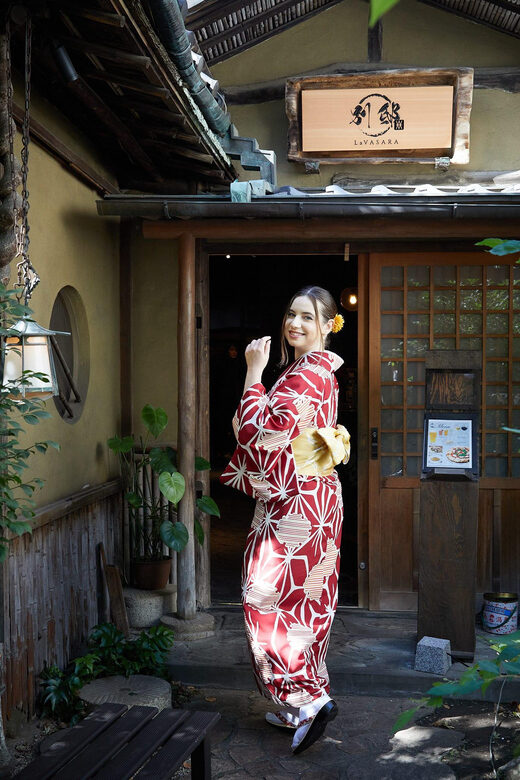
Also, plan for costume time. Kimono sessions usually come with a different kind of body awareness: how you move, how you stand, and how you hold your hands. The guide helps with this, but your best photos happen when you relax and follow direction.
Finally, show up with your mindset set to “photo session,” not “quick walk.” You’ll be pausing often, posing, and getting guidance. That’s the point.
Should you book this Asakusa Kimono Photography Tour?
If you want a real, guided photo day in Asakusa—where you look great because the costume styling is handled and your photographer knows how to work the streets—this is an easy yes. The combination of kimono rental, English local guide, and raw plus edited photos is exactly what makes the price feel fair for the time you spend.
Book it especially if you’re nervous about taking photos. The guide-photographer approach is designed to keep things moving and make it comfortable, so you’re not standing there wondering what to do next. And starting at 1:30 PM helps your images by reducing the worst of the crowd pressure.
I’d pass if you’re mainly looking for independent sightseeing with no direction and no costume commitment. But if you want a Japanese memory you can frame, this tour is built for that.
FAQ
What time does the tour start?
The tour starts at 1:30 PM.
How long is the Asakusa kimono photography tour?
It lasts 150 minutes.
Where do I meet the guide?
Meet in front of the Seven-Eleven convenience store at Tobu Asakusa Station-mae (with a red/orange MagicalTrip sign).
Is the tour offered in English?
Yes. The tour has an English-speaking local guide.
What’s included in the price?
Kimono rental, an English-speaking local guide, raw and edited photos, and instructions are included.
Do I receive both raw and edited photos?
Yes. You’ll get both raw and edited photos.
Are children allowed to wear kimonos?
Kimono options are available for children aged 3 to 10. Children above this age are treated as adults.
Are food and drinks included?
No, food and drinks are not included.