REVIEW · TOKYO
Cozy Tokyo Class: Ramen, Sushi, Sake Pairing & Cultural Exchange
Book on Viator →Operated by Ramen and Sushi Cooking Tokyo · Bookable on Viator
Tokyo smells amazing at dinner time. This class turns that energy into hands-on cooking, pairing ramen and sushi in a small, friendly setting with English-friendly Japanese hosts.
I especially love the small group size capped at four people (and an activity cap of eight), because you get real attention while you’re chopping, mixing, and asking questions. I also love the way the lesson comes with context—stories about Japanese culinary traditions that make the food feel less like a worksheet and more like a living culture.
One thing to consider: the experience is focused, not spread across multiple stops. If you want a sightseeing-style day with lots of walking between neighborhoods, you may feel a bit limited to one cooking location.
In This Review
- Key highlights you’ll care about
- Tsukishima meeting point and how to plan your 3 hours
- The real advantage: small groups mean hands-on help
- Beyond cooking: cultural exchange while you work
- Making ramen in class: what you learn and what you can recreate
- Sushi + optional gyoza: rolling, assembling, and timing
- Sake pairing and drinks: how the lesson stays relaxed
- The food you make: what the meal feels like at the end
- Price and value: why $79 makes sense for this format
- Who should book this class (and who might skip it)
- Should you book Cozy Tokyo Class: ramen, sushi, sake, and cultural exchange?
- FAQ
- How long is the cooking class?
- What is the price?
- How many people are in the group?
- What dishes will I learn to make?
- Are sake pairings included?
- Do I get recipes to take home?
- Where do I meet, and where does it end?
- Is transportation included?
- What if I need to cancel?
Key highlights you’ll care about
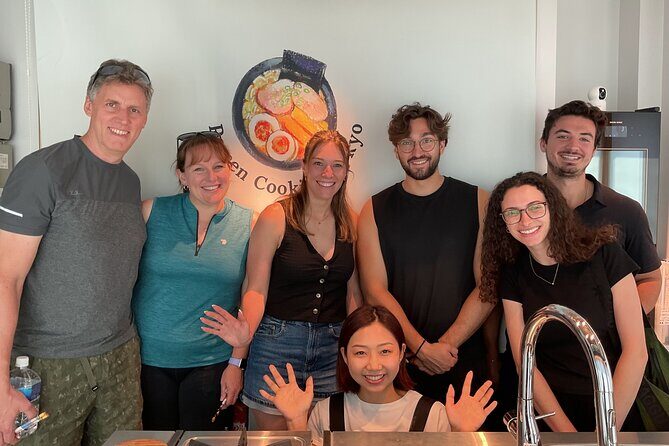
- A class capped at four people for clear instruction and a relaxed pace
- Two iconic dishes: ramen and sushi (with optional gyoza depending on the class flow)
- English-friendly hosts who keep explanations easy and questions welcome
- Unlimited sake pairings (plus beer and non-alcoholic) so you can snack your way through learning
- Detailed recipe handouts so you can recreate your results at home
- Cultural exchange built into cooking, using stories and conversation, not just recipes
Tsukishima meeting point and how to plan your 3 hours
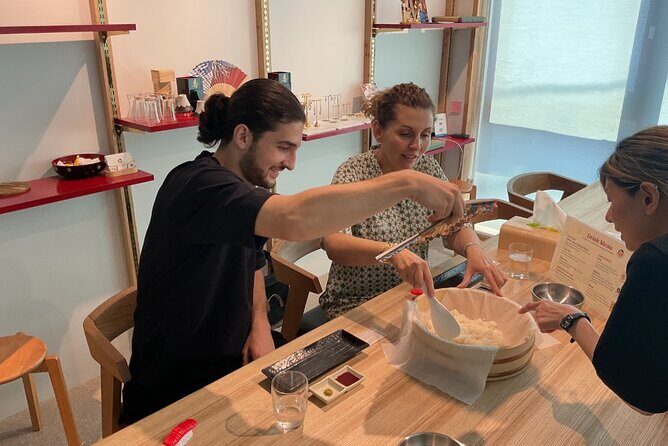
This experience is set up as a cozy, focused cooking block in Tokyo, starting and ending back at the meeting point. You meet at HAUS Tsukishima in Tsukuda (Chuo City), Tokyo: 2-chōme-13-5 (address listed as 104-0051, Tsukuda). The tour says it’s near public transportation, which matters because the class does not include private transportation.
Plan for a smooth, stress-free arrival. Since you’re spending your time cooking, not commuting across town, keep your day schedule a little flexible so you don’t rush in at the last minute. If your Tokyo itinerary is packed, this one is nice because it’s contained—show up, cook, eat, and you’re done.
Also note the format: it runs about 3 hours. That’s long enough to do real prep and cooking, but short enough that you won’t lose momentum. Come hungry, but don’t come so hungry that you forget to listen to instructions.
You can also read our reviews of more food & drink experiences in Tokyo

The real advantage: small groups mean hands-on help
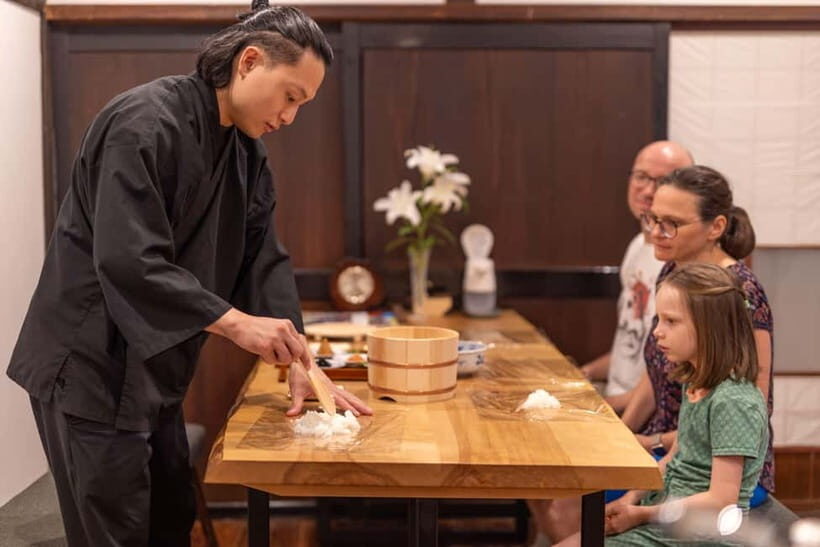
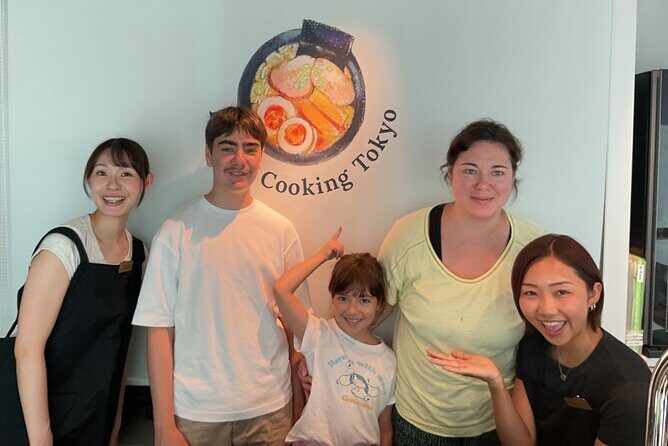
This is where the class earns its value. The experience is designed to stay intimate—up to four people in your cooking group, with the overall activity capped at eight. That difference sounds small on paper, but it changes everything at the counter.
In a big class, you’re often watching. In a small one, you’re doing. You’ll hear the host clearly, and when something doesn’t make sense—texture, seasoning, timing—you can ask. You’re not stuck waiting for attention.
The hosts are English-friendly, which is huge for a food class. You still get the cultural side, but you’re not guessing your way through core steps. Based on what the instructors are known for, they also keep things moving at a pace that fits different levels.
And yes, there’s also a social side: the class is friendly for families, couples, and friends, including special occasions like birthdays or honeymoons. Even if you travel solo, the conversation rhythm here tends to be natural because you’re all working on the same dishes.
Beyond cooking: cultural exchange while you work
The class theme is Beyond Cooking, Feel the Connection. That’s not just a tagline. It shows up in how the instructors talk while you cook—stories about Japanese culinary traditions and the meaning behind techniques.
You don’t have to know Japanese food history to enjoy it. You just have to be curious. You’ll get little explanations tied directly to what you’re making, so the lesson sticks. For example: ingredients aren’t treated like mysterious stuff in a jar. They’re tied to flavor goals and textures you can actually taste.
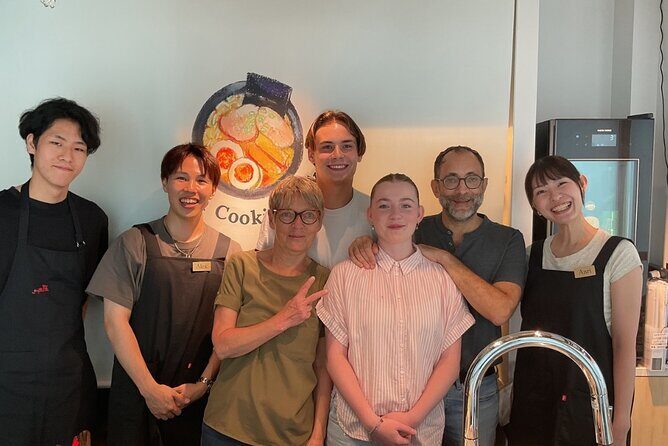
The instructors you might learn from include Umi San and Kou San (and other English-speaking team members like Risa, Namiko, Komi, and Alissa). In practice, that team approach helps: one person can demonstrate while another supports the group, so you’re not waiting for one instructor to finish one task before anyone can get help.
If you like food that has a story—and you want the story to connect to what’s on your plate—this format fits.
Making ramen in class: what you learn and what you can recreate
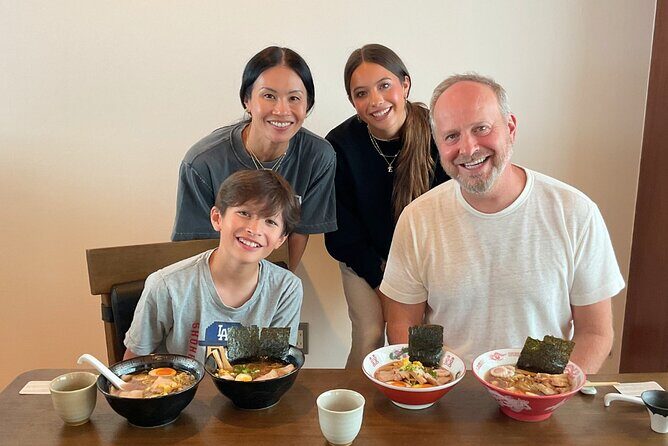
Ramen is the headline dish for a reason. It’s also the kind of food where small steps matter: broth balance, seasoning timing, and how you build your bowl so it tastes right, not just “looks like ramen.”
During the class, you’ll make ramen from scratch. That means you’re not just reheating something or following a distant slideshow. You’ll be working with ingredients and techniques that turn into a finished bowl you can taste at the end (and use as a guide for your own at-home attempt).
What makes this useful for real life is the combination of:
- Guided steps while you cook
- Hands-on practice so you learn what to look for
- A detailed recipe given to you as a gift
The recipe handout part matters more than people think. Tokyo ramen is not one single style. If you want to recreate your bowl later, you need the measurements and the logic behind the seasoning. Having that written down turns the class into a repeatable skill, not a one-off meal.
Also, don’t underestimate how much taste changes during cooking. With this kind of class, you’ll learn to judge the ramen as it comes together, which is the key to doing it again without copying someone else’s exact bowl.
Sushi + optional gyoza: rolling, assembling, and timing
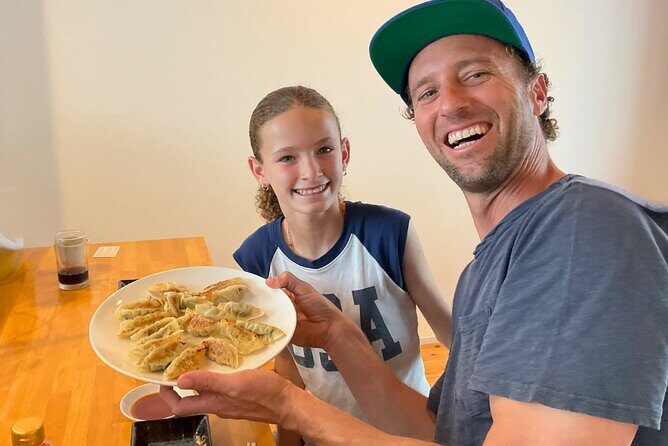
This class pairs ramen and sushi. Depending on the class format, gyoza may be optional. The point is that you’ll get a second iconic dish experience, and sushi adds a different set of skills than ramen.
Sushi in a cooking class isn’t just about rolling. It’s about getting the build right: the rhythm of prep, the way components come together, and how you keep textures balanced. In a good class, you don’t just get shown how once—you get a chance to do it, even if you’re a beginner.
Gyoza is often the “fun side quest” if it’s included in your session. It gives you another satisfying skill: handling filling, shaping, and cooking for a crisp result. If you’re trying to boost your Japanese cooking confidence, a dish like gyoza is a strong way to add variety without doubling the complexity of learning.
Because the class time is about 3 hours, timing matters. You’ll learn how to keep pace—when to switch tasks, when to slow down for quality, and how to finish strong so you can actually enjoy your meal instead of rushing out the door.
You can also read our reviews of more drinking tours in Tokyo




Sake pairing and drinks: how the lesson stays relaxed
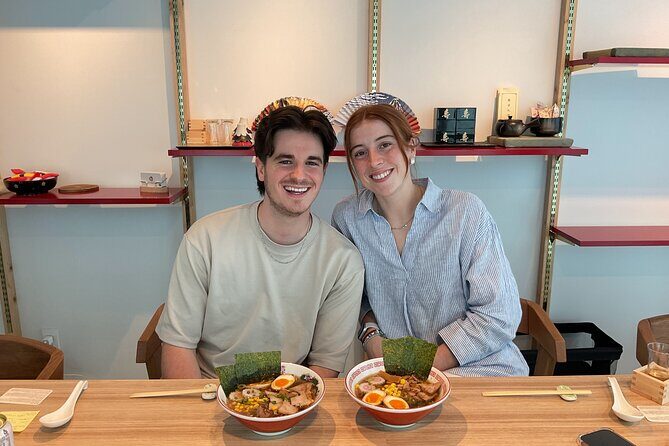
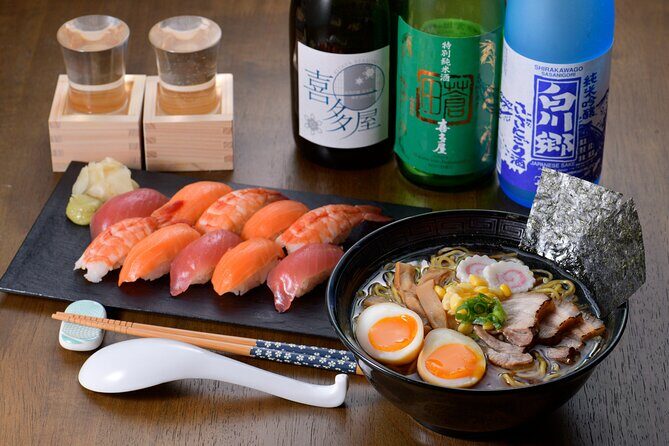
Food classes can feel either stiff or chaotic. This one aims for calm and fun. You’ll have unlimited sake pairings, along with Japanese beer and non-alcoholic beverages.
That setup changes the vibe. It’s not just a drinking add-on. It helps make the cooking itself more social, which in turn makes it easier to ask questions. When your group is relaxed, you learn faster because you aren’t frozen by nerves.
If you’re driving or prefer not to drink, you’re covered by the non-alcoholic options. And if you do drink, the pairing approach is part of the cultural story: different drinks change how you notice flavors, so you’re learning with your mouth, not only your ears.
A small practical note: since it’s unlimited, pace yourself. The goal is a tasty pairing, not turning ramen into a nap.
The food you make: what the meal feels like at the end
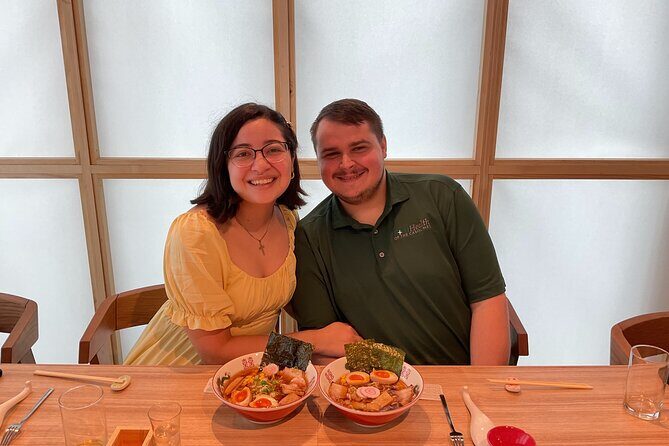
This is a cooking-and-tasting experience. After you cook, you get to enjoy what you made—ramen and sushi (and possibly gyoza). That matters, because you can connect the steps to the result instantly.
One of the biggest strengths of a small, supportive class is correction in real time. Instructors can help you avoid common beginner issues like overly salty or under-seasoned components, or not quite getting the right feel for texture. When the final bowl comes out right, you walk away with the confidence that you can repeat the process.
The overall tone from the experience descriptions is that the team is warm and proud of what they teach. That energy isn’t fluff. It makes people comfortable enough to ask questions, which directly improves the learning.
Price and value: why $79 makes sense for this format
At $79 for about 3 hours, this class isn’t trying to be “cheap ramen for tourists.” It’s priced for a real cooking experience with included ingredients and instruction, plus a key bonus: detailed recipes to take home.
Here’s the value logic for you:
- You get two major dishes (ramen and sushi), with optional gyoza depending on the session
- You’re in a small group (up to four in your group), which usually costs more than big-group classes
- Drinks are included: unlimited sake pairings, plus beer and non-alcoholic options
- The class includes all fees and taxes, which keeps your total from surprising you
If you’ve ever paid for a “food tour” where you mostly eat and barely cook, this offers a different outcome. You leave with skills and written instructions, not just memories.
The only real cost after booking is your own getting-there plan. Private transportation is not included, so factor in transit time to the Tsukishima area.
Who should book this class (and who might skip it)
You’ll love it if:
- You want to learn Japanese cooking basics in a way that’s practical, not intimidating
- You’re a beginner who needs English-friendly guidance
- You’ve cooked before and want structured technique with feedback
- You like a social class experience with conversation and cultural stories
- You want a Tokyo activity that’s compact and doable even on a busy day
You might consider skipping if:
- You mainly want sightseeing and photo stops rather than kitchen time
- You hate cooking classes where you’re expected to actually participate (this is hands-on by design)
- You’re sensitive to alcohol-based pairings—though you do have non-alcoholic options
For families and multi-age groups, the format tends to work well because it’s not one-size-fits-all lecturing. You can still enjoy the cultural exchange while focusing on the tasks that fit your pace.
Should you book Cozy Tokyo Class: ramen, sushi, sake, and cultural exchange?
My call: book it if your goal is to leave with a couple of reliable, repeatable dishes. This class earns its “cozy” reputation through two things that matter: the small-group attention and the recipe support that helps you cook again at home.
At $79 for a roughly 3-hour session, you’re paying for real instruction, included ingredients, and included drinks—not just eating. And because the hosts bring cultural context while you cook, the experience feels more meaningful than a checklist.
If your Tokyo trip has room for one memorable food lesson, this is a strong pick. You’ll go in wanting ramen and sushi. You’ll come out knowing how to build them—and how to explain what you did.
FAQ
How long is the cooking class?
The class is about 3 hours.
What is the price?
The price is listed as $79.
How many people are in the group?
Your cooking group is capped at four people, and the activity overall has a maximum of 8 travelers.
What dishes will I learn to make?
You’ll make ramen and sushi. Gyoza may be optional depending on the class.
Are sake pairings included?
Yes. The class includes unlimited sake pairings, plus Japanese beer and non-alcoholic beverages.
Do I get recipes to take home?
Yes. You receive a detailed recipe as a gift so you can recreate the dishes at home.
Where do I meet, and where does it end?
You meet at HAUS Tsukishima in Tsukuda, Chuo City (104-0051). The activity ends back at the meeting point.
Is transportation included?
Private transportation is not included. The meeting point is near public transportation.
What if I need to cancel?
Free cancellation is available up to 24 hours in advance for a full refund. If you cancel within 24 hours of the start time, the amount paid is not refunded.