REVIEW · TOKYO
Get Unique Insights into Tokyo – Private Tour with local Guide
Book on Viator →Operated by Shiny Tours Tokyo · Bookable on Viator
Tokyo runs fast; this tour slows it down. This private walking experience strings together classic sights and modern neighborhoods in Tokyo, with flexible timing and a local guide who helps with navigation and photos along the way.
I love how photo stops are built in. Your guide can take solo and group pictures at major landmarks, so you get the shot without doing an awkward phone-arm routine. I also like the included tea/coffee and traditional snack, which keeps the “walk, look, move” rhythm going.
One thing to consider: you’re on foot a lot. Expect a solid walking pace in busy areas, and meals are not included beyond the snack and drink, so plan around that.
In This Review
- Key Highlights
- Private Tokyo in 2 to 6 Hours: What You Really Get for $82.90
- Meiji Jingu Ichino Torii Start: Shrines, Etiquette, and a Calm First Step
- Harajuku Takeshita Street and Cat Street: Fashion Watching Without the Stress
- Shibuya Crossing Spectacle: How to Handle the World’s Busiest Intersection
- Shinjuku Skylines to Kabukichō Tower Neon Views
- Odaiba in Half a Day: Aqua City, DECKS Tokyo Beach, Hikara Yokocho, Unicorn Gundam
- Asakusa and the Edo-Period Entertainment Roots
- Akihabara: From Post-War Radio Parts to Pop Culture Shopping
- Ueno Park and the Imperial Palace East Gardens: Green Breaks in Central Tokyo
- How the Included Transit, Photos, and Snacks Save Your Day
- Ending Near Shinjuku Station: Your Easy Exit Plan
- Who This Private Walking Tour Is Best For
- Should You Book This Tokyo Private Tour?
- FAQ
- How long is the Tokyo private tour?
- Is this a private tour or a group tour?
- Where does the tour start?
- Where does the tour end?
- Is pickup available?
- What’s included in the price?
- Are meals included?
- What sights are covered?
- Do we get photos during the tour?
- What if my plans change?
- Do I receive a mobile ticket?
Key Highlights
- Private guide, not a big-group shuffle: only your group, with a pace that can match your interests
- Photo help at each landmark: solo and group pictures included, plus guidance for good angles
- Tea/coffee and a traditional snack: small fuel boost during the walking stretches
- Flexible start time and duration: morning or afternoon, from 2 up to 6 hours
- Included transportation between stops: saves time crossing Tokyo
- A tour route that mixes eras: shrines, shopping streets, neon districts, and calmer garden space
Private Tokyo in 2 to 6 Hours: What You Really Get for $82.90
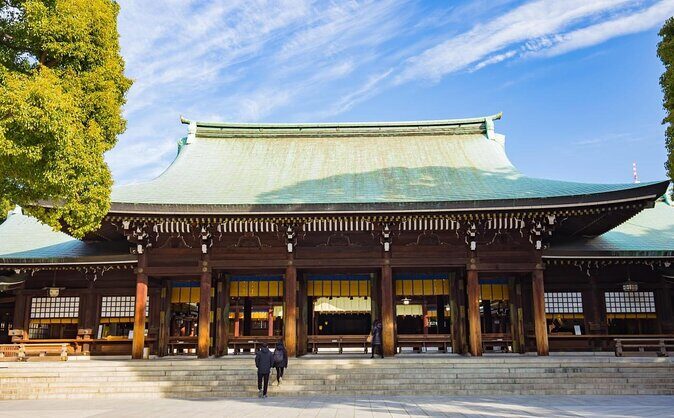
For $82.90 per person, you’re buying something most people struggle to assemble on their own in Tokyo: an ordered route plus a local brain. This is a private tour, with an English-speaking guide available, and it’s designed to work whether you have a short “soft landing” block or a longer half-day.
Here’s where the value shows up. First, transportation between destinations is included, so you’re not wasting your limited time figuring out the fastest transit hops between neighborhoods. Second, photos are part of the experience. That matters in Tokyo because many of the best photo moments are also the most chaotic moments. A guide handling the timing means you don’t miss the shot—or the crossing.
The third value piece is basic but often overlooked: tea/coffee and a traditional Japanese snack are included. When you’re bouncing between Meiji Jingu, Harajuku, and the Shibuya-Shinjuku corridor, you want energy that isn’t an expensive detour.
The trade-off is that this is still a walking tour. Even though transit is included between destinations, you should plan your day around movement. If you want lots of museum-style sitting time, you might feel like you’re passing through too fast.
You can also read our reviews of more guided tours in Tokyo
Meiji Jingu Ichino Torii Start: Shrines, Etiquette, and a Calm First Step
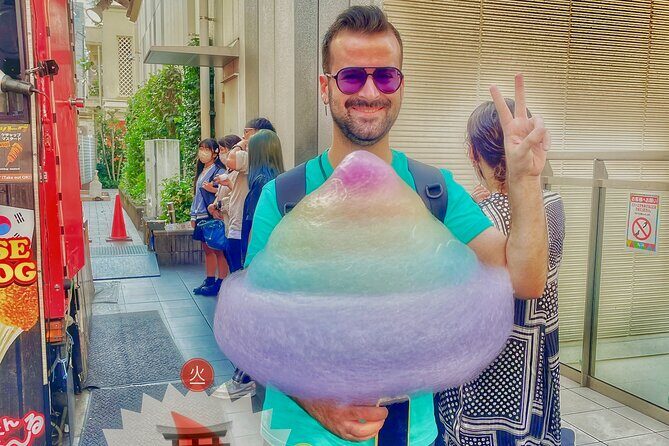
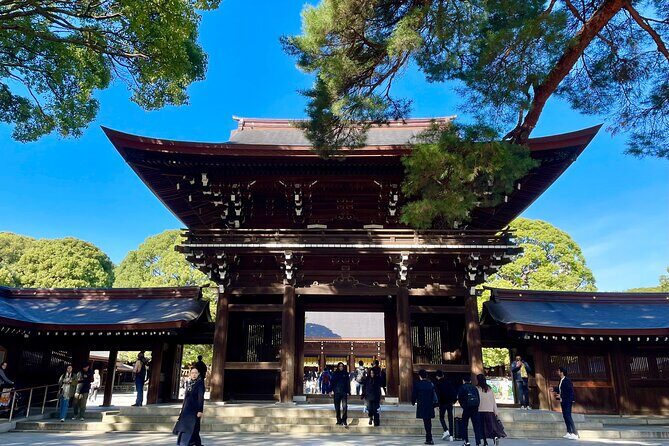
The tour begins at Meiji Jingu Ichino Torii in the Shibuya area. From there, you walk together to the main building of Meiji Jingu Shrine. The setting is a great way to start because it’s a reset from the city’s noise. You get to slow your brain down first, before heading into Harajuku’s fashion streets and Shibuya’s crowd energy.
What I like about this start is the way it gives context. You’re not just seeing a shrine landmark; you’re learning the cultural and historical background behind it. And because it’s a guide-led experience, you also get help with how to be respectful in a shrine space—useful if you’re worried about etiquette. Tokyo is pretty forgiving, but being thoughtful makes the experience smoother.
Practical tip: arrive with shoes you’re comfortable walking in. Even the “calm” parts involve paved paths, steps, and slow moving lines depending on the day.
Harajuku Takeshita Street and Cat Street: Fashion Watching Without the Stress
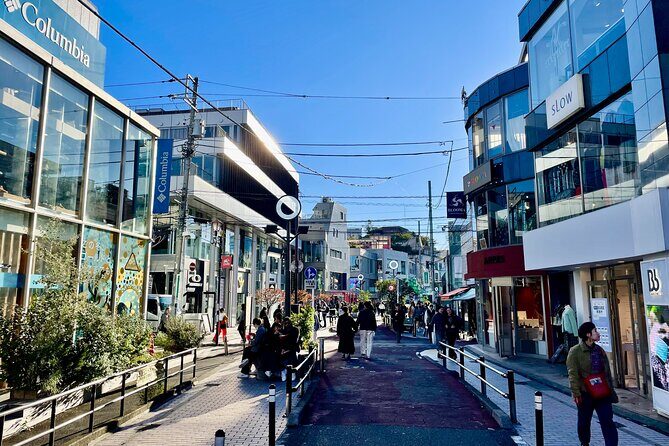
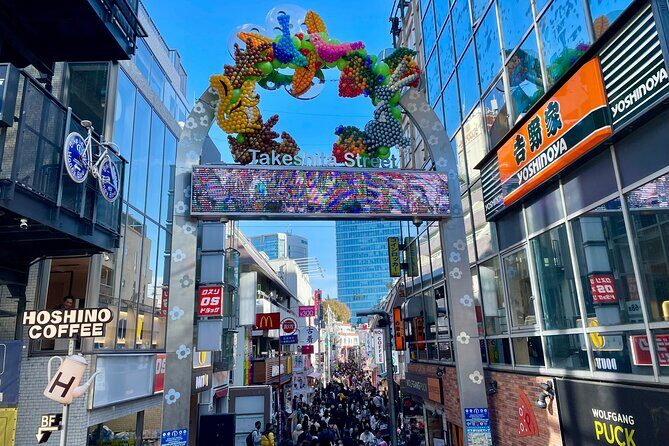
After Meiji Jingu, you head into Harajuku. This is where the tour turns from “Japanese tradition” to “Japanese style,” fast. Takeshita Street is the signature stop—color, snack stands, storefronts, and street fashion everywhere you look. It’s iconic, and it’s also the kind of place where it’s easy to get turned around if you’re wandering alone.
What makes this section work on a private format is that you’re not stuck behind a herd or forced to follow a rigid group route. Your guide can steer you through the busy parts and keep the experience readable. You also get local recommendations and tips, which helps you understand what you’re looking at instead of just photographing it.
You may also pass through areas like Cat Street and Omotesando depending on the exact route your guide uses for your time window. That’s a nice bonus because it shifts the vibe from Harajuku’s loudest retail strip to surrounding streets that feel more like “Tokyo fashion in motion” than one single attraction.
Photo tip: if you want pictures that actually capture the street energy, this is a good place to lean into it. The guide’s photo help matters here because the best angles are often right where phones get bumped.
Shibuya Crossing Spectacle: How to Handle the World’s Busiest Intersection
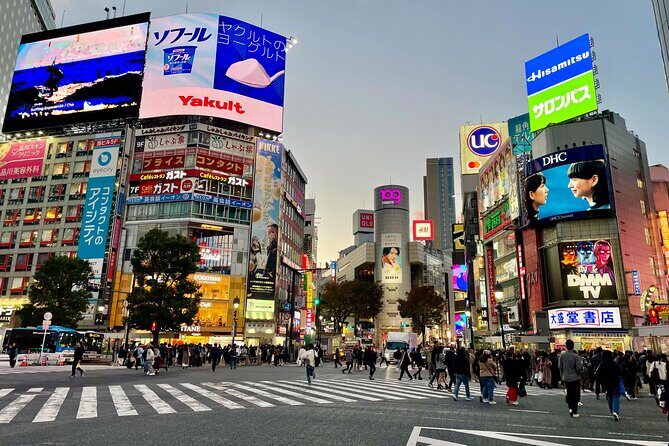
Next comes Shibuya Crossing, the famously intense scramble at the heart of Tokyo’s modern street life. This is where your guide earns their paycheck. Navigating the crossing is easy when you know where to stand and when to move, and tricky when you’re timing your own steps with thousands of strangers.
The tour keeps the focus on “what it feels like to be there” rather than turning Shibuya into a checklist. You’ll walk through the area and experience the pulse of the neighborhood, and you’ll also get tips that help you travel the transit system later on your own.
From my perspective as a reviewer, Shibuya is the stop where people either feel overwhelmed or instantly understand Tokyo’s rhythm. A private guide tips the scales toward the second outcome. You get a quick sense of how the space works—then you can enjoy the moment instead of fighting it.
Shinjuku Skylines to Kabukichō Tower Neon Views
From Shibuya, the tour continues to Shinjuku by train. Shinjuku is a different flavor: taller buildings, more neon density, and a “Tokyo at night” feeling even in daytime.
A highlight here is a skyline-and-lights photo moment, followed by time near Kabukichō. The route includes Kubukichō Tower in the Kabukichō area, which is a great viewpoint option if you want to see Tokyo as a grid of lights instead of a set of individual attractions.
If you’re the type who likes photos but hates waiting in lines, this stop is a strong fit because it compresses a lot of visual impact into a limited time window. And because it’s private, the guide can help you time the move and keep the walking manageable.
The tour finishes near the Giant 3D Cat in Shinjuku, close enough to Shinjuku Station that you can continue your day without a long return trip.
You can also read our reviews of more private tours in Tokyo


Odaiba in Half a Day: Aqua City, DECKS Tokyo Beach, Hikara Yokocho, Unicorn Gundam
Depending on your chosen duration, the tour can extend toward Odaiba, a slice of Tokyo that feels futuristic and playful by comparison. The route includes Aqua City and DECKS Tokyo Beach, plus the nostalgic-feeling Hikara Yokocho.
Then there’s the Unicorn Gundam statue. Even if you’re not a hardcore fan, it’s the kind of landmark you can’t help but notice. It’s also a natural photo stop: colorful, big, and designed to be photographed.
What I like about including Odaiba options is that it prevents Tokyo from becoming one-style-only. Shrines, fashion streets, and neon nightlife already cover a lot of variety. Odaiba adds another layer: waterfront views, modern shopping complexes, and themed attractions.
Practical note: this is the section where the time math matters most. If you have only 2 to 3 hours, you might not fit Odaiba in the mix. If you choose 4 to 6 hours, it becomes more realistic.
Asakusa and the Edo-Period Entertainment Roots
Asakusa is one of those neighborhoods that makes Tokyo feel older, even when everything around it keeps changing. The tour includes Asakusa with a focus on its role during the Edo period, when it was Tokyo’s main entertainment district. You’ll hear about kabuki theaters, geisha houses, and street performers—then see how the spirit of that fun still shows up today.
For me, Asakusa works best as a contrast stop. After the tech and commerce energy of places like Shibuya and Akihabara, Asakusa gives you a different pace. It also helps you understand why Tokyo’s culture isn’t just one theme. It’s layers.
If you enjoy walking through neighborhoods more than checking off famous spots, this is a strong place to slow down and take in the details.
Akihabara: From Post-War Radio Parts to Pop Culture Shopping
Akihabara is included, and it’s not just electronics stores. The tour frames it with a clear origin story: in the post-war period, it grew from a black market for radio parts, then evolved into one of Tokyo’s most lively and unique areas.
That history helps you shop smarter. Even if you’re not hunting for specific gadgets, you’ll understand why the place feels the way it does. It’s the kind of neighborhood where you can go in with one goal and leave with two new interests.
What’s good about having a guide here is simple: you avoid getting stuck doing random wandering in the wrong direction. You’re more likely to hit the areas that match your interests—whether that’s themed stores, gadget browsing, or just taking in the atmosphere.
Ueno Park and the Imperial Palace East Gardens: Green Breaks in Central Tokyo
If your legs start complaining, this is where you get relief. The tour includes Ueno Park, one of Tokyo’s most beloved green spaces, known for seasonal beauty. It’s tied to Kaneiji Temple origins, and that connection gives the park a deeper meaning than a typical city park.
Then, the route can include the Imperial Palace East Gardens. These gardens are a peaceful retreat in central Tokyo, with remnants tied to Edo Castle—like stone walls, gates, and a moat. The result is a different kind of sightseeing: less “street spectacle,” more “feels like history without the museum ceiling.”
I like including at least one calm, open-space area in a half-day tour because it keeps the whole day from turning into nonstop stimulation. It also makes the shrine-and-gardens theme feel complete.
How the Included Transit, Photos, and Snacks Save Your Day
A lot of Tokyo tours forget the small stress points. This one actually addresses several.
- Transportation between destinations included means less time lost in stations and less guesswork.
- Solo-pictures and group-pictures included means you don’t have to recruit strangers for every photo. Your guide also helps with photo timing at places like Shibuya.
- Coffee and/or tea plus a typical Japanese snack included keeps you from burning time finding something quick and good.
- Flexible start time and duration helps you pick the part of Tokyo that matches your energy level.
One more practical perk: the tour is private. That matters in Tokyo because crowd flow can be brutal. A guide can help you adapt the walk to weather, energy, and pacing, which is exactly what you want on day one.
Also, your guide can provide local recommendations and tips. Those are the things that make the rest of your trip easier, because you’ll know what to try next without spending an hour searching.
Ending Near Shinjuku Station: Your Easy Exit Plan
Most walking days die in the last mile: getting back to transit without turning the day into a scramble. This tour ends near the Giant 3D Cat in Shinjuku, close to Shinjuku Station.
That location is useful because Shinjuku is one of Tokyo’s major transit hubs. After the tour, you’ll have options to continue your day. You can ask how to get back to your next stop.
If you like structure, set your next plan right after the tour. If you prefer spontaneity, use the guide’s directions and then let Shinjuku do what it does: make every direction feel like a new chapter.
Who This Private Walking Tour Is Best For
This tour is a smart fit for:
- First-time visitors who want a strong overview fast, without missing etiquette or ending up lost.
- People who want a soft landing after a long flight and need their day shaped around walking pace and stress level.
- Anyone who likes photos as part of the experience and prefers not to spend the day wrestling a phone while walking.
- Small groups or families who appreciate a private route and the ability to adjust timing and stops.
It can also help repeat visitors who want a guided way to connect Tokyo neighborhoods into a story. The route includes everything from shrines to neon districts, plus gardens and park time.
Big caveat: if you hate walking or expect a lot of sit-down breaks, this may feel like too much motion for your style, especially in Shibuya and Harajuku.
Should You Book This Tokyo Private Tour?
Book it if you want an efficient, guide-led way to understand Tokyo in a few hours, with built-in transit, photo help, and small included fuel stops. It’s especially worth it early in your trip, because the tips and navigation guidance can make the rest of your days easier.
Skip it (or adjust your expectations) if you’re looking for a museum-heavy schedule, or if you want meals fully handled and don’t want to manage your own food timing. Also, if your mobility is limited, walking-heavy neighborhoods like Harajuku and Shibuya may be a challenge.
If you do book it, my best advice is simple: wear comfortable shoes, drink water when you can, and tell the guide what you care about most (fashion, history, pop culture, or photo-heavy stops). This tour works best when it’s aimed at your interests, not just Tokyo’s famous names.
FAQ
How long is the Tokyo private tour?
It runs about 2 to 6 hours, depending on the duration option you choose.
Is this a private tour or a group tour?
It’s a private tour/activity, so only your group participates.
Where does the tour start?
You meet at Meiji Jingu Ichino Torii, 1-chōme-18-20 Jingūmae, Shibuya, Tokyo 150-0001, Japan.
Where does the tour end?
The tour ends near the Giant 3D Cat in Shinjuku, Shinjuku City, Tokyo 160-0022, near Shinjuku Station.
Is pickup available?
Yes, pickup is offered.
What’s included in the price?
Transportation between destinations is included, plus a private English-speaking guide, solo and group pictures of you at landmarks, and coffee and/or tea along with a traditional Japanese snack.
Are meals included?
Food and drinks are not included (beyond the coffee/tea and the included snack).
What sights are covered?
The route can include Meiji Jingu Shrine, Harajuku (including Takeshita Street and street fashion areas), Shibuya Crossing, Shinjuku (including Kabukichō Tower), and options in Odaiba, Asakusa, Akihabara, Ueno Park, and the Imperial Palace East Gardens.
Do we get photos during the tour?
Yes. The guide can take solo-pictures of you with famous landmarks and group-pictures as well.
What if my plans change?
You can cancel for a full refund if you cancel up to 24 hours in advance of the experience start time.
Do I receive a mobile ticket?
Yes. The experience includes a mobile ticket.