REVIEW · TOKYO
Gotokuji and Setagaya Walking Tour: Home of the Lucky Cat Statue
Book on Viator →Operated by Trip Designer Inc. · Bookable on Viator
Hundreds of lucky cats, plus real local Tokyo. This half-day walk links Gotokuji Temple with Setagaya shrines and the castle-ruins park, and you get the lucky cat origin story from your guide. It’s not a theme-park route; it’s a neighborhood route where history, faith, and everyday shopping overlap.
I also love the practical shrine guidance, including purity and prayer rituals, plus a break with a ¥800 drink at Shoinjinja shopping street. One thing to plan for: the walk includes mountain paths, so pack comfortable shoes and expect some uphill/downhill, and lunch is not included.
In This Review
- Key things I found most interesting
- Why Gotokuji and Setagaya Feel Like Real Tokyo
- Price, time, and what $84.70 buys you
- Meeting at Gotokuji Station and the walking rhythm
- Stop 1: Setagaya Hachimangu and its sumo-ring detail
- Stop 2: Gotokuji Temple, where the lucky cats line up
- Stop 3: Shoinjinja Shrine and the Yoshida Shoin connection
- Shoinjinja shopping street and the included drink (up to ¥800)
- Setagaya Castle Ruins Park and why you should care about the setting
- A local commute moment: Tokyu Setagaya Line
- What to expect from your guide (and how that affects your day)
- Who should book this tour, and who might skip it
- Should you book the Gotokuji and Setagaya Walking Tour?
- FAQ
- What’s the starting point and start time?
- Where does the tour end?
- How long is the tour?
- How much does it cost?
- What’s included in the tour price?
- Are admission tickets included?
- What should I wear for this walk?
- Is transportation from the places included?
- Can the tour be extended?
- Are there any limits on canceling?
Key things I found most interesting
- Lucky cat backstory at Gotokuji Temple, not just photo time
- Setagaya Hachimangu’s sumo ring (dohyo) and the spirit of local festivals
- Shoinjinja Shrine’s connection to Yoshida Shoin and tombs of Shoka Village schoolchildren
- Shoinjinja shopping street stop with a free coffee or tea (up to ¥800)
- Local pace: you’ll also spend time around the Tokyu Setagaya Line area, like a commuter stroll
- Real end-of-tour recommendations on what to eat and see nearby
Why Gotokuji and Setagaya Feel Like Real Tokyo
This tour makes you trade big-city sightseeing for something more specific: a quiet pocket of Setagaya where religious sites sit near daily life. You’re not just chasing famous Instagram subjects. You’re walking through shrine grounds, temple precincts, and side streets where people actually go—sometimes with errands, sometimes with family, and often with a clear sense of routine.
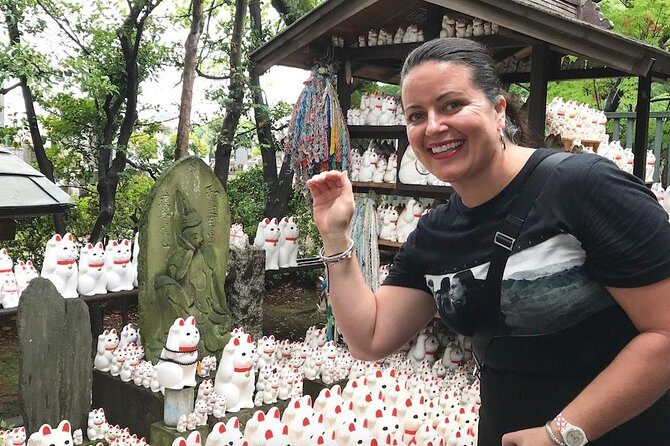
The big draw is Gotokuji Temple and its lucky cats. But what makes the experience worth your time is the way the guide connects the cat statues to the place and the tradition around them. You’ll see the famous lineup of maneki-neko cats, yes, but you also learn the story behind why these statues ended up here and what they’re meant to express.
And Setagaya isn’t just a backdrop. Places like Setagaya Hachimangu and Shoinjinja Shrine add context for how this ward thinks about luck, character, and community. That contrast—cat charm on one side, shrine practice on the other—is what turns this from a quick photo stop into a more satisfying half-day.
You can also read our reviews of more walking tours in Tokyo
Price, time, and what $84.70 buys you
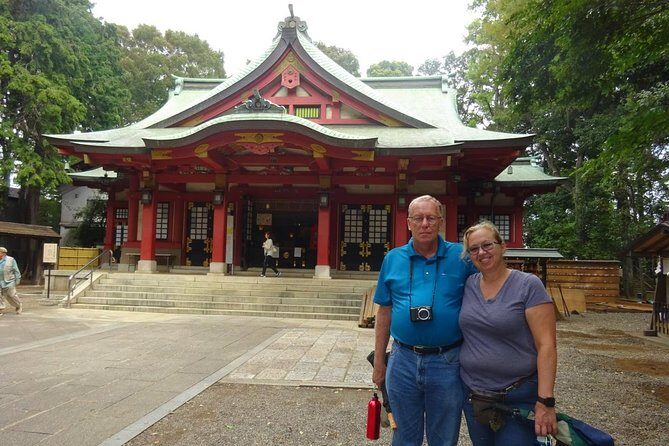
The price is listed at $84.70 per person, for about 3 hours 30 minutes. That’s not “cheap,” but you’re also paying for structure. You get a professional guide, a mobile ticket, and an included drink up to ¥800 at Shoinjinja shopping street.
Here’s the value math I’d use in your head:
- Temple and shrine entries at the scheduled stops are free (based on the tour’s stop notes).
- You’re not paying separately for the walk to make sense—you’re buying someone to explain what you’re looking at.
- A ¥800 coffee or tea can soften the cost if you’d otherwise buy a drink anyway.
Also, this is described as a private tour/activity, meaning your group goes together rather than joining a random crowd. If you’re traveling with friends or family and want an easier conversation pace, that matters.
A small consideration: group discounts are mentioned, so it’s worth checking what your total becomes for your party size.
Meeting at Gotokuji Station and the walking rhythm
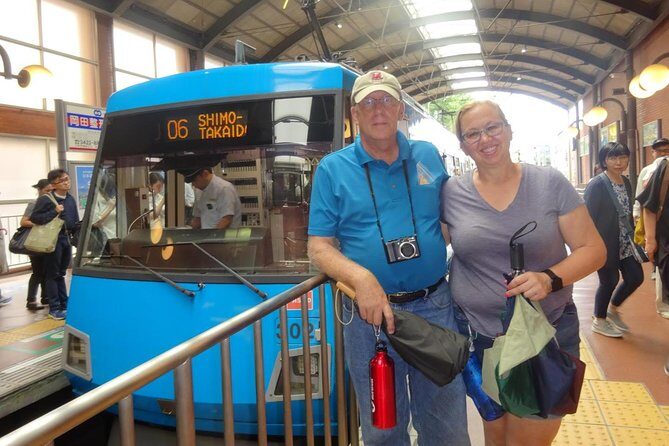
You start at Gotokuji Station at 10:00 am, with the tour ending at Shoin-jinja-mae Station. Expect a walking-based route with a moderate fitness level. The tour specifically asks you to wear shoes that are easy to walk in because you’ll be on mountain paths.
That phrase matters. Even if the sights are close on a map, hills can slow you down and make a guided walk feel more tiring. If you’re the sort who can walk 45–60 minutes on uneven ground comfortably, you’re in good shape. If you usually avoid stairs and slopes, you might feel this one more than you expect.
The tour also doesn’t include transportation to or from attractions, so treat it as a guided stroll that starts at the station and ends at another. You’ll use local rail to connect on your own before and after.
Stop 1: Setagaya Hachimangu and its sumo-ring detail
Your first stop is Setagaya Hachimangu, one of the larger shrines in Setagaya Ward. The standout detail here is the dohyo, the sumo ring set up in the shrine grounds, plus the honosumo event (奉納相撲).
If you’ve only thought of sumo as a stadium sport, this is a fun correction. In Japan, you’ll often see traditional sport elements connected to shrines and seasonal events. It’s not about spectacle for tourists—it’s about ritual and local identity.
Even if you’re visiting on a normal day (not during an autumn festival), the shrine grounds help you understand that Setagaya has its own seasonal rhythm. This stop gives you that “oh, this is how locals mark time” feeling early in the walk.
Stop 2: Gotokuji Temple, where the lucky cats line up
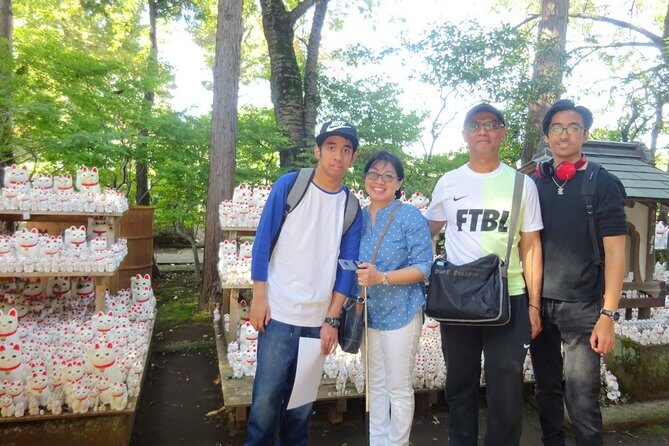
Then you get to the main event: Gotokuji Temple. The tour ties the temple’s beginnings to the Kotokuin hermitage, which was built by Kira Masatada—the same name connected to Setagaya Castle in 1480. It also notes the sect shift over time: it began as Rinzai and later became Soto in 1584.
That may sound like dry detail, but it helps you frame why this temple is treated as more than a quirky cat attraction. It’s a real religious site with a timeline, leadership changes, and community roots.
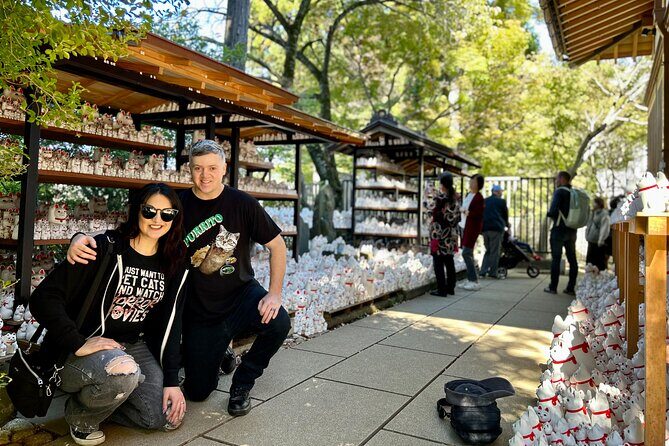
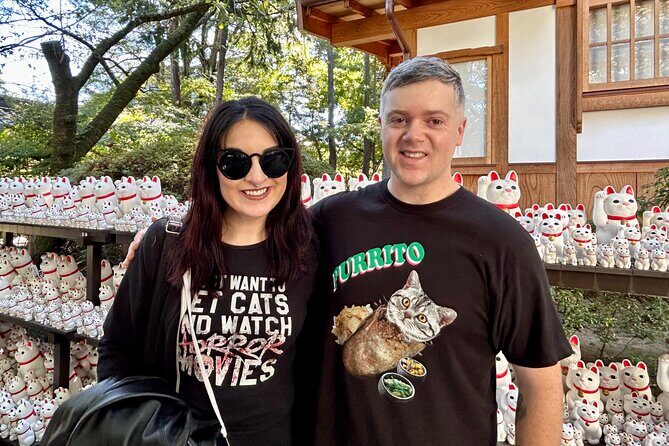
Most importantly, this is where you’re taught the origin story behind the lucky cats on display. You’ll see hundreds of them lined up, and you’ll get the guide’s explanation for why these maneki-neko statues became associated with the place. The best part is that you’re looking at a phenomenon with context, not just counting cats for the camera.





Stop 3: Shoinjinja Shrine and the Yoshida Shoin connection
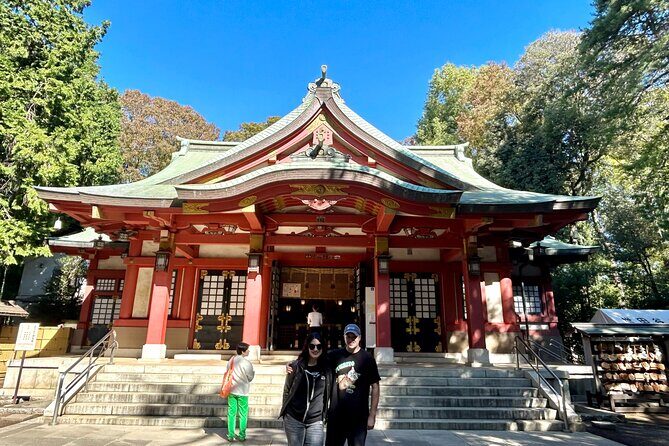
Next comes Shoinjinja Shrine. It’s described as being founded in 1882, centered on the master Yoshida Shoin. If you’re curious about Japanese history beyond what you’ll see in Tokyo’s top museums, this stop is a nice bridge.
The tour also points out something specific in the shrine precincts: the tombs of Shoka Village schoolchildren, including Yoshida Shoin, plus a reproduced building structure in the area.
What I like about this stop is the way it shifts the theme from cats to people and education. You’re still in a shrine environment, still in a place of belief, but now the story connects to learning, youth, and the kind of values a community wants to pass along.
And the guide portion matters again. In the experience’s feedback, guides like Yumi are highlighted for teaching visitors how to enter a shrine with correct purity and prayer rituals. That’s practical. It helps you avoid feeling like you’re doing the wrong thing at the wrong moment.
Shoinjinja shopping street and the included drink (up to ¥800)
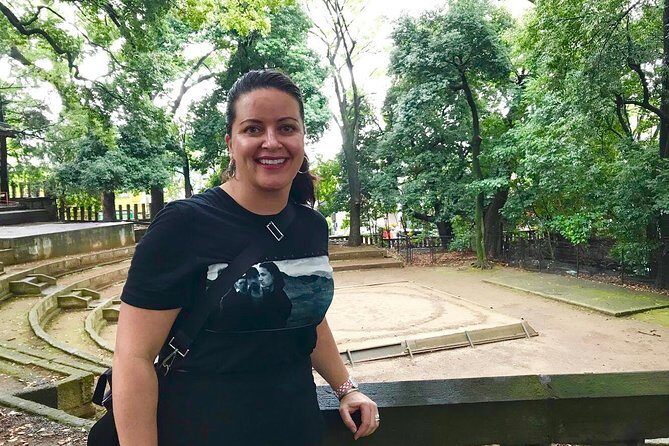
Between shrines, you get a stop at the Shoin Jinja Shopping Street. This is where the tour becomes more than sightseeing. It’s the kind of street you can picture locals using to grab snacks, browse small shops, and catch up without turning everything into a performance.
The big perk here: an included coffee or tea up to ¥800. Even if you don’t plan to buy anything else, it’s a smart pacing tool. You can sit, cool down, and reset before the last stretch.
And you also get the kind of post-tour help that’s hard to replicate on your own. The tour overview says you’ll receive advice on where to eat and what to see in this suburban neighborhood after the tour. That’s the difference between seeing sights and leaving with a workable plan for your remaining time.
Setagaya Castle Ruins Park and why you should care about the setting
The route includes time around Setagaya Castle Ruins Park. Even if you’re not a hardcore history person, ruins parks in Japan are often the best places to feel the shape of a place. You can connect the shrine and temple sites to the geography that supported them.
Castle-related sites also help explain why Setagaya has its own character. This ward isn’t just modern Tokyo spilling outward. It has older layers—fortunes, patron figures, and changing religious roles—woven into the neighborhood structure.
This is the kind of stop where your guide’s stories turn “this is a park” into “this is where the old power and the newer devotion met.” If you enjoy photos but also like to understand what your camera can’t capture, this part is worth slowing down for.
A local commute moment: Tokyu Setagaya Line
You also spend a short segment around Tokyu Setagaya Line, described as a line with locals. It’s not a sightseeing ride like the tourist rail routes you might recognize. Instead, it’s a quick immersion into normal life—Tokyo, but at a neighborhood speed.
That matters because it reinforces the tour’s real strength: this walk is built for people who want to see Tokyo beyond the famous postcard stops. When you mix shrines with everyday stations and shopping streets, you start to understand what “Tokyo” feels like between headlines.
What to expect from your guide (and how that affects your day)
A walking tour lives or dies by the guide. This one appears to get strong feedback for guide personality and attention—names like Mitsuko, Yumi, Emiko, and Yoshimi are mentioned in the available experiences.
Here’s what that means for you as a reader:
- You’re likely to get more than a lecture. Guides are described as keeping people engaged and responsive.
- You may get practical instruction for shrine entry and prayer steps (again, Yumi is specifically associated with teaching purity and prayer rituals).
- If you’re trying to navigate a part of Tokyo where you don’t have a fixed plan, a good guide can save time and reduce stress.
If you’re the type who likes asking questions—about what you’re seeing, why it matters, or what’s nearby—this tour format suits you. It’s also private for your group, so you’re not stuck waiting for the next microphone moment.
Who should book this tour, and who might skip it
This tour is a great fit if:
- You want lucky cat culture with real context at Gotokuji Temple.
- You like shrine visiting but want help with correct ritual etiquette.
- You’d rather walk a neighborhood and eat later on your own than follow a crowded bus route.
- You’re okay with 3.5 hours of walking that includes some uphill/downhill.
Consider skipping if:
- You hate hills and don’t handle uneven “mountain paths” well.
- You want a tour that fills every minute with sit-down attractions (this one has active walking plus multiple short stops).
- You’re looking for lunch to be included or built into the package (it isn’t).
Should you book the Gotokuji and Setagaya Walking Tour?
If you’re coming to Tokyo and you’ve already done the major landmarks, I think this is a strong choice. It gives you a concentrated dose of something unusual—hundreds of lucky cats—but ties it to the surrounding shrines, the local shopping street, and the setting of Setagaya. The included drink and free entries help the cost feel less stingy than it first looks, and the guide help with shrine rituals can be a genuine upgrade to your experience.
Book it if you enjoy the small-scale side of travel: walking, learning what symbols mean, and ending your day with actual neighborhood guidance on where to eat next.
Don’t book it if you’re chasing only famous sights with minimal walking. This tour is for people who want Tokyo to feel like a lived-in place, not just a checklist.
FAQ
What’s the starting point and start time?
You meet at Gotokuji Station (1 Chome-43 Gotokuji, Setagaya City) at 10:00 am.
Where does the tour end?
The tour ends at Shoin-jinja-mae Station (4-chōme-21-16 Wakabayashi, Setagaya City).
How long is the tour?
It runs about 3 hours 30 minutes.
How much does it cost?
The listed price is $84.70 per person.
What’s included in the tour price?
You get a professional guide plus coffee or tea at Shoinjinja shopping street (up to ¥800).
Are admission tickets included?
The scheduled stops are marked as having free admission tickets.
What should I wear for this walk?
Wear shoes easy for walking, since you’ll be on mountain paths and need solid footing.
Is transportation from the places included?
No. Transportation to/from attractions is not included, though you’ll start and end at stations.
Can the tour be extended?
Yes. It can be extended for ¥5,000 per group per hour, paid in cash.
Are there any limits on canceling?
You can cancel for a full refund if you cancel at least 24 hours before the experience start time.