REVIEW · TOKYO
Grand Sumo Tournament Tour w/an English Guide ,Tokyo January 2026
Book on Viator →Operated by True Japan Tour · Bookable on Viator
Sumo feels louder than you expect. This guided January Grand Sumo Tournament outing makes the sport click fast, with an English guide walking you to your reserved seat and explaining what you’re seeing. I really like the reserved chair seating setup, and I also like that the guide explains the roles of the ring officials and the meaning of sumo etiquette, so you’re not stuck guessing. One thing to think about: this tour can feel pricey if you compare it to a standard ticket you might manage to score on your own.
In 3 hours 45 minutes, you’ll pair the energy of match day inside the Kokugikan with context from the Sumo Museum, where ranks, divisions, and traditions become much easier to follow. It’s designed for a small group (limited to 10 people), so questions don’t disappear into a crowd.
The tour starts at 2:15 pm near Ryōgoku Station and ends back at the meeting point, using a mobile ticket for entry. In January, weather can matter for whether the schedule runs smoothly, so I’d build in a little flexibility.
In This Review
- Key highlights you’ll actually use
- January Grand Sumo: why the guided format matters
- Ryōgoku meeting point and getting oriented fast
- Inside Kokugikan: reserved chair seating and match-day rhythm
- Sumo Museum: turning ranks, divisions, and etiquette into something you can follow
- How the guide translates sumo: officials, kimarite, and what wins actually mean
- Seating and January 2026 dates: S seat vs A and B options
- Price and value: why $124.26 can be worth it (or not)
- Timing, pacing, and what to do before and after
- Who should book this guided sumo tour
- Should you book this Grand Sumo Tournament Tour?
- FAQ
- What is the duration of the Grand Sumo Tournament Tour?
- When does the tour start and where do we meet?
- What seating do I get with this tour?
- Is there an admission fee?
- How many people are in the group?
- Do I need a printed ticket?
- What is the cancellation and weather policy?
Key highlights you’ll actually use
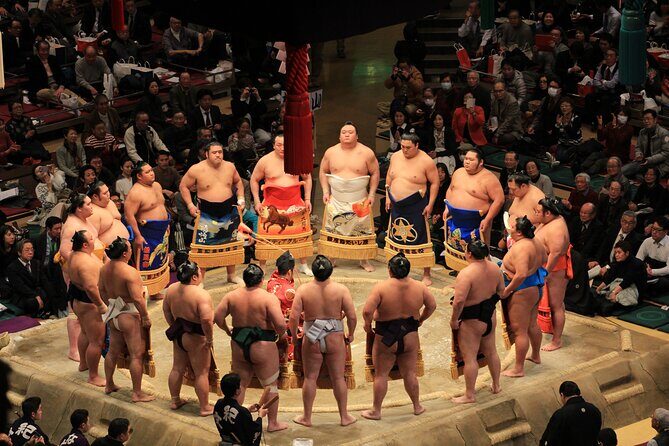
- Reserved S-seat chair seating at Kokugikan (the best chair setup)
- English explanations before and during the tournament experience, not just at the start
- Kokugikan + Sumo Museum pairing so you learn ranks, divisions, and rituals in context
- Clear breakdown of yokozuna, ozeki, sanyaku, and makuuchi, plus what each means
- Kimarite and match highlights explained, so you start spotting the “why” behind the win
- Small group size (up to 10 people) for better attention from your guide
January Grand Sumo: why the guided format matters
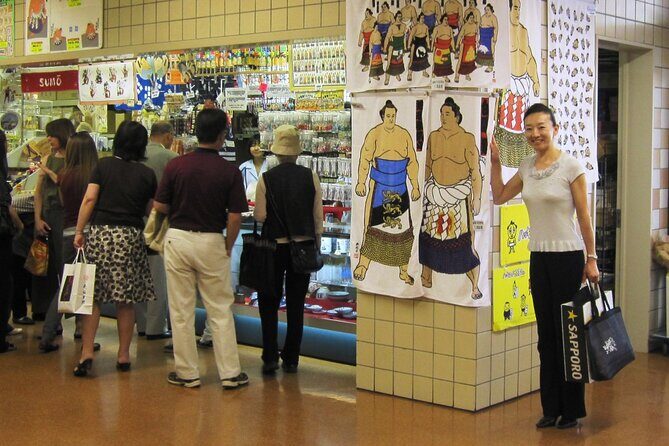
Watching sumo on TV is all angles and instant replays. In Tokyo’s Kokugikan, it’s something else: the sound hits first, then the tension. You’ll feel that moment when the ring activity builds and you realize the sport has its own pace, rules, and symbolism.
That’s where the tour shines. Instead of just handing you a ticket and wishing you luck, the English guide stays engaged and talks you through what you’re seeing. They cover the structure of professional sumo, including the different divisions and how the day’s matches fit together, so the tournament stops feeling like a random sequence of bouts.
It also helps that the guide focuses on etiquette and traditional clothing. Sumo isn’t only physical; it’s ceremonial. When you understand why someone stands a certain way, why officials look and dress as they do, and what the announcer and referee are doing, your seat suddenly feels like front-row context, not just front-row action.
You can also read our reviews of more guided tours in Tokyo

Ryōgoku meeting point and getting oriented fast
Your start point is set at Ryōgoku Station (1-chōme-3-20 Yokoami, Sumida City, Tokyo 130-0015), with the tour beginning at 2:15 pm. The route details aren’t spelled out here, but the good news is that the meeting point is described as near public transportation, which matters in Tokyo. Fewer transfers means less stress when you’re trying to be on time for ceremonial timing inside the arena.
The tour ends back at the meeting point, which is practical when you don’t want to do extra navigation after a few hours of sitting and watching. In a city that can eat your evening with transit transfers, having a clean “start here, finish here” plan is a big part of the value.
You’ll also use a mobile ticket, which is convenient. No printing. No scrambling for paperwork. Just have your phone ready.
Inside Kokugikan: reserved chair seating and match-day rhythm
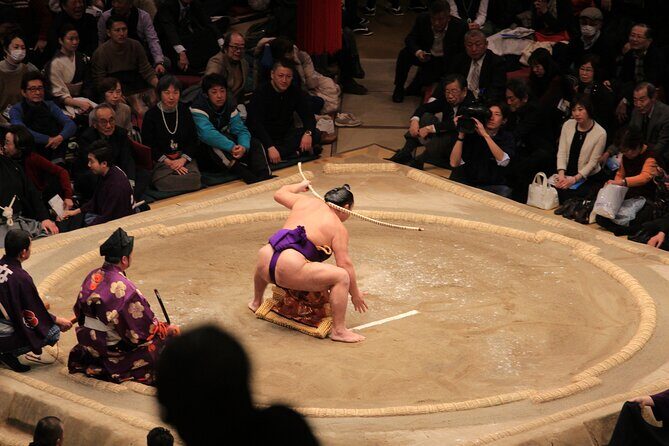
The core of the experience is your time inside the Kokugikan during the January Grand Sumo Tournament. You’re escorted to your reserved seat, and that matters more than it sounds. Sumo crowds can move differently than a typical stadium crowd. Arriving, finding your section, and settling in while the pre-match atmosphere builds is easier when someone is pointing you in the right direction.
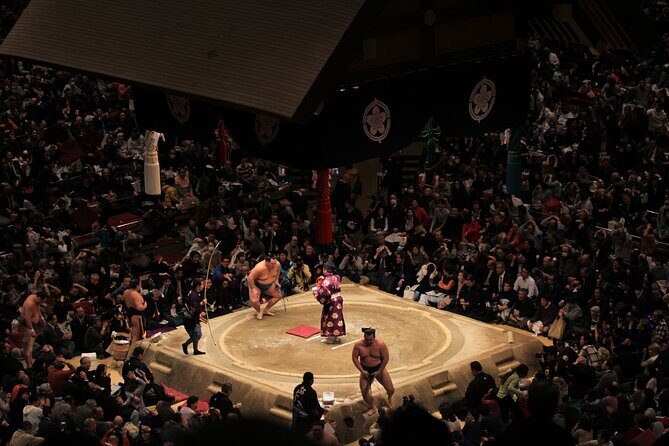
The tour includes S-seat chair seating, described as the best chair seating available. In practical terms, you’re not hunting for the “best angle” at your own expense. You’re already placed. That’s especially helpful for first-timers, because sumo isn’t just about watching; it’s about reading the setup and the timing—when wrestlers enter, how the officials move, and what happens right before a bout starts.
Once you’re seated, expect the atmosphere to do what it’s supposed to do: tension rises, bouts feel explosive, and momentum swings can happen fast. The guide’s commentary helps you catch what would otherwise pass by too quickly—like why a match turns, what matters in the clinch, and what techniques are being used.
One more plus: because the guide explains the meaning behind ceremonial elements, you’ll understand the role of the gyōji (referee) and the yobidashi (announcer). When those officials show up in their traditional attire, you’re not just seeing costume—you’re seeing the structure that keeps the sport orderly and ritualized.
Sumo Museum: turning ranks, divisions, and etiquette into something you can follow
A lot of tour experiences stop at the arena. This one adds the Sumo Museum, and that’s where your second screen of understanding kicks in.
Professional sumo has layers. There are divisions, rankings, and formal categories—so when you sit down for bouts, you want your brain to already recognize what’s important. The guide covers the ladder of status, including yokozuna and ozeki and the broader sanyaku and makuuchi framework. Once you understand those terms, the tournament feels less random.
The museum visit also supports the etiquette piece. You’ll get context on traditional clothing and arena customs, which makes the whole thing more coherent. Instead of treating sumo as a single sport with one rulebook, you start recognizing it as an organized world with ranks, responsibilities, and tradition embedded in the day’s flow.
And if you’ve ever felt overwhelmed by Japanese sports jargon, you’ll appreciate that the guide isn’t only translating words—they’re explaining what those ranks mean in the real tournament setting.
How the guide translates sumo: officials, kimarite, and what wins actually mean
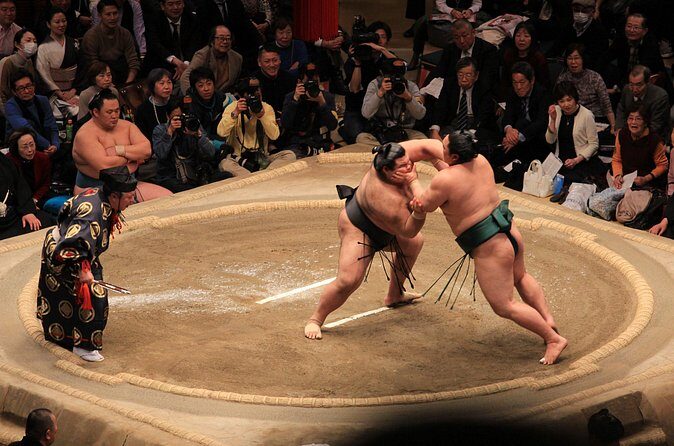
Here’s the part I think makes or breaks the value: the commentary during the tour. The guide explains the sport’s structure and also breaks down winning techniques, including kimarite, along with match highlights.
That means you’re not just watching bodies collide. You’re learning why a wrestler wins—whether it’s a push, a throw setup, or a positioning move that forces an opponent out. Even if you’re not a martial arts expert, having technique names and match context gives you something to track.
In past groups led by English-speaking guides such as Jeff and Yuki, the explanations were described as friendly, detailed, and helpful. One example that stood out was the idea of a guide preparing a simple sheet with additional information about wrestlers. You might not see the exact same handout every time, but it’s a good signal that this tour style tends to support your attention with practical references.
Also, the guide explains the roles of the officials—the gyōji and yobidashi—and what their traditional attire represents. That’s not trivia for trivia’s sake. In the arena, those roles shape how bouts start, how they’re called, and how the atmosphere stays ritual and rule-based.






Seating and January 2026 dates: S seat vs A and B options
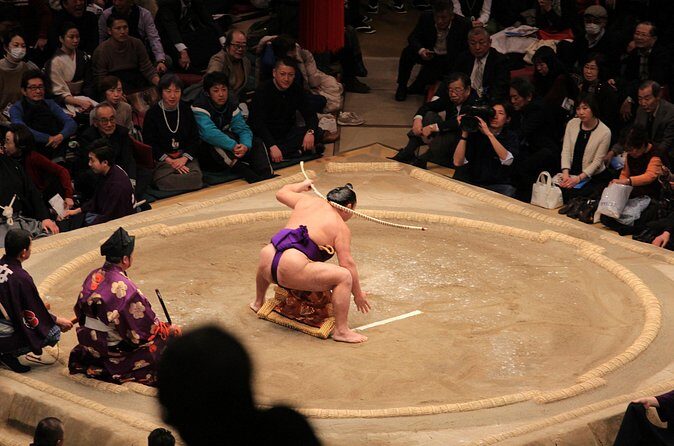
The tour product you’re considering offers the best chair setup under its S-seat option. For January 2026, the schedule notes that S seat and A seat details are listed as to be released soon, while B seat availability is specified for certain dates (January 11, 13, 15, 21, 22, 23).
So what should you do with that information?
1) If your date is flexible, you may find more seat options as the calendar updates.
2) If your date is fixed, check which seat tier matches it, because the listed availability changes by date.
3) Don’t assume all seat types are equally positioned—especially if you care about comfort for 3+ hours.
The other key factor is that this tour doesn’t just give you a seat. It wraps the seat in guided understanding. That’s the main difference versus buying a standard ticket and hoping you’ll figure everything out on the fly.
Price and value: why $124.26 can be worth it (or not)
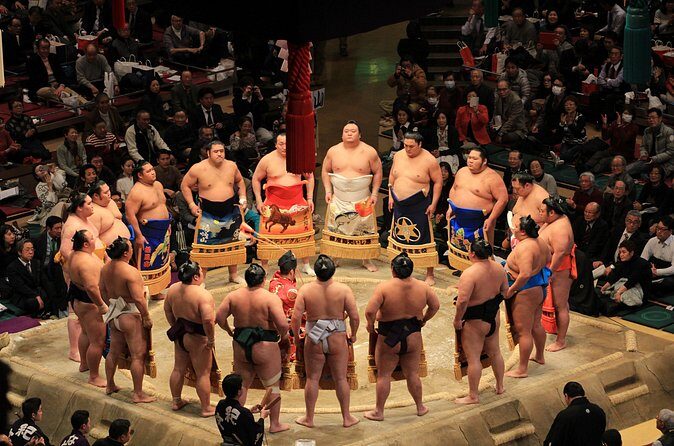
The listed price is $124.26 per person for the January 2026 Grand Sumo Tournament tour. That’s not cheap, and it’s smart to acknowledge the comparison point: you might find tournament tickets on your own, if you’re lucky and plan well.
So why might this still be good value?
- Reserved seating plus escort. Finding your place during an active match-day schedule is easier when you’re guided directly.
- English explanations that add meaning. The guide’s job is to translate what happens in the ring into something you can follow—divisions, rankings, etiquette, officials, and winning techniques.
- Cultural context with the museum stop. You’re not only watching; you’re also learning the structure of the sport.
- Small group size (up to 10 people). Less noise, more chance for a quick answer if something doesn’t make sense.
One past comment flagged that it felt pricey compared with what a regular ticket might cost. I take that seriously. If you’re the type who doesn’t want to pay for explanations, or you’re confident reading the tournament structure yourself, you could choose a cheaper DIY ticket route.
But if you want your day at Kokugikan to feel organized, meaningful, and easier from minute one, this format is exactly what you’re paying for.
Timing, pacing, and what to do before and after
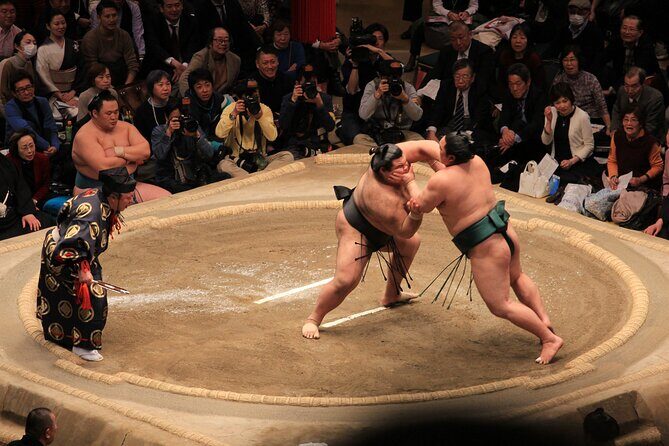
The tour runs for about 3 hours 45 minutes and starts at 2:15 pm. That’s long enough for a real tournament feel, but not so long that you’ve turned your entire day into sitting in silence.
Because you end back at the meeting point, you can plan your evening meal nearby without worrying about transit chaos. Just keep in mind you’ll likely be standing and moving briefly during the museum portion and in getting settled in the arena.
If you’re considering food, one past group mentioned that a chanko moment tasted great. The tour details provided here don’t explicitly confirm a meal for every departure, so treat that as a possible extra rather than a guarantee. Still, it’s a good sign: chanko culture belongs with sumo, and some guides build that cultural texture in when the schedule allows.
Who should book this guided sumo tour
This is a strong fit if:
- You’re coming to sumo for the first time and want the sport explained as you go
- You care about etiquette, ranks, and tournament structure, not only the final bout result
- You want reserved seat certainty rather than gambling on where you’ll end up
- You prefer a small group experience with an English-speaking guide who stays engaged
You might skip it if:
- You already know sumo ranks and technique names and plan to study the bracket yourself
- You’re strictly budget-driven and are comfortable taking on logistics without a guide escort
A practical note: the tour is marked as suitable for most people, and it’s weather-dependent. If conditions force a change, you should expect a different date or a refund offer rather than a cancellation with no help.
Should you book this Grand Sumo Tournament Tour?
If your goal is to leave Kokugikan understanding what you watched—why it matters, who has status, and how wins actually happen—then yes, this is a smart booking. The combo of S-seat reserved seating, an English guide who walks you through officials, ranks, and kimarite, and a Sumo Museum stop is built for first-timers and for anyone who wants sumo to feel more than spectacle.
If you’re trying to pay the absolute minimum and you’d rather learn on your own, you may decide the price doesn’t match your style. But for most people visiting Tokyo in January, paying for clarity beats paying for confusion.
FAQ
What is the duration of the Grand Sumo Tournament Tour?
The tour runs for about 3 hours 45 minutes (approx.).
When does the tour start and where do we meet?
The start time is 2:15 pm. You meet at Ryōgoku Station (1-chōme-3-20 Yokoami, Sumida City, Tokyo 130-0015, Japan).
What seating do I get with this tour?
The tour includes S seat chair seating, described as the best chair seating available. Seat tier details for A and S are listed as to be released soon, and B seat dates are specified for certain days in January 2026.
Is there an admission fee?
Yes. An admission fee applies for guests aged 4 and above.
How many people are in the group?
This activity has a maximum of 10 people.
Do I need a printed ticket?
No. The tour uses a mobile ticket.
What is the cancellation and weather policy?
Cancellation is free. You can cancel up to 24 hours in advance for a full refund. If canceled due to poor weather, you’ll be offered a different date or a full refund.