REVIEW · TOKYO
Home Cooking with a Local Host (Optional Shiba Inu Picnic)
Book on Viator →Operated by Enrich Your Travel Japan · Bookable on Viator
Tokyo bento tastes better when you make it. Step into a real home kitchen, cook alongside a local mom, and finish with a picnic that pairs your food with Ginta the Shiba Inu.
I love the hands-on part: you’re not just watching. You’re making traditional handmade bentos with clear English interpretation and cultural notes as you go, so it feels like you understand what you’re doing, not just copying steps.
One consideration: this experience is non-refundable, and it also doesn’t include private transport beyond getting you near the station. So you’ll want to be sure your timing is locked in before you book.
In This Review
- Key highlights (what makes this one worth your time)
- A Real Tokyo Home Kitchen for Your Bento Skills
- The 10:00 Start at Iidabashi and How the Timing Works
- Bento-Making: What You Learn That Actually Sticks
- The Walk to the Picnic and Why Shrines Make It Feel Different
- Picnic Time with Ginta the Shiba Inu at Around 11:45–12:45
- What the Guide Does (Besides Translation)
- Price and Value: Is $150 a Fair Deal?
- Who This Bento-and-Shiba Tour Is Best For
- Should You Book This Home Cooking Tour?
- FAQ
- Where is the tour meeting point?
- What time does the tour start and end?
- How long is the experience?
- What will I do during the tour?
- Do I get to keep the bento box?
- What’s included besides the food?
- Is transport included to and from the tour location?
- How it’s priced
Key highlights (what makes this one worth your time)
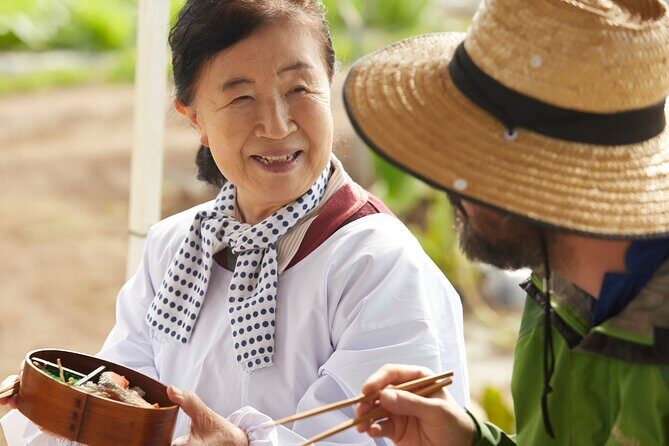
- Local home kitchen, not a studio: Cook with a Japanese mom’s guidance in a real domestic setting.
- Made-from-scratch bentos: You get recipe support, plus the ingredients, tools, and prep items to take it from zero to packed lunch.
- Ginta the Shiba Inu picnic at a shrine: After cooking, you walk to a nearby park/shrine area for an hour with your lunch and the cutest co-host.
- Keep your bento box as a souvenir: You’re bringing home the exact box your bento was packed in.
- Photos included after the tour: Your guide takes photos and sends them to you at no extra charge.
- Small private group (2–6): This keeps the pace personal, with translation and attention when you need it.
A Real Tokyo Home Kitchen for Your Bento Skills
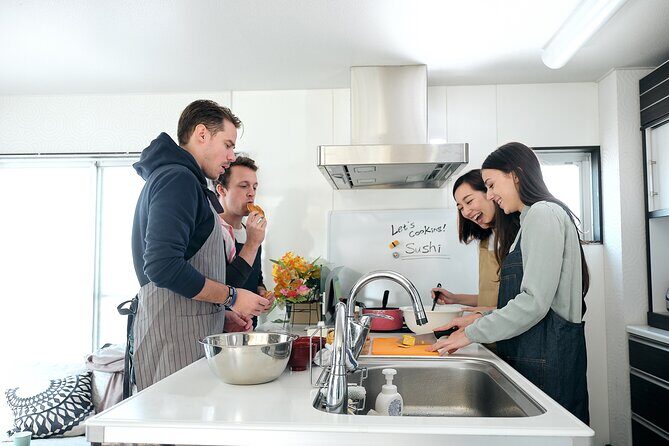
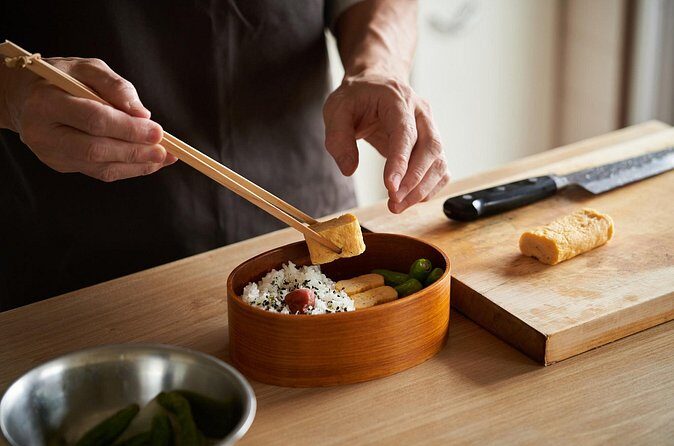
If you want the Tokyo version of a cooking class, this is the one that feels most like daily life. You start in a real Japanese home kitchen with a local mom, not a demo space. That matters. Home kitchens have a different flow—smaller details, normal pacing, and the way people actually talk while cooking.
The core experience is making traditional handmade bentos. You’ll get recipe and step-by-step guidance, along with everything needed for the session: aprons, a cooking cap, hand sanitizer, vinyl gloves, and the bento box itself. That setup keeps you focused on learning the process, rather than worrying about what to bring or whether you’ll be able to follow along.
What I really like is the pairing of food and context. Your English-speaking guide isn’t only there to translate. They also share cultural insights while you cook and when you eat. That turns the class into something you can use at home—because you understand the why behind the routine.
You can also read our reviews of more cooking classes in Tokyo


The 10:00 Start at Iidabashi and How the Timing Works

The tour runs about 3 hours and it’s built like a smooth half-day block. You meet at 10:00 am at Iidabashi Station, West Exit. It’s close to public transportation, which is a big practical win in Tokyo.
Here’s the flow:
- 10:00–11:30: Bento making (about 1.5 hours) in the mom’s home kitchen
- 11:30–11:45: Walk to the picnic location (about 15 minutes)
- 11:45–12:45: Picnic time (about 1 hour) with Ginta
- 12:45: Return to the station, ending around 12:45 pm
That walking segment is short, so you won’t feel like you’re spending your whole morning in transit. Still, treat it like a small stroll: comfortable shoes help. Also, since private transportation isn’t included, plan your Tokyo commute to Iidabashi Station in advance.
Bento-Making: What You Learn That Actually Sticks
This is where you’ll get the most value, because you’re not leaving with a souvenir you can’t recreate. You’re learning how to assemble and pack bento-style lunch the way a household would.
In the kitchen, you cook with the mom’s guidance while your English guide translates and offers cultural commentary. Even when the ingredients and steps are straightforward, this kind of coaching makes a difference. You’ll learn how to handle the work rhythm and how to think about portions and presentation—what goes where and why.
You also get a tangible takeaway: the bento box. You use it during the picnic and you can keep your bento box as a souvenir. That’s a small thing with big payoff. It’s the kind of item that keeps reminding you to actually cook your own bentos later, instead of letting the memory fade after your trip.
One more practical bonus: you’re provided with kitchen hygiene items like hand sanitizer and vinyl gloves. That makes it easier to relax and learn. In a home setting, that comfort matters.
The Walk to the Picnic and Why Shrines Make It Feel Different
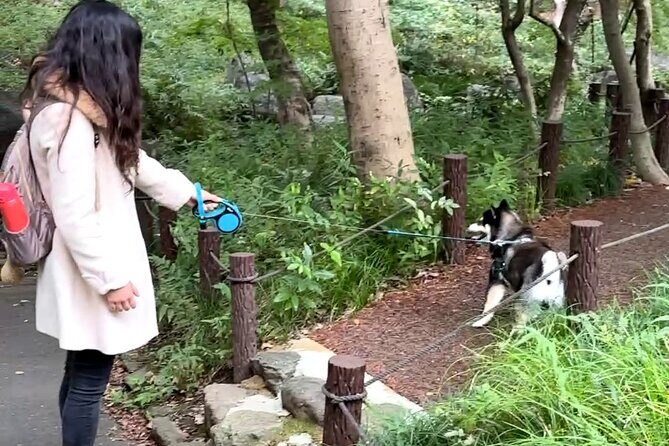
After you finish cooking around 11:30, you’ll take a short walk to the picnic spot. The schedule gives you about 15 minutes for the move, and you’ll meet Ginta the Shiba Inu before settling in.
You’re having lunch at a nearby park and shrine area. That setting adds something you won’t get at a typical food stop. Bentos are already built for eating on the go. Add a shrine-and-park setting, and suddenly your meal feels like a real Tokyo outing, not a staged activity.
Also, picnics with a pet co-host change your photo game instantly. It’s not just your food—there’s a lively little moment baked into the experience, and it keeps things fun and memorable without turning the day into chaos.
Picnic Time with Ginta the Shiba Inu at Around 11:45–12:45
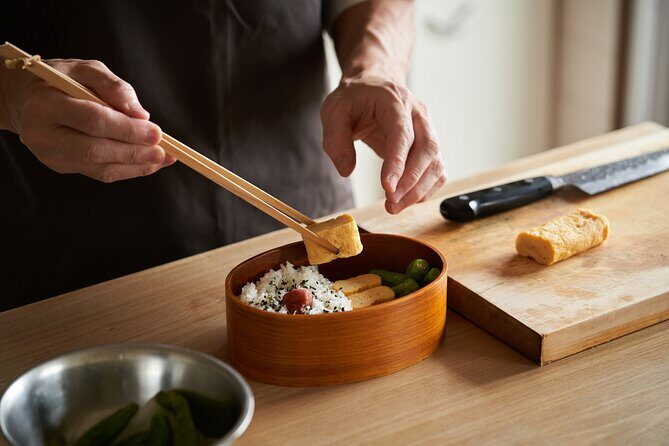
The highlight for many people is the picnic itself—and it’s led by a very good reason. Your Shiba Inu companion is Ginta, and you’ll spend about an hour with your homemade bento.
This hour is built for relaxing. You eat what you made, take photos, and enjoy the setting. The pacing is not rushed, which is important in Tokyo, where tight schedules are common. Here you get time to actually enjoy the food you worked for.
Photos also get handled for you. Your guide takes photos during the experience and distributes them after the tour at no extra cost. That’s a quiet but meaningful perk. When you’re busy cooking and then trying to eat and pose, it’s nice not to worry about missing your own best moments.
From the vibe of similar experiences in Tokyo, I’d expect the shrine/park setting to feel calmer than major tourist hubs. You’ll likely appreciate that this is a lunch moment you can breathe in, even if you’re traveling fast.






What the Guide Does (Besides Translation)

In Tokyo, good English support can mean the difference between following steps and actually learning. Here, your English guide helps throughout the cooking and picnic experience, with translation plus cultural insights.
In practical terms, that means:
- You’re not left guessing when something is labeled or described in Japanese.
- You can ask questions mid-process without the activity stalling.
- You’re more likely to pick up dining etiquette or table habits while you eat.
One of the underrated parts of Japanese home-style food experiences is learning the small manners that come with meals. Even when those details are subtle, they make your homemade bento in the future feel more authentic, not just visually similar.
Price and Value: Is $150 a Fair Deal?
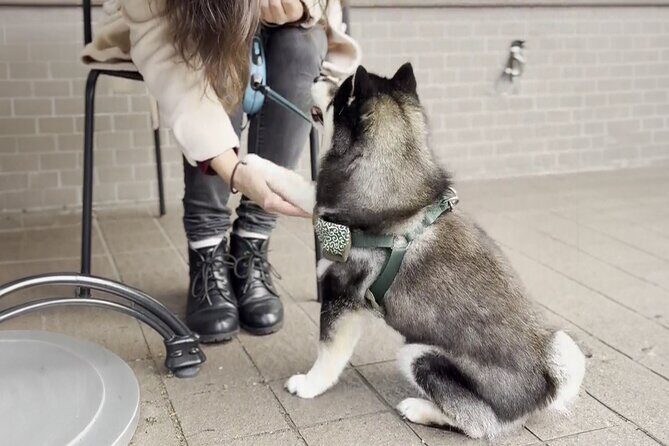
At $150 per person, this isn’t a bargain-basement activity. But it also isn’t a generic group cooking class. You’re paying for four main value drivers:
1) Real home access
You’re stepping into a Japanese home kitchen with a local mom. That kind of access costs money and doesn’t scale like a big restaurant workshop.
2) Private small-group pacing
This is a private tour with groups limited to small numbers (2–6). That’s why the time feels usable and not like you’re standing in a line waiting your turn.
3) Included materials and food prep
You get ingredients, a recipe/guidance, bento box, gloves, apron, cooking cap, hand sanitizer, and more. In many tours, you’re stuck improvising with what you brought. Here, you’re set up.
4) Picnic experience plus photo service
A one-hour picnic at a park/shrine area with Ginta is part of the paid experience. On top of that, your guide takes and shares photos after the tour.
If you like the idea of learning a practical skill (how to build a bento) and you want a memorable Tokyo setting to eat it, the price starts to make sense. If you’re strictly budget-focused, you can always find lower-cost cooking classes elsewhere—but you’d likely trade away some of this home-like authenticity and the bundled picnic moment.
Who This Bento-and-Shiba Tour Is Best For
This experience fits best if you want something more personal than a typical sightseeing tour.
You’ll likely love it if:
- You enjoy hands-on cooking and want a skill you can repeat at home
- You want Tokyo in a human scale, not just streets and photos
- You like the idea of a Shiba Inu picnic with Ginta, but still want the food to be the main event
- You prefer a guided, translated experience over a language barrier
It’s also a strong fit for couples, small groups, and food-curious travelers who appreciate structure: clear start time, clear stops, and an end back at the station.
Should You Book This Home Cooking Tour?
Book it if your dream Tokyo day includes two things: learning to make bento the right way and eating it somewhere that feels like an actual outing. The home kitchen access, the included tools, and the “keep the bento box” souvenir make it feel worth it, even at a premium price.
Skip it if you need schedule flexibility, since the experience is non-refundable and changes aren’t accommodated. Also consider whether you’re okay meeting at Iidabashi Station West Exit and handling your own getting there.
If you’re good with that, this is the kind of experience that gives you more than a photo. You take home a skill, a box, and one very fluffy memory.
FAQ
Where is the tour meeting point?
The tour meets at Iidabashi Station, West Exit in Tokyo. The start address listed is 4-chōme-9-5 Iidabashi, Chiyoda City, Tokyo 102-0072, Japan.
What time does the tour start and end?
The tour starts at 10:00 am and is scheduled to end back at the meeting point around 12:45 pm.
How long is the experience?
The duration is about 3 hours.
What will I do during the tour?
You’ll make traditional handmade bentos in a local home kitchen, then walk to a nearby park and shrine for a picnic time. You’ll also have time for photos during the picnic.
Do I get to keep the bento box?
Yes. You keep your authentic bento box as a souvenir.
What’s included besides the food?
Included items include aprons, a cooking cap, hand sanitizer, vinyl gloves, and a bento box. You also get a local guide with English support, recipe and guidance, and photos taken by the guide shared after the tour.
Is transport included to and from the tour location?
No private transportation is included. The tour takes place near public transportation, and you’ll return to the station with the guide.
How it’s priced
The tour costs $150.00 per person and is described as a private tour for small groups (limited up to 2–6 participants).