REVIEW · TOKYO
Imperial Palace or Edo Castle Time Trip Learning Walking Tour
Book on Viator →Operated by Happy Tour · Bookable on Viator
Two bridges, one thousand years back. This 2.5-hour walk turns Tokyo’s Imperial Palace grounds into a street-level time trip to 1650s Edo. You’ll follow a government-licensed English guide with an illustrated map, then stand near Edo castle elements like moats and stone walls to help the story click in your head.
What I really like is the guide-led clarity. On my read of the experience, the English level matters, and the guide named Blanca stands out for both pleasant delivery and strong explanations. I also like that the tour keeps you moving—about 5.4 km—so you’re not stuck staring at one spot while the history floats past.
One consideration: the meeting point can be a little tricky. One review flagged that the map directions weren’t perfect, and the provider adjusted the explanation afterward so you can find the right Marunouchi South exit area more easily.
In This Review
- Key highlights you’ll feel on the street
- A 2.5-hour Edo time trip you can actually picture
- Finding the start at Tokyo Station’s Marunouchi South Gate Dome
- Stop 1 at Mitsubishi Ichigokan Museum: context in five minutes
- Entering the Imperial Palace area like it’s Edo—without getting lost
- The route’s strength: learning how power moved through space
- Stop 3 at Hirakawa-mon Gate: the wrap-up that ties it together
- Group size and pacing: why 8 people is a sweet spot
- Price and value: $3.25 for a guided walk that actually teaches
- What to bring (and what to skip) for comfort
- Who should book this tour—and who might not love it
- Should you book this Imperial Palace or Edo Castle Time Trip tour?
- FAQ
- FAQ
- How long is the Imperial Palace or Edo Castle Time Trip Learning Walking Tour?
- How much walking is involved?
- What’s included in the tour price?
- Are tickets or admission included?
- What should I bring since meals and water aren’t included?
- Where does the tour start and end?
- Is it canceled if the weather is bad?
- How many people are in a group?
Key highlights you’ll feel on the street
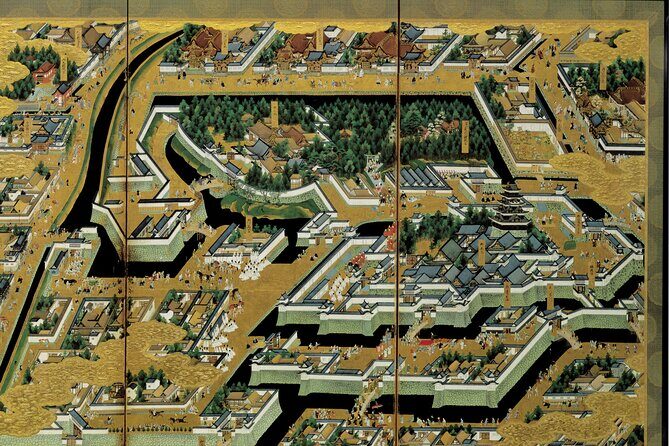
- An illustrated Edo 1650s map you can follow while walking, so the city doesn’t become abstract
- A small group (up to 8), which makes it easier to ask questions as you pass gates and walls
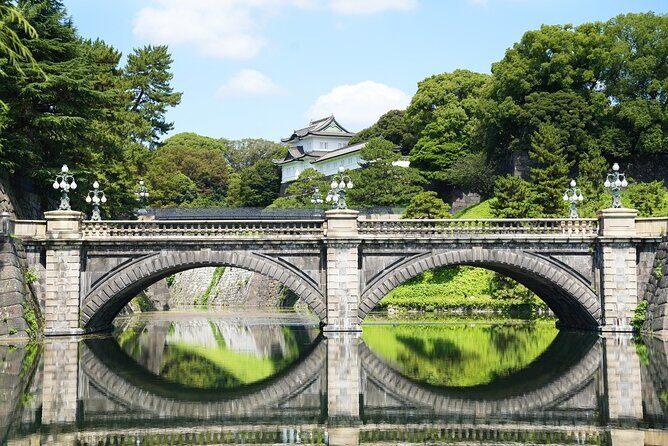
- Imperial Palace doubled bridges viewpoint, used as a visual anchor for the Edo-to-Meiji-to-today story
- Real castle-style elements in your route—gates, huts, stone walls, moats, and bridges—helping your imagination do its job
- Stop 1 context at Mitsubishi Ichigokan Museum, tying the area’s big-picture history to the tour’s themes
- Clear finish at Hirakawa-mon Gate, with a wrap-up that helps you connect Edo society roles
A 2.5-hour Edo time trip you can actually picture
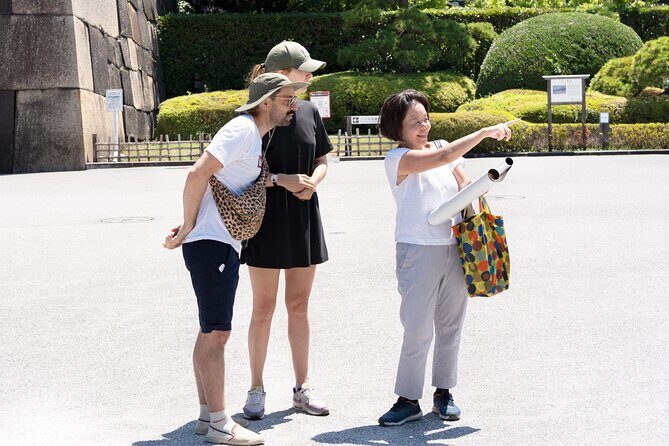
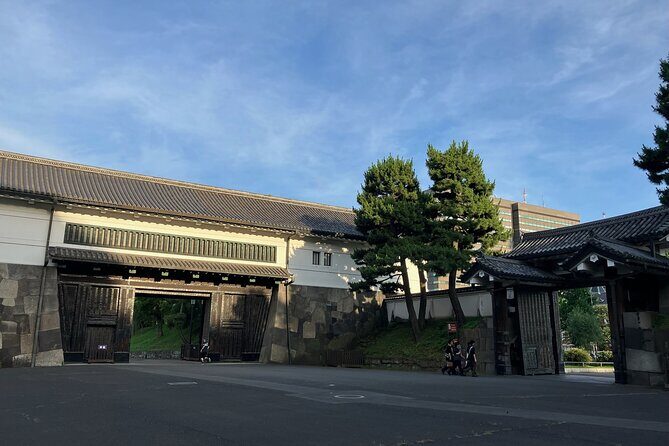
If you’ve ever read about Edo-period Japan and thought, That’s cool, but where is it in real life, this is built for you. The walk links the Imperial Palace area to the idea of the old Edo castle, using what you can see right now—gates, bridges, and boundary-style walls—to make the past feel physical.
The real win here is that you’re not only getting facts. Your guide is walking you through a set of social roles too: shogun, emperor, samurai ruling class, plus everyday residents of Edo and even women connected to castle life. That kind of framing helps you notice what you might otherwise miss on a first visit to Tokyo.
And since the group is small, your guide can slow down where questions come up. At the end, you don’t just feel like you learned something—you feel like you can place it.
You can also read our reviews of more walking tours in Tokyo

Finding the start at Tokyo Station’s Marunouchi South Gate Dome
The tour starts near Tokyo Station, at the Marunouchi South Gate Dome area. That’s a good location—easy to reach, with lots of transport options—but the station is also, well, a station with many exits.
One thing I’d take seriously: confirm you’re aiming for the Marunouchi South exit area around the dome. A review specifically called out that the map pinpoint wasn’t clear at first, and the provider updated their guidance so guests can find the correct ground-floor exit.
My practical advice: arrive 10 minutes early and use Google Maps on the day-of. If you’re meeting on a busy platform-level path, take a second to locate the dome area landmarks before you wait.
Stop 1 at Mitsubishi Ichigokan Museum: context in five minutes
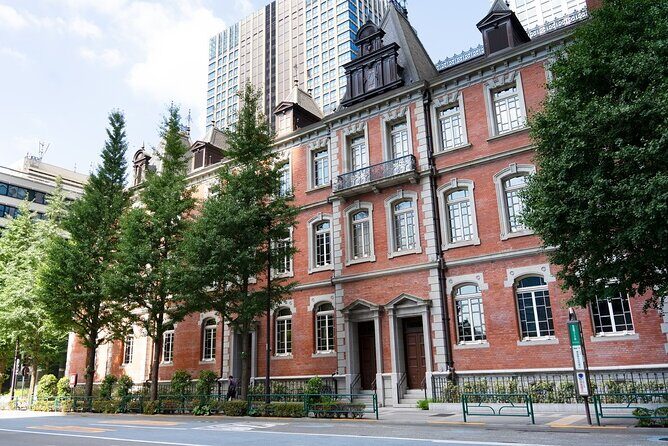
The first stop is Mitsubishi Ichigokan Museum. It’s brief—about five minutes—but it’s not random. You get a quick explanation of the Mitsubishi Group and the role it played in Japan’s economy.
Why this matters: it trains your brain to think in layers. Tokyo isn’t only a medieval castle site or an imperial symbol. It’s also modern power, business influence, and how those threads shape how a city moves from one era to the next. A short intro at the start keeps the rest of the walk from feeling like disconnected sightseeing.
This stop doesn’t require you to pay admission for the tour portion. You’ll likely get what you need fast, then move on.
Entering the Imperial Palace area like it’s Edo—without getting lost
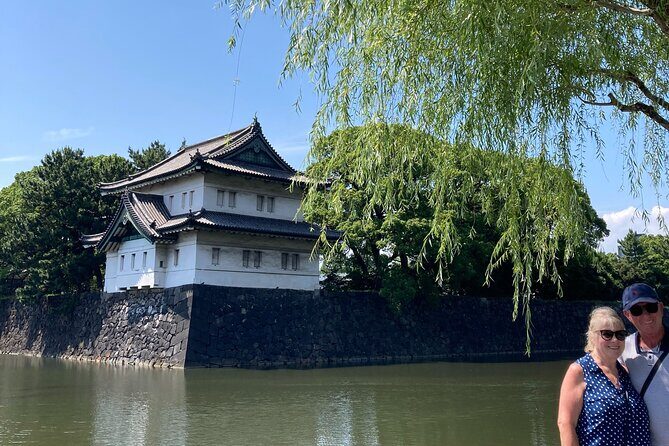
About two hours are spent at the Imperial Palace area, where you’ll see an iconic set of doubled bridges and then continue into the grounds of what’s now the Imperial Eastern Garden. Admission is free for the tour stops.
Here’s the value of using this area as the anchor: it gives you a recognizable visual reference point in a city famous for big, modern views. Once you see the doubled bridges, your guide can connect what you’re looking at to what Edo castle layout used to mean—how movement and access were structured, and how boundaries guided power.
This is also where the walking tour becomes more than a history lecture. You’re set up to imagine Edo castle components as you go. The guiding idea is that you’ll see gates, huts, stone walls, moats, and bridges along the route, even though today’s layout is different from the 1650s. Your imagination does the heavy lifting, but your guide gives it the right scaffolding so it doesn’t feel like guessing.
A realistic note: since you’ll be doing a chunk of walking around a large complex, wear shoes you’d happily use for a city day. You’re not hiking, but it’s long enough that sore feet can steal the fun.
The route’s strength: learning how power moved through space
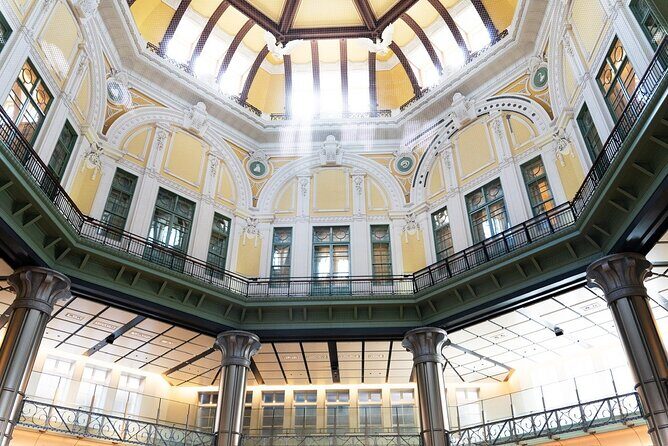
What makes this tour work is how it turns geography into social structure. You’re shown how people and roles connect to physical places. Instead of memorizing names from a textbook, you start seeing patterns: where authority sits, how the castle or palace shapes movement, and how the area’s design communicates control.
When your guide talks about the shogun versus emperor concept, you can tie it to what the landscape suggests about rank and access. When women of the Edo castle are mentioned, you can think about how life inside a powerful compound would be organized differently from street life outside it.
This is one of those tours where the story stays practical. If you’re the type who wants history that helps you look better at what you’re seeing, you’ll enjoy it. If you want only architecture details, you might still appreciate the context, but you’ll get more of the human story than hardcore design analysis.






Stop 3 at Hirakawa-mon Gate: the wrap-up that ties it together
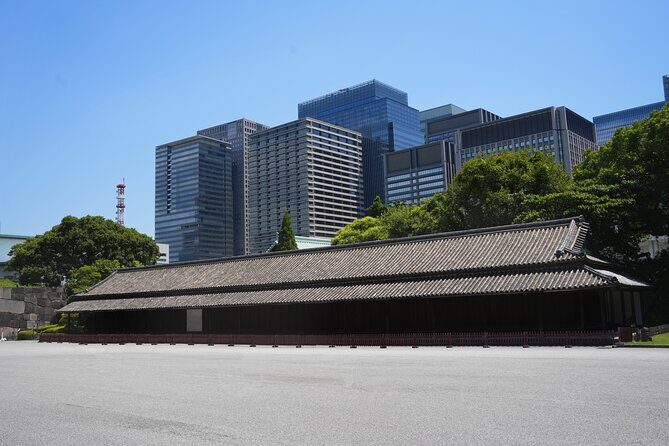
The final named stop is Hirakawa-mon Gate, where you’ll spend about 10 minutes. This is the quick finish: your guide summarizes what you’ve been given and helps you connect it to understanding Japan more broadly.
This last step matters because it converts the walk into something you can carry. After you’ve gone through bridges, garden grounds, and gate spaces, the wrap-up helps you connect why the Edo castle idea still matters in how the Imperial Palace area is experienced today. It also nudges your interest forward—so you might want to read more or look up related topics afterward.
If you tend to forget facts right after a tour ends, this kind of final recap is worth its weight.
Group size and pacing: why 8 people is a sweet spot
The tour caps at 8 travelers, and that changes the feel. In a small group, you’re more likely to get personal attention when you miss a detail or want a quick clarification.
Pacing also matters here. With a 2 hours 30 minutes total duration and only two major time blocks (a short museum context and a longer Imperial Palace area section), the itinerary doesn’t drag. You’ll spend your energy where the views and the guided story actually happen.
That shorter museum time is useful too. It gives you a quick “why this matters” before you focus on the castle-to-palace transformation.
Price and value: $3.25 for a guided walk that actually teaches
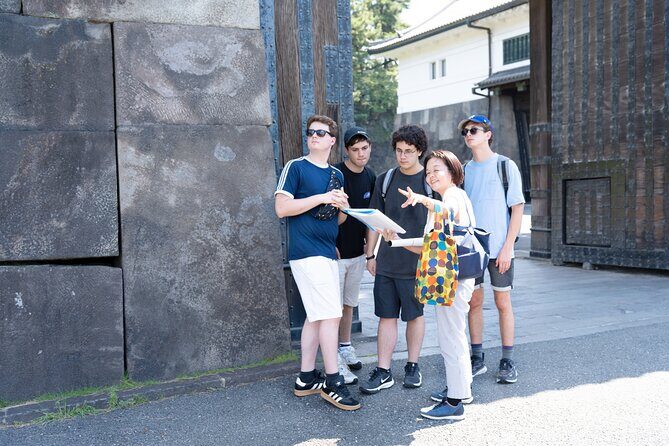
At $3.25 per person, this is priced like a budget-friendly city walk, not a full guided tour experience. The value comes from what you get alongside that price: an English-speaking government-licensed guide, an illustrated Edo map concept, and a small gift. You also get free entry for the key stops tied to the route.
To be fair, cheap doesn’t always mean easy. This price is only great if you’re ready to do a real walking circuit and you’re comfortable supplying your own comfort items. Meals and bottled water aren’t included, so plan for that.
Still, for the combination of guide quality, small group size, and a route that turns one of Tokyo’s biggest areas into a story you can follow, it’s a standout value.
What to bring (and what to skip) for comfort
This is a walking tour around major Tokyo areas. You’ll be fine with typical day-trip basics, but don’t overpack.
Bring:
- Comfortable walking shoes (the route adds up to about 5.4 km)
- An umbrella or light rain layer if the forecast looks sketchy, since the experience requires good weather
- Your own water (bottled water isn’t provided)
- A charged phone for the mobile ticket
Skip:
- The assumption that meals will be provided. Plan to eat before or after.
Also, if you know you’re sensitive to walking for long stretches, pace yourself early. The tour is shorter than a half-day tour, but you still need to keep your energy for the Imperial Palace area portion.
Who should book this tour—and who might not love it
This tour is a great fit if you:
- Want Edo history tied to places you can stand in and look at
- Like an illustrated guide approach rather than a lecture from one spot
- Prefer small groups and clear English explanations (especially if you appreciate guides like Blanca)
You might think twice if you:
- Hate walking in the 5 km range, even at an easy city pace
- Want very detailed deep-dive history in only one theme. This one is about connecting roles and layout, with time spread across a few key stops.
Should you book this Imperial Palace or Edo Castle Time Trip tour?
Yes, if you want a simple, meaningful way to experience one of Tokyo’s biggest areas through an Edo lens. The price is hard to beat for what you get: a guided, English-friendly walk with a small group, plus an approach that helps you picture how power and everyday life fit into the old castle world.
If you do book, go in with two mindset shifts: first, you’re using today’s buildings and spaces as clues, not expecting a fully preserved 1650s site. Second, be ready for a real walking route and bring water. Also, arrive a bit early to get your bearings at Tokyo Station’s Marunouchi South Gate Dome area.
FAQ
FAQ
How long is the Imperial Palace or Edo Castle Time Trip Learning Walking Tour?
It runs for about 2 hours 30 minutes.
How much walking is involved?
You’ll walk about 5.4 km during the tour.
What’s included in the tour price?
An English speaking guide is included, along with a small gift.
Are tickets or admission included?
The tour stops include admission-free access for the listed stops: Mitsubishi Ichigokan Museum, Imperial Palace, and Hirakawa-mon Gate.
What should I bring since meals and water aren’t included?
Bring your own bottled water and plan to eat before or after the tour.
Where does the tour start and end?
It starts at the Tokyo Station Marunouchi South Gate Dome and ends at Hirakawa-mon Gate.
Is it canceled if the weather is bad?
Yes. The experience requires good weather. If it’s canceled due to poor weather, you’ll be offered a different date or a full refund.
How many people are in a group?
The tour has a maximum of 8 travelers.