REVIEW · TOKYO
Japanese Traditional Music Show in Tokyo
Book on GetYourGuide →Operated by Zakuro Show · Bookable on GetYourGuide
A tiny room, big Japanese sound. ZAKURO SHOW turns traditional instruments into an up-close lesson in how the music works. I love the intimate, limited-seat setting where the performers sit right in front of you, and I love the English-and-Japanese host who translates while explaining what you’re hearing. One possible drawback: it’s a focused concert, not a big theatrical production, so go in wanting listening time more than spectacle.
The good news is that the show is built for both first-timers and repeat music fans. You’ll hear Japanese instruments like the koto (Japanese harp), shamisen, shakuhachi, and taiko, with explanations that connect pieces to instruments and technique. At the end, there’s time for photos, including pictures next to the musicians—an extra treat if you like collecting meaningful souvenirs beyond t-shirts.
In This Review
- Wagakki Right In Front of You: Hall 60 Near Harajuku
- Key Points You’ll Care About Before You Go
- The Instruments You Will Hear: Koto, Shamisen, Shakuhachi, and Taiko
- A One-Hour Concert That Still Feels Like a Lesson
- Old Traditions Meet Modern Ears: Western Cover and Surprise Songs
- What the Show Feels Like: Kimono Musicians, Close Listening, Clear Translation
- Photos, Videos, and the After-Show Musician Moment
- Price and Value at $38 for a 1-Hour Wagakki Show
- Tips for a Smooth Evening in the Harajuku Area
- Who Should Book This Show (and Who Might Skip It)?
- Should You Book ZAKURO SHOW?
- FAQ
- How long is the Japanese traditional music show?
- Where is the meeting point for the show?
- What instruments will I hear during the concert?
- Is seating reserved?
- Can I take photos or videos during the show?
- What languages are used for the host or greeter?
- Is food or drinks included?
- What is not included with the ticket?
- What’s the cancellation and refund option?
Wagakki Right In Front of You: Hall 60 Near Harajuku
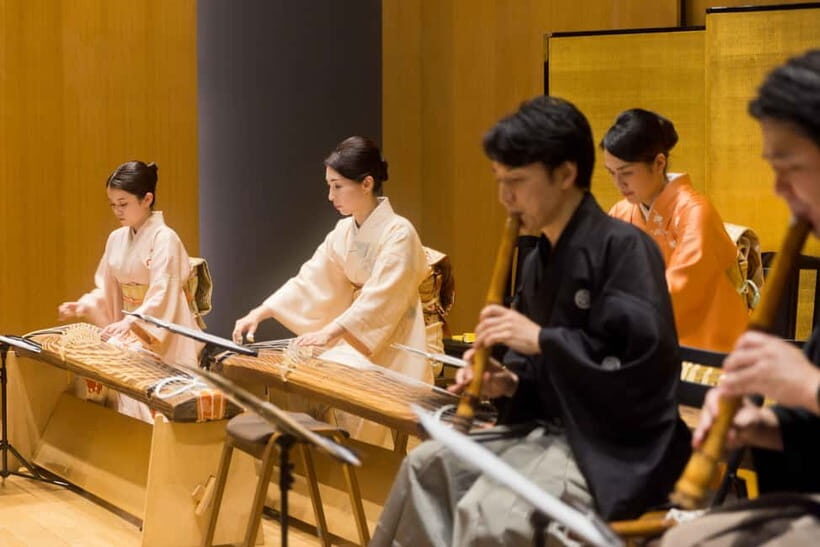
This is the kind of Tokyo experience that works best when you keep expectations simple: you’re paying for a high-quality live concert plus clear context, in a small room.
The venue is Hall 60, and you’ll find it easiest from Meiji-Jingumae Station (Exit 7), about a 1-minute walk. If you’re already in the Harajuku/Omotesando area, JR Harajuku Station (Omotesando Exit) is roughly a 5-minute walk. That’s helpful because you can build a low-stress evening: arrive on foot, take your seat, then focus on the performance instead of racing across town.
Inside, the key detail is the limited, numbered audience. That matters. When the space is small, sound feels more direct and the musicians feel more present, not like you’re watching from across a stage. Reserved seating also keeps things straightforward—you don’t waste time hunting for a spot once you get there.
Key Points You’ll Care About Before You Go
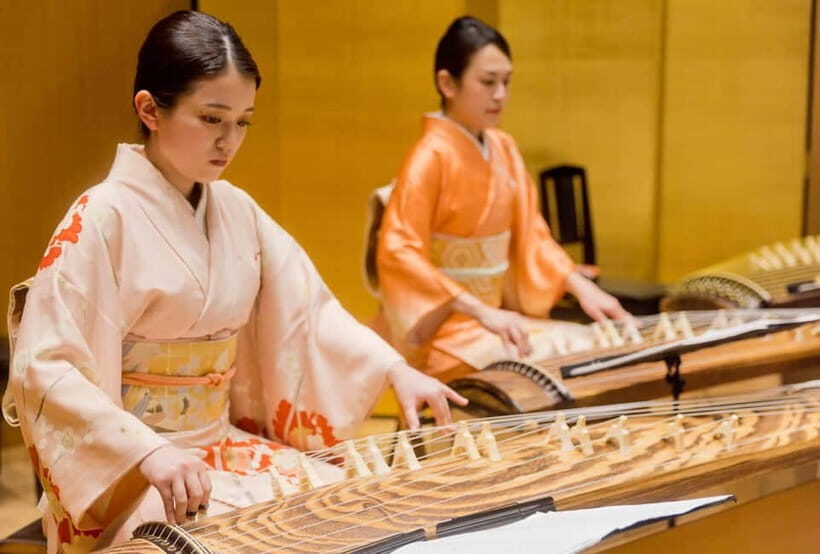
- Small numbered audience means the musicians feel close, not distant
- Instrument-by-instrument context helps even non-musicians follow along
- Koto, shamisen, shakuhachi, and taiko all share the spotlight
- Western cover and surprise moments show how wagakki can meet modern ears
- Photos and videos are allowed, plus you can meet musicians afterward
A few more Tokyo tours and experiences worth a look
The Instruments You Will Hear: Koto, Shamisen, Shakuhachi, and Taiko
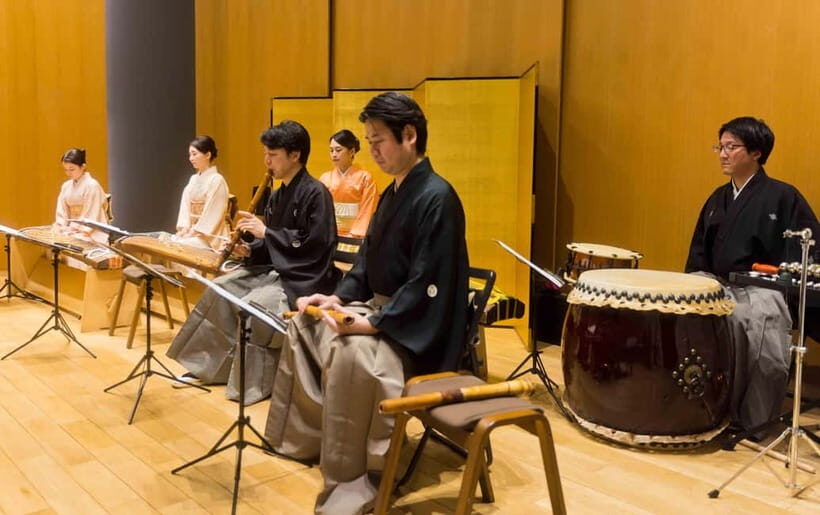
The heart of ZAKURO SHOW is a mix of wagakki instruments, with the host guiding you through what each one does and why the sound is special.
Koto (Japanese harp): Expect the bright, resonant tone that can feel both elegant and hypnotic. The host’s explanations help you hear the mechanics, not just the result—so the instrument stops being a mystery and starts sounding like a person speaking in a different language.
Shamisen: This is the plucked, rhythmic cousin of the story. You’ll hear how sharp attacks and resonance create energy that can swing from delicate to bold without changing the instrument. The show’s format keeps you from zoning out by giving context between tunes.
Shakuhachi: This bamboo flute has a very different voice—breath-driven and expressive. When you hear it live in a close hall, you can pick up how phrasing works. It’s the instrument that often makes people pause, because the sound feels intimate even when the melodies get complex.
Taiko drums: Then comes the physical impact. Taiko can add force and pulse to the program, giving your ears a different kind of excitement than string or flute music. It’s also one of the easiest instruments for first-timers to connect with because the energy is so immediate.
The big benefit here is that you’re not just hearing different instruments. You’re hearing them in an order that teaches you how the pieces are put together.
A One-Hour Concert That Still Feels Like a Lesson
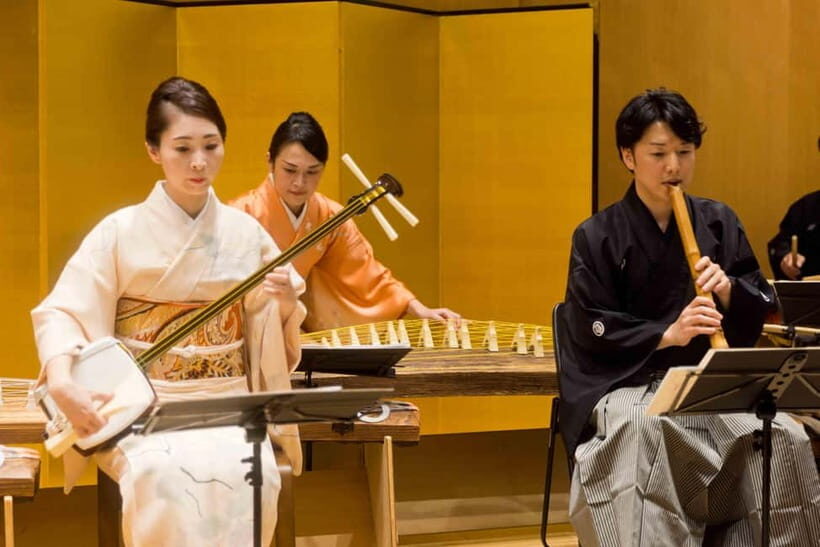
This show stays compact—1 hour, with a reserved seat—but it doesn’t treat explanation like an interruption. The program is designed so each tune comes with context, and the host weaves background throughout.
Here’s what that means for you in real life: you can enjoy the music even if you don’t know traditional Japanese forms. When someone explains what you’re hearing—like how an instrument produces its tone—you don’t have to keep guessing. You listen more carefully, and the whole hour goes faster in a good way.
The show also covers history: not just general trivia, but the history connected to the instruments and the pieces. That helps if you’re curious about where wagakki comes from and why certain styles sound the way they do.
And because the host speaks English and Japanese, you can relax. You’re not relying on a phone translation app to catch the important bits. A strong host matters a lot in music events like this, and this one is clearly trained for it.
Old Traditions Meet Modern Ears: Western Cover and Surprise Songs
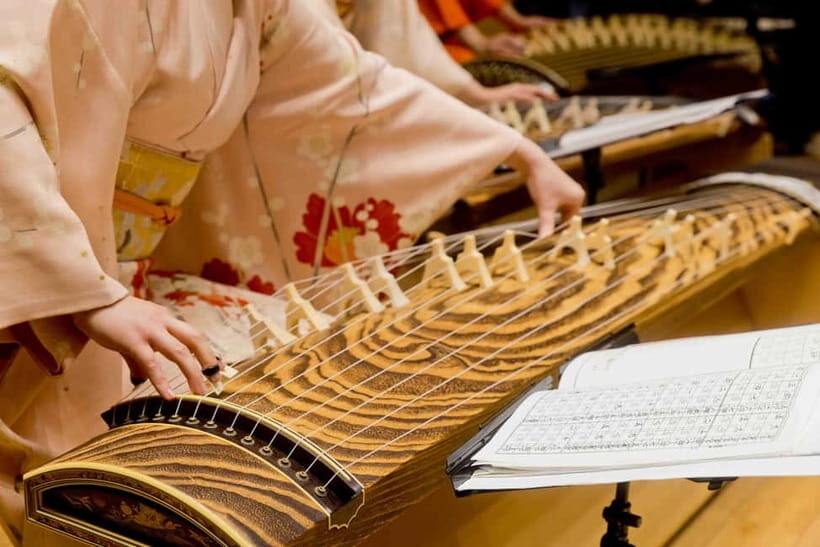
One reason I like this type of Japanese cultural programming is simple: it gives you a bridge. ZAKURO SHOW includes music spanning ancient and modern Japanese traditional styles. Then it adds a western hit cover to help you hear how wagakki instruments can translate familiar melodies into very different textures.
That western cover isn’t a random gimmick. It’s a way to tune your ears. You’ll hear how the same basic idea can sound totally transformed by the instrument’s natural qualities—string resonance becomes something else, flute breath phrasing becomes rhythmic phrasing, and drumming can change a pop-like melody into something with older gravity.
On top of that, there are moments that feel like small surprises rather than a rigid script. People often remember these because they break the expectation that traditional music has to be only slow and formal.
So if you’re worried that traditional concerts will feel too distant, this is a smart way to test that theory. The music stays respectful, and the show still finds connections to what modern audiences recognize.
What the Show Feels Like: Kimono Musicians, Close Listening, Clear Translation
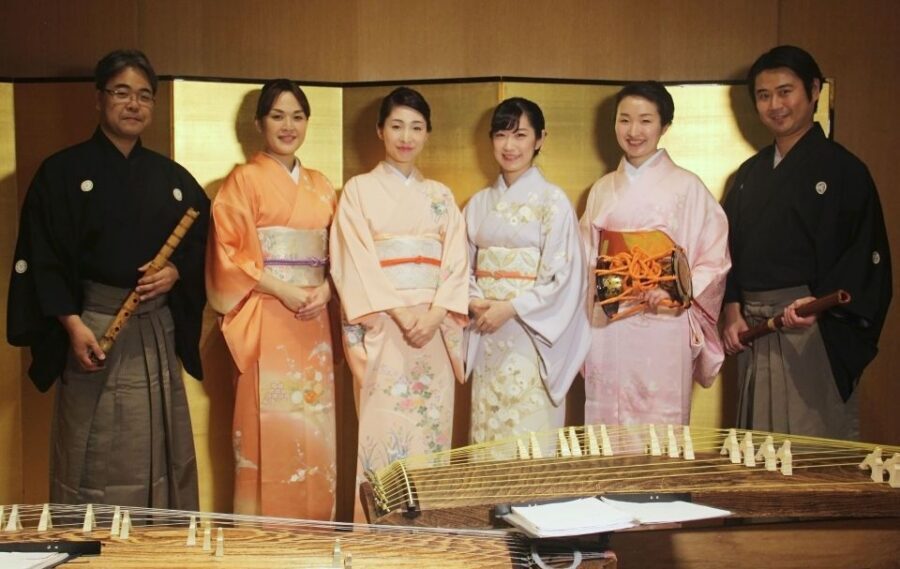
The performers wear kimono, and they’re positioned so you can see them clearly. That detail sounds cosmetic until you’re actually in the room. In a wagakki show, the body matters: hands, breath, and striking technique all shape how the sound lands.
Because the musicians are close, translation becomes more useful too. When you hear an explanation while you can see the instrument being played, you understand it faster. That’s the difference between reading about an instrument online and actually watching the action.
Also, this is a concert you can treat as a social event. The intimate space makes it easy to notice when the music is shifting mood. That makes the hour feel less like you’re sitting through something and more like you’re participating in the flow.
One practical note: since the space is limited, arrive a little early so you can get seated without rushing.






Photos, Videos, and the After-Show Musician Moment
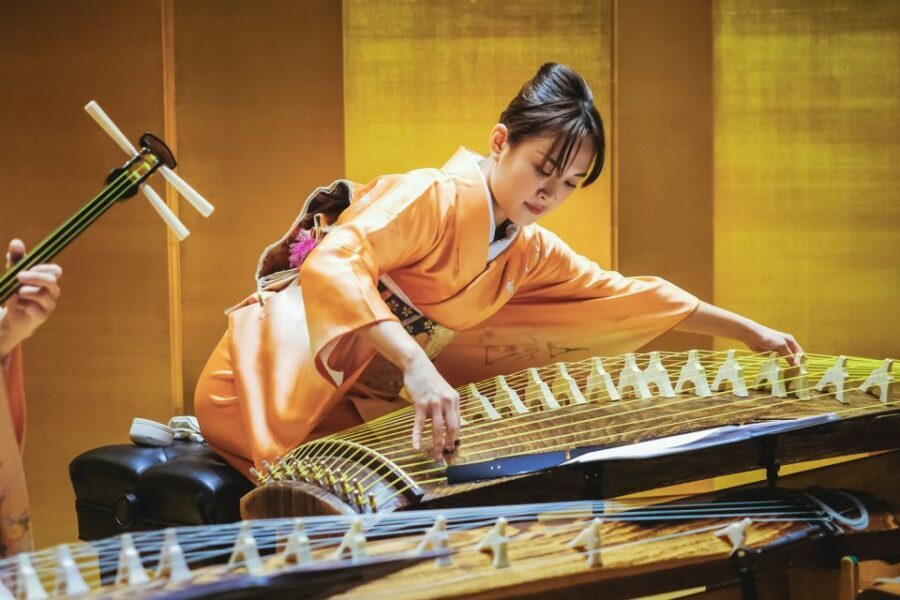
If you like capturing memories, this show gives you options.
You can take photos and videos during the show, which is a big deal in Tokyo—some performances are strict about recording. Here, you can keep your hands free and still make a digital record of the experience.
Then, afterward, you can take photos with the musicians. That extra interaction is one of the reasons this show gets recommended as a genuinely worthwhile evening. It turns the concert from a one-way event into a small personal moment: you leave with the music ringing in your ears and an actual photo that feels connected to it, not generic.
For best results, keep your phone ready but not intrusive. Watch the room flow first; you’ll get a better sense of when to film and when to put your camera away.
Price and Value at $38 for a 1-Hour Wagakki Show
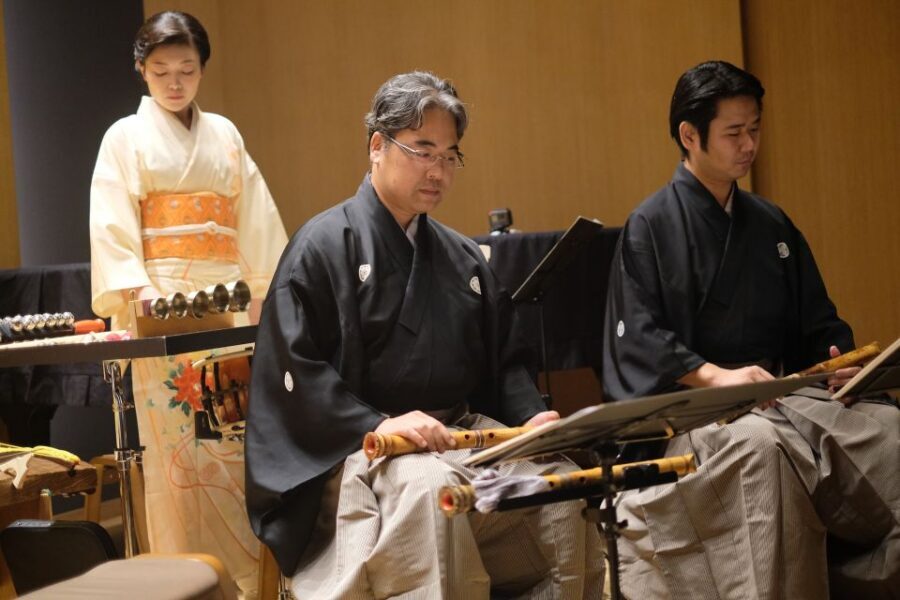
At $38 per person, this concert is priced in the range where you should ask: is it worth it compared to other Tokyo evening activities?
For me, the value comes from three places:
First, you’re paying for a live performance by musicians using multiple instruments (koto, shamisen, shakuhachi, taiko) rather than a single-instrument presentation. That variety helps the hour stay moving.
Second, you get reserved seating and a seat in a small hall where you don’t feel far away from the performers. Location and room size are part of the product here. You’re not just buying sound; you’re buying closeness.
Third, the show is explicitly designed for non-specialists. The host explains the instruments and the context of the pieces in English and Japanese, and that turns the hour into something you can understand, not just something you can hear.
What’s not included is also clear. There’s no hotel pickup or drop-off, and food and drinks aren’t included, so plan to eat before or after. No merchandise is listed too, so think of this as a ticket-only cultural experience rather than a shopping stop.
If you want a straightforward cultural evening with real music and real explanation, $38 for a one-hour concert in a close, intimate setup can feel like good value.
Tips for a Smooth Evening in the Harajuku Area
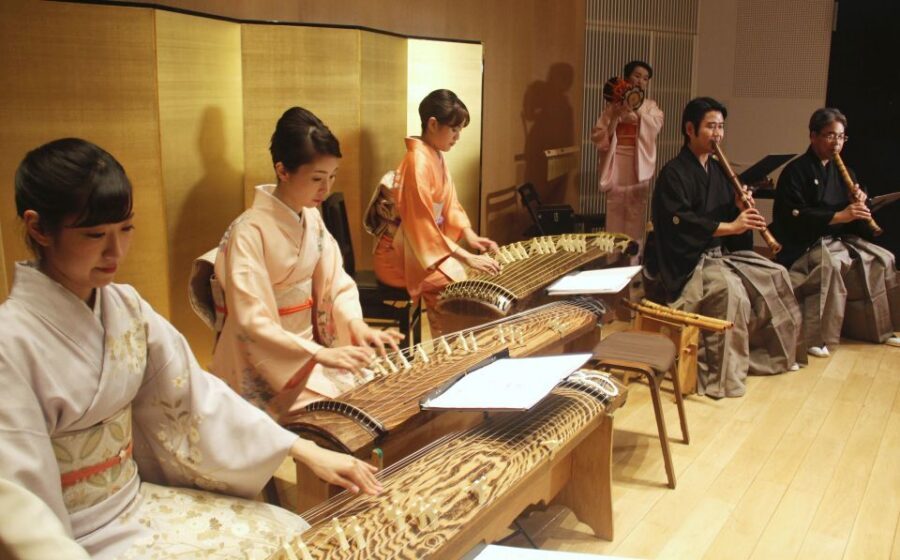
Keep your evening simple and you’ll enjoy it more.
- Go on foot if you can. Both station exits are close, and walking reduces stress.
- Wear something comfortable for a seated hour. It’s not long, but you are sitting and listening closely.
- Charge your phone. You’ll likely want video and photos during the show.
- Plan food around the concert. Food and drinks aren’t included, and you don’t want to rush a meal right before.
If you’re combining this with Harajuku/Omotesando browsing, I’d schedule it earlier rather than late. The show is only an hour, but you’ll appreciate having energy for the walk back through the neighborhood afterward.
Who Should Book This Show (and Who Might Skip It)?
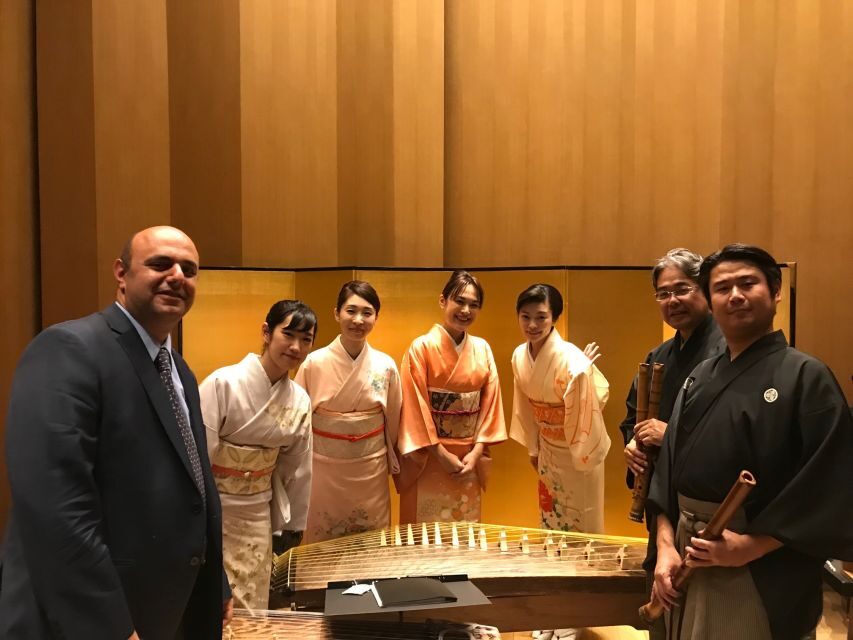
This is a great fit if you want:
- A high-quality introduction to Japanese traditional music
- Close-up instrument watching, not distant seats
- A show that gives you context so you don’t feel lost
- A cultural activity that works for adults and teens (the phone-friendly recording time helps)
You might consider skipping if:
- You mainly want nightlife and late-night entertainment rather than a seated concert
- You’re expecting a big staged production with elaborate sets
- You’re hungry right away and don’t want to plan food around the ticket
In other words: if your ideal Tokyo evening includes listening, learning, and photos with the musicians, this lands right in the sweet spot.
Should You Book ZAKURO SHOW?
I’d book it if you want a compact, memorable introduction to wagakki that doesn’t require prior knowledge. The combination of intimate seating, English/Japanese translation, and a multi-instrument program makes it one of the more approachable traditional music experiences in Tokyo.
Before you book, just check one practical thing: the show start time that fits your day. Then plan dinner so you’re not thinking about food during the concert. If you do that, you’ll walk out with a clearer understanding of the instruments and a set of photos you’ll actually want to look at later.
FAQ
How long is the Japanese traditional music show?
The concert program lasts 1 hour.
Where is the meeting point for the show?
The meeting point is Hall 60 near Meiji-Jingumae Station (Exit 7), about a 1-minute walk, or JR Harajuku Station (Omotesando Exit), about a 5-minute walk.
What instruments will I hear during the concert?
You’ll hear Japanese harp (koto), Shamisen, Shakuhachi flute, and Taiko drums.
Is seating reserved?
Yes. The ticket includes a reserved seat.
Can I take photos or videos during the show?
Yes, you can take videos and pictures during the show.
What languages are used for the host or greeter?
The host/greeter provides English and Japanese.
Is food or drinks included?
No. Food and drinks are not included.
What is not included with the ticket?
The ticket includes entry and the concert program, but hotel pickup and drop-off, food and drinks, and merchandise are not included.
What’s the cancellation and refund option?
There is free cancellation with a full refund if you cancel up to 24 hours in advance.