REVIEW · KYOTO
Kyoto Arashiyama Rickshaw Tour with Bamboo Forest
Book on Viator →Operated by Ebisuya · Bookable on Viator
A bamboo stroll with horsepower and shade.
This Kyoto Arashiyama Rickshaw Tour is a smart way to see the famous bamboo forest without turning your whole morning into a long, slow slog. I love how starting early in the morning helps you dodge the worst crowds while you’re still fresh enough to enjoy the green lanes and photo stops.
I also like the human touch: your guide pulls the rickshaw, points out what you’re looking at, and many guides are praised for clear English and great iPhone photo help (names that pop up often include Ocean, Yoshi, Shota, Hikaru, Kiko, and Kei). You’ll also get more than bamboo, with stops that include Nonomiya Shrine and the area around a traditional haiku poet cottage.
One consideration: part of the experience involves getting off and walking, including a steep up-and-down slope. It’s manageable for most people, but it’s not the best fit if you want zero walking, if you’re in the first 16 weeks of pregnancy, or if mobility is a concern.
In This Review
- Key things I’d highlight
- Morning at Arashiyama Bamboo Forest: Beat the Crowd, Keep the Magic
- Rickshaw Ride Through Bamboo: The Part You Can’t Recreate Alone
- The Stops That Break Up the Ride: Shrine, Photo Break, and a Short Hike
- Haiku Poet Cottage: A Traditional Stop That Adds Real Character
- Duration and Customization: How to Choose 1 vs 2 Hours
- Price at About $86.88: What You’re Really Paying For
- Weather, Comfort, and Photo-Ready Tips That Matter
- Who Should Book This Rickshaw Tour (and Who Might Skip It)
- Should You Book This Kyoto Arashiyama Rickshaw Tour?
- FAQ
- FAQ
- How long is the rickshaw tour in Arashiyama?
- Where does the tour start?
- Is the bamboo forest ride only by rickshaw?
- Are temple and shrine admission fees included?
- What is included in the price around $86.88 per person?
- What should I know about weather?
- What if I’m late to the meeting point?
- Can I reschedule or change times after booking?
- Is the tour private?
- Are there any child or pregnancy limitations?
Key things I’d highlight
- Early-morning strategy to make the bamboo forest feel less like a queue.
- Rickshaw access on routes reserved for rickshaws, then a short on-foot section for the best angles.
- Guides who handle photos well, including spot selection and phone photography help.
- More than bamboo, with shrine and traditional cottage stops along the way.
- Weather-ready timing, since the tour runs rain or shine.
Morning at Arashiyama Bamboo Forest: Beat the Crowd, Keep the Magic
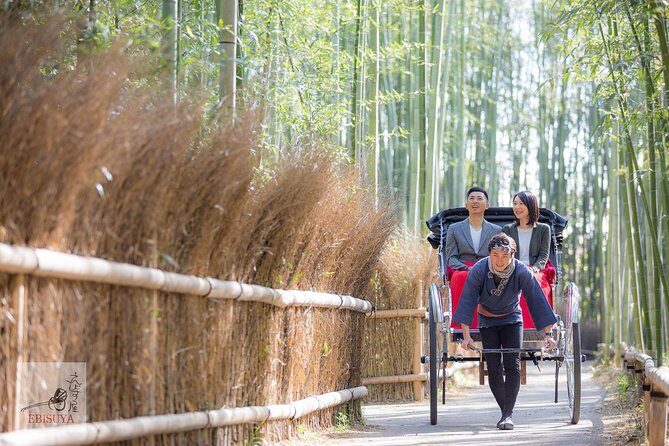
The Arashiyama bamboo forest is one of those Kyoto scenes where timing matters. If you arrive late, you’ll spend more time stepping around people than soaking up the place. Starting early lets you see the bamboo in a calmer rhythm, especially during that first stretch before foot traffic thickens.
This tour is built around that idea. You’re not just “going to bamboo,” you’re using the rickshaw to move efficiently through the area while the light is still gentle. That changes the whole vibe: you get the tall green walls, but you also get moments where you can breathe and frame a photo without squeezing.
And yes, the rickshaw adds comfort. The ride has shade, and on hot days you may even get a cold towel, which makes a big difference when Kyoto decides to run warm. Even if the weather goes the other way, guides still run the tour rain or shine, so you’re not left scrambling for a Plan B.
You can also read our reviews of more tours and experiences in Kyoto.


Rickshaw Ride Through Bamboo: The Part You Can’t Recreate Alone
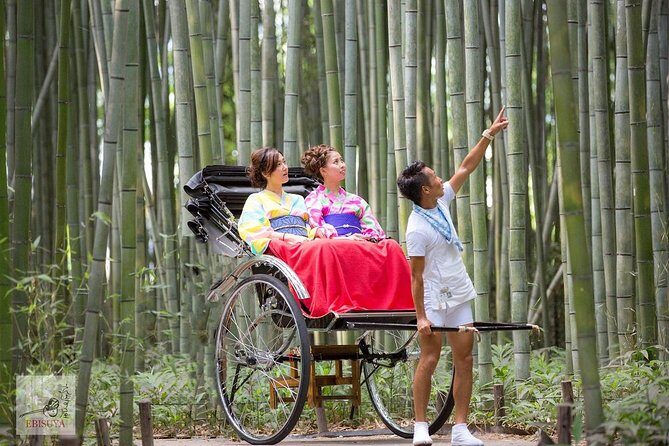
Here’s the simple win: you ride through bamboo sections that you can’t access the same way on foot. Your guide pulls you along the bamboo path reserved for rickshaws, so you’re not battling the same bottlenecks as everyone else walking shoulder-to-shoulder.
The rickshaw also changes how you notice details. From your seat, you can look up at the stalks and down the corridor of bamboo without constantly shifting your footing. That matters because the forest looks different from angles and heights, and the best photos often come from those exact “standing right here” viewpoints.
Most of the time, you’ll stay seated, and that’s a huge help if you’d rather not do a long walk while wearing the wrong shoes. One review even called out the fact that you don’t need to walk most of the time, except for photo moments and the final stretch.
Also, don’t underestimate the guide’s role. People repeatedly mention guides who actively coach photos and hunt for the best spots. Some even let you hand over your phone and direct you on where to stand so your group actually looks good with the bamboo behind you.
The Stops That Break Up the Ride: Shrine, Photo Break, and a Short Hike
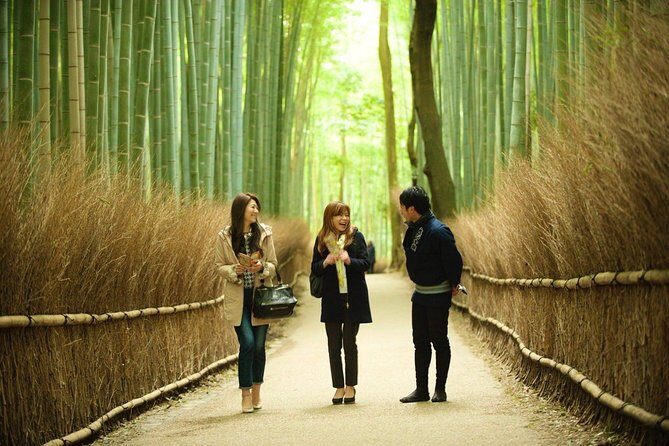
This tour is paced like a good meal: ride, pause, then a little effort at the end when you’re warmed up.
After you start through the bamboo lanes, you’ll pass Nonomiya Shrine, one of the sights that gives context to the area beyond the photo wall. Then you stop for photos at a small park—an easy break where your guide can reset the plan and help you grab a few shots without rushing.
The big “you have to get off here” moment comes at the area you walk to for the most famous bamboo section that can’t be accessed by rickshaw. This walk includes going up and down a steep slope, so it’s worth planning for it. You’ll be switching from “sit and glide” to “short hike,” and the best part is that it’s still short enough to feel like an adventure, not a workout.
Along the way, you also see a Shinto shrine within the bamboo forest. It’s one of those reminders that this isn’t just a scenic set—it’s a living place where spirituality and daily life share the same ground. The bamboo frames the shrine atmosphere in a way that feels more personal than the crowded viewpoint selfies.
Finally, the last leg is on foot to reach an impressive section of the forest. That extra walk is exactly what makes the tour feel complete: you get the efficient rickshaw route, then you do just enough walking to access the best viewing points.
Haiku Poet Cottage: A Traditional Stop That Adds Real Character
I like it when a bamboo tour doesn’t end at bamboo. This one keeps going into traditional Kyoto texture, including the cottage of a famous haiku poet, with a straw thatched roof.
Even if you’re not a literature nerd, the cottage stop gives you a break from the bamboo-only visuals. It’s a chance to see the pastoral style and imagine how the area might have felt before it became a global Instagram stop. It also helps you remember the tour as more than a single location.
One more practical reason to appreciate this stop: it breaks up your sense of repetition. After the bamboo corridors, a different setting helps you reset your eyes, which is important for photos and enjoyment. It also gives you something to talk about later besides “we went to the bamboo forest.”
Duration and Customization: How to Choose 1 vs 2 Hours
The tour runs about 1 to 2 hours, and the guide can customize choices based on the duration you select. In other words, you’re not stuck with a rigid script. If you want more time in the forest for photos, you generally choose the longer option. If you want a highlights-focused version, the shorter ride is a good fit.
I’ve found that this kind of tour works best when you match your energy level to your timing. If you’re traveling with kids, or you know your legs won’t love a steep slope, lean toward the shorter duration. If you want time for photos at multiple spots and a slower pace, go with 2 hours.
You can also customize where you finish. Your rickshaw stand is the normal endpoint, but the finishing location can be adjusted, and any other drop-off location may involve an additional drop-off fee paid on the day of the tour.
One rule to keep in mind: if you’re late, your tour time gets shorter. Being late by 10 minutes or more can mean automatic cancellation, so it pays to arrive early and build in a buffer, especially if you’re navigating Kyoto on foot and public transit.

Price at About $86.88: What You’re Really Paying For
At around $86.88 per person, this isn’t the cheapest way to experience Arashiyama. But you are paying for a few things that add up fast:
- The rickshaw ride itself
- All fees and taxes
- Gratuities
What’s not included is also clear: you’ll typically handle temple and shrine admission fees if they apply to the places you visit, and transportation to and from the meeting point isn’t included.
So where’s the value? You’re paying for less physical strain, faster movement through key areas, and a guide who helps with timing and photos. If you were to DIY it, you’d still likely deal with crowds at the main bamboo section, and you’d still be making photo decisions without a guide helping you find the best angles.
In plain terms, it’s good value if you want the “bamboo forest highlight” experience with less hassle. If you love long walks, don’t mind crowds, and don’t care about guided photo spots, you might decide the cost isn’t worth it.
Weather, Comfort, and Photo-Ready Tips That Matter
This tour runs rain or shine, so you’ll want to dress for Kyoto’s real-world conditions, not the postcard version. Reviews mention snow on a morning tour, and the experience still went ahead, which tells you the company expects people to bring basic weather flexibility.
Comfort tips that actually help:
- Wear shoes you can trust on the steep walking section. You don’t want grippy soles and perfect ankles to be optional.
- Bring layers. Morning air can be cool, and weather can shift fast.
- If it’s hot, take advantage of the shade and the cold towel if they offer it.
For photos, take your guide up on the support. Multiple reviews mention guides who take amazing photos and coach groups on where to stand. One practical tactic: if you want better group framing, ask your guide for the best way to hold your phone and where to position everyone. You’ll spend less time “trying” and more time actually getting shots you’ll want to keep.
Who Should Book This Rickshaw Tour (and Who Might Skip It)
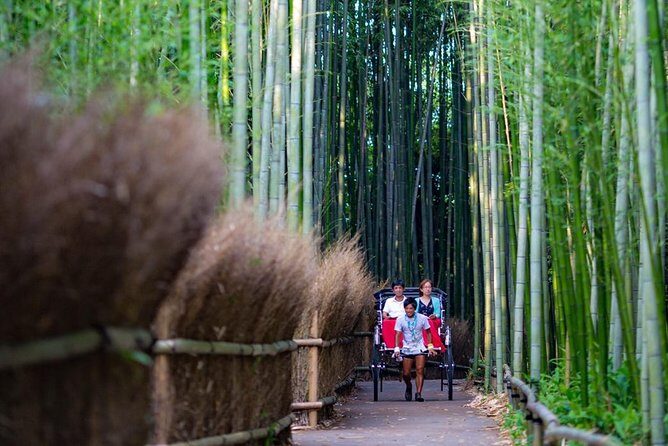
This is a good fit if you:
- Want a guided way to see the bamboo forest without a major walking day
- Care about photos and like the idea of a guide helping you find strong spots
- Appreciate a bit more context with shrine and traditional stops
- Prefer a private group setting where you aren’t competing for space in a loud crowd
Most people can participate, but it’s not recommended for pregnant travelers in the first 16 weeks. The walking includes a steep slope, so if you have mobility limits, you should think hard before booking.
If you’re traveling with kids, pay attention to the seating rules. Rickshaw seats measure 74 cm (about 29.1 inches) wide and can fit up to two adults side by side. Children age 6 and older must have their own seat and pay the same price as adults. Children 5 and under can ride for free if they sit on an adult’s lap, with limits of one child per adult (max two adults and two children per rickshaw). If a child 5 will use a seat, they must book as an adult.
That’s a lot of detail, but it matters for a smooth ride. If you match the child rules to your family setup, the tour stays comfortable instead of stressful.
Should You Book This Kyoto Arashiyama Rickshaw Tour?
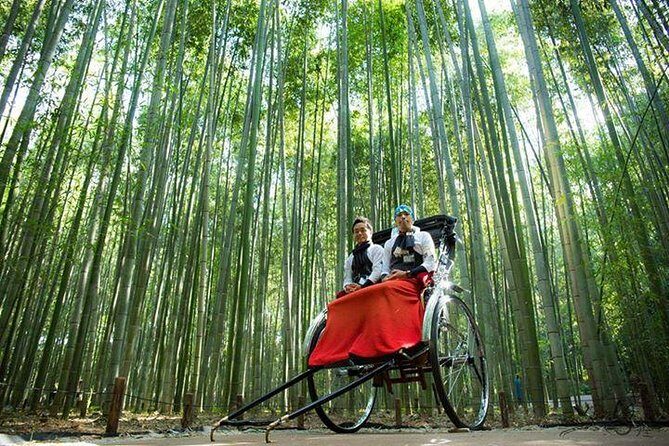
Book it if you want the bamboo forest experience with less friction: early-morning timing, rickshaw access to the bamboo path, guided context, and photo help from guides like Ocean, Yoshi, Shota, Hikaru, Kiko, and others named by past visitors. It’s especially worth it when you’d rather spend your energy enjoying Kyoto than walking to “just the right spot.”
Skip or reconsider if your priority is total freedom with zero walking, you can’t manage the steep slope segment, or you’re in the first 16 weeks of pregnancy. The tour is designed for balance—ride comfort plus a short hike—not a fully stroller-friendly, flat-surface experience.
If you’re standing at the decision point, here’s the easiest way to choose: if you’d pay to reduce hassle and get better photos with a guide, this tour fits. If you’d rather do it all on foot and don’t care about guide-led photo positioning, you may prefer a self-guided day.
FAQ
FAQ
How long is the rickshaw tour in Arashiyama?
It lasts about 1 to 2 hours total, depending on the duration you select.
Where does the tour start?
The meeting point is 1-1 Sagatenryūji Susukinobabachō, Ukyo Ward, Kyoto, 616-8385, Japan.
Is the bamboo forest ride only by rickshaw?
No. You ride in the rickshaw through parts of the bamboo forest, then you get off to walk for a more famous section and for the final on-foot portion.
Are temple and shrine admission fees included?
Admission fees for temples and shrines are not included.
What is included in the price around $86.88 per person?
The tour includes the rickshaw, all fees and taxes, and gratuities.
What should I know about weather?
The tour runs rain or shine.
What if I’m late to the meeting point?
The time you will be late will be deducted from your tour duration. Being late by 10 minutes or more results in automatic cancellation.
Can I reschedule or change times after booking?
Time changes on the day of the tour cannot be accommodated. Rescheduling requests sent after 5pm the day before your tour also cannot be accommodated.
Is the tour private?
Yes. It’s listed as a private tour/activity, meaning only your group participates.
Are there any child or pregnancy limitations?
Pregnancy: it is not recommended for pregnant travelers in the first 16 weeks. Children: ages 6 and older require a seat and pay the same as adults; children 5 and under can ride free on an adult’s lap, with limits per rickshaw.