REVIEW · KYOTO
Kyoto: Traditional Tea Ceremony with Matcha & Sweets in Gion
Book on GetYourGuide →Operated by Japan Wonder Travel · Bookable on GetYourGuide
Kyoto’s tea culture shows up in a very human way here. You’ll sit comfortably in chair seating, watch an elegant tea ceremony up close, then make your own bowl of matcha with guidance from the tea master. The biggest plus I see is that it’s not locked into strict, floor-sitting formality. One consideration: if you’re traveling with young kids, you’ll want to factor in matcha’s caffeine and the fact that toddlers don’t get their own matching cup to make tea.
In the heart of Gion, this experience balances calm tradition with a friendly pace. You’ll also get traditional Japanese sweets and learn the story behind tea, including the Zen ideas that shape how the ceremony is done. If you want a gentle introduction to matcha that still feels authentic, this is a strong pick.
In This Review
- Key highlights worth your time
- Kyoto’s Gion tea ceremony, built for real comfort
- Getting to the ceremony in Gion: meeting point and timing
- Watching the tea ceremony: up-close technique and Zen in plain language
- Sweets with your tea: the break that teaches you
- Your hands on matcha: mixing the bowl with guidance
- Q&A with the tea master: ask what you actually wonder
- Value check: why $22 makes sense for what you get
- Who this Kyoto tea ceremony is perfect for (and who should consider alternatives)
- Should you book this Gion matcha ceremony?
- FAQ
- Is this tea ceremony offered in English?
- Where do I meet for the tea ceremony?
- How long does the experience last?
- Will I need to sit on the floor?
- What’s included in the price?
- Can kids join the tea ceremony?
- Is it a group activity?
- Do I need to book a kimono to do the tea ceremony?
- What are the kimono timing rules?
- What’s the cancellation policy?
Key highlights worth your time
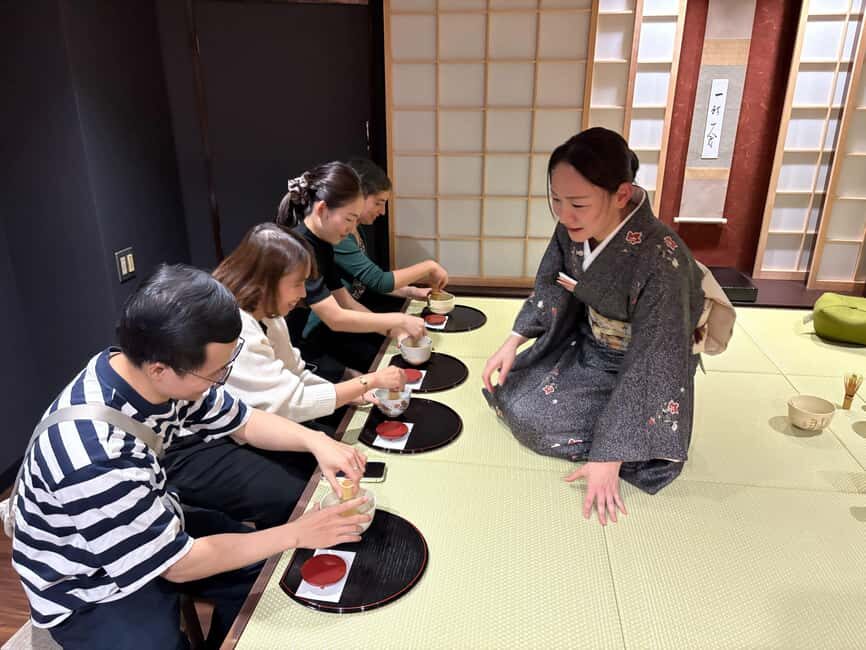
- Chair seating in a traditional setting so you can focus on the tea instead of your knees
- Up-close viewing of the ceremony techniques performed by a tea master
- Sweets + tea history served with context, not just a sugar break
- Hands-on matcha mixing using tea sourced from a family-run farm
- Q&A time to ask your real questions, from quality to philosophy
- A take-home matcha recipe so you can repeat the experience later
Kyoto’s Gion tea ceremony, built for real comfort
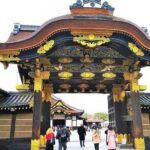
Gion is Kyoto at its most old-school: narrow streets, quiet corners, and a slow rhythm that makes you lower your voice without trying. This ceremony taps into that atmosphere, but it avoids the common trap of making you feel like you must do everything perfectly. The tone is calm and respectful, with just enough looseness that you don’t feel trapped by etiquette.
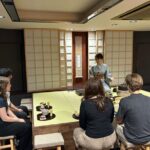
What makes the experience especially practical is the chair setup. Traditional tea ceremonies are often described as floor-based, which can be tough if you’re traveling with mobility limits or simply don’t want to spend an hour worrying about posture. Here, you can participate fully and still watch the ceremony closely.
Two other details matter because they shape how you’ll remember it:
- You’re not only watching. You’ll learn enough to mix your own matcha later.
- You get both the “how” and the “why,” with stories about tea’s history and the Zen philosophy that influences the ritual.
That combination turns this from a performance into a skill you can use again.
A few more Kyoto tours and experiences worth a look

Getting to the ceremony in Gion: meeting point and timing
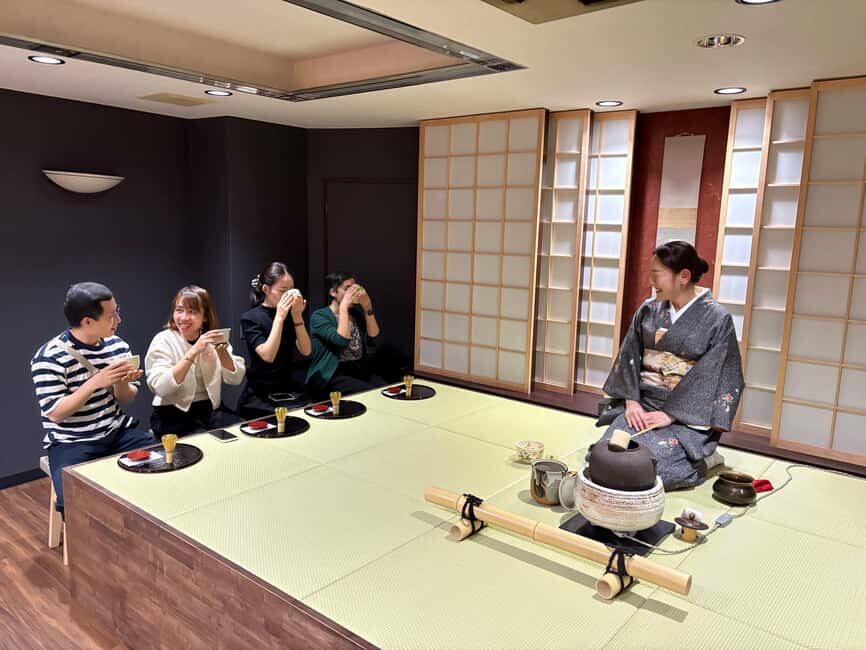
The meeting point can vary by option, so check your exact confirmation. If you’re doing a kimono option, there’s a more structured timing rhythm: you go to the Kimono Rental Wargo Gion store, then walk a few minutes to the ceremony location, aiming to arrive about 10 minutes early. The guide also notes that your tea ceremony time is fixed based on your kimono start time.
Here’s how the schedule works for the kimono option:
- If you select 11:00, attend the 12:30 tea ceremony
- If you select 12:00, attend the 14:00 tea ceremony
- If you select 14:00, attend the 15:30 tea ceremony
After the tour, return your kimono by 5:30pm.
If you’re not doing kimono, the best move is the same: arrive early enough to get settled without rushing. Kyoto is easy to navigate, but Gion can be a little maze-like once you’re weaving between small lanes.
The session duration is listed as 1 hour to 150 minutes, depending on the option and starting time. That range usually means you’ll have time for observation, making tea, and a Q&A at the end without feeling squeezed.
Watching the tea ceremony: up-close technique and Zen in plain language
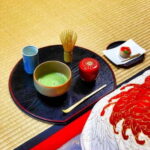
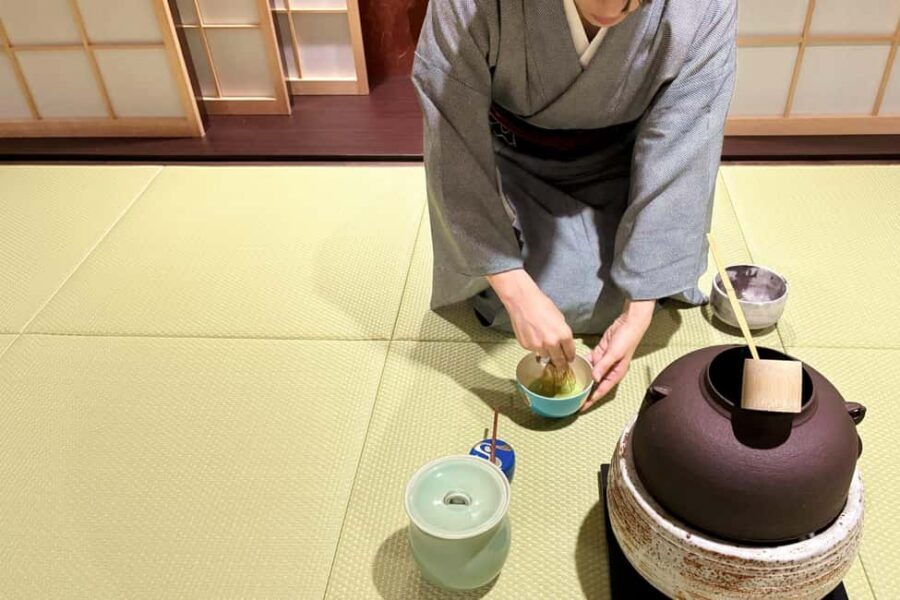
Before you make anything yourself, you’ll see an elegant tea ceremony performed by the tea master. This is the part that helps you understand the logic behind the motions. Even if you don’t know the terminology, you can feel the pacing: deliberate movements, careful handling, and attention to small details that affect the tea’s final texture.
The tea master also explains:
- the history of tea and how the tea ceremony developed
- how Zen philosophy influences the approach to the ritual
I like that this doesn’t lean on mystery. You get the sense of meaning without being forced to memorize cultural trivia. The goal feels like understanding, not impressing anyone.
A small but important touch: because you’re seated in chairs, you can keep your eyes on the process instead of constantly adjusting your body. That makes a big difference for photos too, because you’re not scrambling to find a workable angle.
And if you’re the type who always asks why people do things a certain way, this will fit you. You’ll have a clearer idea of what to watch for when it’s your turn to make matcha.
Sweets with your tea: the break that teaches you
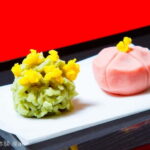
After the ceremony viewing, you’ll be served carefully selected traditional Japanese sweets chosen by the tea master. This is more than a palate reset. Sweet pairing is part of why the ceremony works as a full experience rather than just a drink demo.
The sweets also connect to the storytelling. You’ll hear tea-related history and context while you taste, which helps the information stick. It’s a smarter teaching rhythm than listing facts while everyone sits with empty cups.
One practical note: the sweets can vary, but you can expect them to be traditional and intended to complement the tea. If you have dietary restrictions, you’ll want to check directly when you book, since the selection is described as chosen by the tea master.
Your hands on matcha: mixing the bowl with guidance
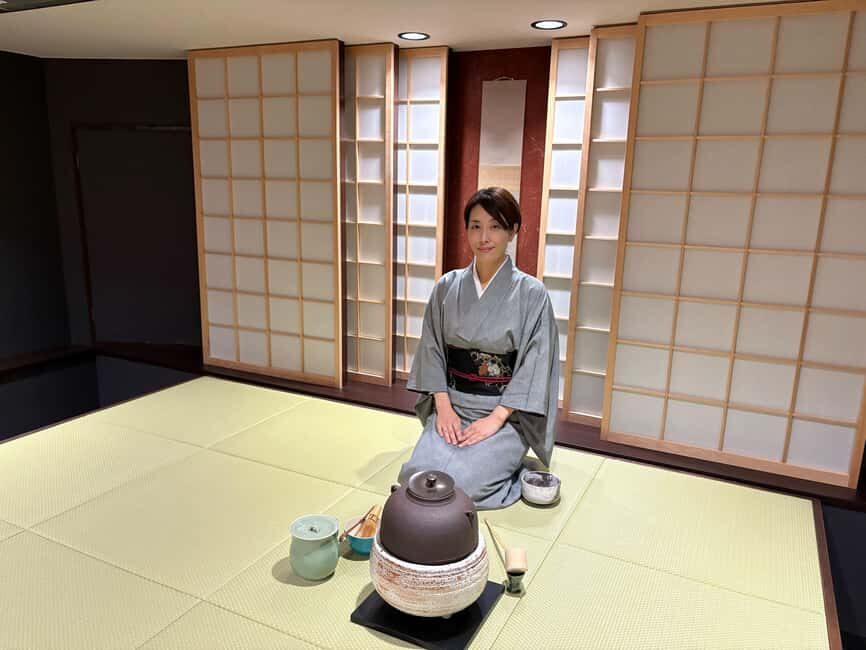
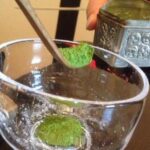
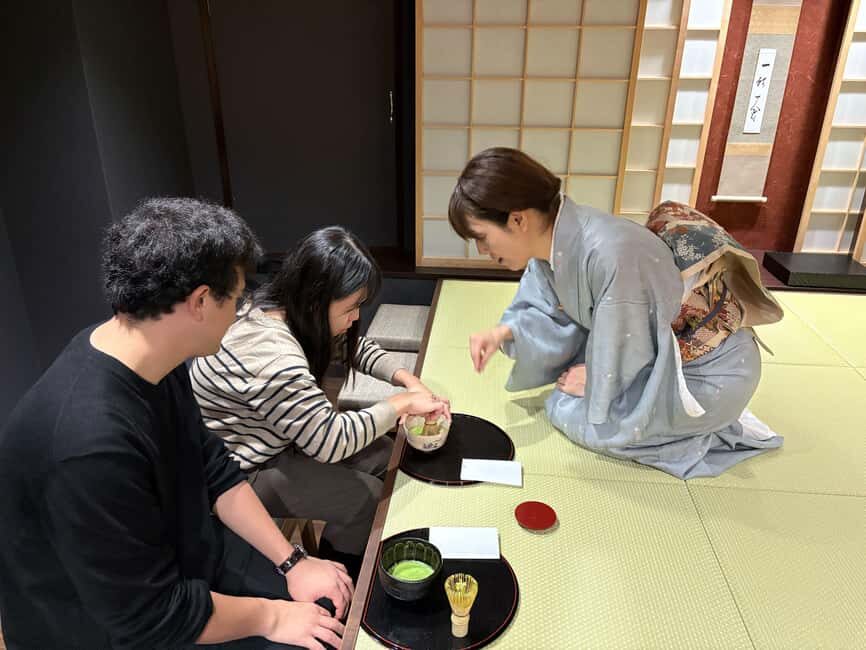
The heart of the experience is the hands-on moment: you’ll make your own bowl of matcha. The session includes guidance, so you’re not left guessing about how much powder to use or how to whisk. You also use a special tea sourced from a family-run tea farm, and that detail matters because it reinforces that matcha quality is not just a buzzword.
This part is where the ceremony becomes a skill you can bring home. You learn the basic technique of mixing matcha into the right texture. And you’re tasting along the way, so you can connect the method to the cup.
To finish, you’ll receive a simple recipe to recreate matcha later. That take-home instruction is one of the best value-adds in any tea experience, because it turns a one-time activity into something you can repeat at home without needing the exact same setting.
My advice: treat your bowl as a learning moment. Even if your first attempt isn’t perfect, you’ll leave knowing what the tea master is trying to achieve—especially around consistency and mixing.


Q&A with the tea master: ask what you actually wonder
The session concludes with a Q&A. This is where the experience becomes personal. You can ask questions about tea, the ceremony, and the ideas behind it, and you’ll get direct answers from the tea master leading your session.
This is also the time to ask practical questions like:
- what makes a matcha taste different
- how to think about quality when you buy matcha later
- why certain steps are done the way they are
Even if you’re not a “tea person,” the Q&A format makes it easier to translate culture into something you can use.
A practical bonus of Q&A: it helps you leave with a few mental hooks. Instead of remembering a bunch of steps, you remember the reasons behind them.
Value check: why $22 makes sense for what you get
At $22 per person, this is priced like a cultural introduction rather than a craft workshop that requires days of training. The value comes from what’s included:
- a matcha drink using matcha powder from a local tea farm
- guidance on making matcha plus history from the tea master
- traditional Japanese sweets selected for the ceremony
- a simple matcha recipe to take home
You’re paying for the full package: learning, tasting, doing, and leaving with an easy way to repeat the experience. That’s a lot for a session that runs 1 hour to 150 minutes.
It also helps that it’s offered in small groups, which generally means you’ll get real attention instead of being processed through a line. The experience is also listed with a 4.9 rating from 27 bookings, which suggests a consistent quality level.
If your goal is “I want to understand matcha and try it myself,” you’re paying for the right things: technique, context, and the chance to make.
Who this Kyoto tea ceremony is perfect for (and who should consider alternatives)
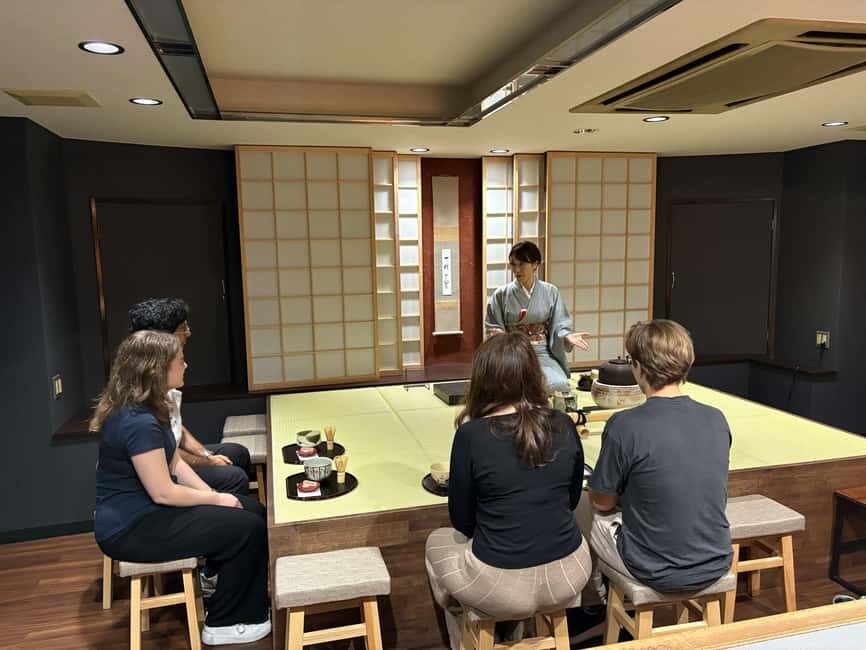
This is a great fit for:
- first-time matcha drinkers who want the basics with context
- travelers who like tradition but don’t want intense formality
- anyone who would struggle sitting on tatami (because you’re in chair seating)
- people who enjoy a calm activity that still feels hands-on
It may be less ideal for:
- very young children, since matcha is high in caffeine and it’s not recommended for children under 5
- families expecting toddlers to participate fully, since infants and toddlers are free but they don’t receive their own matcha cup to make
- anyone looking for a fast “sample and leave” activity. This is more of a paced learning and tasting experience.
One more practical thing: it’s English-led, so you’ll get the explanations without needing Japanese skills.
Should you book this Gion matcha ceremony?
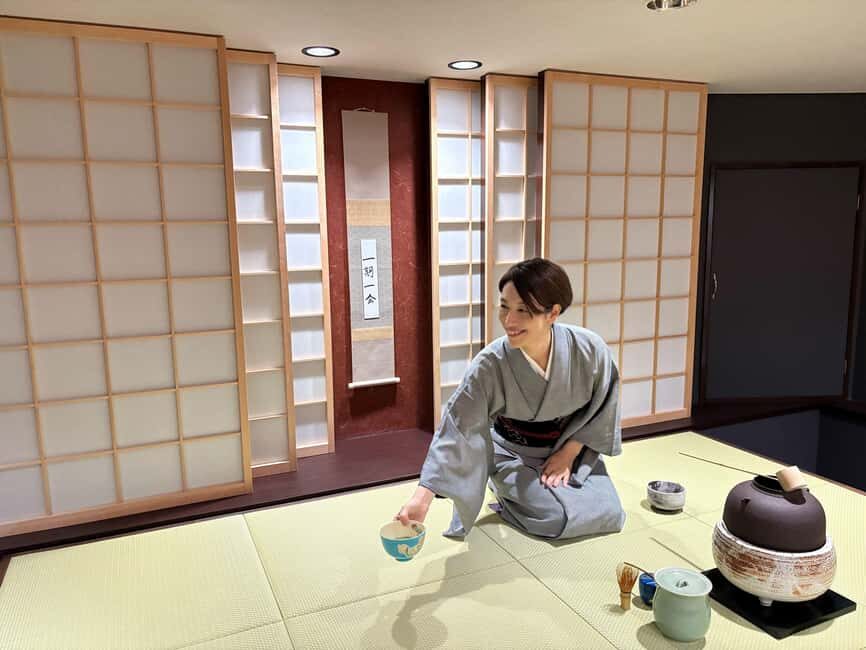
Book it if you want a gentle, authentic introduction to matcha in Kyoto’s Gion district, with real hands-on time and a way to take the experience home. The chair seating alone makes it feel like a thoughtful design choice, not a compromise.
Skip or change plans if you’re traveling with very young kids who shouldn’t have matcha, or if you only want a quick photo-style activity. In that case, look for something more straightforward.
Overall, this one works because it teaches you what you’re doing and why—then gives you a simple tool to keep using after you leave Kyoto.
FAQ
Is this tea ceremony offered in English?
Yes. The instructor for the experience is listed as English.
Where do I meet for the tea ceremony?
The meeting point may vary depending on the option booked, so you should confirm the exact location with your reservation details.
How long does the experience last?
The duration is listed as 1 hour to 150 minutes, depending on availability and starting time.
Will I need to sit on the floor?
No. This experience is designed with chair seating rather than sitting on tatami.
What’s included in the price?
You’ll get a matcha drink with matcha powder from a local tea farm, guidance for making matcha and tea history by the tea master, traditional Japanese sweets selected for the ceremony, and a simple matcha recipe to take home.
Can kids join the tea ceremony?
Infants and toddlers are free, but if they want to try, they must use their parent/guardian’s matcha cup and they will not receive their own cup to make matcha. Matcha is high in caffeine, so it is not recommended for children under age 5.
Is it a group activity?
Yes. A small group is available for this experience.
Do I need to book a kimono to do the tea ceremony?
No. The kimono option is listed separately, and you can select it only if you want it.
What are the kimono timing rules?
If you choose the kimono option, your tea ceremony time is fixed based on your kimono start time. You should also arrive about 10 minutes early after changing, and return the kimono by 5:30pm.
What’s the cancellation policy?
Free cancellation is available up to 24 hours in advance for a full refund.