REVIEW · KYOTO
2 Types of Japanese Sweets making and Tea Ceremony
Book on GetYourGuide →Operated by B.B.Advisors Inc. AN KYOTO · Bookable on GetYourGuide
Three sweets, one matcha lesson. Near Gojo Station on Honshu, this 125-minute workshop combines Ohigashi and seasonal Nerikiri with a matcha tea you’ll help prepare. It is a practical way to understand Kyoto-style sweets and the tea ritual without needing prior skills.
What I like most is the mix of hands-on shaping and tasting: you use bean paste made in Kyoto’s long-established shops, then work with special single-origin matcha. One heads-up though: when the room is full, it can feel more like a class than an intimate sit-down, and the tea portion may be casual rather than a fully formal ceremony.
In This Review
- Key things that make this class worth your time
- Entering the workshop: it starts fast, and that’s a plus
- Price and what $28 buys you in real-life value
- Getting to Gojo Station without stress (and why stairs matter)
- Ohigashi: making a dried Japanese sweet with Wasanbon
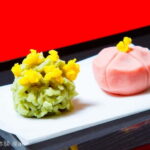
- Nerikiri: two seasonal sweets shaped from Kyoto bean paste
- Tea portion: grinding matcha and a casual ceremony style
- Timeline breakdown: how the 125 minutes are paced
- What you take home (and what you might pay extra for)
- How the instructor experience can shape the vibe
- Who this class is best for
- Should you book it? My practical take
- FAQ
- What sweets will I make in this workshop?
- How long is the experience?
- Is there matcha involved, and do I get to make it?
- Where is the meeting point?
- What is included in the price?
- Are there any optional extra charges?
- What languages are used?
- When does the workshop operate?
Key things that make this class worth your time
- Wasanbon-based Ohigashi: you make dried-style wagashi using traditional Japanese sugar
- Two seasonal Nerikiri: you shape sweets to match the time of year
- Kyoto white/red bean paste: made by long-established shops, used inside your sweets
- Single-origin matcha: you grind matcha and learn what matters about it
- A clear flow from making to tasting: breaks, photo time, then eating and drinking
- English support varies but is available: instructions are provided in Japanese, with English translation as much as possible
Entering the workshop: it starts fast, and that’s a plus
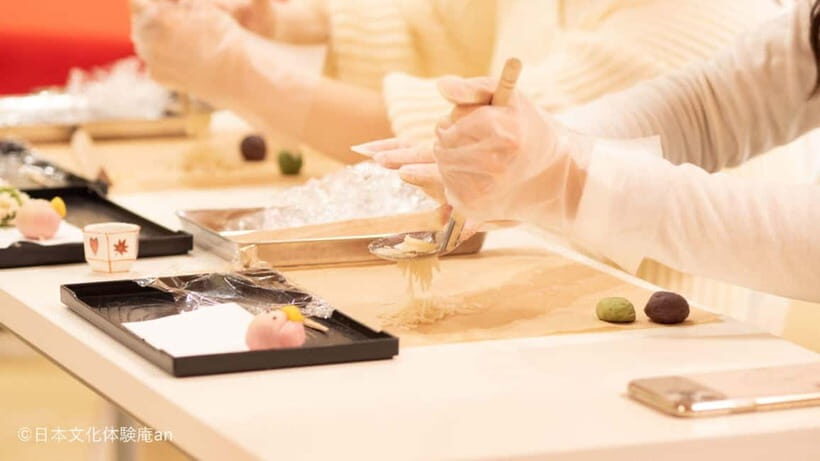
This is the kind of experience that wastes very little time. You meet near Subway Karasuma Line Gojo Station, Exit 1, and you’re basically walked into the process right away. The location is convenient if you’re already staying around central Kyoto, and the total time is tight enough that you can fit it into a normal day.
You’ll begin with an explanation of traditional Japanese sweets and what you’re about to make. Then it is straight into hands-on work: making one dried sweet type, then forming two seasonal sweets, and finishing with matcha grinding and a tea ceremony that’s meant to be approachable.
A few more Kyoto tours and experiences worth a look

Price and what $28 buys you in real-life value
At about $28 per person for 125 minutes, you’re paying for three practical components: two different sweet-making sessions plus matcha preparation and tea time. This is not just a lecture where you watch someone else work.
For value, the big win is that you use quality inputs rather than generic ingredients: the class uses bean paste produced by Kyoto’s long-established shops, and it includes a special single-origin matcha. And because you actually do the shaping and preparation yourself, the experience tends to feel more like a skill you practice than a performance you consume.
There are also optional add-ons if you want to go further. For example, there is an added fee if you want color added, and extra charges if you want a take-out box or a completion certificate. If you like souvenirs, you may want those, but you do not need them to enjoy the class.
Getting to Gojo Station without stress (and why stairs matter)
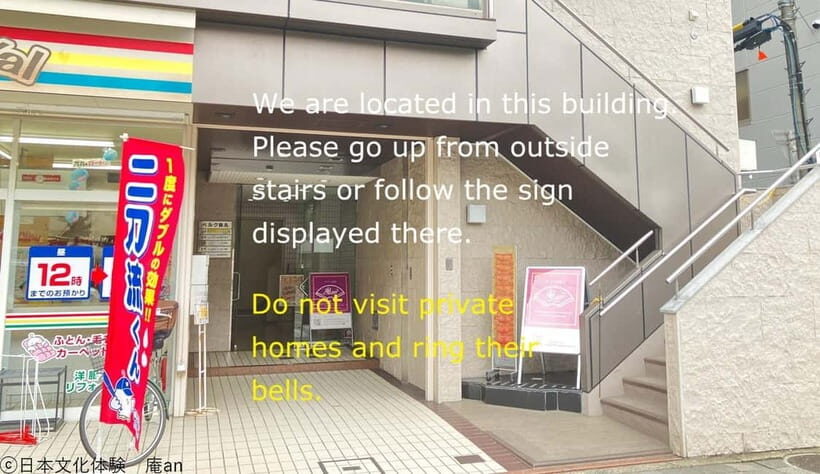
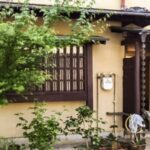
Your meeting point is a 1-minute walk from Gojo Station on the Karasuma Line, Exit 1. The shop entrance faces Gojo-dori, so it’s not hard to orient once you’re above ground.
Two logistics points matter. First, the building has no elevator. You’ll need stairs to reach the venues. Second, the event does not wait for delays, so try to arrive with a little buffer instead of sprinting in at the last second.
If you’re traveling with mobility needs, you should still be able to attend because the workshop is described as wheelchair accessible, but confirm how the stairs apply to the specific venue you’ll use before you go.
Ohigashi: making a dried Japanese sweet with Wasanbon
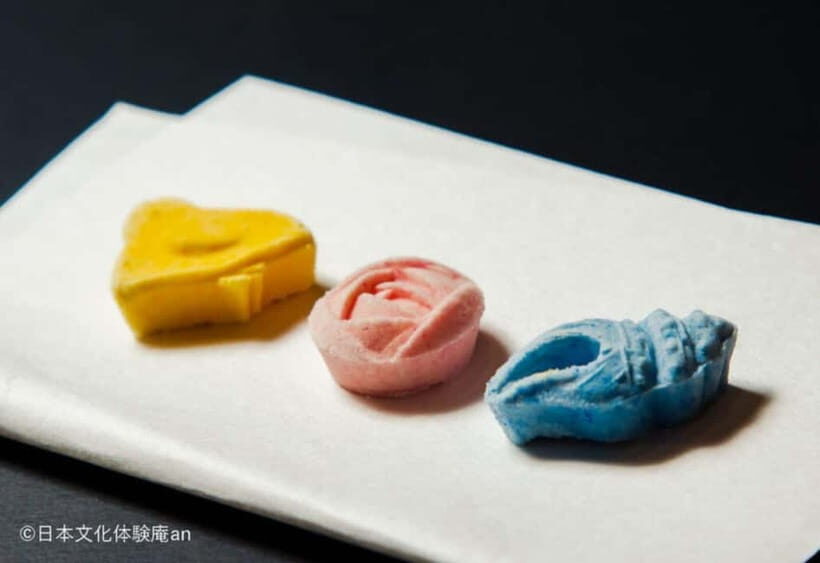
Ohigashi is the first sweet you’ll make, and it helps set the tone for the whole class. Unlike softer sweets that feel wet or custardy, this is a dried-type wagashi made from traditional Japanese sugar called Wasanbon.
What I like about starting here is that it gives you a clear sensory and structural contrast from what comes later. Your hands learn how these sweets behave, how they hold shape, and what kind of texture you can expect. It’s the kind of practical understanding that makes later steps easier, because you’re already thinking about texture and form.
You’ll get an explanation first, then jump into the making. After that first session, you take a break before moving to the more detailed Nerikiri shaping. That break is not wasted time; it’s when you can reset your brain and prepare for the flower-and-detail work that follows.
Nerikiri: two seasonal sweets shaped from Kyoto bean paste
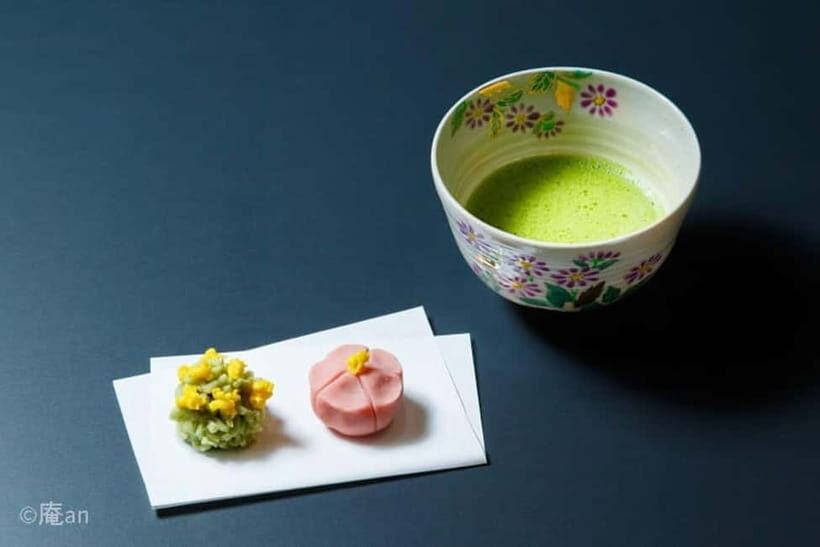
Next comes Nerikiri, the sweet that usually feels most “art made edible.” You’ll make two seasonal Japanese sweets using white/red bean paste. The class specifically emphasizes that the bean paste comes from Kyoto’s long-established shops, which matters because Nerikiri lives and dies by the quality of the paste.
In Nerikiri, you’re not just scooping and eating. You’re shaping. And because the sweets are designed around the season, you get a window into how Japanese sweets reflect the calendar. Even if you do not know wagashi terms yet, you can still feel the intention: the shapes and finishes are tied to when you’re eating them.
The workshop includes a specific making segment called “Kinton Nerikiri,” and you can expect flower-shaped work during this part of the class. That’s a fun moment because it’s where your Nerikiri stops being only about taste and starts becoming a small design project.




Tea portion: grinding matcha and a casual ceremony style
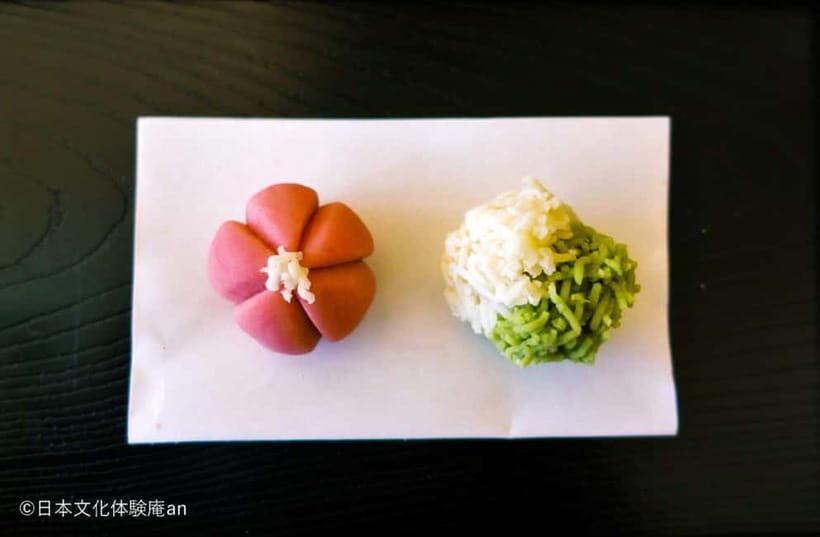
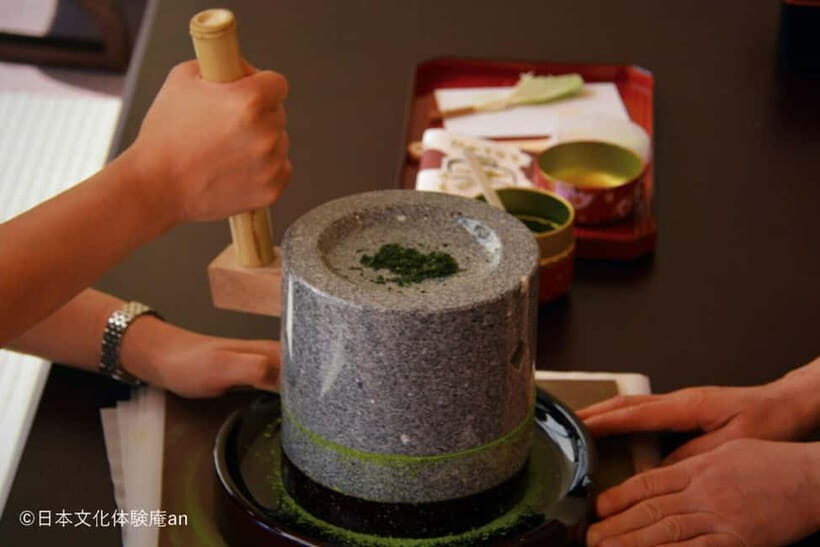
After sweets, the pacing shifts to tea. You’ll get an explanation about tea first, then watch a matcha grinding demonstration. This matters because matcha is not just tea powder dumped into hot water. How it’s handled affects texture and the overall drinking experience.
Then comes the moment you’ll remember: you make your own matcha and enjoy tea with a ceremony style that’s described as casual. Based on the way the session is structured, you’re learning the key steps and etiquette without being put in a pressure-cooker situation.
I also like that this doesn’t try to be overly formal. You get the culture and the method, but you are still treated like a participant. That makes it less intimidating if you’re new to matcha.
Timeline breakdown: how the 125 minutes are paced
The class has a rhythm that prevents you from burning out mid-workshop. It generally looks like this:
- You start with an overview of traditional sweets.
- You then make dried-type Ohigashi.
- After that, there’s a break.
- Then you create the flower-shaped Nerikiri, including the Kinton style.
- Another break follows before you move into tea.
- You learn about tea, see matcha grinding, then you do the tea ceremony portion.
- There’s also time for pictures.
- Finally, you eat and drink before leaving.
This pacing is practical. You’re not forced to do fine-detail shaping for the entire session. And the tasting time at the end helps you connect what you made with what it tastes like.
What you take home (and what you might pay extra for)
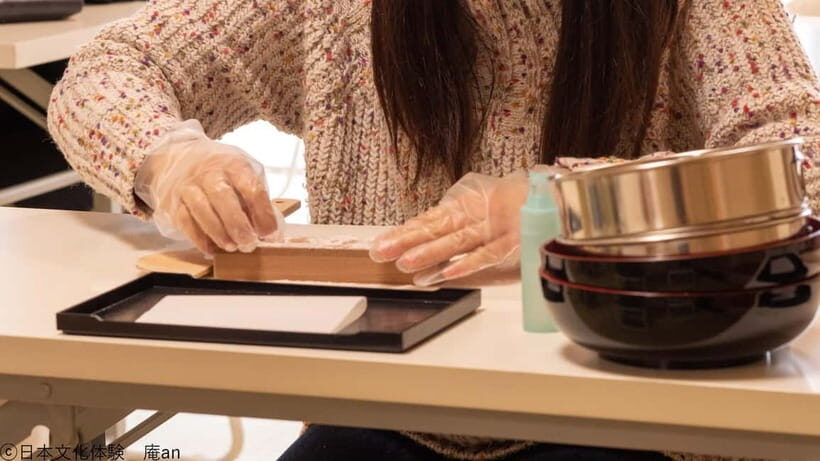
The class includes eating and drinking time at the venue, so you’ll taste the sweet(s) and enjoy your matcha there. The sweets themselves are part of your experience, and you can also consider extras if you want to store them.
Optional items are available for an extra fee, including:
- adding color (extra charge)
- a sweets take-out box
- a completion certificate
If you like bringing something home, the take-out option is the one that most directly helps. If you’re into collecting workshop proofs for your travel records, the certificate might be worth it. If you just want the experience and the taste, you can keep it simple.
How the instructor experience can shape the vibe
This workshop is led by a Japanese instructor, and English translation is provided as much as possible. One detail that stood out in feedback is how friendly and enthusiastic instructors can be, with English support that can make the steps feel clearer and less mysterious.
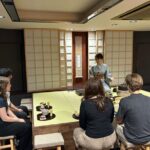
Still, you should plan for a shared room environment. When there are many participants, it can feel more like a group class than a one-on-one craft session. That can be totally fine, but if you’re sensitive to noise, it’s worth mentally preparing for that possibility.
The good news is that even when the atmosphere is lively, the core activities are hands-on: shaping Nerikiri, making Ohigashi, and grinding matcha. Those moments usually cut through the background chatter.
Who this class is best for
This works really well if you want a cultural experience that is active and structured, not just sitting in a showroom. You do not need prior Japanese skills. You’ll get explanations and the steps are designed for participants to succeed.
It’s also ideal if you enjoy food crafts and want a clearer link between ingredient quality and final texture. Using Wasanbon for the dried sweet and Kyoto bean paste for Nerikiri gives you a chance to notice differences rather than eating one generic wagashi.
If you want a fully traditional, quiet, formal tea ceremony that feels like a museum performance, you might find the “casual” style less intense than you hoped. But if your goal is to learn the basics, make something, and drink what you made, this fits nicely.
Should you book it? My practical take
Book it if you want a compact, hands-on Kyoto-flavored experience: two seasonal Nerikiri, Ohigashi with Wasanbon, and matcha grinding plus tea in 125 minutes. The quality cues are strong, and the price makes sense for what you do rather than what you watch.
Think twice if your priority is a silent, intimate setting or a deeply formal tea ritual. The room can be busy and the tea portion is designed to be approachable, so the experience may feel more educational and workshop-like than ceremonial in the strict sense.
If you’re staying near Gojo or you want a creative break from temples and streets, this is a smart add-on. It’s one of those experiences that gives you both a story and an edible souvenir.
FAQ
What sweets will I make in this workshop?
You’ll make Ohigashi (a dried-type Japanese sweet made from Wasanbon) and then make two seasonal Nerikiri sweets using white/red bean paste.
How long is the experience?
The total duration is 125 minutes.
Is there matcha involved, and do I get to make it?
Yes. You’ll have a matcha grinding demonstration and then make your own matcha as part of the tea ceremony experience.
Where is the meeting point?
It’s a 1-minute walk from Exit 1 of the Subway Karasuma Line Gojo Station. The store entrance faces Gojo-dori.
What is included in the price?
The price includes a set experience covering two types of Japanese sweets making and the tea ceremony.
Are there any optional extra charges?
Yes. There can be extra fees for adding color (200 JPY), a sweets take-out box (100 JPY), and a completion certificate (300 JPY).
What languages are used?
The instruction language is Japanese, and English translation is provided as much as possible.
When does the workshop operate?
Operation hours are from 10:00 to 17:00. Reservations received after 17:00 are processed the next day.