REVIEW · KYOTO
Kyoto Day Trip to Nara with a Local – Private & Personalized
Book on Viator →Operated by City Unscripted · Bookable on Viator
Nara feels like a time machine. I like this tour because you get a private local guide shaping the day around your pace, and your itinerary is fully flexible. One thing to weigh: food and drinks are not included, so you’ll want to plan lunch breaks yourself.
I also like how low-stress it is getting there. Your host helps organize the train plan from Kyoto Station so you’re not hunting platforms or timetables while you’re on vacation. Plus, you’ll have a trained guide at your side at the big “must-see” spots—and guides like Taiga, Alex, Kenya, and Milos show up again and again in the praise for being fun, patient, and genuinely helpful.
At the same time, private tours cost real money. At $378.76 per person for a ~9-hour day, this makes the most sense if you value one-on-one time (and if your group is more than one person).
In This Review
- Key things that make this Nara day trip work
- From Kyoto Station to Nara without the stress tax
- Todai-ji and the 15-meter Daibutsu: where to focus your attention
- Nara Park deer time: iconic, but manage your expectations
- Isui-en Garden: a calm pocket between major sights
- Kasuga Taisha: Fujiwara ties and the rhythm of rebuilding
- Kofuku-ji’s pagodas: look up, then look around
- Price and value: is $378.76 per person worth it?
- Who should book this Kyoto-to-Nara private tour
- Should you book it?
- FAQ
- How long is the Kyoto to Nara private tour?
- What’s included in the ticket costs?
- Is this tour private or shared?
- Are food and drinks included?
- Do I need to worry about train timetables?
- Where does the tour start?
- Is the itinerary fixed, or can it change?
- Can I use a Japan Rail Pass?
- Can I cancel for a full refund?
- Are service animals allowed?
Key things that make this Nara day trip work
- Train tickets handled for you so you can focus on the ride, not the logistics
- Private, personalized routing meaning you can adjust pace and priorities in real time
- Reserved entry support for major stops like Todai-ji and Kasuga Taisha
- Nara Park deer viewing with a guide’s common-sense approach to keep it pleasant
- Temple-and-garden variety so the day doesn’t feel like one long photo line
From Kyoto Station to Nara without the stress tax
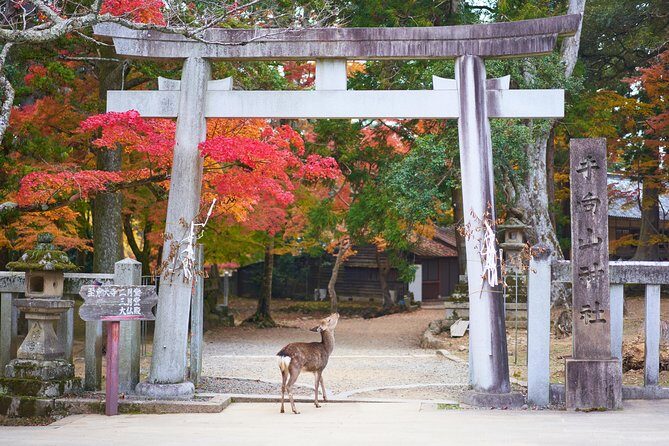
The day starts near JR Kyoto Station at Mister Donut (Shop 901 in the JR Kyoto Station Building area). From there, you take the train with your host. The key detail here is that the guide organizes the tickets, which matters more than it sounds. In Japan, train routes can be easy for locals and tricky for visitors—especially when you’re juggling announcements, platform changes, and the mental load of getting it right.
With a private guide, you also gain something you can’t fake with a smartphone: judgment calls. Your host can help you keep the day moving efficiently, while still slowing down when you want time at a specific place. That’s a big part of why this format feels worth it, even on an all-in cost basis.
There’s also a nice built-in reassurance: the tour is private, so it’s just your group. No waiting around for stragglers from a larger crowd. And because the itinerary is flexible, you’re not trapped in a rigid “museum hours” schedule when you’d rather spend 15 extra minutes somewhere calmer.
One more practical note: the tour description mentions hassle-free pickup from a central Kyoto hotel, but the stated meeting point is at the JR station Mister Donut. In practice, that usually means there’s a defined start point close to transportation. I’d confirm the exact pickup/meeting arrangement at booking so you’re not surprised the morning of.
You can also read our reviews of more private tours in Kyoto


Todai-ji and the 15-meter Daibutsu: where to focus your attention
Todai-ji is the big one, the head temple of provincial Buddhist temples. The most famous sight is the Daibutsuden hall, which houses the Daibutsu, a bronze Buddha statue about 15 meters tall. When you first see it, your brain instantly wants to stand back and take wide photos. But with a guide, you’ll get more out of the time if you slow down and look for the details your eyes might skip alone.
A couple of specifics worth knowing before you walk in:
- The Daibutsu statue is the main event, but the hall itself is part of the experience. Let it set the scale for you.
- There’s also a notable pillar with a hole. It’s one of those classic “do I really see that?” details that becomes more fun when someone points it out and tells you what it’s for.
The value of a private approach here is simple: you’re not rushed. You can stand where you want, ask questions, and get context without pulling your guide’s attention away from their own group rhythm—because you’re the only group.
Potential drawback: Todai-ji is popular. If you hate crowds, aim to prioritize early arrival within your day’s plan. A guide can help you time stops so the “everyone’s here” feeling is manageable rather than exhausting.
Nara Park deer time: iconic, but manage your expectations
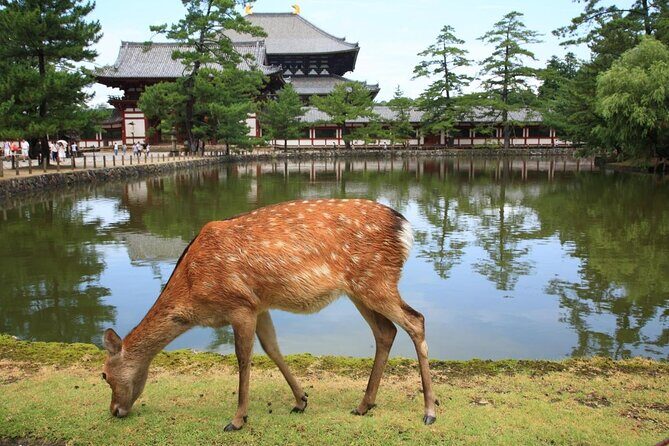
One of the reasons people pick Nara in the first place is the deer. They’re roaming through Nara’s streets and parks, especially around Nara-kōen. It looks charming in photos, but it can also be a little chaotic if you’re not prepared.
Here’s how having a guide helps:
- You get practical guidance on how to behave around deer so it stays fun, not stressful.
- You can choose where to stand and when to move, based on what you see unfolding around you.
This stop is also a reminder that Nara is not only temples. It’s city life, with deer integrated into the scene. If your ideal day includes that mix—historic sites plus everyday weirdness—this tour hits the right tone.
The biggest consideration is personal comfort. If you don’t love animals close to you, this might feel like “cute nuisance.” With a guide, you can still enjoy the area, but you may need to set boundaries about how close you want to get.
Isui-en Garden: a calm pocket between major sights

Between Todai-ji and Kofuku-ji sits Isui-en Garden. The tour frames it as quiet enough to feel almost outside the world in your own bubble of zen-peace. That’s not just marketing language—gardens work best when you let them.
In a day packed with famous buildings, this is the pressure release valve. You’re moving from grand scale to smaller, human-scale calm. You get a change of pace without sacrificing the “Nara experience” theme.
A practical tip: if you want the garden to feel peaceful, don’t treat it like another photo checkpoint. Take the time to walk slowly and let the space do its job. A guide can help you orient your walk so you don’t miss the points that make the garden feel quieter than it looks on the map.
Kasuga Taisha: Fujiwara ties and the rhythm of rebuilding
Kasuga Taisha is Nara’s most celebrated shrine. It also served as the tutelary shrine of the Fujiwara, one of Japan’s most powerful family clans. That connection matters because it helps you understand why the place holds such cultural weight beyond its beauty.
Here’s what makes this stop more than a scenic visit:
- You’re looking at a shrine with deep political and cultural importance, not just a pretty location.
- It was periodically rebuilt every 20 years for many centuries until the Edo period. That “rebuild rhythm” changes how you interpret what you’re seeing. You’re not only looking at an object; you’re witnessing a tradition of care over time.
A guide is useful here because shrines can be visually dense. Without context, you might see a lot of red-lacquered and lantern-like forms and wonder what you should pay attention to. With context, those details start to mean something.
If you’re trying to decide what kind of traveler you are—temple architecture fan, culture-history person, or just someone who wants a meaningful day—Kasuga Taisha is the place that connects all three.
A few more Kyoto tours and experiences worth a look


Kofuku-ji’s pagodas: look up, then look around
Kofuku-ji is where the sky gets important. The tour notes the astonishing five-storied pagoda, described as Japan’s second tallest wooden pagoda, plus three-storied pagodas. These are historical landmarks and, in Nara, they’re tied to the feeling of wandering through a living museum.
What I’d suggest you do here:
- Look up first. Let the vertical scale register.
- Then step back and scan the surrounding area. In temple complexes, the “viewing strategy” matters as much as the monument itself.
This is another spot where time and pace matter. If you only get a quick glance, you miss the effect of seeing the pagodas from different angles. A private format helps because you can linger without worrying about falling behind.
One more practical point: because this tour includes multiple major sites, your feet will take a hit. The tour is built around walking in Nara, and you’ll likely spend time moving between temples and gardens. Comfortable shoes are not optional.
Price and value: is $378.76 per person worth it?
At $378.76 per person for an ~9-hour day (including travel time from Kyoto), this is not a budget excursion. So the real question is value.
This tour delivers value in four places:
- Private guide time for a full day, not a short “headline highlights” version.
- Flexibility, meaning you can shift priorities without feeling like you’re breaking the schedule.
- Train support, since your host organizes ticketing so the journey from Kyoto is easier.
- Tickets included for major stops such as Isui-en Garden, Todai-ji Temple, Kasuga-Taisha Shrine, and Kofuku-ji Temple (plus other tickets).
What’s not included matters too: food and drinks. That can add to your total cost, especially if you want a nice lunch. It also means your schedule needs small breaks for meals. If you’re hoping for a tour that covers lunch in a tidy package, this isn’t that.
Also, transportation costs are not included beyond what’s handled on the day. If you have a Japan Rail Pass, the tour notes that you can travel free on JR. That can help reduce the effective cost.
Finally, the day includes group discounts and a mobile ticket. Those details don’t change the “private guide price,” but they hint that the company is trying to keep the experience smooth once you’re booked.
Who should book this Kyoto-to-Nara private tour
This is a strong fit if you:
- Want one-on-one attention rather than a crowd shuffle.
- Like getting context at each stop, not just taking photos.
- Prefer a plan you can adjust—especially on a day trip when energy runs out fast.
It also suits families, based on the feedback mentioning Taiga being wonderful with kids. If you’re traveling with children, having a guide who can handle pace and questions makes the day feel more natural.
If you’re a solo traveler on a strict budget, you might compare alternatives: cheaper group tours, or going independently with a map and guidebook. But if your priority is comfort and having someone manage the “how do I get there next” moments, the private setup is where you’re paying.
Should you book it?
Yes, if you want a guided day that treats Nara as more than a checklist. This tour’s biggest advantage is that the day feels directed by a local: train stress reduced, major sites covered, and the rhythm balanced with a quiet garden stop.
I’d hesitate only if:
- You expect lunch and snacks to be included.
- You’re comfortable handling transport and timing on your own and want to spend less.
- You strongly dislike animals close-up, since deer are part of the iconic experience.
If that sounds like you, book it with confidence. Nara is a perfect day trip when you’re not battling logistics—and this one does that work for you while you focus on the sights.
FAQ
How long is the Kyoto to Nara private tour?
It runs for about 9 hours, including travel time from Kyoto.
What’s included in the ticket costs?
Tickets are included for Isui-en Garden, Todai-ji Temple, Kasuga-Taisha Shrine, Kofuku-ji Temple, and other attractions.
Is this tour private or shared?
It’s private. Only your group participates.
Are food and drinks included?
No. Food and drinks are not included.
Do I need to worry about train timetables?
No. Your host helps organize the train tickets, so you don’t have to manage timetables as part of the day.
Where does the tour start?
The meeting point is Mister Donut at the JR Kyoto Station Building (Shop 901). The tour ends back at the meeting point.
Is the itinerary fixed, or can it change?
Your itinerary is fully flexible and personalized, so the places you visit may differ from the listed stops.
Can I use a Japan Rail Pass?
The tour notes that JR Pass holders can travel free on JR, though transportation costs are generally not included.
Can I cancel for a full refund?
Yes. You can cancel up to 24 hours in advance for a full refund.
Are service animals allowed?
Yes, service animals are allowed. The tour is near public transportation and most travelers can participate.