REVIEW · TOKYO
Mini Origami Lamp and Mizuhiki knot Belt Workshop in Ueno
Book on Viator →Operated by 和紙ラボTOKYO · Bookable on Viator
Paper, precision, and warm light in Ueno. In a private 2.5-hour session, you learn the washi-folding steps to build an origami lamp and then finish with a mizuhiki knot belt ornament, both meant for real take-home use. The only catch: this craft demands careful, detailed hand work, so it is not a good fit for young children.
Your instructor (Kaho Shinoda has guided sessions) keeps things paced with a guide document and personalized help when a fold gets stubborn. You’ll also get sweets with Japanese paper tea, and there’s a cat on site—tell the team about allergies before you go.
In This Review
- Key points before you book
- Ueno craft studio: your calm pocket of Tokyo
- What you make in 2.5 hours: origami lamp + mizuhiki belt
- The private lesson flow with your instructor
- Entering the washi part: the bellows lamp technique
- Mizuhiki knots: decorative paper cord with meanings
- Tea and sweets: Japanese paper tea that’s part of the deal
- Price and value: what $107.50 buys you
- Who should book this, and who should skip it
- Practical tips so your lamp survives Tokyo
- Should you book this Ueno origami lamp and mizuhiki workshop?
- FAQ
- How long is the workshop in Ueno?
- Where do I meet for the activity?
- Is this a private class or a group activity?
- What will I create during the workshop?
- Are materials included?
- Is tea and food included?
- Is the workshop suitable for young children?
- Is the meeting point easy to reach?
- What if I have allergies?
- What happens if weather is poor?
Key points before you book
- Two crafts, one sitting: you leave with a mini origami lamp plus a mizuhiki belt ornament
- Private instruction: ask questions and get help that matches your pace
- Washi paper focus: you work with Japanese washi and learn the basics behind it
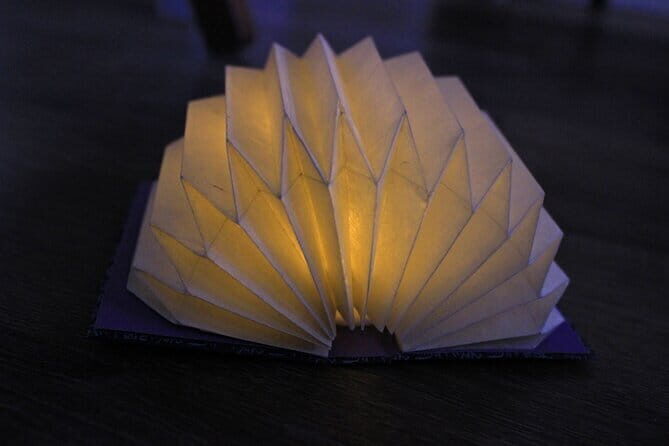
- Warm-light lamp design: the lamp shuts into a closed-book look, then opens to glow
- Included Japanese paper tea: tea and sweets are part of the experience, not an optional add-on
- Small-but-serious craft time: detailed work means you should be ready for hands-on concentration
Ueno craft studio: your calm pocket of Tokyo
This is the kind of activity I like for Tokyo: it’s not about rushing between landmarks. Instead, you go to a workshop in the Ueno area and spend a focused chunk of time making something you can actually use (and keep). If you want a break from crowded streets and constant photo stops, this works because it pulls you into a craft routine right away.
You’ll meet at 和紙ラボTOKYOJapan, 3-chōme 302 市川ビル 1F in Taito City (Tokyo 110-0016). It’s near public transportation, so you’re not stuck with long transfers. Also, you get a mobile ticket, which makes it easy to show up without paperwork chaos.
One more human detail: there’s a cat in the workshop. The team explicitly asks you to inform them if you have allergies, so do that early.
A few more Tokyo tours and experiences worth a look


What you make in 2.5 hours: origami lamp + mizuhiki belt
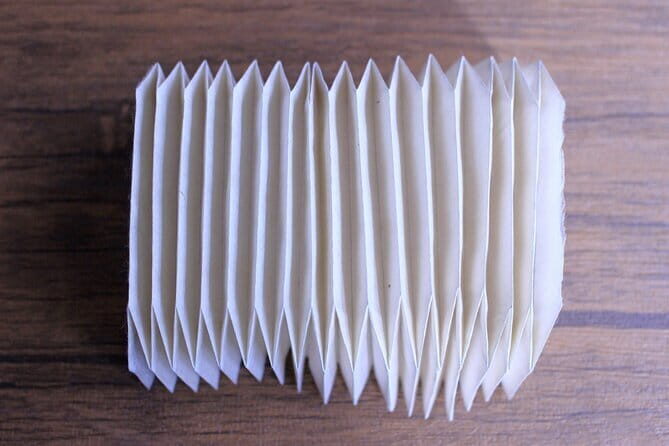
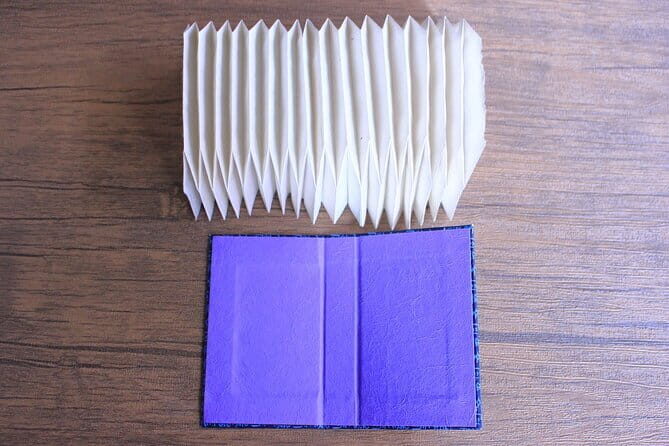
The centerpiece is a mini origami lamp built from washi paper. The method is very specific: you fold and glue several sheets of handmade washi paper into a bellows-like shape. Then you insert a small lamp inside the bellows so the light shines through gently and warmly.
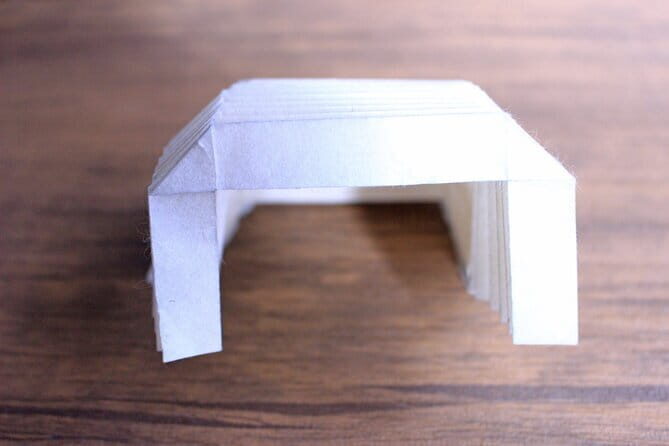
When you close the bellows, the shape turns into something that looks like a closed book. That closed-book look is more than a cute detail. It also means it’s easier to store and transport compared with a rigid lantern, which is a big deal when you’re packing for travel.
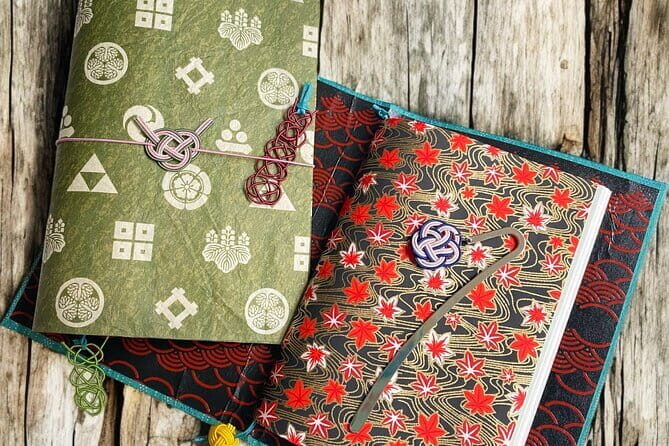
Along the way, you also create a mizuhiki knot belt ornament. Mizuhiki is traditional decorative paper cord: a twisted washi paper core wrapped with nylon or film. What you’re learning here isn’t just a “knot.” The class also covers that each knot can carry a meaning, which is why mizuhiki shows up on gifts in Japan. You’re basically making something that’s decorative and symbolic at the same time.
And yes, both of these are take-home items. You should expect to leave with your own original lamp and ornament, not just a partial craft.
The private lesson flow with your instructor
This is a private class, meaning it’s only your group. That matters more than it sounds. When you’re doing detailed paper work, small mistakes happen fast, and it helps when someone can correct your fold or glue step on the spot. You’ll get personalized instruction and you can ask questions.
The class starts with an introduction to washi paper basics, and you’ll have a guide document to help you follow along. That’s useful if you like structure. It also helps if you get interrupted by questions mid-project; you can refer back to the guide and keep moving.
After the setup, the workshop turns into an assembly-and-folding rhythm:
- Learn the washi basics used for the project
- Fold and glue the paper into the bellows-like lamp shape
- Insert the small lamp inside
- Close it into the finished form
- Make the mizuhiki knot cord ornament for the belt
- Finish up and move to tea and sweets
The total time is about 2 hours 30 minutes. That’s long enough to do the crafts thoughtfully, but not so long that you’ll feel drained. I’d plan to arrive ready to focus—this isn’t a casual “drop in and doodle” situation.
Entering the washi part: the bellows lamp technique
The origami lamp is built through a folding method that feels closer to engineering than casual origami. The bellows-like paper structure is key. Instead of one flat fold pattern, you’re creating repeated folds that let the lamp expand and close.
A big part of making it work is gluing with care. If the glue is uneven, the shape won’t open and close cleanly. If you rush, the paper can warp. The good news is that you’ll have instruction and can ask questions, so you’re not left guessing when something doesn’t look right.
Once your bellows structure is ready, you insert the small lamp inside. The result is a gentle, warm glow—exactly the kind of lighting that makes paper crafts feel special, not flimsy. Then you close the bellows to get that closed-book look. It’s satisfying because you can clearly see the transformation from “work-in-progress paper” to “finished object with a purpose.”
Value tip: plan for a careful trip home with it. Paper crafts are sturdy, but you still want to protect your lamp from crushing in a bag.
Mizuhiki knots: decorative paper cord with meanings
Mizuhiki is a Japanese art form where knots (and the way you arrange them) can communicate meaning. The workshop teaches you that each knot has significance, which is part of why mizuhiki is used for gifts.
The cord itself uses a twisted washi paper core. Then it’s wrapped with nylon or film, giving it that decorative finish and helping it hold up as a cord you can tie and shape. So you’re learning an actual craft material, not just doing a single stationary knot decoration.
In your session, you create a mizuhiki knot ornament for a belt. That belt element matters because it frames the knots as wearable and gift-adjacent. After the lesson, you’ll understand the symbolism well enough to feel confident using mizuhiki again later, even if you recreate it at home.
If you like the idea of taking home something you could potentially use for future gifting, mizuhiki is the better craft of the two. The origami lamp gives you a beautiful object now; mizuhiki teaches you a language of knots you can reuse.





Tea and sweets: Japanese paper tea that’s part of the deal
One of the standout inclusions is the food break. You get a selection of Japanese sweets and tea, included in the workshop.
Even better, the class specifically calls out Japanese paper tea that isn’t offered elsewhere. That turns the snack time into more than a random perk. It ties the experience back to the paper theme—tea that connects to the idea of Japanese paper tradition.
In the same spirit, some sessions reference kozo tea (kozo is the paper mulberry used for washi). You shouldn’t go expecting a loud flavor explosion. Instead, think of it as a calm, paper-linked companion to your hands-on craft session.
This is also a practical reset. After folding, gluing, and tying knots, you’ll want a breather. The tea break gives you that without breaking the flow of learning.
Price and value: what $107.50 buys you
At $107.50 per person, this isn’t a budget “craft activity.” But it’s also not overpriced when you look at what’s included.
You’re paying for:
- A private 2.5-hour class (not a crowded group setup)
- Instructor-led, hands-on instruction
- Materials for both projects (lamp and mizuhiki belt ornament)
- Included Japanese sweets and tea
- Take-home souvenirs that are designed to be transportable and meaningful
Also, this style of workshop requires time and care. Paper folding and knot craft aren’t mass production. The materials are part of the cost, and they’re not optional add-ons. If you like crafts, this price is basically buying you the teacher’s attention plus the full “from scratch to finished object” process.
Booking timing note: this is often booked about a month in advance on average, so I’d secure your date early—especially if you’re traveling during peak seasons.
Who should book this, and who should skip it
This is a great fit if:
- you like detailed hands-on activities
- you want a take-home souvenir with real craftsmanship
- you’d rather do something meaningful than just buy something
- you enjoy Japanese traditions and want to learn what they mean, not just copy a pattern
It may not be the best fit if:
- you’re traveling with very young children
- you want something low-effort and fast
- your hands don’t like precision work (gluing and knotting require steadiness)
The workshop explicitly notes it isn’t suitable for young children due to the detailed work required. If that’s your situation, I’d look for an easier craft alternative.
Practical tips so your lamp survives Tokyo
A few practical moves can make the experience smoother:
- Wear comfortable clothes. You’ll be folding and working close to the table.
- Plan for careful packing. Paper crafts and lamp parts don’t like being crushed.
- If you have allergies, mention the cat ahead of time. The workshop asks for this.
- Be ready to ask questions. The private setting is where you get the most value.
- Take your time with glue and folding. Small corrections are easier than rushing and fixing later.
Also, the team encourages you to light the lamp at home afterward. That’s a nice way to turn your souvenir into a memory you can actually use.
Should you book this Ueno origami lamp and mizuhiki workshop?
Book it if you want a Tokyo activity that feels personal and practical. You’ll come away with two handmade items: a mini origami lamp with warm glow and a mizuhiki belt ornament that carries cultural meaning. The private instruction and included Japanese paper tea make it more than a craft “class”—it’s a full, focused experience.
Skip it if you’re looking for something casual, quick, or kid-friendly. The craft requires careful, detailed hand work, and that’s the whole point.
If your travel style includes art, paper, and calm, hands-on learning, this is an easy yes. It’s also one of the better ways to take a break from Tokyo’s constant pace without turning your day into a museum marathon.
FAQ
How long is the workshop in Ueno?
It runs for about 2 hours 30 minutes.
Where do I meet for the activity?
You meet at 和紙ラボTOKYOJapan, 110-0016 Tokyo, Taito City, Taitō, 3-chōme302 市川ビル 1F.
Is this a private class or a group activity?
It’s private. Only your group participates.
What will I create during the workshop?
You’ll make a mini origami lamp using washi paper, and you’ll also create a mizuhiki knot belt ornament.
Are materials included?
Yes. Materials to make the lampshade/origami lamp and the mizuhiki knot belt ornament are included.
Is tea and food included?
Yes. You’ll get Japanese sweets and tea included as part of the session, including Japanese paper tea.
Is the workshop suitable for young children?
No. It’s not suitable for young children because the work requires detailed hands-on skills.
Is the meeting point easy to reach?
It’s near public transportation.
What if I have allergies?
There is a cat in the workshop. Let the team know about any allergies when booking.
What happens if weather is poor?
The experience requires good weather. If it’s canceled due to poor weather, you’ll be offered a different date or a full refund.