REVIEW · TOKYO
Mochi Making at a Private Studio in Tokyo
Book on Viator →Operated by Simply Oishii Wagashi School · Bookable on Viator
Sticky rice plus good instruction is hard to beat. This mochi-making class in Meguro pairs hands-on rolling and shaping with a clear cultural intro, so you’re not just eating sweet dough—you’re learning why it shows up in Japanese festivals. I like the small-group setup, and I really appreciate that the instructor is fluent in English and brings real know-how from wagashi training.
You’ll also get a mix of sweet and savory outcomes, including strawberry daifuku and grilled mochi with soy sauce and nori. That variety makes it feel worth it even if you’re not a “dessert person.”
One possible drawback: mochi is sticky, so if you hate getting a little messy or you want a hands-off food show, this is not that kind of experience.
In This Review
- Key Things To Know Before You Go
- Mochi Making in a Private Studio Near Meguro Station
- Getting Oriented: What Your 2 Hours Actually Includes
- What You’ll Make: Daifuku, Dango, Warabi, and the Ice Cream Technique
- Strawberry daifuku: sweet, soft, and very hand-based
- Three-color dango: skewers and portioning discipline
- Warabi mochi: a different feel, a different style
- Mochi ice cream: a demo that explains the logic
- The Culture Bit: Mochi in Japanese Festivals and Everyday Life
- Taste Time: Sweet and Savory, Served With Tea or Coffee
- Price and Value: Is $79.26 Worth It?
- Location and Day Planning: How to Fit It Into Tokyo
- Who This Mochi Class Is Best For (and Who Might Skip It)
- Should You Book Mochi Making at a Private Studio in Meguro?
- FAQ
- How long is the mochi making class?
- How many people are in the group?
- Where is the meeting point?
- What will I make during the class?
- Do you also serve savory mochi?
- What drinks are included?
- Can they prepare dairy-free mochi ice cream?
- What is the minimum age, and is it non-smoking?
- What is the cancellation policy?
Key Things To Know Before You Go
- Meguro studio location: short walk from Meguro Station on the JR Yamanote Line and nearby metro options
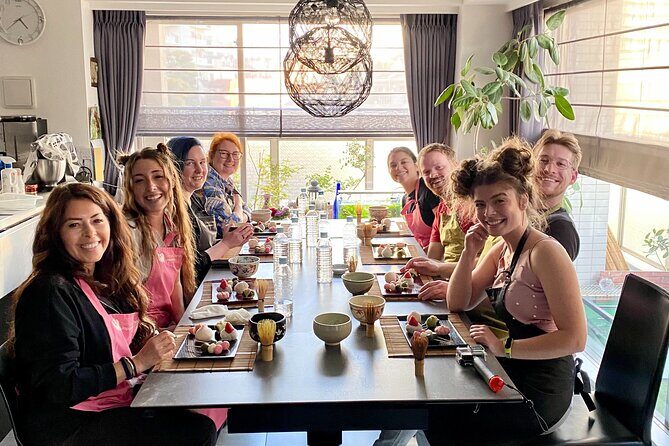
- Max six per class: you get personal pacing and help as you work the sticky dough
- Hands-on mochi variety: strawberry daifuku, three-color dango, and warabi mochi
- Ice cream is a demo: you’ll watch mochi ice cream technique and learn how it comes together
- Sweet + savory tasting: grilled mochi with soy sauce and nori, plus tea or coffee
- English recipe sheet: practical guidance you can use again later
Mochi Making in a Private Studio Near Meguro Station
Tokyo has lots of food tours, but this one is built around doing the work yourself. You start in a private studio in Meguro, a convenient walk from Meguro Station (JR Yamanote Line) or a nearby metro station. The meeting address is 1-chōme3-16 プレジデント目黒ハイツ in Meguro City, so once you’re oriented to the neighborhood, arrival is straightforward.
What I like most is the “small class, serious teaching” feel. The class is designed for a maximum of six people, and it shows in how the instructor can slow down, correct your technique, and keep the pace comfortable. In the past sessions, instructors like Chef Michiko-san, as well as teachers such as Ayumi, Waka-san, Miho, and Owa, have been praised for being patient and skillful—so you’re not stuck with a script. You’re working with someone who can explain what you’re seeing and what you should do next.
Timing is flexible too. You can choose a morning or afternoon departure, and the class lasts about two hours. That makes it a good plan for jet lag days when you still want something special but don’t want to commit to a full half-day outing.
You can also read our reviews of more private tours in Tokyo



Getting Oriented: What Your 2 Hours Actually Includes
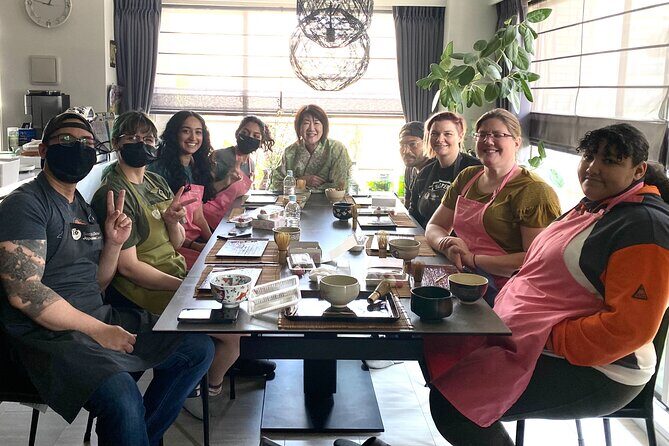
The flow is simple, and it keeps you from feeling rushed. You’ll be greeted by the instructor, then you’ll get a short presentation about mochi—especially how it connects to Japanese traditions and festivals. After that, you move into hands-on making.
The exact mochi lineup is built to cover different textures and techniques, not just the same dough repeated. You’ll learn how to make:
- Strawberry daifuku mochi
- Three-color dango (mochi on skewers)
- Warabi mochi
Then there’s a grilled mochi component: savory grilled mochi served with soy sauce and nori seaweed. That savory stop is more important than it sounds. Mochi can feel like “just sweet rice cake,” but grilled mochi makes it clear how versatile the base ingredient is.
You’ll also see a demonstration for mochi ice cream. You won’t necessarily be assembling every step yourself, but you do get the technique explained so you understand how the dough and filling work together.
Finally, you end with tasting. You’ll sit down with your creations and enjoy drinks such as green tea, hojicha, or coffee (served as part of the class). In other words, you get both learning and payoff: the work, then the eating.
What You’ll Make: Daifuku, Dango, Warabi, and the Ice Cream Technique
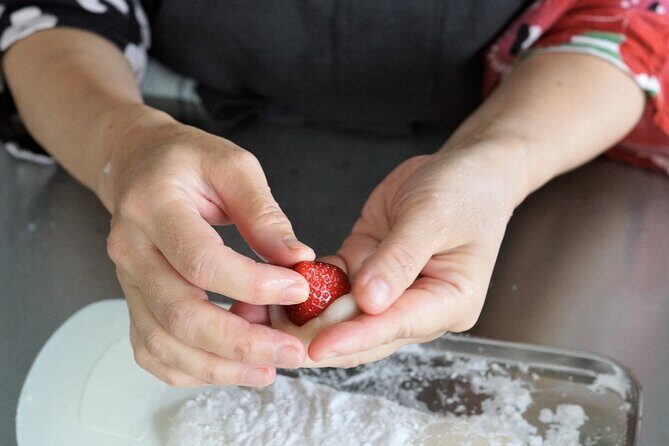
This class is cleverly structured because you’re not only making different foods—you’re practicing different “mochi skills.”
Strawberry daifuku: sweet, soft, and very hand-based
Daifuku is the mochi many people already know, but making it yourself is where it becomes real. You’ll form mochi around a filling, aiming for that signature balance: the outside should stay soft and chewy, while the inside stays intact rather than leaking. It’s also where sticky hands become part of the learning curve, so you’ll get coached on handling the dough.
Three-color dango: skewers and portioning discipline
Dango is mochi served in a different shape and texture. Making three-color dango on skewers teaches portioning and shaping, because each piece needs to be consistent enough to cook and present well. It’s also more forgiving than you might expect—your work becomes “presentable” even if your first attempts are slightly imperfect.






Warabi mochi: a different feel, a different style
Warabi mochi is another classic, and it tends to feel different from the daifuku style. This portion of the class helps you understand that mochi isn’t one single “thing.” It can be chewy, set up differently, and presented in ways that reflect seasons and tradition.
Mochi ice cream: a demo that explains the logic
The mochi ice cream segment is presented as a demonstration. That’s actually a smart choice for a two-hour class: it helps you learn the concept and technique without turning the session into a complicated assembly line. If you’re the type who likes to understand how food is engineered, you’ll likely enjoy this part.
One more useful detail: if you want dairy-free ice cream, it can be prepared upon request. So if your plans include dietary limits, this is worth mentioning when you book.
The Culture Bit: Mochi in Japanese Festivals and Everyday Life
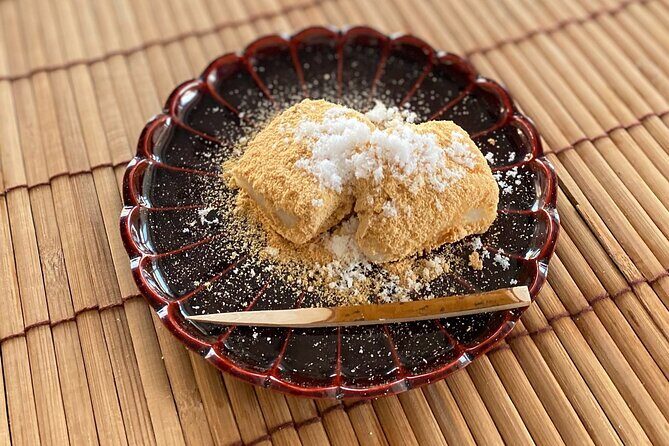
This isn’t just “here’s the recipe.” You start with a short presentation on traditions and festivals that involve mochi, and the instructor ties it to Japanese culture in a way that feels connected instead of academic. The goal is to give you context for why the sweets show up around certain moments.
That’s also why mochi is such a strong souvenir. A photo is nice, but the real win is understanding the meaning behind the color choices, the shapes, and the serving styles. Even if your souvenir is mostly edible, you’ll be able to tell the story later.
A nice bonus is that the instructor is fluent in English and is ready to answer questions about Tokyo—everything from where to shop to what to see. You don’t have to guess. You’re in conversation with a local wagashi professional.
Taste Time: Sweet and Savory, Served With Tea or Coffee
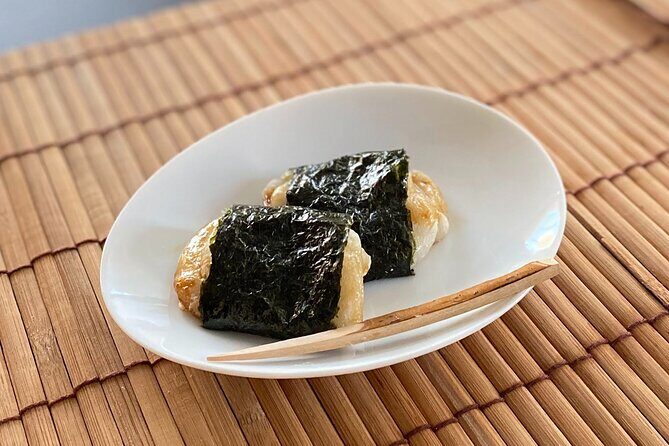
After you make and shape everything, the tasting is where you get to relax. You’ll try what you produced, and you’ll also get savory mochi as part of the class experience.
The class includes:
- Green tea, hojicha, or coffee
- Savory grilled mochi with soy sauce and nori seaweed
That grilled mochi matters because it changes your mental map. Mochi isn’t only for candy-like sweetness. Soy, seaweed, and heat bring out a different side of the rice cake—earthy, salty, and very satisfying. If you’re traveling with someone who gets nervous about “yet another dessert,” this savory piece is your peace treaty.
In past sessions, people also noted that they were able to take extra mochi home and get containers if they couldn’t finish everything. Even if you don’t plan to package leftovers, it’s comforting to know the class supports eating at a natural pace rather than forcing you to finish on the spot.
Price and Value: Is $79.26 Worth It?
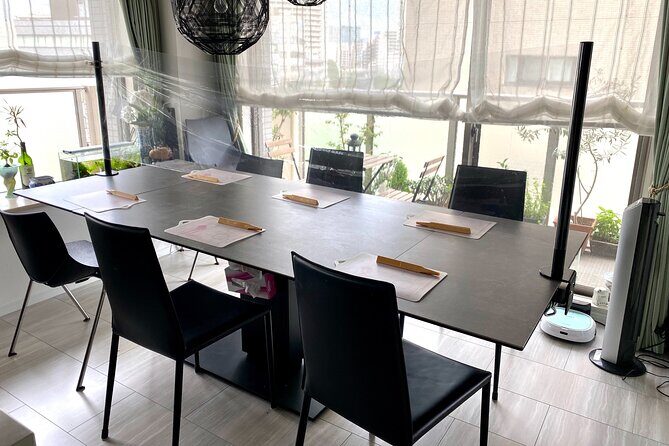
At $79.26 per person, this sits in the middle of the cooking-class world. It’s not the cheapest activity in Tokyo, but it also isn’t a one-size-fits-all tourist show.
Here’s why the value works:
- You get a hands-on class with multiple mochi types, not just watching.
- The class size is capped (maximum six), which usually means more instruction time and less standing around.
- You get included tools and guidance: aprons and an English recipe sheet you can actually use later.
- The experience wraps learning and eating together with drinks like green tea/hojicha/coffee.
If you’re choosing between a generic food tasting and a practical cooking lesson, I’d pick the cooking lesson. You walk away with a clearer understanding of mochi and a recipe you can recreate. That’s harder to get from a tasting crawl where you mainly sample and move on.
Location and Day Planning: How to Fit It Into Tokyo
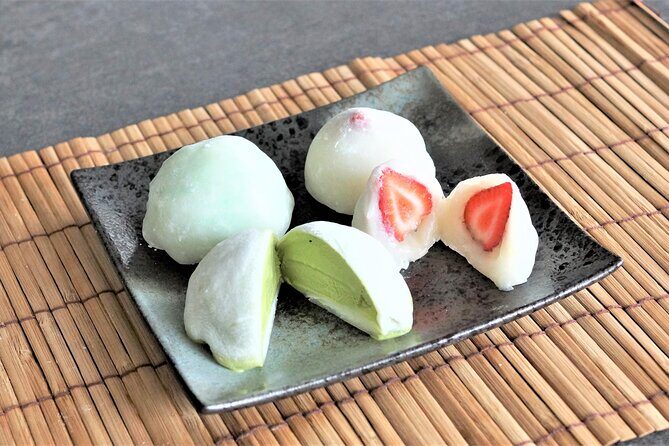
This studio is in Meguro, and the location is one of its quieter strengths. You’re near public transit, and you’re not fighting a complicated multi-bus commute. Since it’s a short walk from Meguro Station (JR Yamanote Line), it’s easy to pair with other plans in the area.
A good strategy is to schedule it when your feet need a break. Two hours indoors in a private studio is a solid reset after a hot morning of walking. If you can choose afternoon, you’ll probably appreciate the calmer pace.
You don’t get hotel pickup, and transportation to/from attractions isn’t included. So plan to arrive under your own steam and treat it like an appointment. Once you’re there, though, the class runs smoothly from greeting to tasting.
Who This Mochi Class Is Best For (and Who Might Skip It)
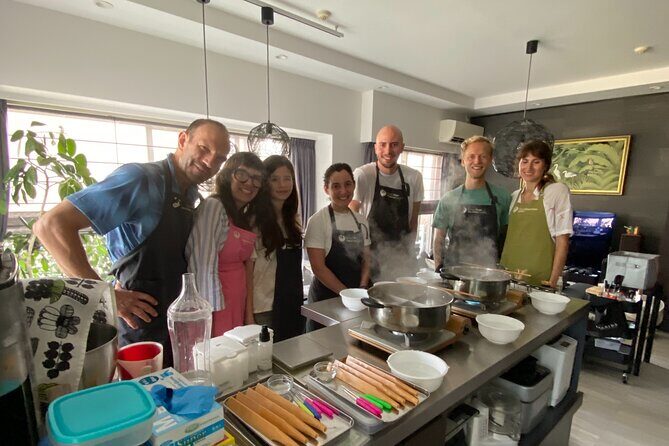
This is a great fit if:
- You want a hands-on Tokyo food experience with real technique
- You like Japanese sweets but also want a savory option
- You’re traveling with family and want something structured for kids age four and up
- You prefer small groups where you can ask questions and get help
It might be less ideal if:
- You dislike working with sticky dough and handling food directly
- You want a longer multi-stop day with more sights and less food work
- Your group needs a lot of special accommodations beyond the dairy-free ice cream note (the class only specifically mentions dairy-free ice cream by request)
Non-smoking rules apply in the studio, and the class has a minimum age of 4 years. Safety-wise, children under four aren’t allowed in the class.
Should You Book Mochi Making at a Private Studio in Meguro?
If you’re the kind of person who likes to learn by doing, book it. This experience gives you mochi variety in a two-hour window, with English instruction, an easy-to-follow recipe sheet, and a tasting that doesn’t stop at sweet. You’ll likely leave with a better grasp of mochi shapes and serving styles, plus a practical way to share the experience back home.
I’d especially recommend it for first-time Japan visitors who want something authentic that isn’t just “eat and go.” And if you’re on the fence about cooking classes in Tokyo, this one is a smart try: small group, clear structure, and a payoff that’s both delicious and educational.
FAQ
How long is the mochi making class?
It runs for about 2 hours.
How many people are in the group?
The cooking class is a small-group setup with a maximum of six people. The overall activity listing allows a maximum of 12 travelers.
Where is the meeting point?
The meeting point is at 1-chōme316 プレジデント目黒ハイツ, Meguro City, Meguro, Tokyo (near public transportation).
What will I make during the class?
You’ll learn to make strawberry daifuku mochi, three-color dango (skewered mochi), and warabi mochi. There is also a demonstration on mochi ice cream.
Do you also serve savory mochi?
Yes. You’ll be served savory grilled mochi with soy sauce and nori seaweed.
What drinks are included?
The class includes green tea, hojicha, or coffee.
Can they prepare dairy-free mochi ice cream?
Yes. Dairy free ice cream can be prepared upon request.
What is the minimum age, and is it non-smoking?
The minimum age is 4 years. The class is non-smoking.
What is the cancellation policy?
Free cancellation is available up to 24 hours before the experience start time for a full refund. If you cancel less than 24 hours before, the amount paid is not refunded.