REVIEW · TOKYO
Mt Fuji and Lake Kawaguchiko Bus Day Tour with English Guide
Book on Viator →Operated by QHTravel · Bookable on Viator
You can almost feel Mt. Fuji before you see it. This day tour is built around iconic photo stops and smart pacing, from the steps at Arakurayama Sengen Park to the famous Fuji views at Lake Kawaguchi. I love the way the route mixes classic viewpoints with quick, photogenic detours like the Lawson blue facade at Kawaguchiko Station. I also really like that you get an English guide who helps you time your photos and understand what you’re looking at. The main drawback: this experience depends heavily on clear weather, so Fuji can hide on gray days.
Mt. Fuji is the star, but the real win for many people is how easy the day feels. You ride in an air-conditioned vehicle, hit multiple must-see areas, and don’t have to plan train transfers yourself. Just keep your expectations realistic for photos: in summer heat or autumn haze, the mountain can look softer than you hoped.
In This Review
- Key highlights at a glance
- Mt. Fuji in one day, without the stress
- Price and what makes it good value
- The ride from Tokyo: how the pace feels
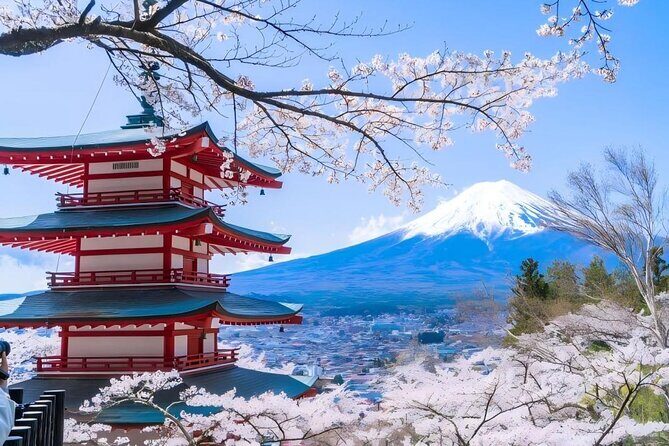
- Stop 1: Arakurayama Sengen Park and the Chureito Pagoda view
- Stop 2: Hikawa Clock Shop and the Stairway to Heaven Town vibe
- Stop 3: Oshino Hakkai and Fuji reflections in the eight springs
- Stop 4: Lawson Kawaguchiko Station and the blue facade contrast
- Stop 5: Oishi Park and seasonal color around Lake Kawaguchi
- The guide part: what you actually get in an English tour
- What to wear and bring for Fuji day reality
- Should you book this Mt Fuji and Lake Kawaguchiko bus tour?
- FAQ
- Where is the meeting point?
- What time does the tour start?
- How long is the tour?
- Is this tour private?
- What does the tour include in the price?
- Is admission included for the stops?
- Is lunch included?
- Is there a cancellation fee if the weather is bad?
- Do I get a mobile ticket?
Key highlights at a glance

- Arakurayama Sengen Park (397 steps to Chureito Pagoda) for the classic Fuji-with-pagoda angle
- Free admission at every listed stop, so your money stays focused on transport and your day
- Photo-prioritized timing at short stops like the Lawson at Kawaguchiko Station
- Oshino Hakkai’s eight springs for mirror-like water and Fuji reflections
- Oishi Park seasonal color (lavender in summer, kochia in autumn)
- English guide support (you may even meet guides like Wong or Kevin, praised for friendly help)
Mt. Fuji in one day, without the stress
A good Mt. Fuji day trip is equal parts timing, transit, and photo strategy. This one is designed around that. You start early from Tokyo Station (Marunouchi North Exit, Bus Stop No.21) at 8:00am, ride out to the Fuji area, and return to the same meeting point by the end of the day. For most people, the biggest “aha” is that you’re not just visiting one viewpoint—you’re getting a run of Fuji scenes that vary in setting.
What I like most is that the tour gives you both the famous long-view spots and the short, high-reward stops. Arakurayama Sengen Park is the classic foundation. Then you add more variety with Oshino Hakkai’s springs, a quirky street-scene at Hikawa Clock Shop, and the modern-pop contrast of the Lawson at Kawaguchiko Station. The final big hit is Oishi Park, where the background shifts by season.
One thing to consider: the tour is set up for good weather. When the sky is clear, everything pops. When it’s not, you’ll still see the stops, but the mountain views may be disappointing.
You can also read our reviews of more guided tours in Tokyo

Price and what makes it good value
At $15 per person, this is priced like a budget-friendly option that still includes the essentials. You pay for:
- Air-conditioned vehicle
- Driver and guide service fee
You don’t pay extra for admission at the listed stops (they’re free on the schedule). That matters because many Fuji-adjacent places add small costs that creep up.
The flip side is what’s not included:
- Lunch
- Other personal spending
So think of it as a transport-and-guidance package with free entry. You’ll want to plan your meals in advance—either bring something simple or make a quick stop for food during free time. If you show up hungry, you’ll end up paying for convenience. If you show up prepared, your cost stays low and your day stays smoother.
The ride from Tokyo: how the pace feels
This is an 8 to 10 hour day. That’s not short, but it’s realistic for getting from Tokyo to Lake Kawaguchiko and back with multiple stops. The air-conditioned vehicle is a comfort win, especially in summer or during bumpy early-morning departure.
The pace also explains why the tour works well for photography without turning into a marathon. You’ll have longer time blocks where it counts (like about 1 hour 20 minutes at Arakurayama Sengen Park and Oshino Hakkai, and about 1 hour at Oishi Park). Then you get brief photo windows where the payoff comes fast (like 20 minutes at Hikawa Clock Shop and 20 minutes at the Lawson).
If you’re someone who hates rushing, this tour may feel “tight” at the photo stops. But if you like a structured day with set viewpoints, it’s a good fit.
Stop 1: Arakurayama Sengen Park and the Chureito Pagoda view
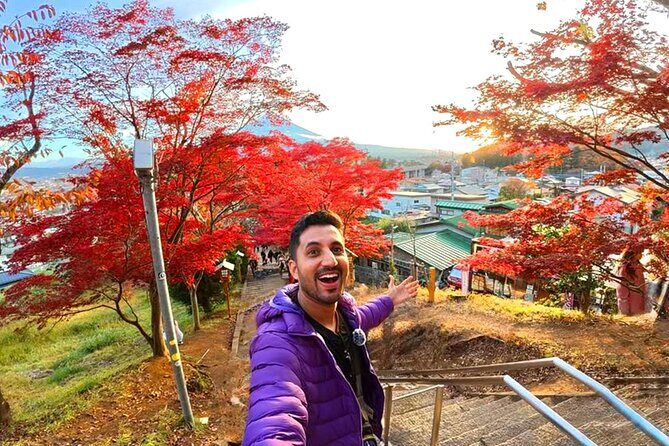
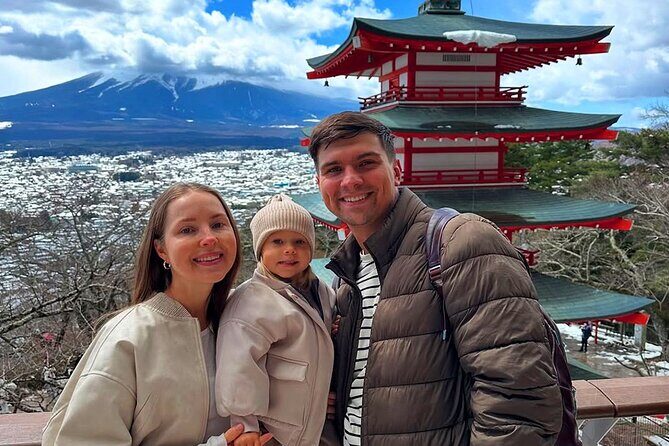
Arakurayama Sengen Park is the reason so many Fuji itineraries start here. You climb 397 steps near the main shrine, and at the top you’re rewarded with the iconic angle of the Chureito Pagoda framed against Mt. Fuji.
This stop hits two needs at once:
1) It’s a high, open viewpoint—perfect for getting the mountain in the background.
2) It’s a photo destination with a clear “target”—you know where you’re aiming your camera.
Why it’s worth your time: the steps filter the crowd a bit as people choose their pace, and the pagoda is one of those subjects that looks good even if the weather is slightly tricky. If Fuji is partly obscured, you may still get a pleasing composition with the pagoda and the slope below.
The drawback to plan for: the steps. If you’re traveling with older family members or you’re not comfortable with stairs, you’ll want to go at an easy pace and consider whether you want to climb to the main viewpoint. You can also take breaks as needed.
Stop 2: Hikawa Clock Shop and the Stairway to Heaven Town vibe
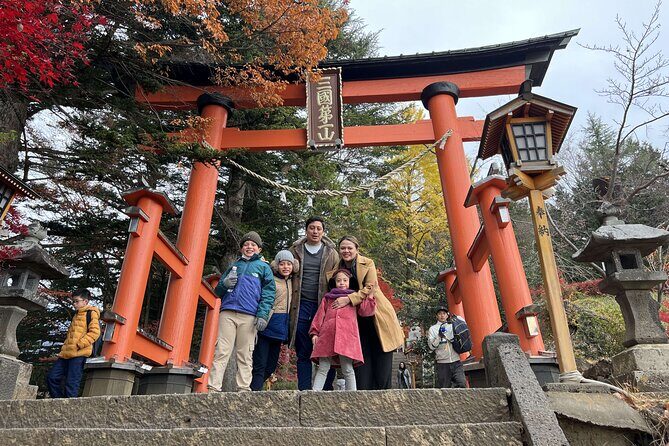
Next is Hikawa Clock Shop, also connected to an area sometimes described as Stairway to Heaven Town. The idea here is simple: narrow streets, a stepped feel, and the mountain view at the end of the road.
This isn’t about a huge landmark with long walking loops. It’s about atmosphere and framing—like a short walk that turns into a photo corridor. Even with only 20 minutes, you can get a few angles, especially if you move slowly and wait for a clean line of sight.
What I like about this stop: it breaks up the day. You start with big viewpoint stairs, then you get something more street-level and human-scaled before returning to nature-heavy scenery.
Possible consideration: this stop is short, so if you linger too long you might feel rushed later. Use the time to pick 2–3 photo spots rather than trying to “do everything.”





Stop 3: Oshino Hakkai and Fuji reflections in the eight springs
Oshino Hakkai is all about water, and that’s where Lake Fuji trips really separate from just looking at a mountain. This area has eight pristine springs, fed by snowmelt that filters through the ground. On clear days, the water can act like a mirror for Mt. Fuji.
You get about 1 hour 20 minutes here, which is enough to walk the perimeter, take photos from different distances, and actually enjoy the calm pace. It’s also a great stop if you’re tired of only “one-view” photos. The springs add texture—ripples, edges of water, and reflections that change with angles.
The main thing to watch: even if the mountain is hidden, Oshino Hakkai still has visual interest. The water is the point, not only Fuji. So it’s a good backup if weather isn’t perfect.
Stop 4: Lawson Kawaguchiko Station and the blue facade contrast
Yes, it’s a convenience store. And yes, it’s a serious photo stop here.
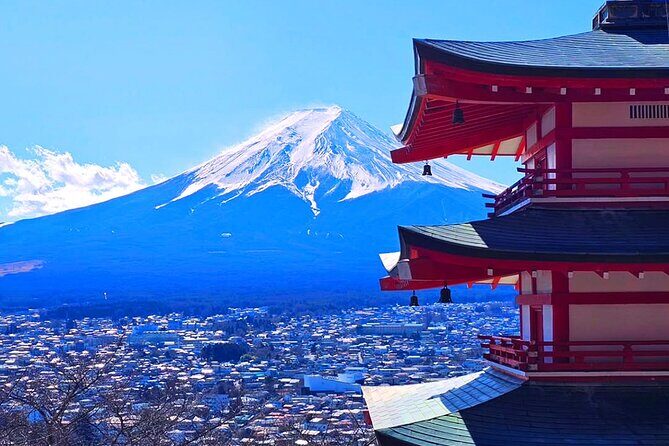
At Lawson Kawaguchiko Station, near the namesake station, the store’s modern blue facade creates a bold contrast with Mt. Fuji. It’s one of those scenes that looks almost unreal when Fuji shows up cleanly behind it. This is also why the stop is only 20 minutes: you’re meant to capture the setup quickly and move on.
Why it works: your brain expects Fuji in nature. This gives you Fuji in an everyday setting, and the contrast makes the photo feel fresh rather than repetitive.
Consideration: because the viewing angle depends on weather and crowds, you may not get the exact shot you imagined. If you’re flexible—blue facade, mountain behind, different positions—you’ll still come away with something usable.
Stop 5: Oishi Park and seasonal color around Lake Kawaguchi
Oishi Park is the “seasonal payoff” stop. You’ll spend about 1 hour here, and what you see depends on the season.
- In summer, the park has lavender that can cover the area in purple tones.
- In autumn, kochia turns bright, red-leaning colors and creates a strong background contrast against Fuji.
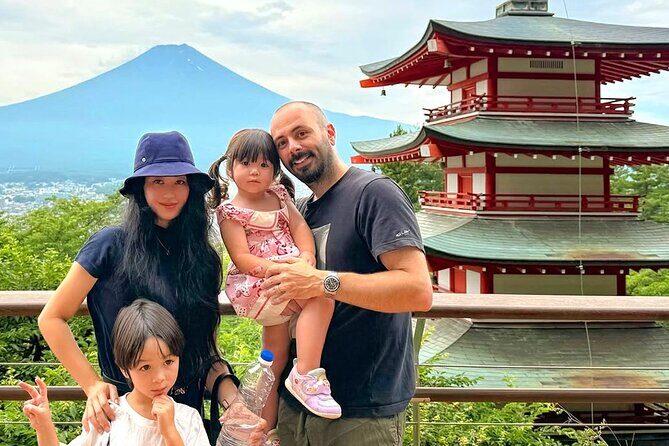
This stop matters because it gives your photos more than just a mountain. You’re adding foreground color and texture, which makes your images feel complete. If Fuji is bright in the background, the flowers or plants make everything feel intentional.
Now, Oishi Park is also tied to seasonal events around Lake Kawaguchi. Depending on timing, you may catch experiences like a Lake Kawaguchi Cherry Blossom Festival, the Lake Kawaguchi Herb Festival, or the Maple Corridor seasonal display (including its annual fiery red leaf look in autumn). The exact event experience can vary by date, but the tour is clearly built for those seasonal moments.
Practical tip: in busy seasons, the best photos often come from patience—waiting for gaps in the crowd or shifting your angle slightly. You won’t get stuck long, since you only have about an hour, but it’s enough time to try a couple of compositions.
The guide part: what you actually get in an English tour
The guide is what turns a checklist day into a meaningful day. In the feedback you can see a pattern: people praised guides like Wong and Kevin for being friendly and for explaining what to notice. That matters because Fuji sightseeing can feel repetitive if you just arrive and snap photos. A good guide helps you understand the setting and how the spots connect.
Here’s what that usually means in practice:
- You get help focusing your photos at each stop
- You learn a bit about why each place is special (like Oshino Hakkai’s spring origins)
- You’re less likely to miss the best angles because someone points them out
Also, because this is a private tour/activity, only your group participates. That often means less chaos, fewer waiting games, and more flexibility for small adjustments to your pace.
What to wear and bring for Fuji day reality
This tour is simple, but Lake Kawaguchi and the Fuji viewpoints can be a little demanding depending on the weather.
Bring:
- Comfortable shoes for the stair climb at Arakurayama Sengen Park
- A layer for changing conditions (morning can feel cooler)
- A way to keep your phone/camera charged, since you’ll want lots of shots
Plan:
- No lunch included, so decide how you’ll handle food before you go
- If Fuji is cloudy, shift your mindset to water, architecture, and seasonal color, not only the mountain silhouette
And for comfort, remember: the tour says most travelers can participate, but elders over 70 should be accompanied by a family member. If that applies to you, plan your pace for the steps.
Should you book this Mt Fuji and Lake Kawaguchiko bus tour?
If you want an easy, structured Fuji day with photo stops that keep changing the scenery, this is a strong pick. It’s especially good for first-timers who:
- Don’t want to manage transfers on your own
- Want English guidance for what to focus on
- Like a mix of classic viewpoints and fun, unexpected photo scenes (that blue Lawson facade will likely do it for you)
Skip it or think twice if:
- You’re only going for one “hero shot” and hate any possibility of weather disappointment
- You need a long sit-down lunch or long free time at each stop (this is set up for efficiency)
My bottom line: this tour is excellent value for a guided, transport-included day built around Fuji’s best angles plus seasonal color at Lake Kawaguchi. With decent visibility and a bit of flexibility, you’re set up for a memorable day.
FAQ
Where is the meeting point?
You meet at Tokyo Station Marunouchi North Exit Bus Stop No.21, Chome-6, Marunouchi, Chiyoda City, Tokyo.
What time does the tour start?
The start time is 8:00am.
How long is the tour?
It runs about 8 to 10 hours.
Is this tour private?
Yes. It’s a private tour/activity, so only your group participates.
What does the tour include in the price?
The price includes an air-conditioned vehicle plus driver and guide service fees.
Is admission included for the stops?
Yes. The listed stops have free admission tickets on the schedule.
Is lunch included?
No. Lunch is not included.
Is there a cancellation fee if the weather is bad?
You can cancel for a full refund up to 24 hours in advance. The experience also requires good weather; if it’s canceled due to poor weather, you’ll be offered a different date or a full refund.
Do I get a mobile ticket?
Yes. The tour provides a mobile ticket.