REVIEW · TOKYO
Mt. Fuji Area Tour Tokyo DEP: English Speaking Driver, No Guide
Book on Viator →Operated by Japan Guide Agency · Bookable on Viator
A Fuji day without the transit headache. This private group tour gets you out of Tokyo and into the Mount Fuji area with a private driver who speaks English, plus pickup and a mobile ticket for smoother logistics.
What I like most is the freedom. You’re not stuck on a rigid walking route, so you can linger where the views hit hardest, then move on when you’re ready. I also like that you can ask real questions along the way, since the driver is the English-speaking point person instead of a separate licensed guide.
One consideration: you won’t have a licensed local English-speaking guide. The driver helps, but if you want deeper, formal commentary at every stop, you’ll need to rely on what you read on-site or ask questions as you go.
In This Review
- Key things to know before you go
- Trading Crowds for a Private Fuji Driver
- How the 8-Hour Schedule Feels in Real Life
- Fuji Subaru Line 5th Station: The Best Halfway View Stop
- Mt. Kachi Kachi Ropeway: When You Want Elevation Fast
- Oshino Hakkai: Fuji’s Snowmelt Water Story in Eight Ponds
- Lake Yamanaka: A Calm Fuji Backdrop for Your Photos
- Choosing Your 3–4 Stops: Build the Day That Matches Your Priorities
- Price and Value: What You’re Really Paying For
- Weather, Timing, and the One Thing You Can’t Control
- If You Care About Pacing, You’ll Like This
- Who This Tour Fits Best (and Who Might Not)
- Should You Book This Mt. Fuji Day Trip?
- FAQ
- What is the group size for this tour?
- Is this tour private?
- Do I get an English-speaking guide?
- How long is the tour?
- What stops are included?
- Is pickup available in Tokyo?
- Are entrance fees included?
- Do I need to buy a ropeway ticket?
- Is the ticket delivered digitally?
- What if the weather is bad?
Key things to know before you go
- Private group, up to 5 people: your vehicle and time belong to your party only
- English-speaking driver, no guide: helpful Q&A, but not the same as a licensed sightseeing guide
- Pick 3–4 spots from the Fuji-area menu: build a day that fits your interests and pace
- Your route avoids crowded public-transport connections: you’re not timing transfers with other tourists
- Ropeway and some attractions cost extra: plan for entrance fees you’ll pay on-site
Trading Crowds for a Private Fuji Driver
Mount Fuji is one of those places where the “getting there” can make or break your day. On a normal day, you’re juggling buses, trains, and other people’s schedules. Here, the biggest value is simple: you swap the churn of public transport for a private vehicle and an English-speaking driver who handles the driving.
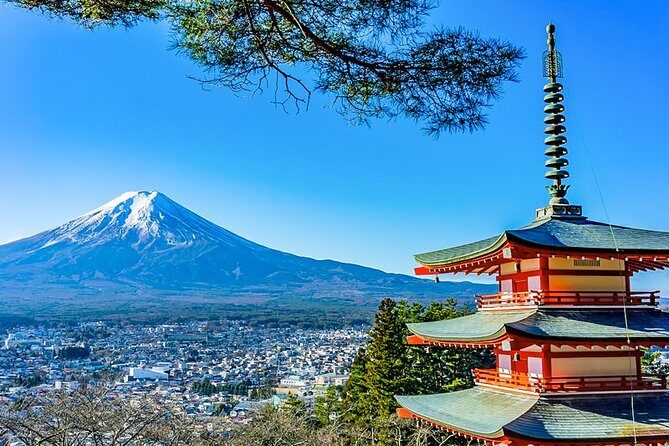
This setup matters because the Fuji area isn’t one tight sightseeing block. The viewpoints and classic photo stops are spread out: a 5th station on the mountain, ponds in Oshino Hakkai, and lake scenery around the Fuji Five Lakes. When you can move directly between areas, you gain time for the parts that feel worth it—views, short walks, photos, and not just “checking boxes.”
I also like the vibe. Because it’s just your group, the day feels less like a tour bus schedule and more like you’re doing a plan you made yourself—only with local driving and navigation handled.
You can also read our reviews of more guided tours in Tokyo

How the 8-Hour Schedule Feels in Real Life
You’re looking at an 8-hour day trip from Tokyo, with a rough rhythm that stays pretty consistent: head out early, spend time at 3–4 Fuji-area stops, then return to Tokyo. You can expect about two hours of travel each way, so your best use of time is thinking of the day as a sequence of “photo + explore” blocks.
That two-hour drive both helps and tests you. It helps because you’re not losing the day to transit transfers. It tests you because you’ll want to be ready with water, snacks if you prefer, and a plan for weather changes. The tour is explicitly dependent on good weather, and Mount Fuji can disappear fast when clouds roll in.
The “mobile ticket” is another practical win. On days when your phone is already your wallet, having everything stored digitally tends to reduce stress at pickups and stops.
Fuji Subaru Line 5th Station: The Best Halfway View Stop
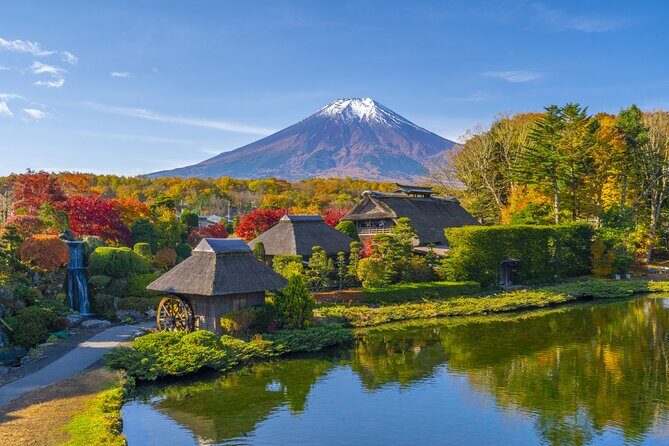
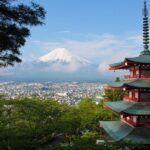
If Mount Fuji is your goal, the Subaru Line 5th Station (Fuji Subaru Line Gogōme) is one of the most sensible places to go. It sits roughly around the halfway point of the Yoshida Trail, which connects the mountain’s base to the summit.
Why this stop is worth your time even if you’re not hiking:
- It’s a popular sightseeing area on its own, not just a “climb staging point.”
- It’s among the easier 5th stations to reach from Tokyo, so you’re not spending your day on hard-to-time detours.
- It can be accessible for much of the year, depending on snow conditions, which makes it a reliable option when you’re planning a short visit.
The main drawback is also the reality of a mountain: weather and visibility decide a lot. When the view cooperates, you’ll understand why this place is so loved. When conditions are poor, it can feel like you drove all that way for mist. Still, even in less-perfect weather, the station area gives you a strong sense of the scale of Fuji and the trail path.
Mt. Kachi Kachi Ropeway: When You Want Elevation Fast
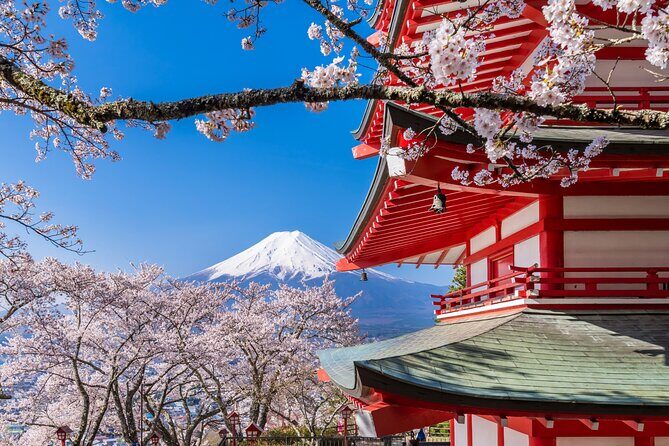
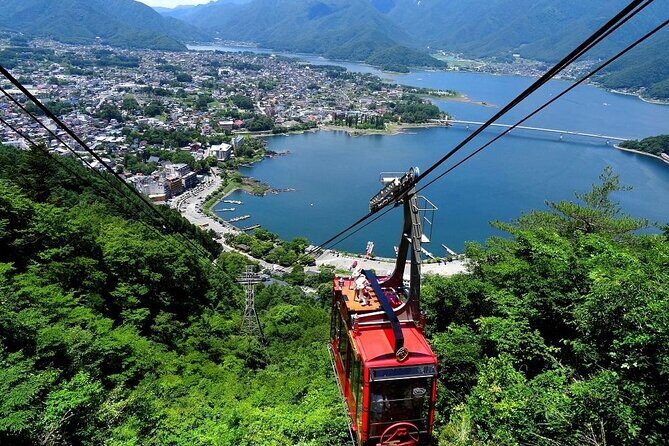
If your priority is dramatic views, add the Mt. Kachi Kachi Ropeway next to Lake Kawaguchiko. The ride takes you to the top of Mt. Tenjo, where you can look over Mount Fuji and Lake Kawaguchiko and the surrounding area.
This stop is especially good if:
- You don’t want a long hike but still want height and perspective.
- You’re traveling with people who want “easy effort, big rewards.”
- You want a clear plan for views that doesn’t require climbing.
The one catch is cost. The ropeway is not included, so it’s an extra admission you’ll pay on-site. I’d still consider it a good value, because it compresses “view time” into a manageable chunk of the day—just don’t forget that it’s weather dependent. On a clear day, the payoff can be excellent; on a gray day, expect more limited views.
Oshino Hakkai: Fuji’s Snowmelt Water Story in Eight Ponds
Oshino Hakkai is a classic stop for a reason: it’s a cultural scene tied directly to Fuji’s water system. The area features eight ponds formed from spring water fed by snowmelt from Mount Fuji.
The setting is more than a scenic postcard. You’re walking through a traditional-style village feel in the Fuji Five Lakes region, and the ponds are the centerpiece. If you like details—water temperature effects, how the ponds interact with the environment, small local design choices—this is one of the most rewarding stops because it’s not purely about looking up at a mountain. It’s about understanding how Fuji shapes daily life nearby.
The time budget works well here. With about an hour, you can see the ponds, wander at an easy pace, and take photos without feeling rushed. You’ll likely need tickets or entrance fees if you visit specific areas, since this stop is not included in the base inclusions.
A few more Tokyo tours and experiences worth a look

Lake Yamanaka: A Calm Fuji Backdrop for Your Photos
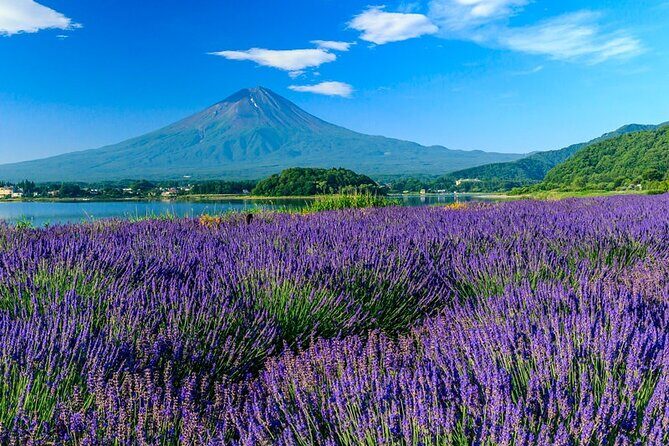
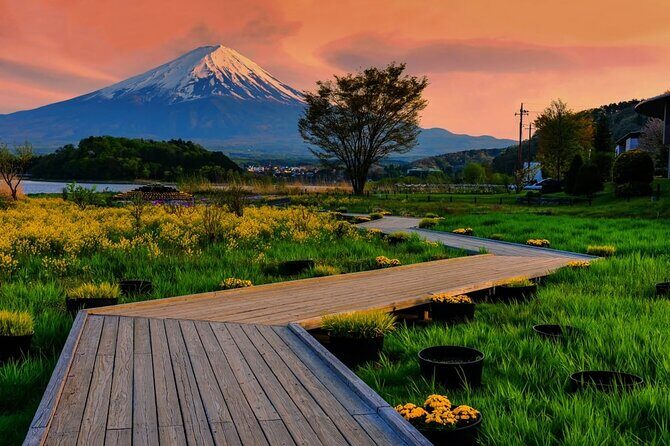
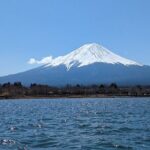
For a softer, more relaxed mood, you’ll want Lake Yamanaka. This is part of the Fuji Five Lakes group, which includes Lake Kawaguchiko, Yamanakako, Lake Saiko, Lake Motosuko, and Lake Shoji. Each one has its own character, but Lake Yamanaka (Yamanakako) is a strong choice if you want lake scenery with Mount Fuji in the background.
What makes this stop click is timing and atmosphere. Lakes give you room to breathe. Instead of scanning for the best mountain angle while standing among crowds, you can take your time with a view that changes as you move.
You’ll get about one hour here, and that’s enough to:
- find a good vantage point for photos
- do a short walk along the area around the lake
- reset before heading back toward Tokyo
Like the other non-included attractions, you may pay for certain viewpoints or local activities, but the lake view itself is the main event, and it’s why this stop fits the “flexible group” style of the day.
Choosing Your 3–4 Stops: Build the Day That Matches Your Priorities
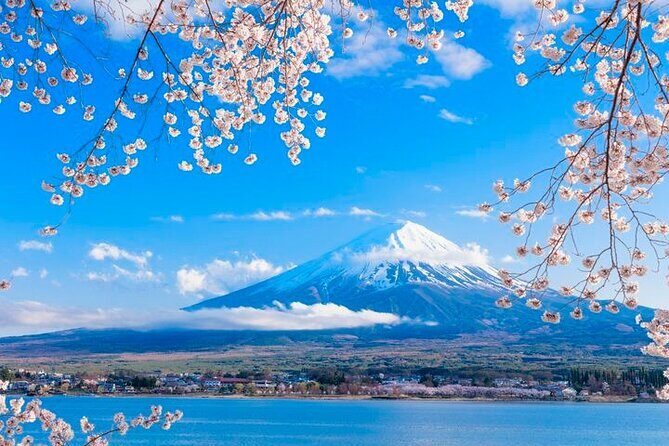
The best part of this tour is that you can customize the day by picking 3–4 places from the available Fuji-area options. That flexibility matters because “Fuji day trip” means different things to different people.
Here’s a practical way to choose:
- If you want the most iconic mountain access: include the Subaru Line 5th Station.
- If you want easy height and skyline views: add the Mt. Kachi Kachi Ropeway.
- If you want something cultural and calmer than mountain viewpoints: go for Oshino Hakkai.
- If you want a scenic reset and great photo angles: choose Lake Yamanaka.
A balanced day could look like mountain + ropeway + lake, or mountain + Oshino Hakkai + ropeway, depending on weather. On days where cloud cover is unpredictable, I’d bias toward stops where you still get something rewarding even if the mountain is partially hidden—ponds and lakes tend to remain pleasant even when the peak isn’t fully visible.
Price and Value: What You’re Really Paying For
The price is $748.78 per group (up to 5), for roughly 8 hours with an English-speaking driver and a private vehicle. If you compare that to piecing together multiple train and bus legs, this price can feel steep at first. But the value is in the time saved and the stress removed.
Think of it like this:
- You’re paying for private transport between dispersed sites.
- You’re paying for a driver who can answer questions and keep the day moving.
- You’re paying to avoid the crowded bus scramble that can drain the whole outing.
Now, don’t ignore the extras. Entrance fees and lunch aren’t included, and ropeway admission is typically an additional cost. That means your final spend depends on which stops you pick and whether you add optional paid activities while you’re there. Still, for a group of up to five, the private aspect often makes the economics feel fair, especially if you want a day that feels like yours.
Weather, Timing, and the One Thing You Can’t Control
This experience requires good weather. Mount Fuji is famous for appearing and disappearing fast, and the tour provider builds in the reality that sometimes the best plan is a backup.
If the tour has to be adjusted because of poor weather, the offer is a different date or a full refund. That’s important because Fuji days aren’t like city days where the sights are always visible no matter what.
On your side, the simplest move is to dress like a forecast can change every hour. Bring layers, and keep your expectations flexible. When the mountain shows itself, you’ll be glad you stayed ready.
If You Care About Pacing, You’ll Like This
One theme that stands out is how people respond to the driver approach: the day has more room to explore at your own pace than a structured guided route. With a private driver, you can spend extra minutes where the view clicks, or cut time short if a spot feels crowded or underwhelming.
That patient, flexible style is especially useful in the Fuji area, where conditions matter and plans can shift. If you want time for photos, short walks, and brief stops without feeling managed every step, this format tends to fit well.
Who This Tour Fits Best (and Who Might Not)
This is a great match if you:
- want private transport and less hassle than public transit
- travel with 2–5 people and want the day to feel efficient
- enjoy asking questions and learning as you go, even without a separate licensed guide
- prefer to spend time where your eyes want to linger
It’s less ideal if you specifically want a licensed guide at each stop delivering scripted historical detail. Since the driver is English-speaking but not described as a licensed local guide, you’ll get help and answers, but you won’t get the depth of a full guided experience by default.
Should You Book This Mt. Fuji Day Trip?
Book it if you want a Fuji day that’s mostly about the sights, not the commute. The private vehicle, English-speaking driver, and ability to select 3–4 stops make it a strong option when you care about pacing and avoiding the crowded transport grind.
Skip it or reconsider if:
- you know you need a licensed guide’s deeper commentary rather than driver Q&A
- you’re on a tight budget and don’t want extra admission costs for the ropeway and other non-included stops
- you’re traveling during a period when weather uncertainty would seriously upset your plans
For most groups of up to five, though, this is a practical way to see the Fuji area with less stress and more freedom.
FAQ
What is the group size for this tour?
The tour is priced per group and is for up to 5 people.
Is this tour private?
Yes. It’s a private tour/activity, and only your group participates.
Do I get an English-speaking guide?
You get an English-speaking driver. A licensed local English-speaking guide is not included.
How long is the tour?
It’s listed as about 8 hours.
What stops are included?
You can choose 3–4 places from the Fuji-area options. The day commonly includes the Subaru Line 5th Station, Mt. Kachi Kachi Ropeway, Oshino Hakkai, and Lake Yamanaka.
Is pickup available in Tokyo?
Yes, pickup is offered.
Are entrance fees included?
No. Entrance fees are not included, and lunch and other personal expenses are also not included.
Do I need to buy a ropeway ticket?
The Mt. Kachi Kachi Ropeway admission is not included, so you’ll pay it separately.
Is the ticket delivered digitally?
Yes. You’ll receive a mobile ticket.
What if the weather is bad?
The tour requires good weather. If it’s canceled due to poor weather, you’ll be offered a different date or a full refund.