REVIEW · NARA
NARA: Budda gigante, Cervi liberi nel parco (Guida italiana)
Book on GetYourGuide →Operated by Agenzia Turisti Italiani in Giappone · Bookable on GetYourGuide
Deer, Buddha, and an easy train ride. This half-day Nara experience from Kyoto Station mixes a guided visit to Todai-ji with time in the famous park where deer roam alongside locals. The big win is having an Italian-speaking guide from Kyoto who can answer questions about Japan’s past and daily life, not just recite dates.
I especially like two parts: the Todai-ji visit, where you focus on standout monuments and national treasures with explanations that connect to everyday Buddhist devotion, and the deer encounter, made simple by the guide and the on-site snack stalls. The main thing to consider is timing: it’s designed to fit into about 5 hours, so if you want to wander Nara slowly on your own all day, this route may feel a bit tight.
In This Review
- Key takeaways before you go
- A half-day Nara plan that starts and ends at Kyoto Station
- Meeting at Kyoto Station: the exact spot that saves time
- Train, bus, and timing: how the 5 hours actually work
- Todai-ji and the Great Buddha: why the guide focus changes everything
- A good heads-up: you’ll be in a popular complex
- Ukimido: a calmer stop that balances the big moments
- Nara Park deer: feeding biscuits the right way
- Consideration: treat this as a shared space, not a petting zoo
- Why the Italian Kyoto guide is the real value
- Small group pacing: the difference between a bus tour and a real visit
- Who should book this Nara tour from Kyoto?
- Should you book this tour?
- FAQ
- How long is the Nara tour from Kyoto Station?
- What language is the tour guide?
- How big is the group?
- Where do we meet in Kyoto Station?
- What are the main stops during the tour?
- How do we get from Kyoto to Nara and back?
- Is deer feeding included?
- Is the price based on a full guided package?
Key takeaways before you go
- Small group (up to 15) keeps questions flowing and the pace human.
- Italian-native Kyoto guide answers what you actually wonder about, including life in historical Kyoto.
- Todai-ji time is guided and focused on major sights and what they mean.
- Nara Park deer feeding is part of the experience, with biscuits you can buy there.
- Ukimido adds a quieter pause between the big-ticket sights.
- Tour ends at Kyoto Station, but you can leave earlier if you want.
A half-day Nara plan that starts and ends at Kyoto Station
This is the kind of tour you can fit into a busy itinerary without losing a full day. You start and finish at Kyoto Station, and the schedule is built around public transport: a train ride to Nara, a short bus segment to the temple area, then you return the same way. It’s efficient without feeling like a sprint.
Nara matters because it was Japan’s imperial capital in the 8th century (710–784). Kyoto, your starting point, was the capital later (794–1868). A good guide can help you see the shift in mindset and everyday life between the two cities, and that’s a real value here. You’re not only visiting a temple. You’re getting the background that makes the sights click.
The pace is also designed to work for different interests. If you’re a temple person, you get solid time at Todai-ji. If you’re more into atmosphere and “Japan in real life,” the deer park portion gives you a lively, memorable slice of the city’s rhythm.
You can also read our reviews of more tours and experiences in Nara.
Meeting at Kyoto Station: the exact spot that saves time
The meeting point is specific, and that matters when Kyoto Station is doing its usual thing—busy, loud, and full of signposts. You meet in the space between the four escalators in front of the taxi terminal, just outside the central north entrance of Kyoto Station on the east side (the part near Karasuma-guchi).
Helpful detail: from that spot, you can see Kyoto Tower up ahead to your upper left. You’ll receive an email ahead of time with confirmation and more detail about where to stand, so you’re not guessing.
I like tours that remove uncertainty at the start, and this one does that. If you show up a bit early, you’ll get your bearings fast—no rushing through crowds at the last second.
Train, bus, and timing: how the 5 hours actually work
The day is short on purpose: the total duration is about 5 hours. The travel blocks are clear:
- Train from Kyoto to Nara: about 45 minutes
- Bus/coach to the Todai-ji area: about 15 minutes
- Guided temple time: 1.5 hours
- Short walks and sightseeing moments: about 20 minutes combined
- Return train to Kyoto: about 45 minutes
That breakdown is important because it tells you what you’ll spend your attention on. You’re not commuting for half the day. You’re using most of the time where it counts: temple sights plus the park.
One more practical point: the tour finishes at Kyoto Station, but you’re free to leave it partway through. That’s useful if you want to keep exploring Nara on your own after the big sights, or if you’ve got a separate plan near your hotel in Kyoto later.
Todai-ji and the Great Buddha: why the guide focus changes everything
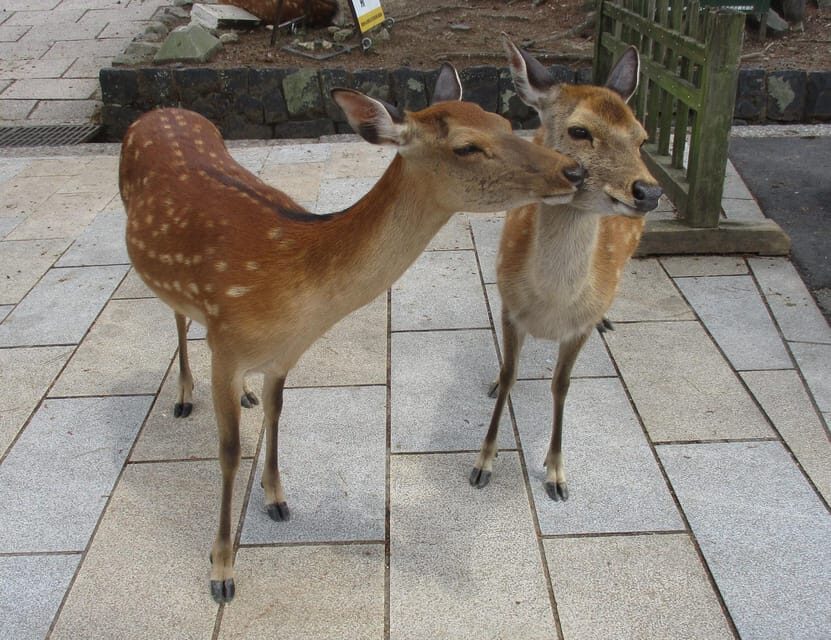
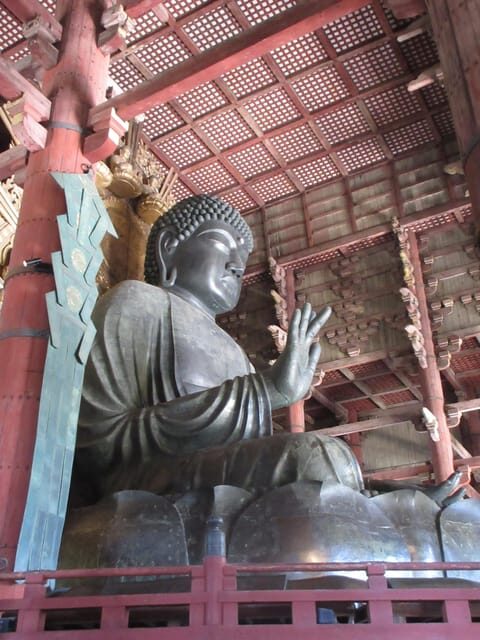
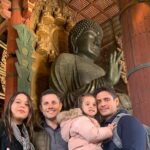
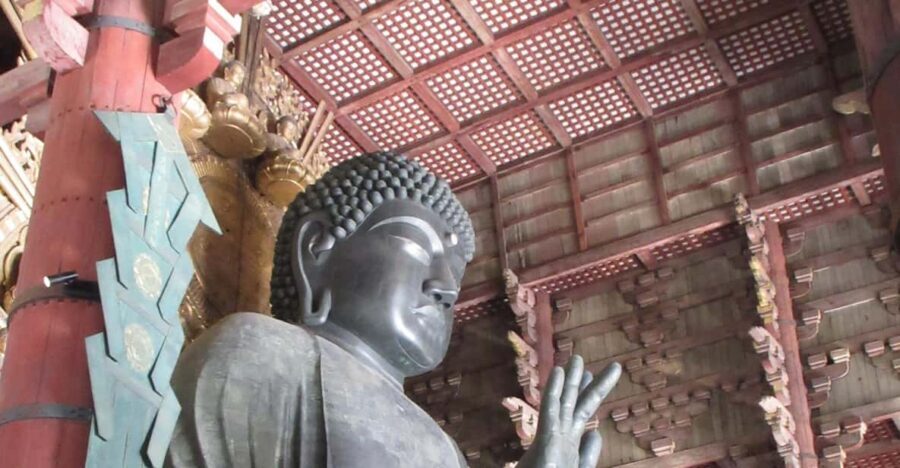
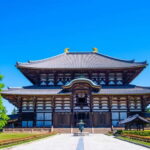
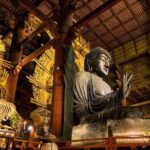
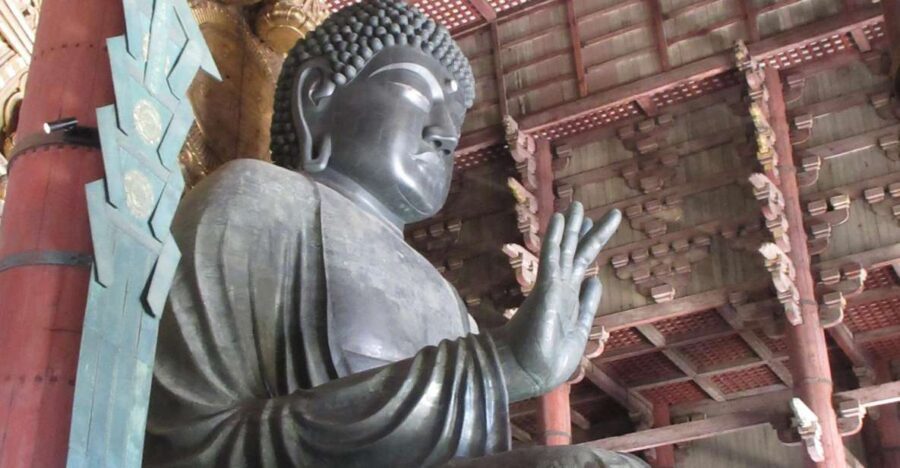
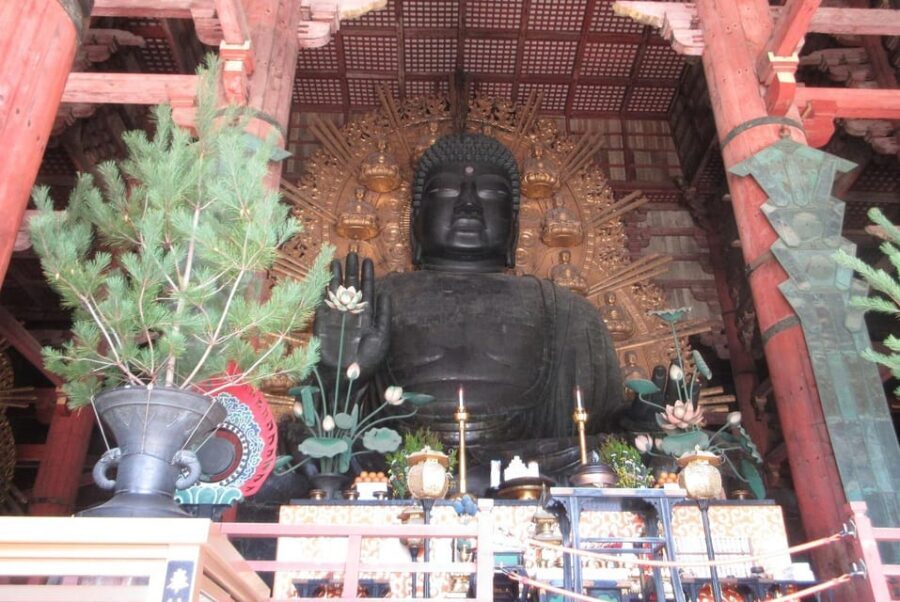
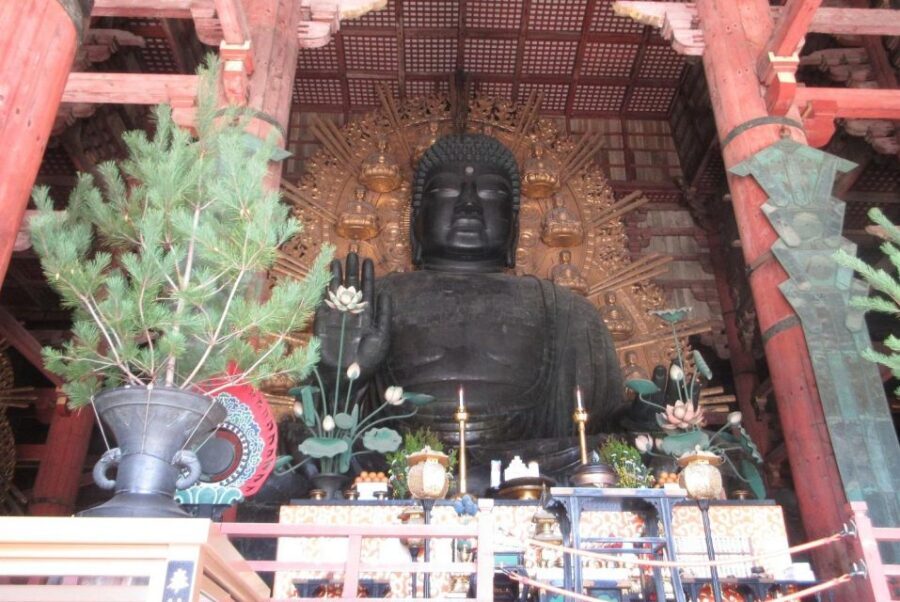
Todai-ji is famous for one thing that grabs you instantly: the giant Buddha statue. Even if you’ve seen photos, standing there is a different experience—big scale plus the temple’s devotional feel.
What makes this tour worth your time is not only that you visit Todai-ji, but that your visit is guided and structured. You get time to see the temple’s key monuments and focus on the ones recognized as national treasures. The guide doesn’t just point and move on. You get explanations that connect the sights to popular Buddhist devotion—how people actually relate to these places in daily or lived ways.
That kind of context is what turns a temple visit from sightseeing into understanding. You start noticing details that you might otherwise miss: the reason certain elements matter, and how the temple’s art and layout fit into devotion rather than functioning like decoration.
Time is also reasonable: 1.5 hours at Todai-ji gives you space to look, listen, and re-look without feeling squeezed. If you usually speed through temples, that longer guided block helps you slow down in the right places.
A good heads-up: you’ll be in a popular complex
Todai-ji sits in an area that gets regular visitor flow. Expect crowds around the main sights. The guide helps here by keeping you on track so you don’t lose time trying to interpret everything at once.

Ukimido: a calmer stop that balances the big moments
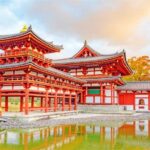
Between the main temple highlight and the deer park atmosphere, you’ll also stop at Ukimido. In the schedule, it’s listed as a brief sightseeing and walking segment of about 10 minutes, plus short walking time in the surrounding area.
Ukimido won’t replace the Great Buddha as the headline, but that’s not the point. It works as a mental breather. You get a change of pace after the intensity of the main temple focus, and you can absorb the place as a complex of multiple spaces rather than a single photo spot.
If you tend to get temple-fatigue—too many things, too fast—this kind of smaller stop can help you reset without breaking the flow of the tour.
Nara Park deer: feeding biscuits the right way
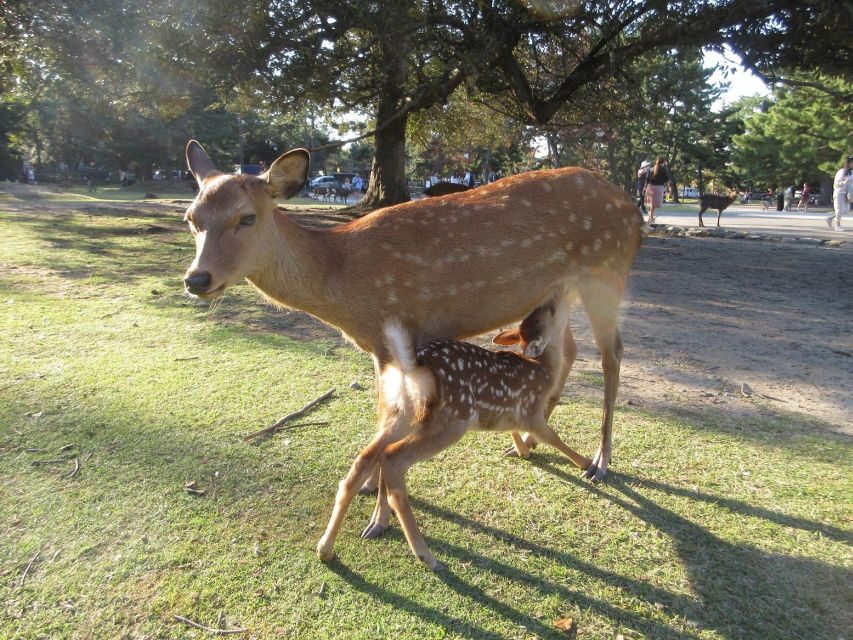
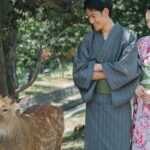
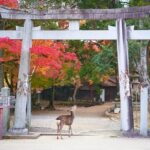
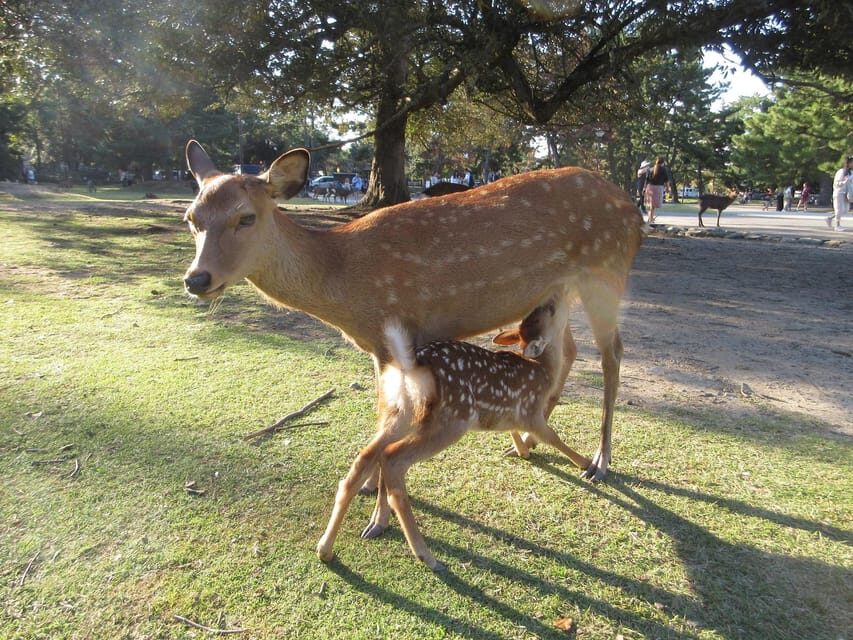
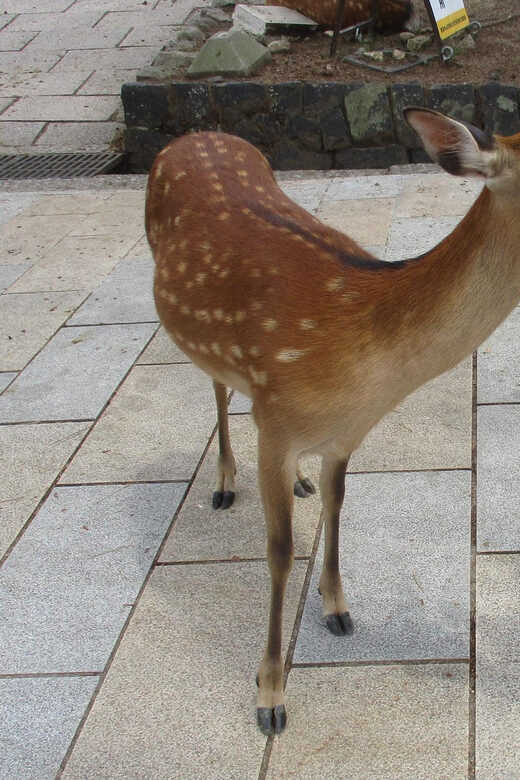
Then comes the most instantly memorable slice for many people: deer in the park, both domesticated and free-roaming, living alongside local life around the temple grounds.
You’ll be able to feed them biscuits sold at stalls set up specifically for visitors. That’s practical, because it removes the guesswork of what to do and where to go. You don’t have to improvise with random snack purchases or worry you’ll offend the local rhythm.
What I like here is that it’s handled as part of the experience, not a random detour. The guide helps you understand the park vibe and keeps you oriented in the area.
Consideration: treat this as a shared space, not a petting zoo
It’s easy to see cute deer and react like you’re at a theme park. In reality, they’re living animals in a public space. Keep your focus on how you behave around them, follow the guide’s cues, and keep interactions calm. If you do that, you’ll enjoy it; if you don’t, it can feel stressful instead of fun.
Why the Italian Kyoto guide is the real value
At $153 per person for about 5 hours, the price isn’t “cheap,” but it’s not random either. You’re paying for several things bundled together:
- Transport (train + bus)
- Entrance fees to the monuments included in the route
- A live Italian-speaking guide
- A small group size capped at 15
That guide piece is the value-maker. The guide is described as native and fluent in Italian, with strong communication and deep cultural knowledge. More importantly, the guide is also described as helpful beyond the tour itself—providing tips and recommendations for other parts of the trip.
For you, that means less mental load. You spend less time figuring out what matters, and more time using your eyes well. When someone can explain what you’re looking at—especially in a language you’re comfortable with—you get more out of your time and money.
Also, having a Kyoto-based perspective matters. Kyoto and Nara are linked historically, but they’re not the same city. A guide who can naturally compare the two helps you connect the dots between eras and everyday life.
Small group pacing: the difference between a bus tour and a real visit
With a limit of 15 participants, the tour has room for questions. That matters on a temple day, because you’ll usually want clarification—about beliefs, symbols, why certain things are arranged the way they are, and what a sight means in context.
A small group also tends to move more smoothly. You’re not trapped behind an endless line. You can pause longer when something grabs your attention.
And because the tour is structured around two main blocks—Todai-ji and the deer park area—there’s a natural rhythm. You get a guided anchor point, then you get to experience the atmosphere with less pressure.
Who should book this Nara tour from Kyoto?
This is a strong choice if:
- You want a half-day Nara visit without organizing trains, buses, and entrance logistics.
- You prefer learning in Italian, with answers coming from a guide who lives and works in the Kyoto area.
- You like a mix of major sights and everyday “on the ground” moments, like deer in the park.
- You’d rather spend time understanding what you see than collecting only photos.
It may be less ideal if:
- You want a full day to wander Nara slowly with no time limits.
- You dislike crowds and would rather avoid popular temple areas entirely.
- You’re hoping for a very deep, multi-temple marathon. This tour is tight by design.
Should you book this tour?
If you’re staying in Kyoto and you want Nara highlights without wasting time figuring things out, I’d book it. The structure is smart for limited time: train, short bus hop, focused Todai-ji guiding, a deer park experience with feeding, and then back to Kyoto the same way.
The biggest reason to choose it is the guide: native Italian with strong communication, plus a friendly, supportive approach that makes you feel looked after—not just processed through sights. Add small group size and included transport/entrance fees, and the value starts to make sense for a short day.
If you’re the type who wants total freedom to roam all day, you might choose a DIY day. But if you want a clean, efficient Nara hit with context and a memorable park moment, this one earns its spot.
FAQ
How long is the Nara tour from Kyoto Station?
The tour lasts about 5 hours.
What language is the tour guide?
The guide speaks Italian.
How big is the group?
The group is small, with a maximum of 15 participants.
Where do we meet in Kyoto Station?
You meet in the space between the four escalators in front of the taxi terminal, just outside the central north entrance of Kyoto Station (east side near Karasuma-guchi).
What are the main stops during the tour?
You visit Todai-ji, spend time sightseeing around Ukimido, and go through the area in Nara Park with deer.
How do we get from Kyoto to Nara and back?
You travel by train to Nara, then take a short bus/coach to reach the temple area. On the way back, you return by train to Kyoto Station.
Is deer feeding included?
Yes. You can feed the deer using biscuits sold at the stalls in the park area.
Is the price based on a full guided package?
Yes. Transportation and entrance fees for the monuments included in the route are included in the tour price.