REVIEW · TOKYO
Tokyo City Attractive One Day Tour
Book on Viator →Operated by Sato · Bookable on Viator
Tokyo in one day, without chaos. This private Tokyo City Attractive One Day Tour strings together classic temples, big skyline icons, and food-market energy without making you feel lost in the sprawl. I like the air-conditioned comfort and the practical round-trip hotel transfers.
I also like the built-in flexibility: it’s just your group with a driver-guide setup, so you can adjust the flow to match your pace. One thing to plan for: Skytree and Tokyo Tower entry tickets cost extra, and with multiple stops packed into a 9-hour day, you may feel you’re moving on quickly at peak times.
In This Review
- Key things I’d watch (and enjoy) on this Tokyo day
- How a private one-day plan keeps Tokyo from swallowing you
- Price and logistics: what $500 per group really means
- Asakusa and Sensoji: Tokyo’s old center, with a shopping street fix
- Skytree and Solamachi: views, shops, and a modern Tokyo mood
- Tokyo Tower: classic skyline energy after Skytree
- Tsukiji Outer Market: the food town mindset, not a full wholesale tour
- Shinjuku Gyoen and Meiji Jingu: two very different ways to slow down
- Shinjuku Gyoen National Garden
- Meiji Jingu Shrine
- Shibuya scramble, Hachiko, and Harajuku Takeshita Street: where Tokyo feels like a movie
- Shibuya Scramble and the Crossing Square
- Hachiko
- Harajuku and Takeshita Street
- Driver-guide style: how Sato’s setup affects your day
- Who this Tokyo City Attractive One Day Tour is best for
- Should you book this private Tokyo one-day tour?
- FAQ
- How long is the Tokyo City Attractive One Day Tour?
- How much does the tour cost?
- Is pickup and drop-off included?
- What tickets are included, and what is not?
- How much extra should I budget for Skytree and Tokyo Tower?
- Are meals included in the tour price?
- Is this a private tour?
- Can I cancel for a full refund?
- Is there a mobile ticket?
Key things I’d watch (and enjoy) on this Tokyo day
- Private, just-your-group format with a driver who acts as the guide
- Hotel transfers that take the hassle out of timing Tokyo transit
- Icon mix: old-school Asakusa temple, two towers, a major shrine, and big-city neighborhoods
- Skytree and Tokyo Tower cost extra while other stops are free to enter
- Short, focused visits (often around 30–60 minutes) that help you see more in one day
- Mobile ticket for smoother entry at paid stops
How a private one-day plan keeps Tokyo from swallowing you
Tokyo can feel like two cities at once: calm and sacred one minute, neon and fast the next. This tour’s appeal is that it gives you a guided route across that full range in a single, manageable day. You’re not left to connect dots on your own, and you still get to choose what matters most to you.
The vibe here is practical sightseeing. You’re not just hopping from one landmark sign to another. You get enough context to understand why each place is famous, and you get the comfort of an air-conditioned ride between stops. For a first visit, or a stopover with limited time, that matters.
And yes, it’s private. That means you can ask questions, slow down near something you like, and speed up when you’re done. If you’re traveling with a family, older relatives, or you simply hate crowds-without-a-plan, this setup can make the day feel civilized.
You can also read our reviews of more city tours in Tokyo

Price and logistics: what $500 per group really means
The price is $500 per group, up to 5 people. That’s the key number to do the math on. If you fill all 5 spots, it lands at about $100 per person. If you’re traveling as a couple and only two of you book, it’s closer to $250 per person. Solo travelers would be near the full $500.
For that money, you’re buying three things that add up fast in Tokyo:
1) A private itinerary across far-flung neighborhoods
2) Round-trip hotel transfers (rather than figuring out train timing all day)
3) A guide who can explain what you’re seeing as you go
Are you paying for convenience? Yes. Is it still good value compared with spending hours navigating alone and then paying for your own private tickets? Often, it is.
One more logistics note that can shape your experience: the tour starts and ends at the Tokyo Station Hotel area in Marunouchi, and you return there at the end. That’s handy for getting back to dinner plans without a second transit headache.
Asakusa and Sensoji: Tokyo’s old center, with a shopping street fix
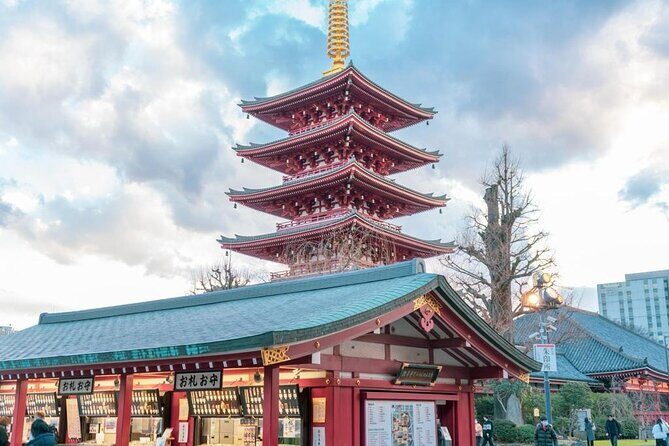
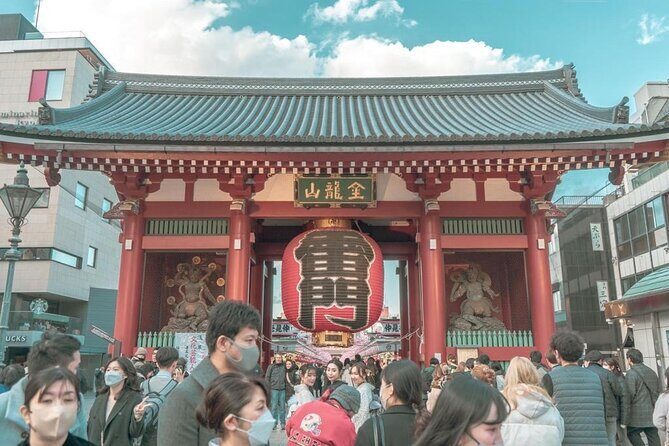
Asakusa is the kind of neighborhood that instantly slows your brain down. The centerpiece is Sensoji, a Buddhist temple tied to the story of Kannon. The legend says that in 628 two brothers fished a Kannon statue from the Sumida River, and the statue kept returning even after it was put back. The temple you see today traces back to that origin story, with completion in 645—making it Tokyo’s oldest temple.
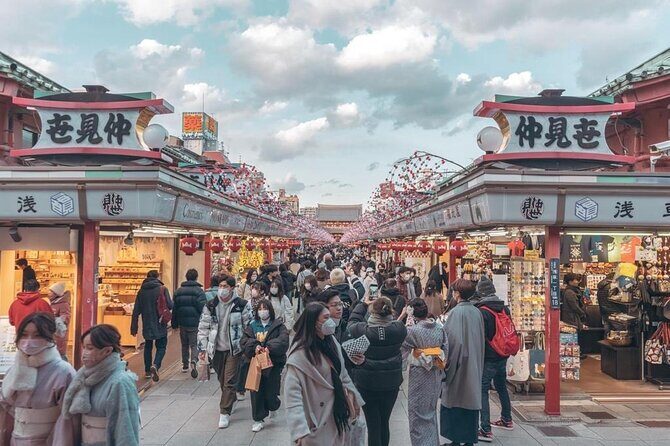
What makes this stop fun is the path you take to reach the main grounds. The approach runs through Nakamise, a shopping street over 200 meters long, stretching from the outer gate to Hozomon (the main gate). You’ll find souvenir snacks and classic Japanese items along the way, which means you don’t feel like you’re spending the whole hour just standing in front of stone.
How to make the most of this 1-hour window:
- Arrive ready to walk. This isn’t a sit-and-view stop.
- If you care about photos, plan to move steadily. It’s lively and crowded near the temple.
- Buy smaller, eatable items if you’re also going to markets later. The day has plenty of food vibes.
If your group prefers a quieter pace, you can keep things focused: explore Nakamise briefly, then spend more time inside the temple complex.
Skytree and Solamachi: views, shops, and a modern Tokyo mood
Tokyo Skytree is built for height lovers. It’s the world’s highest free-standing broadcast tower at 634 meters, with two observation decks around 350 meters and 450 meters up. If you want skyline photos, this is one of the most direct ways to get them.
This stop also pairs with Skytree Town and Solamachi, a large complex with lots to do when you’re ready to move away from the crowds outside the tower. Solamachi alone includes 312 restaurants and retail shops. You could treat it like a “Tokyo modern life” sampler: local crafts at Sumida Machidokoro, a robot tech exhibition space at Chiba Institute of Technology, and even an aquarium option (Sumida Aquarium is listed with penguins).
Important value note: Skytree entry is not included. The price data provided lists Skytree admission as about $12 USD extra. That means you’ll want to budget this into the overall cost, especially if your goal is the observation decks.
One practical tip comes straight from how Skytree tends to behave at busy times: lines can get long. If you’re traveling during a peak season, think about timing within the day and whether you’ll be okay spending part of your hour in queue mode.
Tokyo Tower: classic skyline energy after Skytree
Tokyo Tower is the older sibling icon. It reaches 333 meters high and has its own special place in the city’s modern identity. It was completed in 1958 and was Japan’s tallest structure until Skytree took over in 2012. It also functions as a broadcast antenna, so it’s not just a tourist object.
The design comparison people make with the Eiffel Tower is natural: it’s described as 3 meters taller than the Eiffel Tower’s model. But Tokyo Tower is more than a copy-cat comparison. It’s a reminder of how Tokyo advertised its post-war comeback with engineering you could spot from far away.
Like Skytree, Tokyo Tower entry is not included. The provided data lists about $7 USD extra. If you’re not sure whether you’ll go up, I’d base the decision on your group:
- If your group loves views, go up.
- If you’re view-sated after Skytree, you might prefer to keep this stop as a photo-and-walk moment.
A few more Tokyo tours and experiences worth a look





Tsukiji Outer Market: the food town mindset, not a full wholesale tour
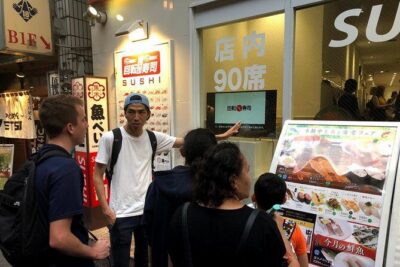
Tsukiji Outer Market is one of those places where Tokyo feels like Tokyo. Not fancy, not quiet—just fast-moving food curiosity. The idea is simple: Japan’s food culture is on display in street stalls, small shops, and ready-to-eat bites.
The market’s history helps explain why it feels the way it does. Originally, Tsukiji catered mainly to professionals, meaning many items were too large for a small family to buy. Over time, the wholesale shops started retailing to visitors, including smaller portions. That shift is why you can find bite-sized versions of classics, including ready-to-eat sushi meals in smaller sizes.
The provided tour timing is about 1 hour here, and that’s enough for a focused circuit:
- Walk the main streets first to see what looks best, then pick 1–2 items rather than trying everything.
- If your group has dietary limits, ask your guide for the most straightforward options within the time.
A heads-up: this stop is more about sampling and browsing than sitting down to a full meal. Lunch isn’t included on this tour, so you’re essentially building your own food plan around what Tsukiji offers.
Shinjuku Gyoen and Meiji Jingu: two very different ways to slow down
This part of the day is where Tokyo becomes breathe-easy.
Shinjuku Gyoen National Garden
Shinjuku Gyoen is a major park escape near Shinjuku Station. You get spacious lawns, winding walking paths, and calm scenery that feels like a reset button after busy neighborhoods. Spring is a big deal here because Shinjuku Gyoen becomes one of Tokyo’s best cherry blossom areas.
Even if it’s not peak season, the park is still worth it because it gives you open space. In a day full of towers, markets, and traffic-choked intersections, that matters.
Meiji Jingu Shrine
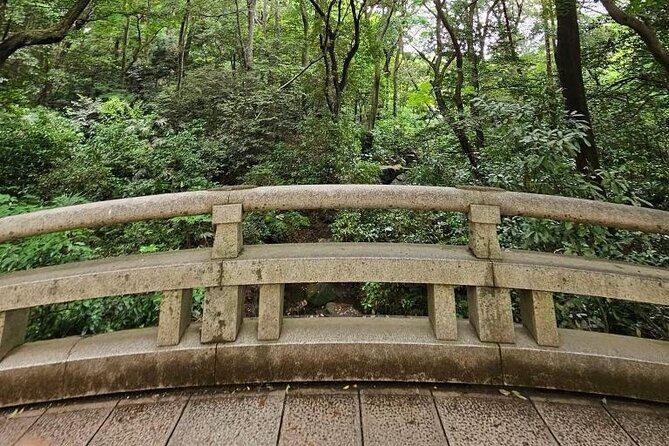
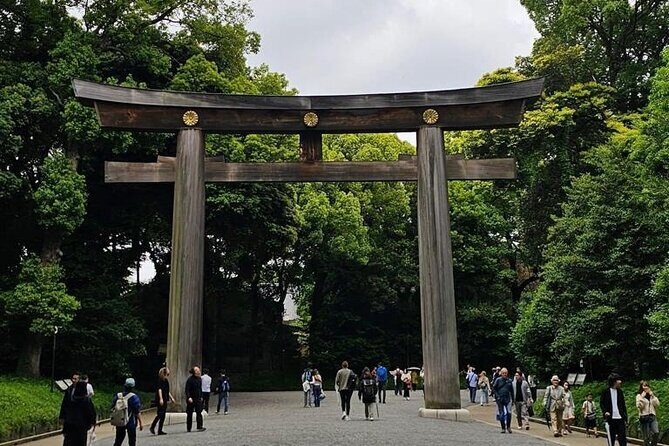
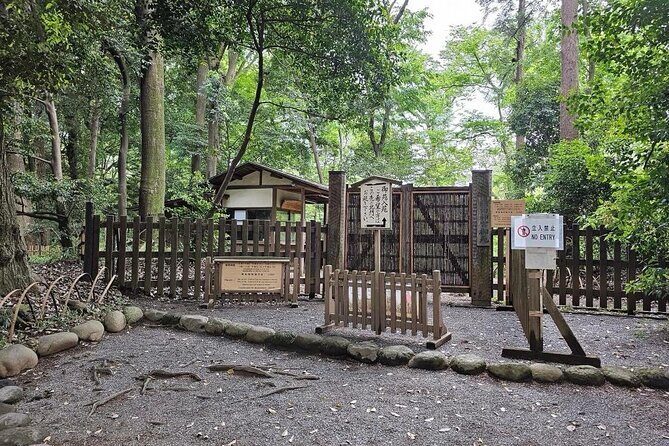
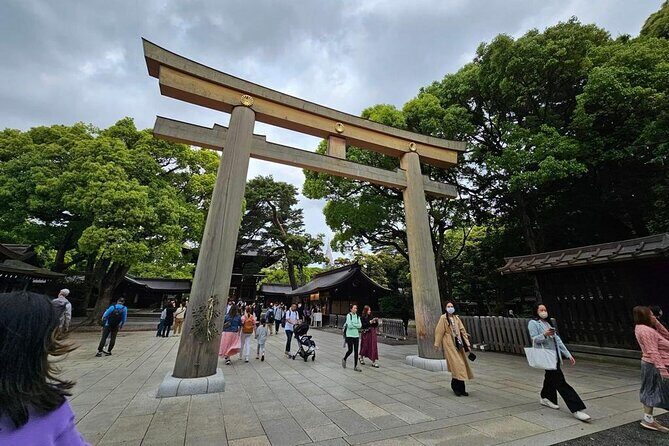
Then comes Meiji Jingu, one of Tokyo’s most famous shrines tied to Emperor Meiji and Empress Shoken. The shrine was dedicated in 1920. The site was destroyed during the war and rebuilt shortly after. That history—loss and renewal—adds emotional weight beyond the architecture alone.
The shrine connects to the Meiji Restoration era, when Japan modernized rapidly and Japan’s feudal system ended. If you’re the kind of person who likes to understand what modern Japan is reacting to, Meiji Jingu is a useful stop.
What I like about combining these two:
- Shinjuku Gyoen gives you the natural pause.
- Meiji Jingu gives you the cultural pause.
In a short day, that pairing can keep Tokyo from turning into a blur.
Shibuya scramble, Hachiko, and Harajuku Takeshita Street: where Tokyo feels like a movie
This final stretch is fast, iconic, and very Tokyo—meaning it can be a little overwhelming if you’re not ready for crowds. But with a guide, you’re less likely to feel stuck.
Shibuya Scramble and the Crossing Square
The Shibuya Scramble is often called controlled chaos for a reason. Ten lanes of traffic and five major crosswalks meet at once, creating a crossing that feels like choreography done at full speed. The tour also points out Shibuya’s role in big seasonal moments like New Year’s Eve countdowns and famous Halloween celebrations.
The practical value of this stop is orientation. After seeing it, Tokyo’s map in your head starts to make sense. You know what neighborhoods connect, what direction energy flows, and what “center” means here.
Hachiko
Right nearby, you get a quieter, human story: Hachiko. The dog is tied to Shibuya Station. The account you’re given is specific: Hachiko was adopted by university professor Hidesaburo Ueno, and he showed up every day waiting for his master to return from work—even after Ueno died in 1925. Hachiko died in 1935.
It’s a short stop, but it sticks, because the story is simple and real.
Harajuku and Takeshita Street
Then you’re in Harajuku, which is Tokyo’s youth-culture playground. You’ll likely notice the crowd energy right away, especially on weekends and holidays when high school students and groups of tourists gather. The tour highlights Takeshita Street with its fashion shops, cafes, dessert spots, and quirky memorabilia.
You’ll also see the street’s position on a small hill, plus a gateway entrance that signals you’ve arrived. A place like Paris Kids is mentioned as an example of what you’ll find—trendy accessories and style-forward items at prices that can feel more friendly than you might expect.
This is a good place to buy a small souvenir or a piece of clothing you can actually wear back home, as long as you don’t overspend on impulse snacks during the earlier market stop.
Driver-guide style: how Sato’s setup affects your day
One detail worth understanding: the company’s approach is that the driver is the guide. That can be a plus because it keeps the day flowing—one person handling logistics while also explaining what you see. In the communication you’re likely to have with the provider, the team makes clear this driver-guide structure is part of the tour design.
The other side of that coin is expectations. If you’re hoping for a full-time separate guide plus a separate driver, this setup might not match that wish. If that matters to you, plan to ask up front before booking.
Also, since this is a private route, your timing depends a lot on real-world traffic and the moment you arrive at each stop. The tour can feel perfectly paced on a calm day, and slightly frantic during peak times.
Who this Tokyo City Attractive One Day Tour is best for
This is a strong fit if you:
- Are on a first trip and want Tokyo highlights in one day
- Have limited time and don’t want to spend it routing through transit
- Want a guide to explain context at Sensoji, Meiji Jingu, and the iconic street scenes
- Travel in a group up to 5 where the per-person cost becomes reasonable
It’s also a good match for people who value comfort between neighborhoods. The air-conditioned vehicle plus hotel transfers reduce the most exhausting part of Tokyo touring: the constant switching.
Where it may not suit you as well:
- If you hate crowds and prefer long, slow exploration, the short stop times can feel too jumpy.
- If you want only one paid view experience, you might consider how much extra you want to pay for observation decks.
Should you book this private Tokyo one-day tour?
I’d book it if you want a day that works like a greatest-hits album: temple heritage at Sensoji, skyline ambition at Skytree and Tokyo Tower, food energy at Tsukiji Outer Market, and then the big-city personality of Shibuya and Harajuku. The private format and hotel transfers are the main reasons this feels worth it, especially for anyone who doesn’t want Tokyo logistics to take over the trip.
Before you book, do these two quick checks:
- Budget for the extra tower tickets (Skytree plus Tokyo Tower) if your plan includes going up.
- Think about your priorities. With multiple highlights in one day, you’ll enjoy it most if you’re okay with a “see a lot” pace rather than a “linger for hours” day.
If your ideal Tokyo day is a mix of contrast—old shrine calm, modern towers, market snacks, and neon crossings—this tour is built for you.
FAQ
How long is the Tokyo City Attractive One Day Tour?
The tour runs about 9 hours (approx.).
How much does the tour cost?
It costs $500 per group, up to 5 people.
Is pickup and drop-off included?
Yes. The tour includes round-trip hotel transfers, starting and ending at the Tokyo Station Hotel meeting point.
What tickets are included, and what is not?
Entry tickets for Skytree and Tokyo Tower are not included. The other listed stops have admission tickets marked as free.
How much extra should I budget for Skytree and Tokyo Tower?
The provided pricing shows Skytree entry at about $12 USD and Tokyo Tower entry at about $7 USD.
Are meals included in the tour price?
No. Lunch and dinner are not included.
Is this a private tour?
Yes. It’s a private tour/activity, and only your group participates.
Can I cancel for a full refund?
Yes. Free cancellation is available, with a full refund if you cancel up to 24 hours in advance.
Is there a mobile ticket?
Yes. Mobile tickets are listed as part of the experience.