REVIEW · TOKYO
Private Half-Day Grand Bike Tour in Tokyo
Book on Viator →Operated by 東京下町自転車ツアー Tokyo Backstreets Bike Tour · Bookable on Viator
Tokyo works great on two wheels.
This private half-day bike tour makes the city feel manageable fast, trading long walks for short rides and guide-led navigation through real neighborhoods. I especially liked the safety-first feel and the way the route mixes famous sights with streets you’d likely miss on your own. The other big win for me was how smoothly the bike gets you moving—so you actually enjoy the day instead of fighting traffic on foot. One heads-up: it’s still a 5 to 6 hour ride total, so you’ll want moderate fitness and comfort biking in busy areas.
By the time you reach Shibuya, it feels like you’ve stitched together a big slice of Tokyo’s story—from temple lanes to government buildings to fashion streets—without turning it into a marathon. The highlight for me is that the guide (Take) focuses on keeping the group together and gives solid local context, not just check-the-box photos. Still, because it depends on good weather, you might have a different date if conditions aren’t ideal.
In This Review
- Key things that make this Tokyo bike tour worth your time
- Why Tokyo feels easier when you ride
- The 11:30 start and the half-day rhythm (5–6 hours)
- How the route flows: from Skytree photos to Shibuya energy
- Stop 1: Sakura Bridge and Tokyo Skytree photo time
- Stop 2: Edo Taito Traditional Crafts Center (craft museum)
- Stop 3: Senso-ji Temple and the temple-street scene
- Stop 4: Ryogoku Kokugikan, the sumo stadium view
- Stop 5: Yanagi Bridge and canal-side Tokyo
- Stop 6: Nihonbashi Bridge and the old waterways feel
- Ginza: cycling past luxury storefronts on a main drag
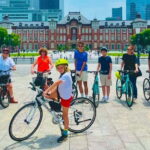
- Stop 7: Imperial Palace grounds from outside
- Near the National Diet Building (government architecture pass)
- Stop 8: Tokyo Tower and that classic skyline silhouette
- Stop 9: Jingu Gaien’s ginkgo-lined street walk-and-ride mood
- Roppongi night town riding segment
- Stop 10: Aoyama Street, fashion-forward city design
- Stop 11: Takeshita Street and bike handling in a shopping lane
- Stop 12: Omotesando, luxury retail on a clean street
- Stop 13: Meiji Jingu Shrine, park bikes and walk inside
- Stop 14: Shibuya Crossing and the ride’s big finale
- Safety, pace, and comfort: what to expect from the guide
- Value check: $130.07 for a private, bike-based Tokyo loop
- Who this tour fits best (and who should think twice)
- Quick practical tips before you go
- Should you book this private half-day Grand Bike Tour?
- FAQ
- How long is the private half-day bike tour in Tokyo?
- What’s included in the price?
- Where does the tour start and where does it end?
- What time does the tour begin?
- What kind of bike is used and who is it suitable for?
- Is this tour private?
- What fitness level do I need?
- Does the tour run in bad weather?
Key things that make this Tokyo bike tour worth your time
A guide who prioritizes safe riding, not just sightseeing
Classic Tokyo stops plus practical backstreet connections
Photo breaks at big photo magnets like Tokyo Skytree and Shibuya
Comfortable folding bikes (14–20 inch) sized for most heights
Complimentary bottled water and helmets included
Why Tokyo feels easier when you ride
Tokyo can be intense on foot. Blocks are long, directions can twist, and you can lose an hour just figuring out the best route between two highlights. This tour solves that by doing the heavy lifting for you: you get a guided plan, a bike, helmets, and water, so your job is mostly to look up, take photos, and pedal steadily.
On a private tour, you also avoid the “everyone goes at once” chaos. Your guide sets the pace, keeps eyes on the group, and helps you cross the city’s moving pieces in a way that feels calm—even when you’re passing high-energy spots like Shibuya Crossing.
The bike format matters too. These are folding bikes with 14–20 inch wheels, intended for people roughly 140–180 cm tall. If you’re taller than 180 cm, you should say so ahead of time so the rental size works for you.
You can also read our reviews of more cycling tours in Tokyo
The 11:30 start and the half-day rhythm (5–6 hours)
This is billed as a half-day tour, and it mostly delivers that feeling. You start at 11:30 am and return to the Shibuya area at the end near Shibuya Station, close to the zebra crossing. The stops are short and purposeful, which keeps the day from dragging.
What helps is the mix of “look and pause” moments (bridges, towers, temple exteriors) with a few longer moments where you can actually slow down and absorb. For example, there’s a 1-hour stretch at Meiji Jingu Shrine where you park bikes and walk inside. That one stop alone changes the tone of the tour from pedal-and-snap to slow-and-watch.
Bring water-energy snacks if you’re the type who gets hungry while sightseeing, but keep it practical: the only built-in refreshment is the complimentary bottled water.
How the route flows: from Skytree photos to Shibuya energy
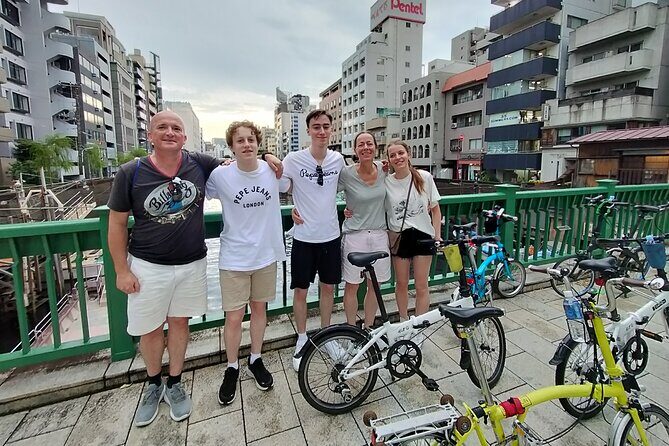
Here’s what the day looks like, stop by stop, and what each place is good for.
Stop 1: Sakura Bridge and Tokyo Skytree photo time
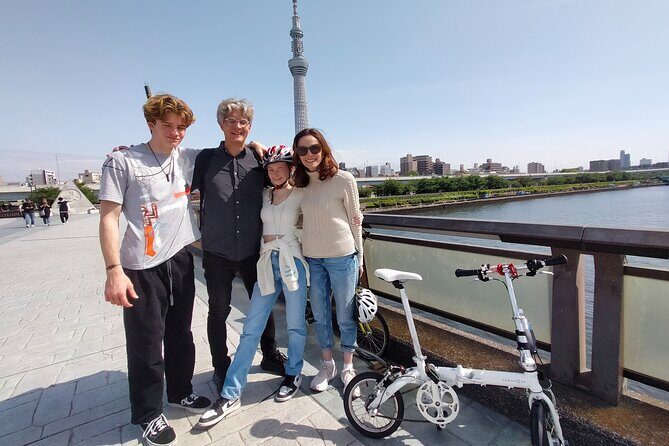
You start with Sakura Bridge, with a photo-friendly view of Tokyo Skytree. This is a classic early “OK, we’re really in Tokyo now” moment: bright skyline, good angles for pictures, and a quick reset before the city gets busy.
The stop is short (about 10 minutes), so think of it as orientation plus a few solid photos. If you care about getting the right angle, arrive ready, because there’s not a lot of hanging around time.
Stop 2: Edo Taito Traditional Crafts Center (craft museum)
Next is the Edo Taito Traditional Crafts Center (also called Edo Shitamachi Traditional Crafts Museum). This is where Tokyo slows down just enough to show you what local craftsmanship looks like in a museum setting.
With about 20 minutes here, it’s long enough to see what’s on display and read a few explanations, but not so long that you’ll feel stuck. If you like handmade details and cultural context, this stop helps balance the more modern parts of the route.
You can also read our reviews of more private tours in Tokyo
Stop 3: Senso-ji Temple and the temple-street scene
Then you head to Senso-ji Temple, one of Tokyo’s major temple sites. Expect the main area to feel like a living center: shops and snack stalls around the temple grounds, plus the gate and pagoda that make this place instantly recognizable.
Your time is about 20 minutes. That’s enough to walk around the outer areas, get a feel for the crowds, and sample the vibe if you want. What I like about this timing is that you’re not stuck for hours during peak tourist crush—your guide keeps things efficient.
Stop 4: Ryogoku Kokugikan, the sumo stadium view
A quick cycling moment brings you past Ryogoku Kokugikan, the sumo stadium. Even if you don’t catch a match, seeing the stadium from the outside gives you a sense of Tokyo’s sports culture beyond baseball and soccer.
It’s only about 5 minutes. The goal here is photos and context, not a deep dive. If sumo is a big interest for you, you’ll probably want to add extra time on your own later.
Stop 5: Yanagi Bridge and canal-side Tokyo
At Yanagi Bridge (Yanagibashi) you get canal views and a look at the old waterside atmosphere. The area is known for yakatabune—traditional party boats—and their docking spots.
This stop is about 10 minutes. It’s short, but it’s a nice palate cleanser between temple energy and shopping districts. You get water, older-style surroundings, and a different Tokyo pace.
Stop 6: Nihonbashi Bridge and the old waterways feel
Then comes Nihonbashi Bridge, a place for old-school Tokyo waterways and the town around them. This is one of those stops that works even if you’re not a museum-person, because the setting is visual and you can immediately spot why the bridge matters.
You spend about 20 minutes. It’s enough time to look down at the water, check out the surrounding streets, and get a few photos that don’t all look like the same big landmark angle.
Ginza: cycling past luxury storefronts on a main drag
From there you cycle through Ginza, known for luxury brand shopping (think high-end names like Louis Vuitton and Chanel). Riding here is surprisingly fun because you get motion and street-level perspective without walking every block.
This part is more about the atmosphere than a single stop. Expect more traffic and more visual stimulation. If you’re prone to information overload, focus on one thing: the shop windows, the street geometry, or the way the guide navigates the flow.
Stop 7: Imperial Palace grounds from outside
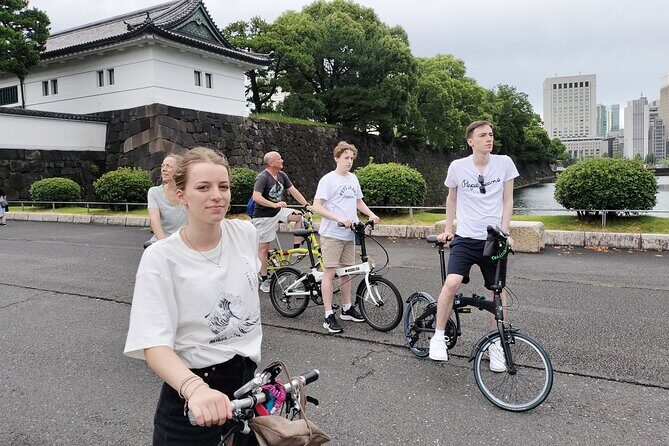
Next is the Imperial Palace, where you’re seeing the area from the outside. The palace sits on 115 hectares of land and connects to Edo-era history, including the former Edo castle and the Tokugawa shogunate’s governance center.
You have about 30 minutes here. This is a good time to slow down and simply watch the scene. Because you’re not going deep into buildings (you’re seeing the grounds), it works well as a calm break in the middle of the day.
Near the National Diet Building (government architecture pass)
After the palace, you cycle near the National Diet Building, which includes a House of Representatives and a House of Councilors. This is a “look at the architecture” stop more than a long visit.
The time here is limited because the route stays active. If you like civic buildings and how a country expresses power through design, it’s worth noticing.
Stop 8: Tokyo Tower and that classic skyline silhouette
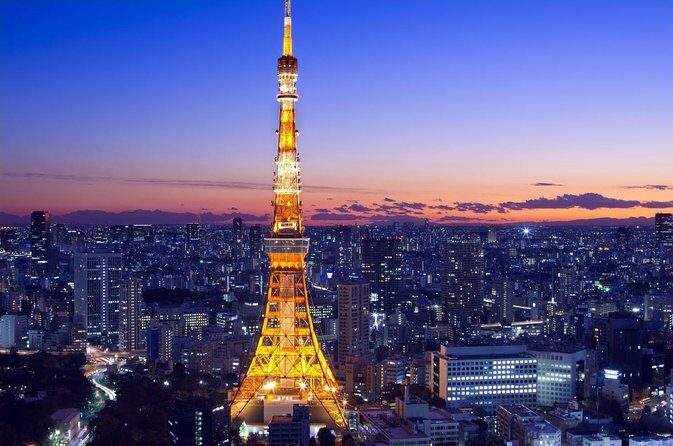
Then you hit Tokyo Tower. It’s 333 meters tall, opened in 1958 for broadcasting, and it’s still a popular sight for locals and visitors.
You get about 10 minutes, including cycling near it and under it. The fun part on a bike is that you experience it at street speed, not just from a distant platform. It feels like the tower is part of the city’s daily rhythm.
Stop 9: Jingu Gaien’s ginkgo-lined street walk-and-ride mood
Next is Jingu Gaien, known for its ginkgo tree-lined street, famous for yellow color in autumn. Even outside autumn, it still reads as a beautiful corridor with trees lining both sides.
You spend about 20 minutes here, cycling between the trees. This stop is good for anyone who likes “Tokyo texture”—the in-between moments where streets look designed for walking, even when you’re on a bike.
Roppongi night town riding segment
You cycle through Roppongi, often associated with a night-life vibe. This isn’t a long stop, but it changes the feeling of the tour: more lights, more energy, more city-as-stage.
If you’re the type who likes Tokyo after dark, this is a quick teaser. If you prefer quieter neighborhoods, it’s a brief taste rather than a long hangout.
Stop 10: Aoyama Street, fashion-forward city design
You then ride along Aoyama Street, one of the more fashionable central Tokyo corridors. The whole point is to see how that part of Tokyo looks and moves when you’re not just standing still.
You get about 20 minutes. It’s enough time to feel the neighborhood identity, and then your guide gets you moving again.
Stop 11: Takeshita Street and bike handling in a shopping lane
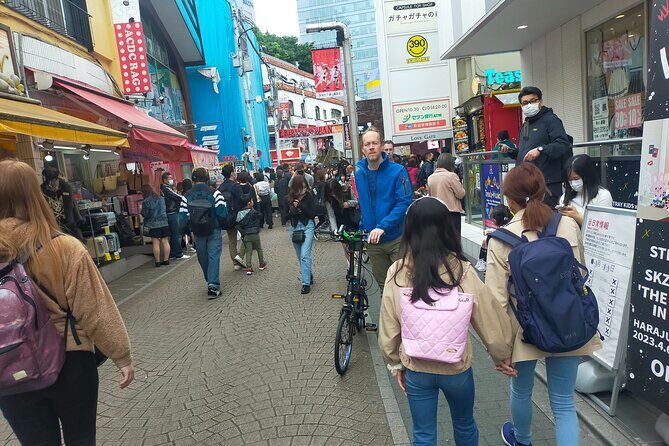
Next is Takeshita Street, which is famous for shopping intensity. One practical detail: you push bikes into a popular shopping mall area here, giving you a way to navigate the crowds without trying to pedal through the densest sections.
You have about 30 minutes. This is one of the more “stop-and-walk” parts of the day. If you’re shopping-focused, this is where your time can turn into a souvenir sprint.
Stop 12: Omotesando, luxury retail on a clean street
After Takeshita, you cycle through Omotesando, another high-street area with lots of well-known luxury shops. This part tends to feel more polished and design-forward compared to the louder shopping zones.
You spend about 10 minutes. It’s short but effective, like a quick visual contrast after the Takeshita crowds.
Stop 13: Meiji Jingu Shrine, park bikes and walk inside
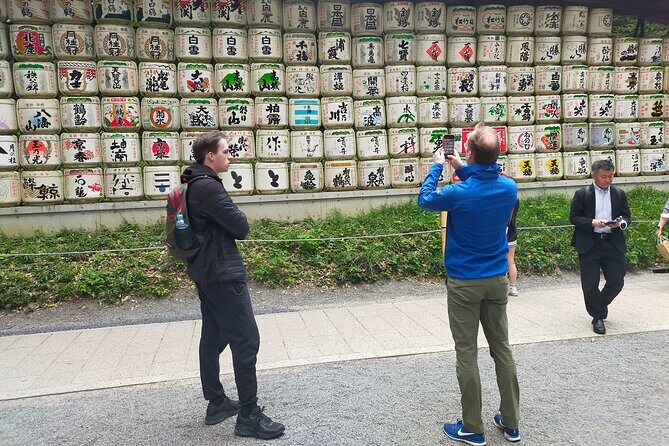
Then comes the biggest pause: Meiji Jingu Shrine. You park the bikes and walk inside, and you’re there for about 1 hour. The shrine is one of Japan’s biggest and was established in 1920, dedicated to the former Emperor.
The grounds include a lot of sake barrels dedicated in honor of the Shin spirit. Even if you don’t plan to read every sign, you’ll feel the shift: more space, more quiet, and a break from street noise.
This hour is also a good moment to pace yourself. If you’re biking for the view, this is where you’ll stop being in a “ride mode” and just enjoy Tokyo’s calmer spiritual side.
Stop 14: Shibuya Crossing and the ride’s big finale
Finally, you arrive at Shibuya Crossing, the zebra crossing known for constant motion. Your time is about 15 minutes, and the tour ends at Shibuya Station near the crossing.
This is a great finish because it’s instantly recognizable. You get one last photo, maybe a quick look around the station area, and then you’re positioned well for the rest of your day.
Safety, pace, and comfort: what to expect from the guide
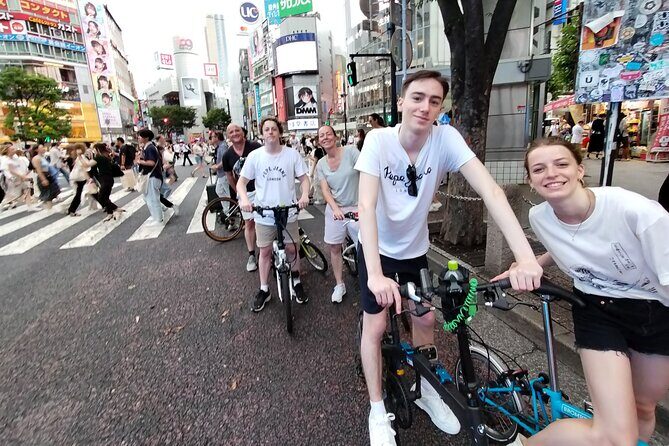
The strongest praise in the experience is the sense of safety and control. One guide, Take, is specifically credited with making sure the group stayed safe the whole time. That matters in Tokyo because some areas can get chaotic fast—especially near major crossings and shopping districts.
Also, the experience feels efficient. The day is planned so you get to landmarks without spending long stretches guessing routes. If you like photography, you’ll appreciate the early and late photo-ready spots: Tokyo Skytree from Sakura Bridge and the final showstopper at Shibuya Crossing.
About length: the stated duration is about 5 to 6 hours, and that includes multiple short stops plus a 1-hour shrine segment. One person who did it felt that around 3 hours might be the ideal length, which is a useful reminder. If you’re the type who hates long stretches, prepare for a full morning-to-midday effort anyway, and don’t assume every stop will feel equally short.
Value check: $130.07 for a private, bike-based Tokyo loop
At $130.07 per person for a private half-day tour, the price lands in the “worth it if you want time savings” category. You’re paying for more than a bike: you’re buying a route, a guide who knows how to move through Tokyo, helmets, and bottled water.
If you were to do this on your own, you’d spend money on transit, time on navigation, and energy on figuring out the best ways to connect neighborhoods. The bike changes the equation: it gets you from one side of the city to another with less friction than walking.
Group discounts exist, and a private format means you’re not sharing the ride with strangers. If you’re traveling with a friend or family group and you all want to see a lot without sprinting, this price usually makes sense.
One more value point: the tour ends in Shibuya. That can reduce the cost of repositioning later, since Shibuya is a major transport hub.
Who this tour fits best (and who should think twice)
This experience is a strong match if you want:
- A high-hit-rate Tokyo day with multiple neighborhoods
- Cycling-friendly sightseeing with short photo stops
- A guide focused on safe movement and practical city routing
- A mix of classic sights (Senso-ji, Imperial Palace area, Meiji Jingu) and fashion/shopping Tokyo (Ginza, Aoyama, Omotesando, Takeshita)
It may be less ideal if:
- You dislike riding in busy streets for extended periods (even with a careful guide)
- You have mobility limits that make biking or getting on/off bikes tough
- You’re expecting a mostly walking day—there’s a lot of cycling, with a few walk segments
Quick practical tips before you go
- Wear shoes you trust for walking. You’ll park bikes and walk inside Meiji Jingu Shrine, and you’ll handle pushing bikes through shopping areas.
- Bring a light layer. Tokyo weather can flip through the day, and you’ll be outside for most of it.
- Plan around crowds at big draw sites like Senso-ji and Shibuya. Your guide will manage the flow, but you still need patience.
Also, the experience depends on good weather. If it’s canceled due to poor conditions, you’ll be offered a different date or a full refund, so keep an eye on the forecast.
Should you book this private half-day Grand Bike Tour?
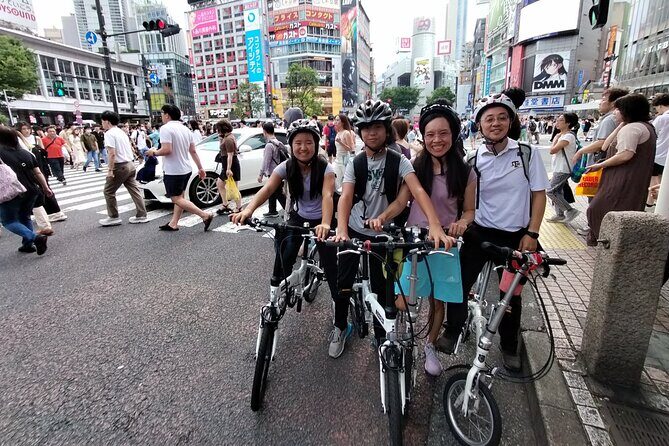
If your goal is to see a lot of Tokyo without turning it into a stressful puzzle, I’d book it. The biggest reasons are the safe, guided bike experience and the way the route connects real neighborhoods—temple areas, bridges, government buildings, and shopping streets—into one workable day.
I’d especially recommend it if you’re short on time and you want to end in Shibuya, ready to continue exploring on transit. If you’re more of a slow-and-steady walker, or you dread cycling through busier streets, you might feel better choosing a sightseeing plan with fewer bike segments.
FAQ
How long is the private half-day bike tour in Tokyo?
It runs about 5 to 6 hours, with multiple short sightseeing stops and one longer stop at Meiji Jingu Shrine.
What’s included in the price?
You get a bicycle, bottled water, and helmets. Personal expenses and private transportation are not included.
Where does the tour start and where does it end?
It starts at Tokyo Backstreets Bike Tour in Sumida City (Higashimukōjima) and ends at Shibuya Station near the Shibuya zebra crossing.
What time does the tour begin?
The start time is 11:30 am.
What kind of bike is used and who is it suitable for?
You’ll ride folding bikes with 14–20 inch wheels, suitable for people between 140 and 180 cm tall. If you’re over 180 cm, you should inform the provider in advance.
Is this tour private?
Yes. It’s a private tour, so only your group participates.
What fitness level do I need?
The tour calls for a moderate physical fitness level.
Does the tour run in bad weather?
It depends on good weather. If it’s canceled due to poor weather, you’ll be offered a different date or a full refund.
![[1 Group Only] Tokyo Shinjuku Food Tour for Family - Price and value: what you pay for (and what you don’t)](https://images.thejapantraveler.com/wp-content/uploads/1-group-only-tokyo-shinjuku-food-tour-for-family.jpg)