REVIEW · KYOTO
Private Japanese Sound Bath in Kyoto
Book on Viator →Operated by Miracle.Sound.Vibration · Bookable on Viator
Quiet calm, right in Kyoto. This is a fully private Japanese sound bath where you lie down while the Singing Ring and Japanese-crafted vibrations do the work. I love the sense of ceremony and craftsmanship in every sound, and I also love that it’s built for real relaxation, not performance. One thing to consider: you’ll spend the whole time lying still, so it’s not for you if you’re craving an active, sightseeing-style experience.
My session with the instructor, Junichiro, felt warm and grounded. You start with a heated mat plus an eye mask and blanket, then he guides the sound over you—first played near you, and later placed so you can feel the vibration through your body. At about 1 hour 20 minutes total, it’s a tidy reset that fits well into a day of temple-hopping—if you’re okay being quiet for a bit.
In This Review
- Key things to know before you book in Kyoto
- Why Kyoto’s Japanese sound bath feels different from the usual
- Finding Little Granmy Kyoto without stress
- What happens during your 60-minute sound bath (and how it feels)
- 1) Settle in on the heated mat
- 2) Sound near you first
- 3) Instruments placed so you can feel vibrations
- 4) The session ends and you leave reset
- Price and value: is $97.73 worth it?
- Who this suits best (and who should skip it)
- Pairing it with your Kyoto day plan
- Should you book this private sound bath in Kyoto?
- FAQ
- How long is the private Japanese sound bath session?
- Is this sound bath private or shared with other guests?
- What instrument is used during the session?
- Where do I meet the instructor in Kyoto?
- If I choose the Traditional Tatami Room, is it at the same location?
- Can more than 2 people join the session?
- What is the cancellation policy if plans change?
Key things to know before you book in Kyoto
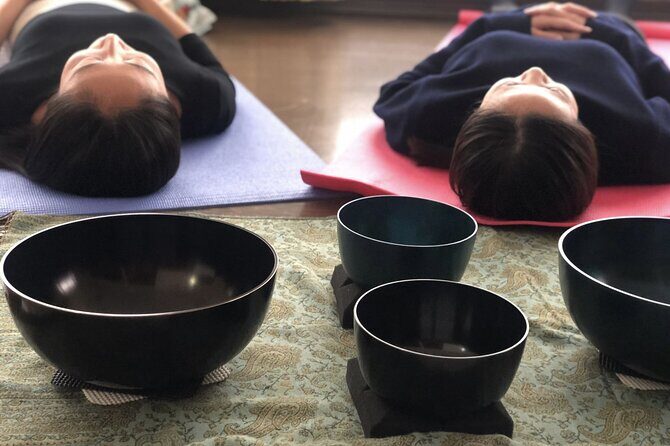
- Singing Ring focus: The star instrument is the Singing Ring, a Japanese harmonic tool made by artisans, not a generic “sound bowl” setup.
- Truly private time: Up to 2 people in the same slot, and once confirmed, no one else gets added to your session.
- You’ll feel it, not just hear it: The guide plays near you and then places instruments so you can experience vibrations on your body.
- Tatami room is a separate venue: The Traditional Tatami Room option is elsewhere, and you should follow the guidance message you get after booking.
- A guide who explains calmly: Reviews highlight Junichiro’s professionalism and clear explanation, which helps if it’s your first sound bath.
Why Kyoto’s Japanese sound bath feels different from the usual
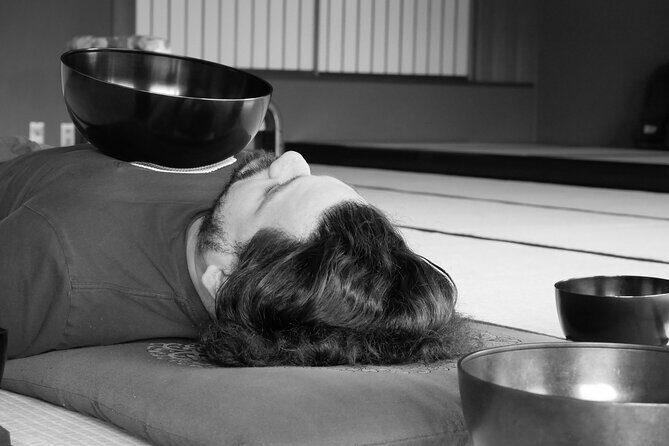
Kyoto has plenty of “quiet experiences,” but a sound bath is its own category. You don’t walk anywhere dramatic or chase a view. Instead, you lie down and let sound take over your nervous system—like a Zen practice, but with sound you can physically sense.
What makes this one feel especially Kyoto-meets-Japan is the instrument choice. The session uses the Singing Ring, described as a harmonic instrument crafted one by one by Japanese artisans. That matters because it shifts the whole experience from generic background relaxation to a more meditative, almost tactile sound world. It’s less about trying to figure out what you’re hearing and more about receiving it.
I also like that it’s private. In many wellness sessions, you’re sharing the room and the silence. Here, you’re away from other people during your time slot, so the session is easier to treat like your own reset button.
You can also read our reviews of more private tours in Kyoto



Finding Little Granmy Kyoto without stress
Your meeting point is listed at Little Granmy 京都 (Shimogyo Ward, Koinarichō). It ends back there too. That’s straightforward on paper, but Kyoto can be tricky in real life—small streets, confusing apartment-style entrances, and the occasional outdated map pin.
A practical tip: in at least some sessions, Junichiro has met people at a nearby family mart so you don’t get lost. That’s a great “Kyoto reality” workaround. If you’re worried, don’t pretend you don’t need help—message or wait for the guide’s guidance so you can start calm instead of flustered.
One more thing that can trip people up: the Traditional Tatami Room is at a separate venue. The info warns that Google Maps can’t set the location from the option, and you should follow the guidance message you receive after booking. In other words, don’t rely on your first click—use the instructions you’re sent.
What happens during your 60-minute sound bath (and how it feels)
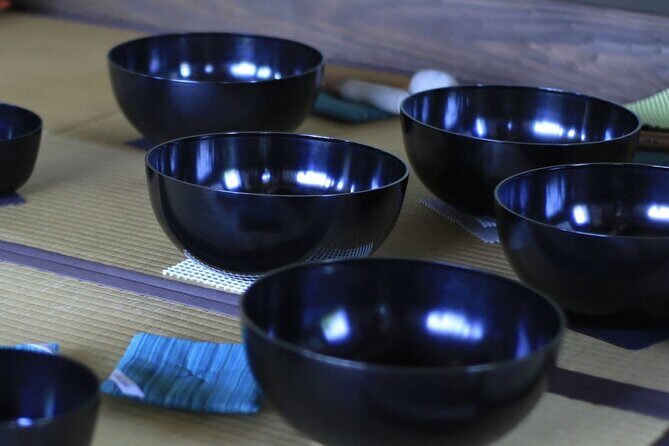
The headline is simple: lie down and let the sound wash over you. But the experience has a clear flow, and that flow is part of why people leave feeling calmer and clearer.
1) Settle in on the heated mat
You arrive, get set up, and lie down on a heated mat. You’ll also have an eye mask and blanket. That combination does two things right away: it blocks visual distractions and it adds comfort so your body can stop guarding itself. Even if you’ve never tried sound therapy before, that setup helps your brain shift gears quickly.
2) Sound near you first
Junichiro starts by playing next to you. This phase matters because it lets you understand the rhythm and vibration without being overwhelmed. You can listen and breathe without feeling like you’re being poked or moved around.






3) Instruments placed so you can feel vibrations
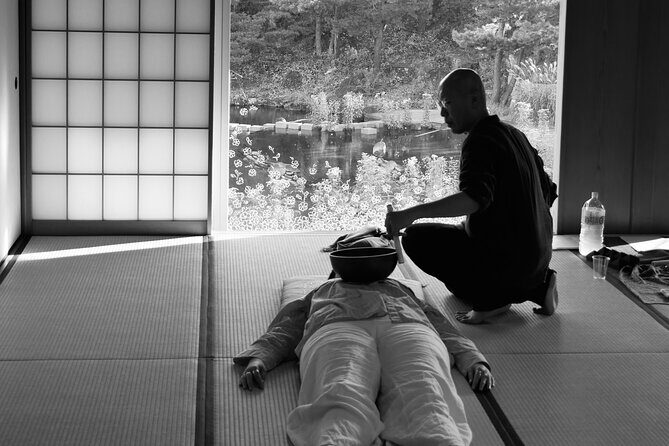
Then comes the part many people remember. The guide places the bowls so you feel the vibrations through your body. Reviews describe sensations like calming vibrations when copper bowls are placed on the body, and that hands-on placement seems to be a core technique here.
This isn’t about “mystical” claims. It’s basic human physics: when sound creates vibration, your body can pick it up in ways you don’t get from headphones. Lying still makes your body more receptive, and that’s exactly what this session is asking you to do.
4) The session ends and you leave reset
Your session itself lasts 60 minutes, with the overall experience listed as about 1 hour 20 minutes. That extra time is typically for meeting, setup, and settling. I like that it doesn’t eat an entire afternoon—Kyoto days are busy, and you want your recovery time to actually happen, not turn into a rushed stop.
Price and value: is $97.73 worth it?
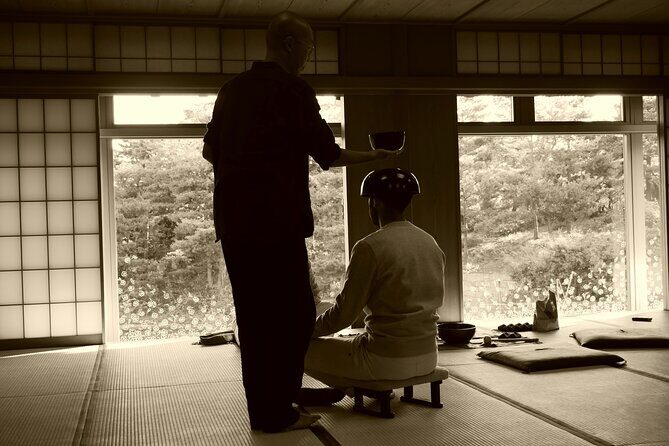
$97.73 is not a cheap add-on. So the real question is what you’re paying for, beyond the instrument and the relaxation.
Here’s the value math that makes sense for this experience:
- You’re paying for privacy. A fully private session (no added guests) is rare at this price point in Kyoto, especially for a guided, hands-on vibration experience.
- You’re paying for Japanese craftsmanship in the instrument. The Singing Ring is highlighted as artisan-made, one by one. Even if you don’t know the details, the focus on a specific traditional instrument signals this isn’t a generic “sound bath package.”
- You’re paying for a guide, not just a recording. Reviews mention Junichiro’s professionalism, teaching approach, and explanations. That matters because first-timers often relax faster when they understand what’s happening.
- You’re buying time-efficient recovery. One hour of deep quiet can feel like a bigger reset than a longer but distracted activity.
If you’re the kind of traveler who goes for the “authentic craft” versions of things—rather than the cheapest option—this fits. If you’re on a tight budget or you strongly prefer active sightseeing, you might feel the cost more than the calm.
Who this suits best (and who should skip it)
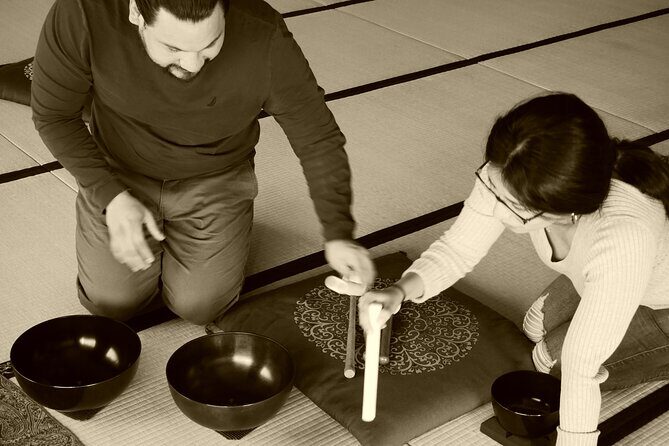
This experience is especially good for:
- First-timers who want relaxation without having to figure out what to do.
- People who like a guided reset and appreciate someone explaining the process clearly.
- Anyone who wants a break from Kyoto’s nonstop walking and crowds.
- Families with teens who can handle quiet time—one review describes doing it with a 16-year-old who ended up enjoying it.
It may not be for you if:
- You hate lying still or get restless when you’re told to relax.
- You want a social, chatty class.
- You’re looking for a “see it and take photos” experience. This is about feeling, not filming.
Pairing it with your Kyoto day plan
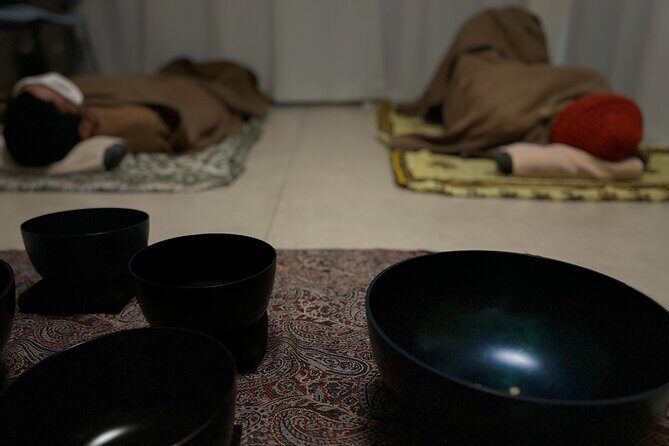
Sound bath sessions work best when your body isn’t already overloaded with motion and stress. If you’ve spent the morning climbing steps and navigating transit, this can be a smart afternoon reset. If you go right before a big night out, you’ll still feel calmer—but you might want a little breathing space afterward, so you don’t rush into more stimulation immediately.
Also, treat it like a slow activity. This is one of those experiences where you’ll get more out of it if you don’t multitask. Turn your phone off, accept that you’re in “quiet mode,” and let the sound do the heavy lifting.
If you’re choosing between the main setup and the Traditional Tatami Room, consider what you want from the setting. The tatami option is at a separate venue, and the logistics note matters, but the experience is still described as an add-on you can request. If you’re the type who likes atmosphere, it’s worth asking about.
Should you book this private sound bath in Kyoto?
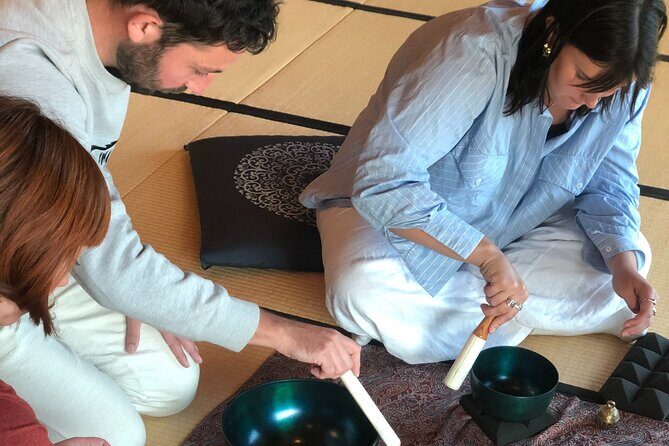
If you want a calm, Japanese-craft-focused experience that’s private, guided, and designed for true rest, I’d book it. The biggest reasons are the ones that show up consistently: the session feels deeply relaxing, the guide’s presence helps you settle in fast, and the vibrations placed on your body are a major part of why it lands.
Before you confirm, do two things:
- Make sure you can follow the meeting instructions you receive, especially if you opt for the Traditional Tatami Room at the separate location.
- Pick a time when you won’t rush out the door. The whole point is letting your body downshift.
If your travel style is quiet, reflective, and craft-minded, this is a strong match.
FAQ
How long is the private Japanese sound bath session?
The sound bath session lasts 60 minutes, with the full experience taking about 1 hour 20 minutes.
Is this sound bath private or shared with other guests?
It’s fully private. Only your group participates, and up to 2 guests per session are allowed. Once your booking is confirmed, no other guests are added to your time slot.
What instrument is used during the session?
The session uses the Singing Ring, a special harmonic instrument crafted by Japanese artisans.
Where do I meet the instructor in Kyoto?
You start at Little Granmy 京都, 600-8208 Kyoto, Shimogyo Ward, Koinarichō, 85-10-203. The activity ends back at the same meeting point.
If I choose the Traditional Tatami Room, is it at the same location?
No. The Traditional Tatami Room is at a separate venue. A Google Maps link may be provided but can’t be set properly on the map, so you should check the guidance message after booking.
Can more than 2 people join the session?
The standard session supports up to 2 guests. The option mentions they may be able to accommodate up to 3 people in the optional Traditional Tatami Room, but you’d need to contact them after booking to ask.
What is the cancellation policy if plans change?
You can cancel for free up to 24 hours in advance for a full refund. If you cancel less than 24 hours before the start time, the amount paid will not be refunded.