REVIEW · TOKYO
Private Workshop for Making Paper Last 1,000 years in Ueno
Book on GetYourGuide →Operated by Washi labo TOKYO · Bookable on GetYourGuide
Two hours of tree-to-paper magic in Ueno. This private washi workshop at Washi labo TOKYO is hands-on from start to finish, and you don’t just watch. You learn the full craft process, then make multiple finished paper items you can actually use.
I love two things most: you work the real sequence of traditional Japanese papermaking, from bark peeling to fiber beating, and then you form your own sheets using a paper-making mold and deckle. I also like the pause built into the class—while your paper dries, you get kozo leaf Japanese paper tea with local Japanese sweets, which turns a messy craft hour into something calm and cozy.
One consideration: there’s a cat in the workshop (the mascot cat is Kami-chan), so if you have allergies, tell the team ahead of time.
In This Review
- Key highlights worth your attention
- Ueno Washi Workshop at Washi labo TOKYO: Small, Private, and Practical
- What You’ll Actually Make: 2 Postcards, Rakusui, and A5
- From Tree to Fibers: Hyouhitor and Dakai in Plain Language
- Mold, Deckle, and Sifting: Where Your Sheet Becomes Even
- Tea Break Timing: Kozo Leaf Japanese Paper Tea and Local Sweets
- Clothes, Tools, and the Cat You’ll Want to Meet (From a Distance)
- Price and Value: Is $130 Worth 150 Minutes and Four Outputs?
- Who This Workshop Suits Best (And Who Might Want a Different Plan)
- Ueno Logistics Tips: How to Arrive Without Stress
- Should You Book This Private Washi Workshop in Ueno?
- FAQ
- FAQ
- How long is the Ueno washi workshop?
- What do I make during the class?
- Is this workshop private or shared?
- What language is the instructor teaching in?
- Are materials included?
- Is tea or coffee included?
- Are work clothes provided?
- Is the workshop suitable if I have allergies?
- How much does it cost?
- What’s the cancellation and payment policy?
Key highlights worth your attention
- Full washi process in one sitting, including Hyouhitor (outer bark peeling) and Dakai (beating tree fibers)
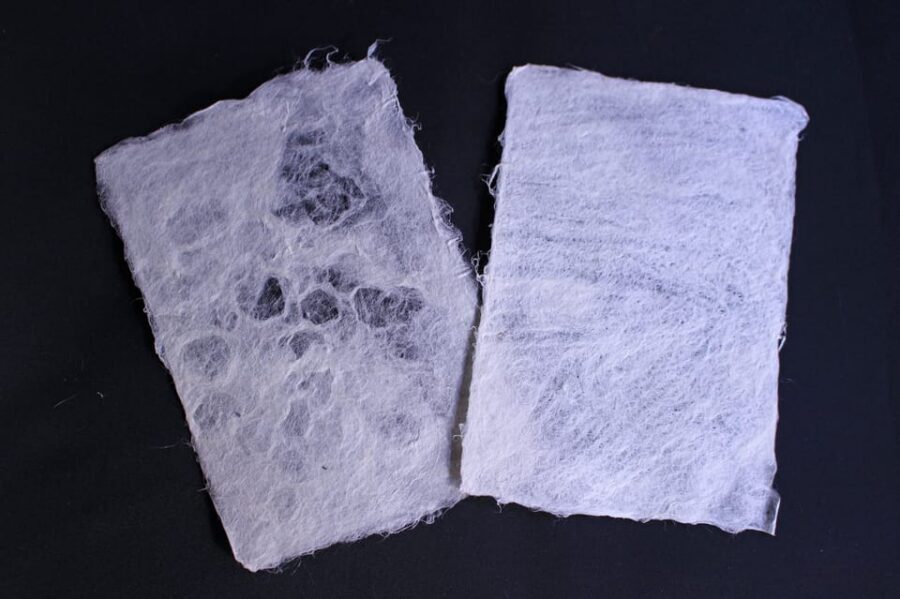
- You leave with four paper products: 2 postcards (two designs), Rakusui paper, and an A5 sheet
- Hands-on sheet making with a mold, deckle, and sifting for an even, flat finish
- Kozo leaf tea break while your paper dries, plus local sweets to match the moment
- A small, focused private setup, with work clothes provided in the class experience
- Cozy workshop energy with mascot cat Kami-chan (and a clear allergy heads-up)
Ueno Washi Workshop at Washi labo TOKYO: Small, Private, and Practical
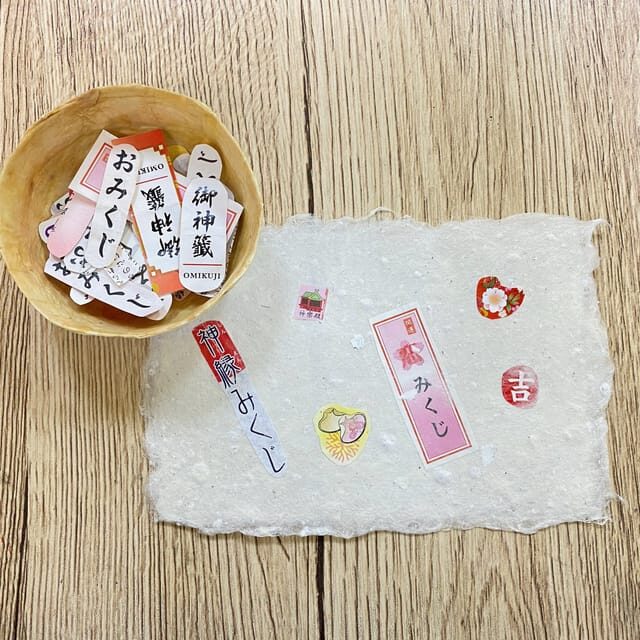
If you’ve ever tried to learn Japanese papermaking from videos, you’ll know the hard part isn’t the words. It’s the feel—how fibers behave in water, how evenly you spread, and how quickly your sheet starts to look “right” once the timing clicks.
That’s why I like this workshop’s format. It’s a private group experience in Ueno with an instructor who works in Japanese and English, and the class is built so you’re not stuck as a spectator. Over 150 minutes, you’ll move through the craft step-by-step and end up with finished items, not just paper samples.
The “small and compact” vibe matters too. You can ask questions without feeling rushed, and the instructor can correct details when your technique needs it. In a craft this tactile, that kind of attention is the difference between okay and wow.
You can also read our reviews of more private tours in Tokyo



What You’ll Actually Make: 2 Postcards, Rakusui, and A5
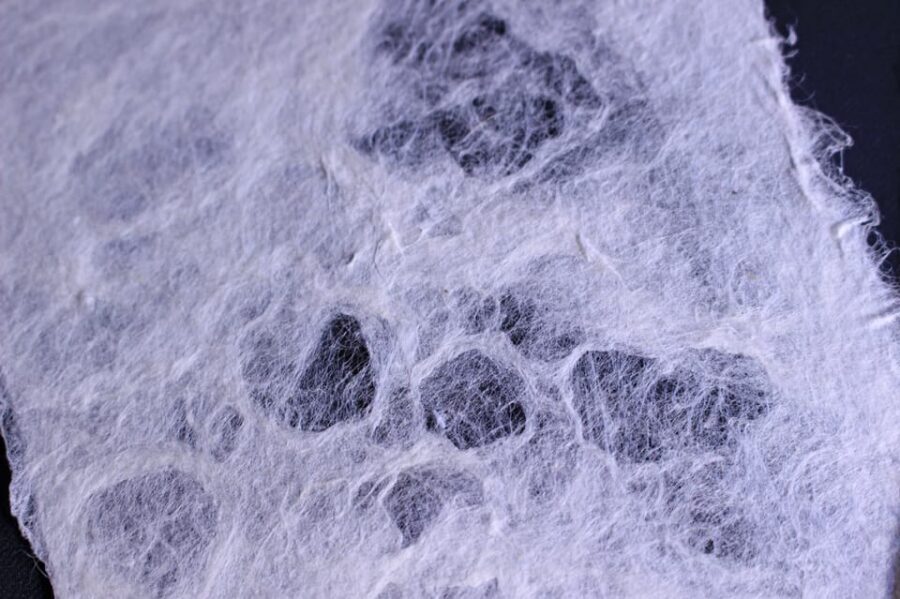
This isn’t a one-project class. It’s a four-output workshop, and that’s a big part of the value.
You’ll create:
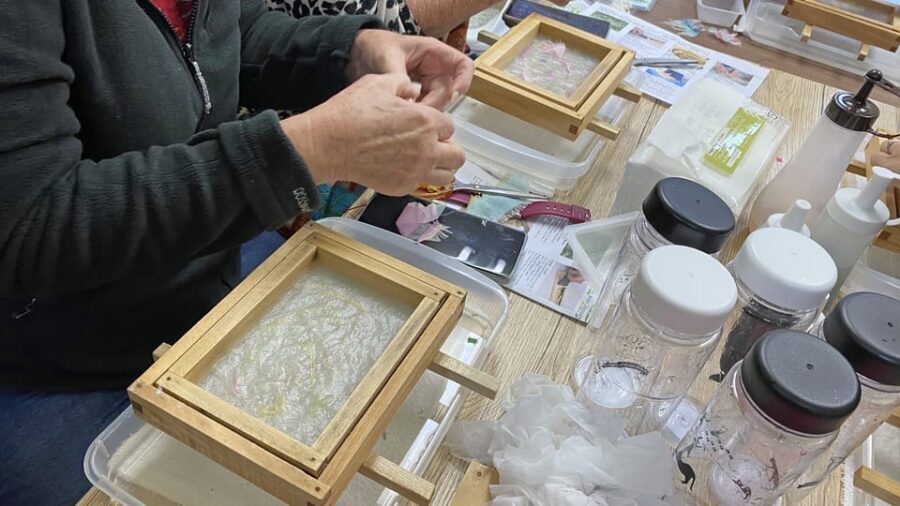
- Two postcard designs (your own design work, not pre-printed craft activity)
- Rakusui paper, a specific type of Japanese paper product you’ll make during the process
- An A5 paper sheet, made as a finished piece you can keep, gift, or use for something simple like notes or a backing sheet for small crafts
Why this matters: when you make multiple items, you get more “practice time” with how fibers pull together and how the sheet forms. You also get a mix of sizes/styles, so you can see what changes when the paper area changes.
And because the workshop guides you through the full workflow—from raw tree material to deckled sheet to drying time—you’ll understand what’s happening at each stage. That makes the finished paper feel more personal, and it makes the results more satisfying.
From Tree to Fibers: Hyouhitor and Dakai in Plain Language
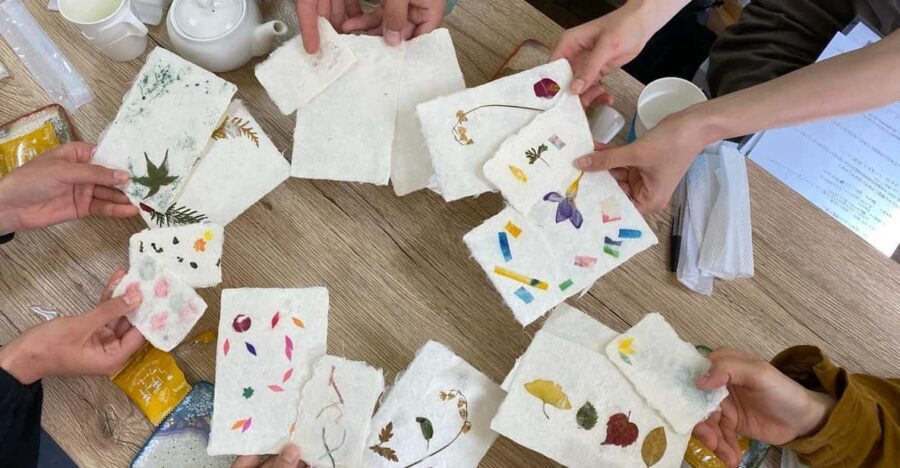
The class starts with a general explanation, then gets physical. You’ll experience the craft steps that people often summarize in one line online.
In this workshop, you’ll learn and do:
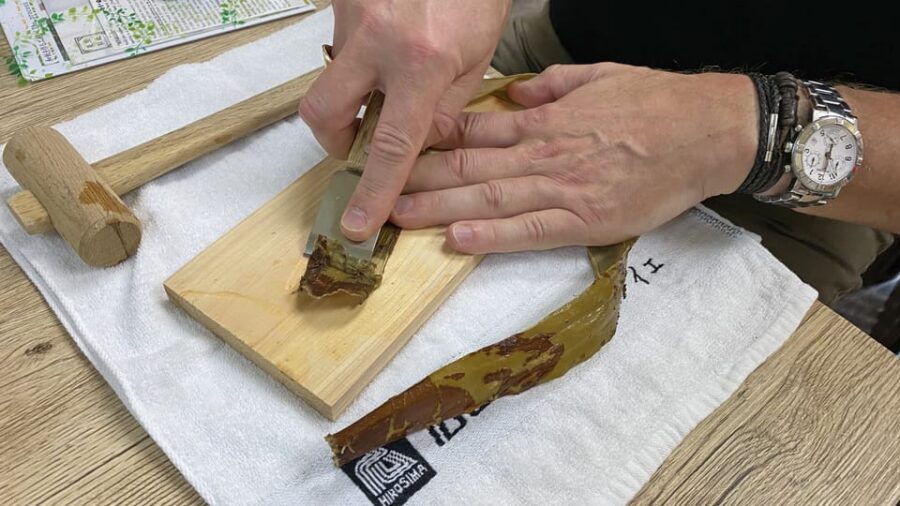
- Hyouhitor: peeling off the outer bark
- Dakai: beating the tree fibers
Even if you’ve never done anything like this, the workflow makes sense. First you work on preparing the material, then you convert it into usable fibers, then you turn those fibers into a sheet.
A lot of papermaking lessons stop at the sheet stage. Here, the class goes earlier. That’s useful because it helps you understand why washi has a different feel than modern pulp paper. You’re seeing the effort that creates the texture and the character.
Also, getting hands-on with the early steps helps you connect with the craft rhythm. By the time you’re shaping the sheet, you already know what the fibers went through to become workable.
Mold, Deckle, and Sifting: Where Your Sheet Becomes Even
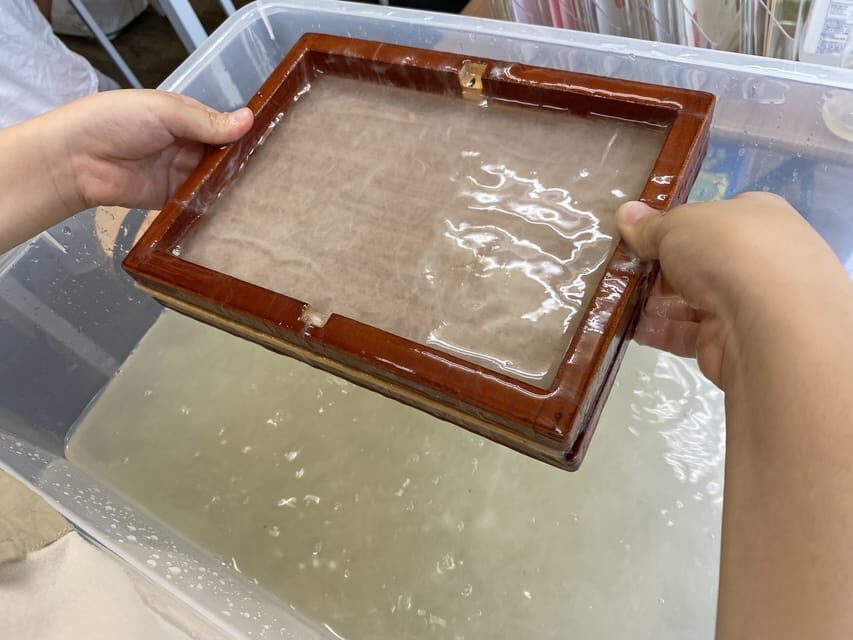
Once the fibers are ready, you move into the classic papermaking tools phase: pouring, shaping, and thinning the layer so it becomes flat and even.
Here’s what you’ll do in this workshop:
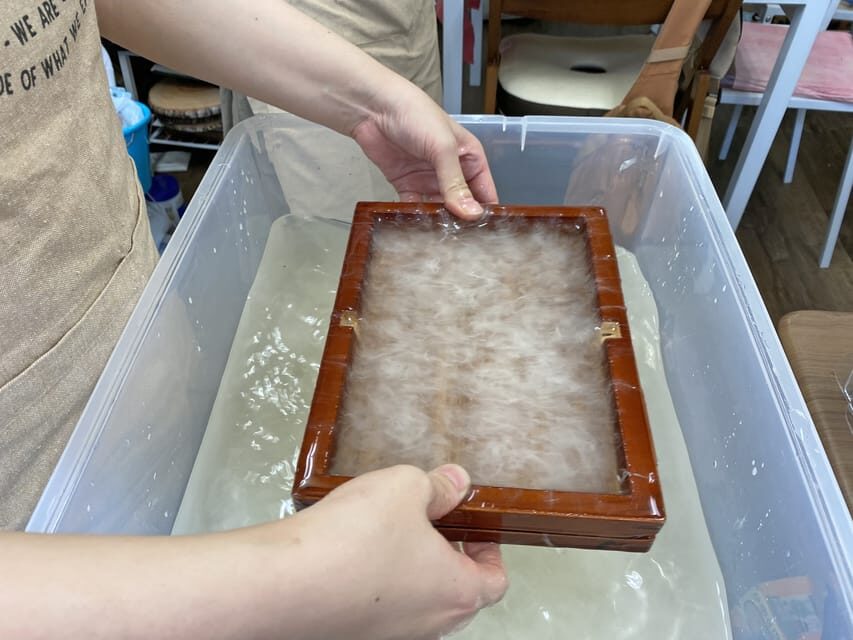
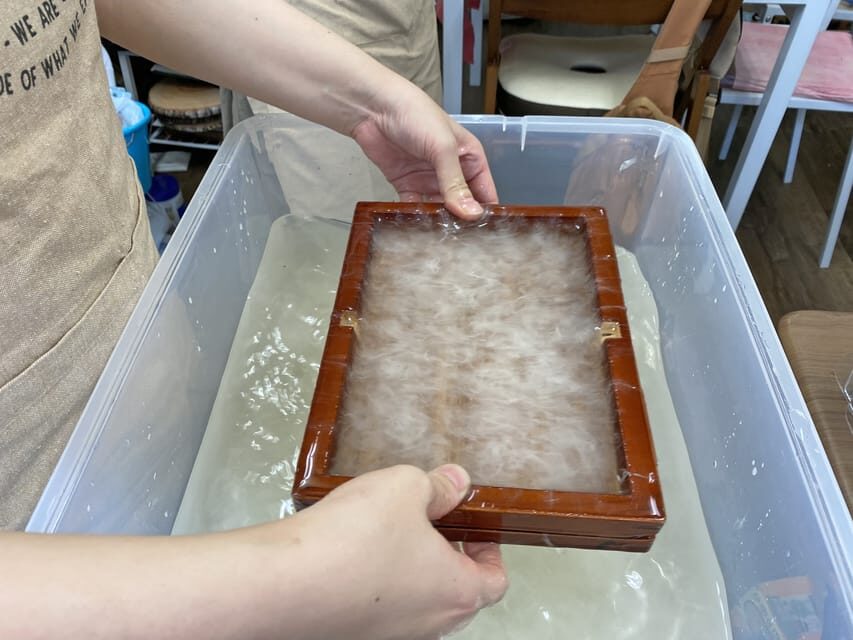
- Pour the raw material into a paper-making mold and deckle
- Use deckle to define the sheet edges and keep the form tidy
- Sift the solution so the fibers distribute evenly
- Watch your sheet start to look like actual washi instead of a bowl of fibers
This is the moment where most people get surprised. It looks like chaos for a while. Water, fibers, motion. Then suddenly it becomes a sheet with a clean outline.
That “how it comes together” part is one reason the workshop duration works. 150 minutes is long enough to do each step without feeling like you’re being shuffled. You get time to make decisions, not just follow a fast demo.
One practical point: sheet-making can be a little messy, and your focus needs to stay on even distribution. If you’re someone who likes clearly defined results, this will feel rewarding. You can see how small differences show up in the finished paper.
Tea Break Timing: Kozo Leaf Japanese Paper Tea and Local Sweets
While your paper dries, you’re not left sitting around. The workshop includes an intentional break.
You’ll be served an original Japanese paper tea made from Kozo leaves—the same kind of plant matter connected to papermaking. Alongside that tea, you’ll get local Japanese sweets sourced from a beloved shop.
This matters more than it sounds. Papermaking involves constant wet-to-dry transitions. Drying time is the pause where your brain usually switches off. Here, the tea and sweets give that pause a purpose: you can slow down and let the craft reset your attention.
And because the tea is tied to the kozo material used for paper, it doesn’t feel random. It’s part of the same story: plant to paper, then plant to a drink that fits the theme.
If you’re a tea person, this is one of the highlights. If you’re not, the break is still a nice way to recover from the physical parts of the class.
A few more Tokyo tours and experiences worth a look



Clothes, Tools, and the Cat You’ll Want to Meet (From a Distance)
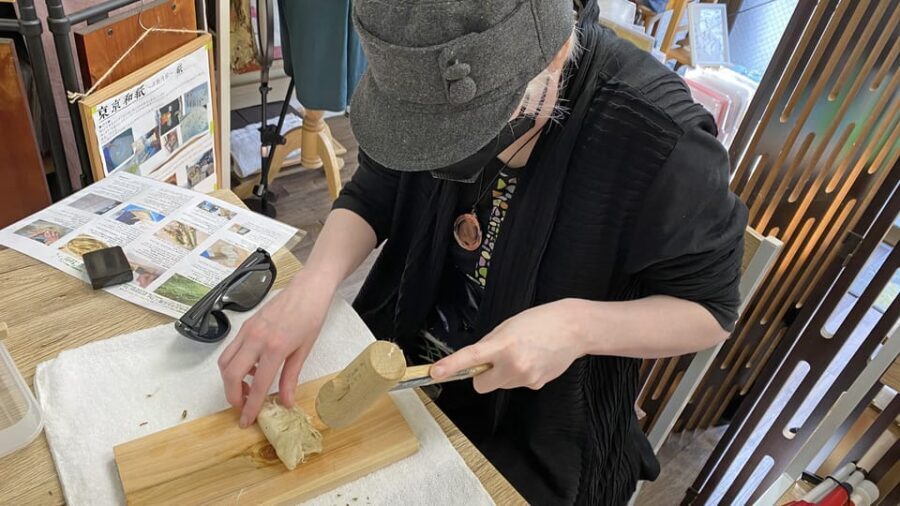
The workshop experience is set up to be practical. Work clothes are provided, so you can focus on the papermaking instead of worrying about ruining your outfit.
Another practical detail: there’s a cat in the workshop, and the mascot is Kami-chan. The team asks you to inform them if you have allergies, which is the right move. If you’re not allergic, it adds a relaxed, homey feel to the space, and it makes the workshop feel less like a factory and more like a small craft studio.
If you do have allergies, don’t “tough it out.” Contact the team in advance so they can plan for you.
Price and Value: Is $130 Worth 150 Minutes and Four Outputs?
At $130 per person for 150 minutes, this workshop isn’t the cheapest thing you can do in Tokyo. But it’s also not priced like a generic activity.
Here’s why it feels fair:
- You’re making four outputs: two postcard designs plus Rakusui paper plus an A5 sheet
- You get the full process, including early steps like Hyouhitor and Dakai, not just sheet shaping
- Materials are included, and you’re supported by a friendly instructor in Japanese and English
- You get a tea break with kozo leaf Japanese paper tea and local sweets
If you compare it to paying for finished paper alone, this class also gives you something intangible: you understand why the paper behaves the way it does. That knowledge changes the way you look at washi in shops after the workshop. You stop seeing it as just decorative paper and start seeing it as a material produced through specific steps.
Private workshops also usually cost more, but the payoff is time on task and attention to detail. If you want a calm, focused craft experience, this one is priced like it’s designed for that.
Who This Workshop Suits Best (And Who Might Want a Different Plan)
This is a strong fit if you:
- Want a hands-on cultural activity in Tokyo that feels small and personal
- Like making usable items, not souvenirs you’ll forget in a drawer
- Want to learn the paper process from raw fiber steps, not only the final sheet stage
- Prefer English support alongside Japanese, since the instructor teaches in both languages
It might be less ideal if:
- You’re sensitive to cats and can’t guarantee comfort around a cat in the workspace
- You want something with lots of walking and sightseeing rather than a studio-style craft session
- You’re short on time and want a quick taster (this one is built around learning, not rushing)
Also, if you enjoy tea culture and plant-to-craft connections, you’ll likely appreciate the kozo leaf tea component.
Ueno Logistics Tips: How to Arrive Without Stress
Ueno is convenient, but finding the exact studio can take a little effort. One reason is simple: metro disruptions and station-to-studio walking can throw off your timing.
My practical advice:
- Give yourself extra buffer time to reach the nearest station and locate the workshop entrance
- Double-check directions before you head out
- If you have dietary restrictions or allergy concerns, flag them before the session begins, especially because the workshop mentions the presence of a cat
Since the instructor is there for a full learning session, arriving on time helps you experience every step instead of feeling rushed during the first explanation.
Should You Book This Private Washi Workshop in Ueno?
I’d book it if you want an activity that turns “Japanese tradition” into a skill you can feel in your hands. The workshop is structured around real papermaking steps—Hyouhitor, Dakai, then mold-and-deckle sheet formation—and you leave with two postcard designs plus Rakusui paper plus an A5 sheet. That’s not just a craft lesson. It’s a take-home result.
If you’re allergy-sensitive, confirm your situation about the workshop cat first. If that’s fine, this is the kind of class that sticks with you because you didn’t just learn about washi—you made it, watched it dry, and connected it to kozo leaf tea and sweets along the way.
FAQ
FAQ
How long is the Ueno washi workshop?
The workshop lasts 150 minutes.
What do I make during the class?
You’ll make two postcard designs, Rakusui paper, and an A5 paper sheet.
Is this workshop private or shared?
It’s a private group workshop.
What language is the instructor teaching in?
The instructor teaches in Japanese and English.
Are materials included?
Yes. Required materials for the workshop are included.
Is tea or coffee included?
Yes. Coffee or tea is included, and the workshop also offers Japanese paper tea made from kozo leaves along with local Japanese sweets.
Are work clothes provided?
Work clothes are provided.
Is the workshop suitable if I have allergies?
There is a cat in the workshop, so you should inform the team if you have any allergies.
How much does it cost?
The price is $130 per person.
What’s the cancellation and payment policy?
Free cancellation is available up to 24 hours in advance for a full refund, and you can reserve now and pay later.