REVIEW · KYOTO
See What You Can’t See by Day — Explore Kyoto at Night by E-Bike
Book on Viator →Operated by Discovery Bicycle Tours Okinawa / e-CHARIty Naha · Bookable on Viator
Kyoto at night feels made for two wheels. This e-bike ride strings together temple lighting, lantern-lit streets, and calm waterways into a low-stress way to see Kyoto after dark. I also like that the pacing works for lots of people because the ride is built around an easy-to-handle e-bike and short photo-and-walk moments.
The one thing to watch is that the tour requires good weather, and you’ll still be balancing on a bike in the dark for the full ~3 hours.
In This Review
- Key highlights you’ll actually notice
- Why Kyoto at Night Works So Well on an E-Bike
- Meeting at Thousand Kyoto and Getting Ready in Minutes
- Stop 1: Old Streets and Photo Moments Near Seikouin
- Stop 2: Nishi Hongan-ji and the Weight of World-Heritage Architecture
- Stop 3: Shirakawa Canal, Chaya-Mati Vibes, and Seasonal Plant Clues
- Stop 4: Shomen-dori Street and the Nintendo Headquarters Moment
- Stops 5–7: Lake Biwa Canal Segments and Nanzen-ji’s Gate Presence
- Stop 8: Heian Shrine’s Torii and the Capital-Transfer Story
- Stop 9: Hokodencho and the Kamo River Foot Cooling Break
- How the Whole 3-Hour Ride Feels as One Continuous Evening
- Price and Value: What $117.28 Buys You
- Who Should Book This Night E-Bike Tour
- Should You Book This Kyoto Night E-Bike Ride?
- FAQ
- How long is the Kyoto at Night e-bike tour?
- What is the price per person?
- What’s included in the tour?
- How many people are in the group?
- Where do I meet the guide?
- Is free cancellation available?
Key highlights you’ll actually notice
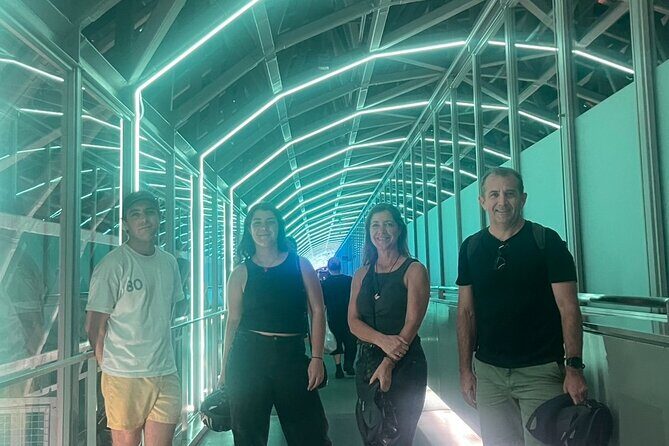
- Small group size (max 5): You get more direct attention and a calmer vibe.
- Safety briefing + helmet: You start with cycling instruction and use an installed helmet.
- A night-focused route: Quiet roads, temple glow, and river views are the point.
- Mostly admission-free stops: You’re paying mainly for guided riding time and photos, not entrance fees.
- Kamo River cool-down: You can rest along the riverbed and get your feet in the water at the end.
Why Kyoto at Night Works So Well on an E-Bike
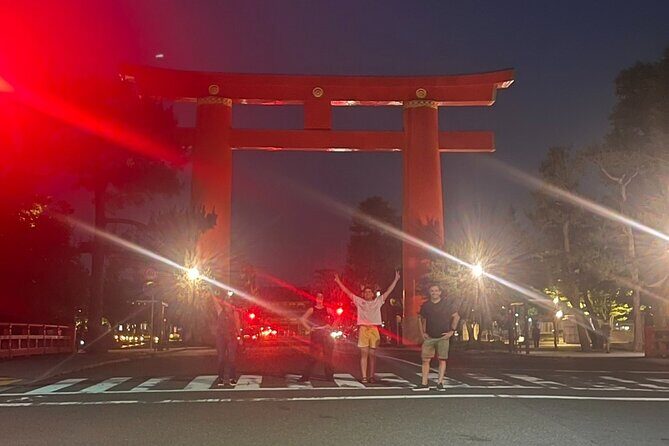
Kyoto at night has a different rhythm. Daytime crowds fade, streets feel quieter, and temple and shrine lights look sharper against the dark sky. On an e-bike, you’re not stuck on a walking-only route. You can cover real distance without arriving totally fried.
I like that the tour leans into Kyoto’s gentler side: old alleys for photos, riverside atmosphere, and scenic viewpoints. You also get that small-but-important practical win: less effort than a regular bike, so you can actually enjoy the sights instead of grinding your way from stop to stop.
The vibe is also built for mixed ages and fitness levels. The tour description explicitly says it fits families and “all ages and fitness levels,” and the e-bike helps with that. Just keep your expectations in the right place: you’re still riding a bike in the evening, so balance and basic comfort matter.
Finally, this is a night experience designed to reduce the usual “where do we go next” stress. A guide handles timing and direction, while you focus on moving through Kyoto when it feels most cinematic.
You can also read our reviews of more cycling tours in Kyoto


Meeting at Thousand Kyoto and Getting Ready in Minutes
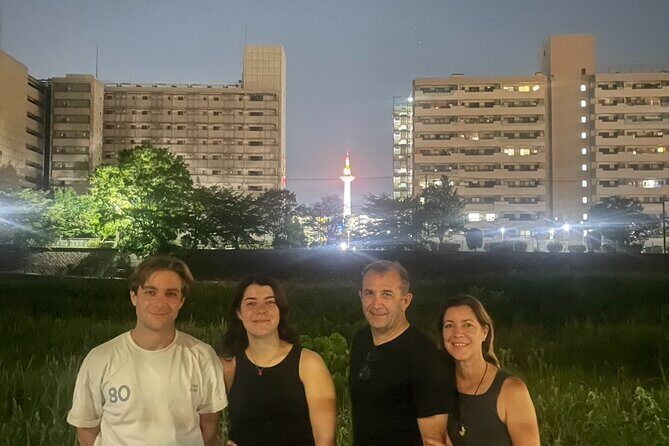
The tour starts and ends at Thousand Kyoto, 570 Higashishiokōjichō, Shimogyo Ward, Kyoto. Your meeting point is at a share-cycle port called Clew, located in front of Seikouin Wagatazizou (listed as behind the hotel).
Before you roll, you get a briefing on cycling basics, including hand-sign communication. This matters more than it sounds. Night riding is when tiny misunderstandings get bigger, so clear signals help everyone stay relaxed.
You’ll also wear an installed cycling helmet and use the provided bicycle. E-bikes are straightforward, but the early instruction helps you get comfortable with how the bike behaves at slow speeds—especially if you’re new to riding in traffic-free streets at night.
Group size stays small, with a maximum of 5 travelers. That’s a huge quality factor for a night tour. You can move together without the “everyone stretched out and lost” problem that happens on bigger group rides.
Stop 1: Old Streets and Photo Moments Near Seikouin
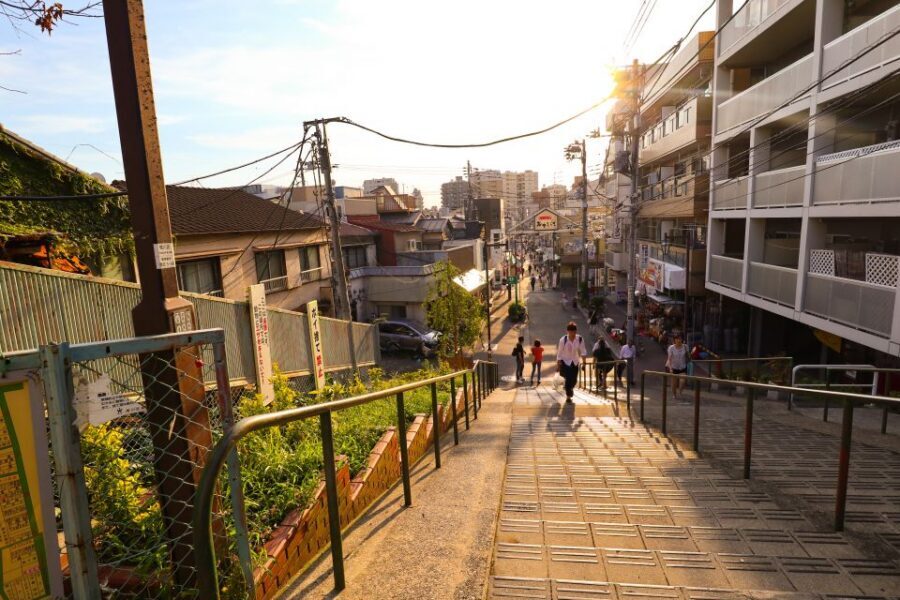
The first part of the ride focuses on those classic Kyoto details that are hard to catch at a distance. You’ll move through Japanese-feeling streets and alleys, stopping where your eyes naturally land. The tour emphasizes that this works especially well because it’s set up as a private tour, so you can take photos together without feeling rushed.
This isn’t just “look at the buildings” time. It’s also a practical way to get your body synced to the pace. Starting with slower, photo-friendly segments helps you settle into the bike and the night atmosphere without immediately jumping into longer rides.
You’ll also notice the guide guiding more than just direction. You’re getting a sense of what to look for at night: how lights reflect off surfaces, how narrow lanes create a tunnel effect, and how temples and gates hold attention in low light.
If you care about photos, this first stop is valuable because it’s early enough to set the tone. You’re not only sightseeing—you’re training your eye for Kyoto’s night look.
Stop 2: Nishi Hongan-ji and the Weight of World-Heritage Architecture
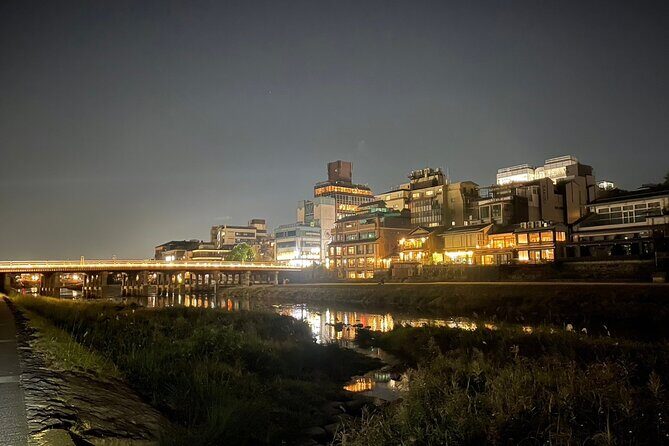
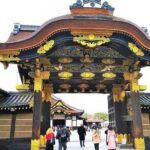
Next comes Nishi Hongan-ji Temple, described as the head temple of the Jodo Shinshu Hongwanji-ha sect and also known as Western Hongan-ji. It’s famous for historical buildings, including a World Heritage–registered set of structures.
At night, big temple compounds can feel surprisingly calm. Even if you’re not going in for a deep museum-style visit, the exterior architecture and gates read differently after dark. You’ll likely appreciate the scale more once lighting is doing the work for you.
This stop is also a good example of what makes an e-bike tour useful. You can reach key temples without needing to plan a day of long backtracking on foot. The stop duration is short (about 20 minutes), so it’s not a full immersion day at one site. Instead, it gives you the right “hit” of the place, then moves you along while the night is still at its best.
One small consideration: because this is a ride with multiple stops, you won’t have hours to roam like you would on a full temple visit. If you love slow, quiet temple time, this stop works best as a highlight rather than a replacement for a separate daytime temple day.
Stop 3: Shirakawa Canal, Chaya-Mati Vibes, and Seasonal Plant Clues
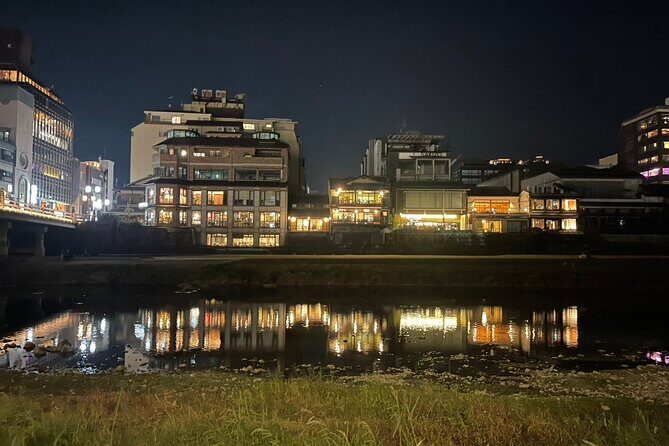
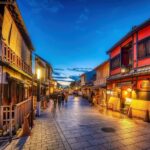
Then you hit Shirakawa Canal, known for its former life as a chaya-mati—tea-house district—plus a Kyoto-style riverside atmosphere with old buildings lining the water. The tour description points out seasonal plants, including cherry blossoms.
At night, canal areas have a special feel. Reflections can soften edges, and lantern-style lighting often makes the street feel older than it looks in a daytime photo. This is exactly the kind of stop that rewards a slower pace, and the tour’s bike-and-stop structure lets you do that.
Another smart part of this stop is that it mixes “viewing” with “walking briefly.” You can step away from the bike for a moment, take photos, and feel the air near the water. It’s the kind of break that prevents a night ride from turning into nonstop pedal time.
If you’re visiting outside cherry blossom season, don’t worry. The canal vibe still comes through as a traditional riverside scene.
You can also read our reviews of more evening experiences in Kyoto


Stop 4: Shomen-dori Street and the Nintendo Headquarters Moment
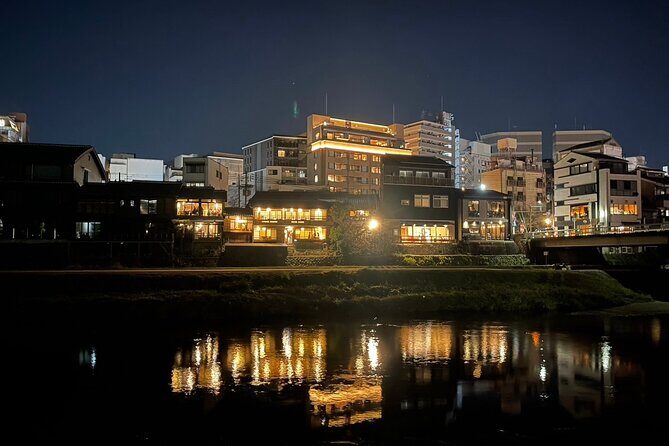
You’ll also pass through Shomen-dori Street, including a striking building described as the old headquarters of Nintendo. The route notes how its historical significance draws attention from people.
This is one of those “Kyoto is not frozen in time” moments. Seeing a tech name attached to Kyoto’s modern city fabric makes the night ride feel more complete. You’re not just stacking temples and traditional alleys; you’re seeing how the city functions now, too.
At night, a huge modern building can contrast sharply with the traditional settings you’ve just left. That contrast is useful. It keeps the tour from becoming repetitive and helps you understand Kyoto as a living city with multiple layers.
The stop itself is mostly about passing and noticing. It’s about spotting a major presence along the way rather than getting a long, planned visit.
Stops 5–7: Lake Biwa Canal Segments and Nanzen-ji’s Gate Presence
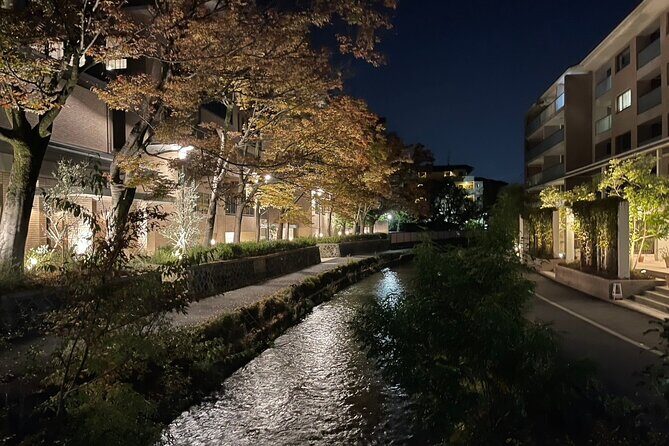
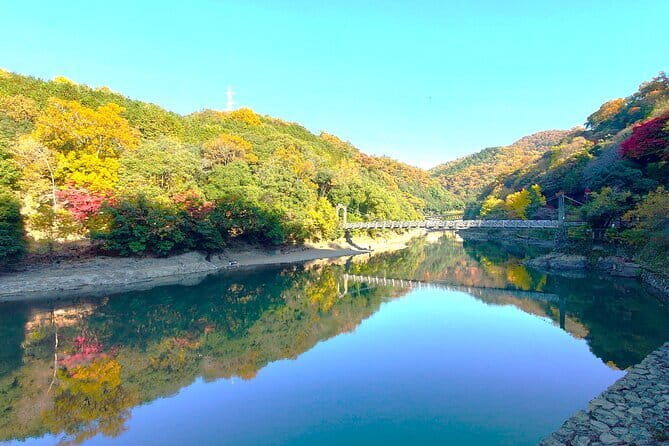
From there, the route shifts into an engineering-plus-temple zone. You’ll spend time around the Lake Biwa Canal system, described as linking Kyoto and Lake Biwa and designed to handle elevation differences between the areas. It also notes the waterway contributed to Kyoto’s development by supplying water.
You encounter it in three parts:
- 13 Nanzenji Fukuchichō
- 17 Nanzenji Kusakawachō
- 86 Nanzenji Fukuchichō
You’re not just passing street corners. These stops are timed so you can look at how water infrastructure shapes the city. In a place like Kyoto, canals and water systems are part of daily history. Seeing them at night makes them feel quieter and more deliberate, especially when you’re already in a low-crowd rhythm.
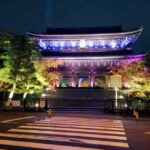
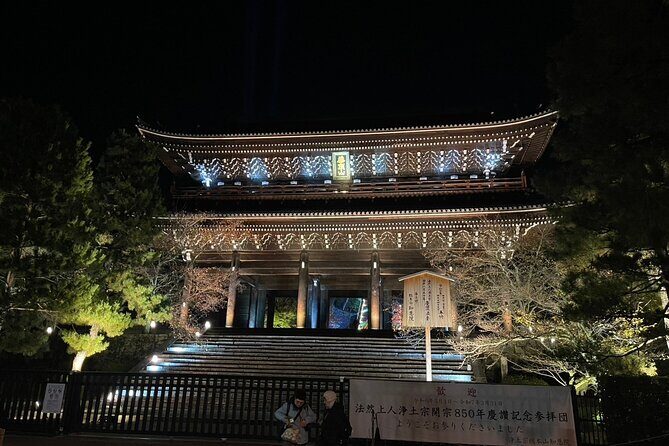
Then you get Nanzen-ji Temple at 86 Nanzenji Fukuchichō. It’s described as special among the Five Mountains of Kyoto, with a magnificent main temple and gate that attract attention.
This stop is one of the best examples of why e-biking helps. Nanzen-ji’s precinct presence can be dramatic, and reaching it by bike keeps your evening from becoming a series of long climbs between landmarks. After an hour on wheels, you often appreciate a temple stop more because you arrive without fatigue.
The only possible drawback here is pacing. These are multiple stops with about 20 minutes each, which means you’ll see the highlights rather than spend a full afternoon on detailed grounds.
Stop 8: Heian Shrine’s Torii and the Capital-Transfer Story
Next is Heian Shrine at 97 Okazaki Nishitennōchō. The tour description explains it was established to commemorate the 1100th anniversary of the capital transfer to Heian-kyo, with Emperor Kanmu as the enshrined deity. It also highlights the large red torii gate.
A torii gate at night is pure geometry. It frames the scene, and the bright red against dark surroundings can look almost like stage lighting. This is the kind of stop where even a short pause can feel meaningful because the visual impact carries the story.
Heian Shrine’s historical focus also balances the earlier canal engineering. You get both the “Kyoto built it” side and the “Kyoto’s identity formed here” side—within a single ride.
Again, the stop length is around 20 minutes, so think of it as a strong highlight stop, not a replacement for a longer shrine visit.
Stop 9: Hokodencho and the Kamo River Foot Cooling Break
The final sightseeing anchor is Hokodencho, described as a famous spot for the Kamo River. You can relax in the riverbed and/or cycle along the riverbank. Then at the end, you can put your feet in the water to cool down.
This is a practical end-of-tour design. After hours of riding and stopping, your body usually wants a reset. The riverbed break and foot cooling turn the ride into something more like an evening experience rather than a transit between sights.
It’s also a smart fit for the night concept. Rivers feel calming after dark, and the space often feels less pressured than city streets. The tour also points out the idea of getting your feet wet, which tells you the experience expects a bit of play rather than stiff museum behavior.
If you dislike water contact, you can simply choose the relaxing option along the riverbed. The tour description doesn’t frame it as mandatory—just a chance.
How the Whole 3-Hour Ride Feels as One Continuous Evening
This tour is built to feel like a smooth evening loop, not a patchwork of separate tickets. The durations at each stop are short and consistent—most around 20 minutes—with a shorter end segment and return.
That structure matters because it keeps the night “fresh.” You’re not stuck in one location long enough for the energy to drop. You get a new scene frequently: alley, temple, canal, street, water infrastructure, shrine, river.
It also keeps the mental load low. I like tours like this because you’re not juggling a map every 10 minutes. You follow the guide, take photos during planned pauses, and enjoy the night breeze while moving at a pace that still feels social.
The e-bike aspect is key. You’re not sprinting to make connections, and you’re not spending the evening solely on foot. You’re in that nice middle zone: movement plus sight time.
One more small note based on the tour’s design: it’s capped at 5 travelers. That group size helps keep the ride feeling calm and controlled, especially at night.
Price and Value: What $117.28 Buys You
At $117.28 per person for about 3 hours, you’re paying for the whole package: guided riding, safety prep, helmets, and the bicycle. The tour also includes a Mandarin and Japanese speaking guide, plus a mobile ticket.
Here’s the value logic I’d use. Many of the stops are listed with free admission, which signals you’re mostly paying for time with a guide and for access to a guided nighttime route. You’re not budgeting for entrances at every stop.
You also get a small group cap. Max 5 travelers means fewer people for the guide to track and more chances to ask questions in real time. On a night ride, that matters because you need clarity quickly.
The guide quality is a big part of the value too. In past experiences with the guide named Yuki, guests highlighted clear instructions for the bike, thorough safety explanations, and a patient, calm approach. One reviewer even described a surprise birthday cake and gift arranged by the guide, which tells me this tour can be thoughtful in a personal way when you share your moment.
Just keep expectations realistic. That kind of celebration likely depends on your situation and the guide’s capacity, not every traveler will experience it. Still, it’s a good sign for service.
Who Should Book This Night E-Bike Tour
This tour suits people who want Kyoto without the usual “walk yourself into exhaustion” plan. The e-bike format makes it a strong choice for couples, first-time visitors, and families with kids who meet the height requirement.
The tour notes that children under 10 can join if they’re at least 140 cm tall and can ride a bicycle, and they pay the same fee as adults. If your child is on the shorter side or unsure on bikes, you might want to consider a different style of Kyoto tour.
It also fits you if you like the night atmosphere and want fewer crowds. The tour is explicitly framed as a way to ride when traffic and crowd pressure are lower, focusing on temple glow and quiet streets.
If you hate any chance of cold rain, you should think twice. The experience requires good weather, and if it’s canceled due to poor weather, you’ll be offered another date or a full refund. In Kyoto, the weather can swing, so having a flexible evening plan helps.
Should You Book This Kyoto Night E-Bike Ride?
I’d book if you want a confident way to see Kyoto after dark with minimal navigation stress. The mix of temples, canals, a major river stop, and a modern street contrast makes the 3 hours feel full without being frantic. The small group cap and the safety briefing are also strong signals that you’ll be guided rather than left to figure things out.
Skip it if you want long, slow temple time. This ride is designed for short highlight visits, not deep multi-hour sightseeing at one site. Also skip or postpone if your schedule can’t handle a good-weather condition.
If you do book, show up ready to ride, listen closely during the bike hand-sign and safety briefing, and bring your phone for photos at the alleys and major lights stops. Kyoto at night is when the city’s mood does the heavy lifting.
FAQ
How long is the Kyoto at Night e-bike tour?
The tour lasts about 3 hours.
What is the price per person?
The price is $117.28 per person.
What’s included in the tour?
You get a cycling guide, an installed cycling helmet, use of the bicycle, and a guide who speaks Mandarin and Japanese. You also receive a mobile ticket.
How many people are in the group?
The tour has a maximum of 5 travelers.
Where do I meet the guide?
You meet at the start point: Thousand Kyoto, 570 Higashishiokōjichō, Shimogyo Ward, Kyoto. The guide meets you at a Clew share-cycle port in front of Seikouin Wagatazizou (behind the hotel).
Is free cancellation available?
Yes. You can cancel for a full refund up to 24 hours in advance of the experience start time. The experience requires good weather, and if it’s canceled due to poor weather you’ll be offered another date or a full refund.