REVIEW · KAMAKURA
Sushi Making in a Century Old Kamakura Home
Book on Viator →Operated by Manju · Bookable on Viator
Sushi tastes better with Enoden passing by. I love the century-old Kamakura home setting and that you can enjoy the lesson while the Enoden train runs right beside the garden. I also like the focus on real sushi craftsmanship, taught by a master chef with 20+ years of experience in high-end Ginza restaurants, using premium fish.
One thing to consider: this class is not recommended for food allergies. If you need strict allergy control, you’ll want to think twice before booking.
In This Review
- Key things to know before you go
- Entering a century-old kominka where the train is part of the show
- The sushi lesson: craftsmanship, not just rolling speed
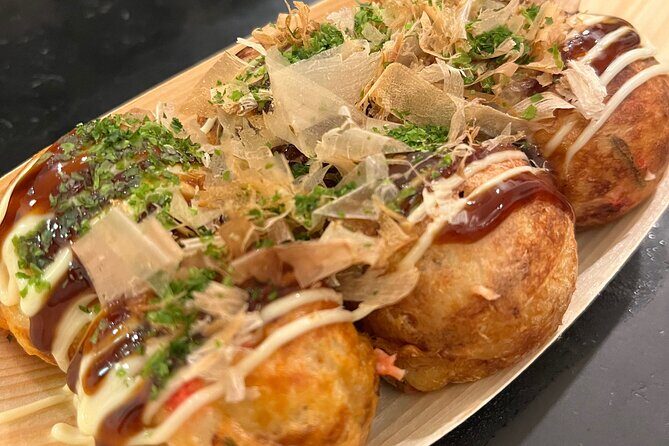
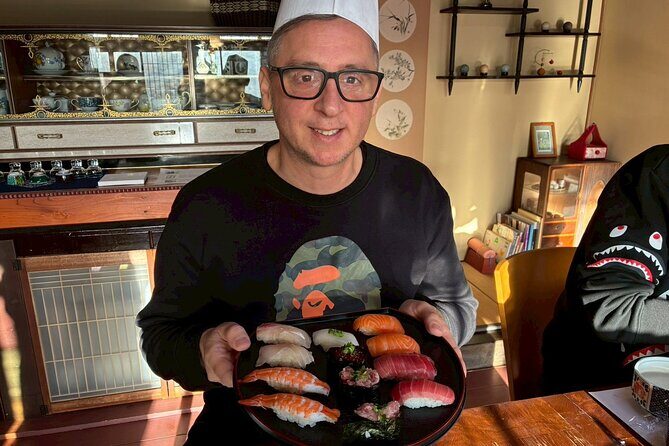
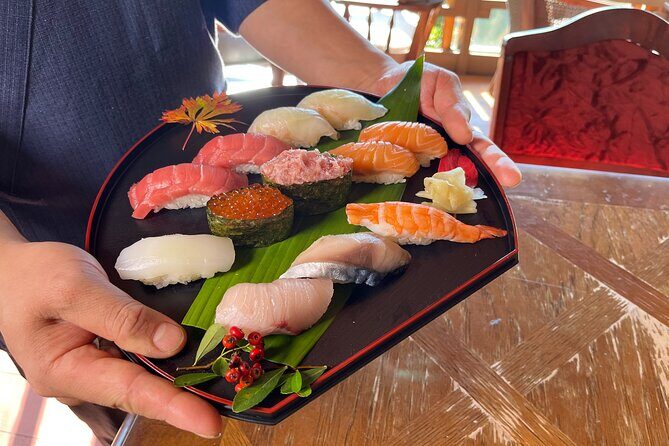
- What you’ll make and eat: 10 to 12 pieces of nigiri sushi
- Timing and neighborhood: 10:30 am near Kamakura Station
- Sake option, calligraphy souvenir, and small details that make it memorable
- Price and value: assessing $74.93 for 1.5 hours of sushi craft
- Who should book this sushi making experience in Kamakura?
- Final verdict: should you book this Kamakura sushi making class?
- FAQ
- Where is the meeting point for Sushi Making in a Century Old Kamakura Home?
- What time does the workshop start?
- How long does the experience last?
- What is included in the price?
- Is coffee or tea included?
- Can I add a sake experience?
- Is this class good for people with food allergies?
- How many people are in each group?
- Is the experience weather-dependent?
Key things to know before you go
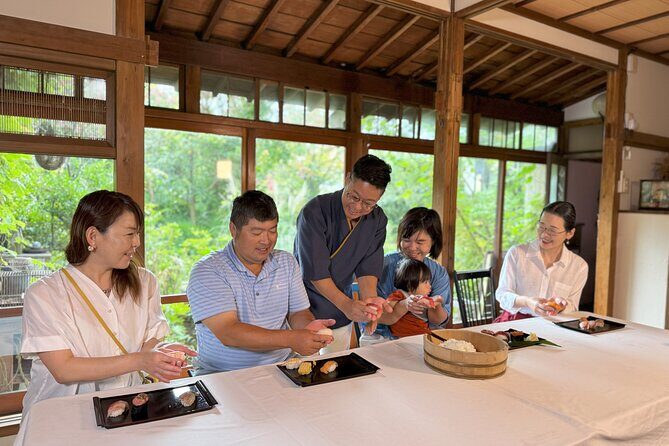
- Century-old kominka setting: a rare preserved home near Kamakura Station, with a calm garden.
- Enoden runs by the garden: train sights and sounds happen without leaving the house.
- Chef-led nigiri class: you’ll get guidance from a sushi master with 20+ years in Ginza.
- 10 to 12 pieces of nigiri: premium toppings like tuna, sea bream, shrimp, squid, yellowtail, and salmon roe.
- Seasonal variety: the exact seafood selection can change depending on when you go.
- Small group size: a maximum of 10 travelers keeps it more personal in a small space.
Entering a century-old kominka where the train is part of the show
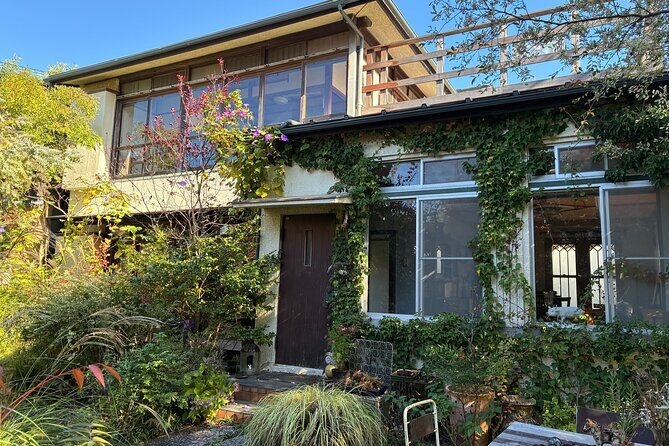
Kamakura has plenty of temples and ocean views, but this workshop adds a different kind of atmosphere: a preserved, traditional Japanese home that still feels lived-in. The building blends Japanese and Western architectural styles, which helps it feel both historical and comfortable rather than staged.
The biggest sensory detail is the Enoden line. It passes right next to the grounds, so you don’t just see the train world of Kamakura from a distance—you hear it and watch it slide by while you’re inside. In practice, that means the experience feels more like a quiet afternoon at an old family house than a factory-style cooking class.
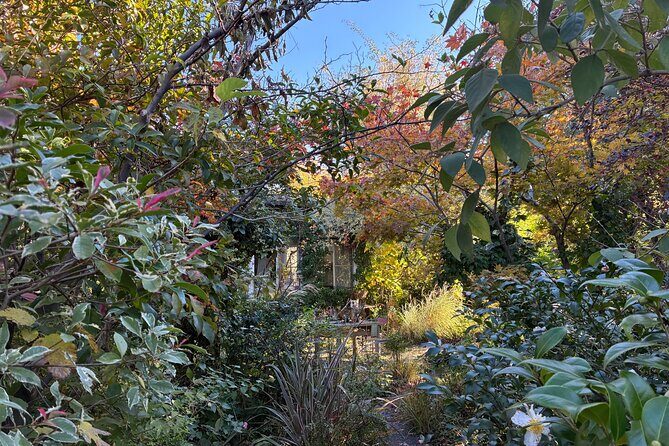
The garden is another big draw. Expect lush greenery outside the windows and a space that’s meant for slowing down, not sprinting to the next photo spot. Reviews also point out that the front approach can look especially pretty—colorful trees and a tranquil neighborhood vibe that makes you feel like you found something local, not a random activity stop.
Small note on location: it’s a 10-minute walk from Kamakura Station and on the way toward the Great Buddha of Hase. That’s convenient, but it’s still a traditional neighborhood setup, so give yourself a little time to orient.
You can also read our reviews of more tours and experiences in Kamakura.
The sushi lesson: craftsmanship, not just rolling speed
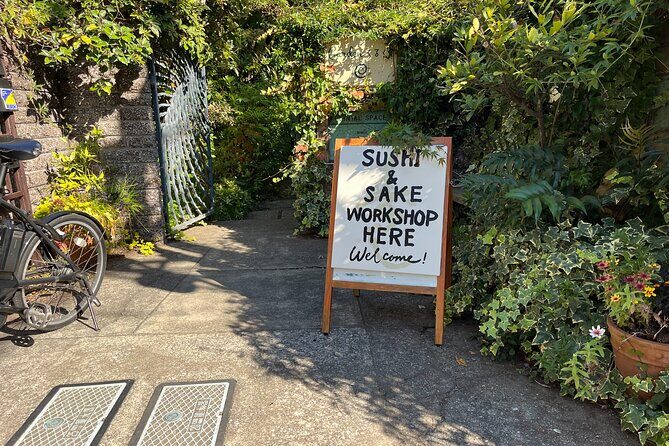
This isn’t marketed as a quick demo where you watch and eat. You create your own nigiri, with personal guidance from a chef who trained and worked for over 20 years at Ginza’s most prestigious restaurants.
That background matters because sushi is more about technique and feel than raw ingredients. You’ll focus on the basics of sushi making as a craft—refined technique, careful handling, and the kind of attention that keeps nigiri tasting balanced. Even if you’ve never made sushi at home, the lesson tone is aimed at fundamentals you can understand quickly.
The class is built around premium ingredients. You can expect nigiri topped with items such as tuna, sea bream, shrimp, squid, yellowtail, and salmon roe. The exact mix changes with the seasons, so if you’ve come during a different month than another visitor, your seafood selection may not match.
Also, the master chef’s experience is positioned as the core of the experience. You’re not just learning how to assemble; you’re learning what makes sushi taste right.
What you’ll make and eat: 10 to 12 pieces of nigiri sushi
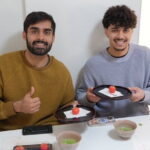
Your meal portion is straightforward: 10 to 12 pieces of nigiri sushi, made by you. That’s a practical amount. In 1 hour 30 minutes, it gives you enough time to actually produce something and still sit down to eat at a comfortable pace.
The ingredients are described as being the same type of quality as what you’d find at high-end sushi restaurants. You shouldn’t expect a huge buffet spread, though. This is about quality, not quantity—each piece is part of the lesson and part of the meal.
One useful way to think about it: you’re getting both food and skill in the same ticket price. If you’re someone who loves eating, you’ll still be satisfied by the meal. If you’re more curious about technique, you’ll get enough practice to feel like you did something real.
If you have food allergies, this is the part that matters most. Since it’s not recommended for allergy needs, the class likely won’t be able to guarantee safe swaps or simplified ingredient control. If that’s your situation, it’s safer to skip than to hope for flexibility.
Timing and neighborhood: 10:30 am near Kamakura Station
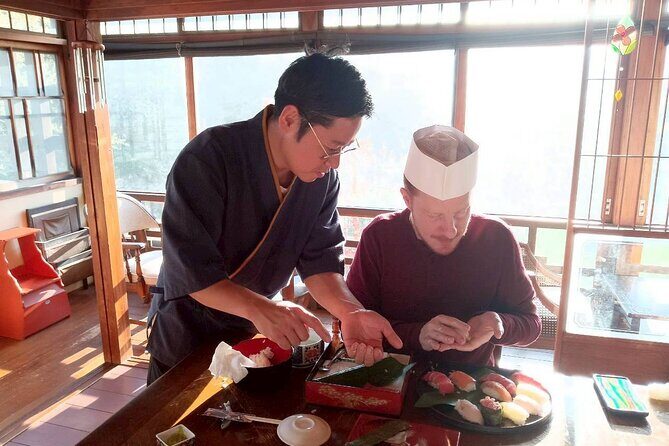
The workshop starts at 10:30 am and runs about 1 hour 30 minutes. It ends back at the meeting point, which makes it easy to plan the rest of your day without a long commute or a complicated pickup.
The meeting point is: 2-chōme-7-12 Yuigahama, Kamakura, Kanagawa 248-0014, Japan.
Because it’s near public transportation and only about a 10-minute walk from Kamakura Station, it works well for a half-day plan. I’d plan this after a morning temple or shrine visit, or before you head to the seafront.
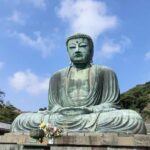
And there’s a fun geographic bonus. The house is described as being on the way to the Great Buddha of Hase, and the seaside is about a 10-minute stroll from the venue. From there, you might catch views of Mt. Fuji beyond Enoshima—something that feels almost like a woodblock print moment when the timing is right.
If you’re mapping your day, consider this workshop as your calm reset in the middle: less walking, more stillness, and a sit-down meal that feels different from ramen or casual izakaya stops.
Sake option, calligraphy souvenir, and small details that make it memorable
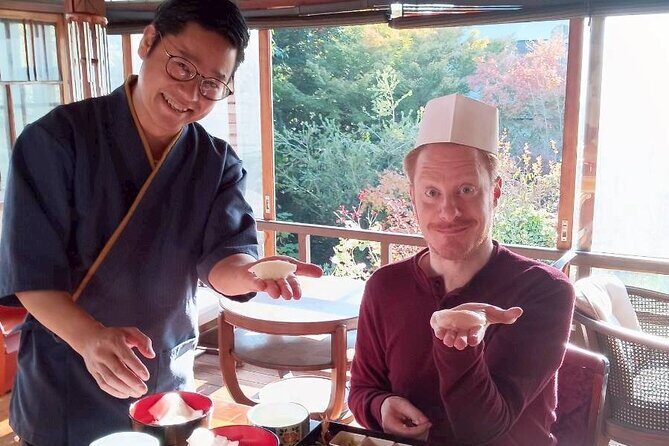
Meal inclusion is clear: you’ll eat the 10 to 12 pieces of nigiri sushi you make. Coffee or tea isn’t included, so if you’re the kind of person who likes a warm drink with food, you may want to get one before or after.
Alcoholic beverages are optional. You can choose a sake experience course for an additional charge. Since it’s not part of the base package, plan on paying extra if sake is a must.
Then there’s the souvenir that makes the experience feel more personal than a typical food class. You receive a complimentary canvas inscribed with Kamakura Sushi Sake, hand-brushed by a professional calligrapher. It’s a nice pairing: you learn sushi craft, then take home an art form tied to the same theme.
Logistics are also light. You get a mobile ticket, and confirmation comes at booking. It’s a small group experience with a maximum of 10 travelers, which fits the setting—there’s more room for quiet instruction than for a big crowd.
Finally, the environment matters for the mood. Reviews mention warm light and the cozy feeling inside the house. Even if you’re not usually sentimental about decor, this kind of setting changes how you taste what you’re making.
Price and value: assessing $74.93 for 1.5 hours of sushi craft
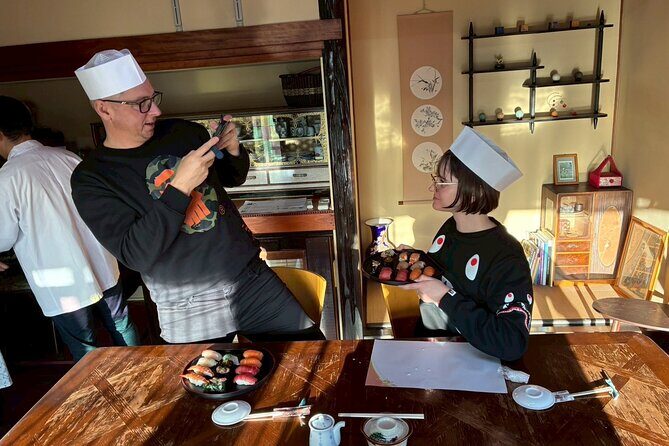
The price is $74.93 per person for about 1 hour 30 minutes, with the meal included. On paper, it’s not a bargain like street food. But in a craft-focused workshop, your value comes from a few things working together:
- You’re paying for hands-on instruction by a chef with 20+ years of high-end experience.
- You’re paying for premium seafood used for your nigiri toppings.
- You’re getting a finished meal (10 to 12 pieces), not just tasting crumbs.
- You’re also getting a calligraphy canvas souvenir included.
If your goal is to eat sushi, you can always find cheaper options in Japan. But if your goal is sushi technique, the included instruction and the quality of ingredients push this into a different category.
Another value angle: small group size. A max of 10 travelers means you’re less likely to be stuck waiting for attention. In a small traditional house, that matters.
Weather can also play a role. The experience requires good weather, and if it’s canceled due to poor conditions, you’ll be offered a different date or a full refund. That’s worth considering if you’re planning around a tight schedule.
Who should book this sushi making experience in Kamakura?
This workshop makes the most sense if you want one of two things:
First, you want sushi that’s made carefully, in a guided way, not just sushi you order. If you like understanding why something tastes right, you’ll appreciate the craft emphasis.
Second, you want an experience that feels tied to place. The century-old home, the garden, and the Enoden train running nearby give you a Kamakura flavor you can’t replicate by taking a sushi class in a generic studio.
It’s especially good for:
- Couples looking for a relaxing activity with a meal built in
- People who want a break from temple circuits after morning sightseeing
- Anyone who wants a small-group class in a real local-style building
Skip it or think hard before booking if:
- You have food allergies, since it’s not recommended for allergy needs.
- You’re expecting a long, multi-course dining event. This is focused on making and eating nigiri, not a big feast.
If you’re visiting and want a smart day flow, I like the idea of pairing this with a morning of major sights (like the Great Buddha area) and then using the class as your calmer, tastier finish. The venue is close enough that it feels like a natural pivot.
Final verdict: should you book this Kamakura sushi making class?
If you’re choosing between another restaurant meal and a technique-focused class, I’d lean toward booking this one if you want to go beyond eating. The combination of chef-guided nigiri making, premium seasonal seafood, and a rare century-old home with the Enoden line running nearby creates a package that feels worth paying for.
The only strong reason to pass is allergies. Otherwise, the experience is well matched to people who like calm settings, small groups, and practical skill-building tied to real food.
My recommendation: book it if you’re in Kamakura for more than a quick stop and you want one activity that tastes like the trip instead of just filling time. If your schedule is flexible and you can handle the weather requirement, this is one of those choices that tends to feel satisfying long after you’re done eating.
FAQ
Where is the meeting point for Sushi Making in a Century Old Kamakura Home?
The meeting point address is 2-chōme-7-12 Yuigahama, Kamakura, Kanagawa 248-0014, Japan.
What time does the workshop start?
The start time is 10:30 am.
How long does the experience last?
It lasts about 1 hour 30 minutes.
What is included in the price?
You’ll receive 10 to 12 pieces of nigiri sushi as your meal.
Is coffee or tea included?
No. Coffee and/or tea are not included.
Can I add a sake experience?
Yes. Alcoholic beverages are available if you add the sake experience course for an additional charge.
Is this class good for people with food allergies?
It is not recommended for individuals with food allergies.
How many people are in each group?
The maximum group size is 10 travelers.
Is the experience weather-dependent?
Yes. It requires good weather, and if it’s canceled due to poor weather, you’ll be offered a different date or a full refund.