REVIEW · TOKYO
Tokyo Made Easy | Private Chauffeur Day Adventure | Car and Guide
Book on Viator →Operated by JapanAventures · Bookable on Viator
Tokyo feels smaller with your own driver. This private chauffeur day turns a complicated city into a smooth, planned route, so you can focus on sights instead of stations. You get a car, a guide, and a day that can bend around your pace, which matters in Tokyo.
I love the way the day mixes contrasts: classic Tokyo like Senso-ji and Meiji Jingu on one side, then high-energy neighborhoods like Akihabara and Harajuku on the other. I also like the human touch—guide Daniel’s approach, from keeping a family entertained to staying punctual and flexible, shows up in how the day runs.
One drawback to consider: the itinerary is packed for a 9–10 hour day, so you’ll want to be realistic about how long you can linger at each stop. Also, Tokyo Tower has an extra cost since the observation deck ticket isn’t included.
In This Review
- Key Highlights You’ll Actually Feel on the Day
- Private Chauffeur vs Tokyo Trains: Why This Feels Effortless
- Timing a 9–10 Hour Day: How to Make Each Stop Work
- Tsukiji Fish Market and Senso-ji: Old Tokyo Food Culture Meets Sacred Ground
- Akihabara and Harajuku: Shopping, Style, and the Fun Side of Tokyo
- Imperial Palace East Gardens and Tokyo Station: Architecture and Power, Up Close
- Odaiba and Tokyo Tower: Tokyo Bay Views to a Classic Skyline Icon
- Meiji Jingu and Shinjuku Observation Decks: Calm Shrines and Free Panoramas
- Shibuya Crossing: The World’s Scramble Intersection Moment
- Price and Logistics: Is $349 per Group Good Value?
- Who This Chauffeur Day Adventure Fits Best
- Should You Book This Private Chauffeur Day Adventure?
- FAQ
- How long is the Tokyo private chauffeur day adventure?
- How many people can the private group include?
- Is pickup included?
- Do I need tickets for the stops?
- Which observation views are included that are free?
- Is this tour only for my group?
- Can a childseat be provided?
- When will I get confirmation after booking?
Key Highlights You’ll Actually Feel on the Day
- Private, do-your-own-pace planning: Your driver adapts the route and timing so you’re not trapped in rigid group pacing.
- A best-of mix that covers big Tokyo in one shot: Markets, major shrines, shopping districts, skyline viewpoints, and Shibuya all fit into one day.
- Daniel-style energy: The guiding approach stands out for being friendly, professional, and good with different ages.
- Mostly free admissions: Many stops are free, so your budget doesn’t get eaten by entrances.
- Photo-friendly stops with real context: You’ll see iconic architecture and landmarks, not just pass-by moments.
- Car comfort in heavy traffic zones: You trade train navigation for easier door-to-door movement.
Private Chauffeur vs Tokyo Trains: Why This Feels Effortless
Tokyo can be efficient, but it’s not always easy—especially when you’re juggling luggage, kids, weather, or jet lag. A private chauffeur removes the mental load of transfers, station exits, and sprinting for the next train. You still get the real places, but you do it with fewer stress spikes.
The value here is in the rhythm. Instead of spending half your day figuring out directions, you spend that time at places like Senso-ji and Meiji Jingu, or wandering the shopping energy around Akihabara and Harajuku. The car also gives you a practical fallback if your feet get tired.
The best part is the customization. Your driver isn’t just driving; they’re steering your day toward what you care about, including how long you want at viewpoints and busy pedestrian areas.
You can also read our reviews of more guided tours in Tokyo

Timing a 9–10 Hour Day: How to Make Each Stop Work
This is a full-day plan, roughly 9 to 10 hours, so the trick is using the right mindset at the right places. Big Tokyo icons tend to have crowds and queues, and some areas—like Shibuya Crossing—are more about the moment than a long stay.
Plan for quick in-and-out time at high-demand spots. The itinerary’s structure supports that: you’ll hit major highlights, then keep moving. If you know you’ll want extra time somewhere—shopping streets, shrine grounds, or a viewpoint—tell your driver early so they can shape the pacing.
Also, remember this: not every stop has a fee. Many are admission-free, which helps you spend your budget where it counts—like the Tokyo Tower observation area (not included).
Tsukiji Fish Market and Senso-ji: Old Tokyo Food Culture Meets Sacred Ground
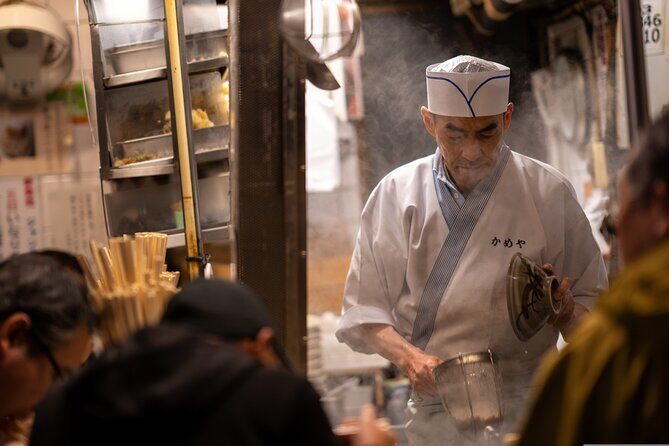
Start your day with Tsukiji Fish Market, a Tokyo icon tied to food culture. It opened in 1935 on reclaimed land in central Tokyo and grew into what’s often described as the world’s largest wholesale seafood market. Even if you don’t buy anything, the sensory experience—busy stalls, seafood, and fast-moving energy—gives you an immediate sense of how Tokyo eats.
A good strategy here is to keep your mission simple. Focus on watching, sampling if you want, and grabbing a few photos without getting stuck in long lines for every single stall. The market is the kind of place where seeing it clearly matters more than trying to do everything.
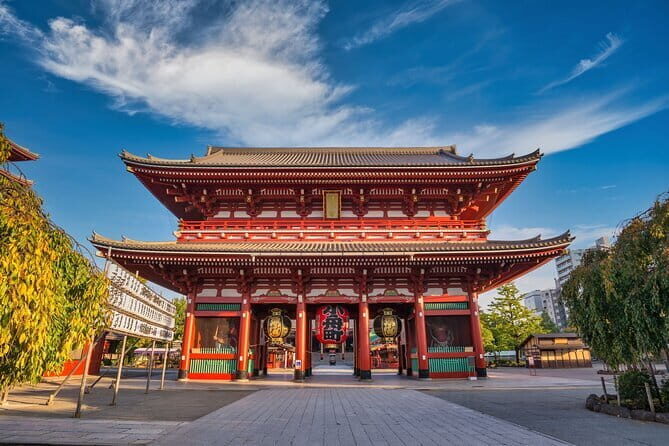
Then you shift to Sensō-ji Temple in Asakusa, Tokyo’s oldest and most significant Buddhist temple. Founded in 645 AD, it’s associated with a legend of a golden statue of Kannon, the bodhisattva of compassion. This is the emotional contrast to Tsukiji: slower, more ceremonial, and filled with texture—lanterns, incense, and people arriving with intention.
One consideration: Asakusa gets busy, especially on weekends and holidays. If you want quieter photos, aim to move with purpose once you reach the temple approach.
Akihabara and Harajuku: Shopping, Style, and the Fun Side of Tokyo
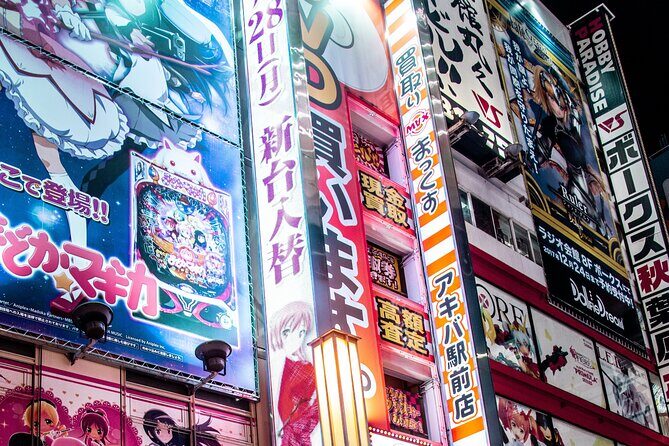
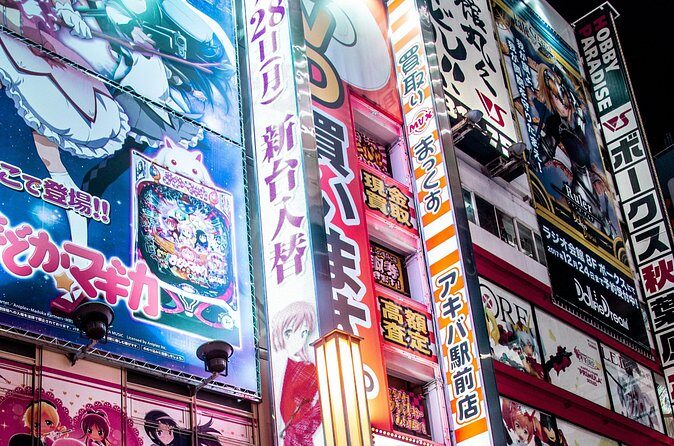
From Tsukiji and temples, the day swings into pop culture with Akihabara. This area is famous for Japan’s otaku culture and electronics shopping. It’s also a great example of Tokyo’s ability to do niche obsession at full volume—arcades, gadgets, themed shops, and street-level energy all in one compact zone.
If you’re not into electronics, you can still enjoy Akihabara through the visual chaos. Think of it like a theme park for fans, with your own level of participation. Want to browse? Great. Want to just walk and photograph? Also fine.
Next comes Harajuku Station and the wider Harajuku area, one of the clearest windows into Japan’s youth culture. It’s known globally for extreme fashion and the birthplace of kawaii culture. Even if you don’t plan to shop, the area is fun to stroll because style changes block to block.
A useful tip: wear comfortable shoes. Harajuku and Akihabara both reward walking, but neither is built for slow, lingering foot-dragging.
Imperial Palace East Gardens and Tokyo Station: Architecture and Power, Up Close
Then you pivot into Tokyo’s official-landmark side with the East Gardens of the Imperial Palace and the former Edo Castle grounds. The gardens sit on what used to be the Tokugawa shogun seat from 1603 to 1867. It’s a public park space with a sense of scale that’s hard to get from just looking at photos.
This stop is one of the best reset points in the day. After shopping districts and crowds, you can slow down, take a breath, and notice how Tokyo places green space inside the city’s high pressure.
After that, you’ll pass through Tokyo Station, famous for its historic red-brick facade on the Marunouchi side and the modern Yaesu entrance across the way. Opened in 1914, it’s one of those landmarks that quietly matters because it’s such a central hub—and it’s still an architectural statement.
If you love trains, Tokyo Station is a natural place to linger with photos. If you don’t, treat it as a visual breather—old meets new, all while you’re still moving.
You can also read our reviews of more private tours in Tokyo



Odaiba and Tokyo Tower: Tokyo Bay Views to a Classic Skyline Icon
Odaiba is your Tokyo Bay contrast stop. It’s an artificial island redeveloped into a futuristic entertainment and shopping district. But it also has a history layer: it was originally built as defensive forts in the 1850s, then reinvented in the 1990s.
One of the standout ways Odaiba is enjoyed is through the views. In a flexible day, your driver may adjust timing so you can see sights like the Rainbow Bridge and even a Statue of Liberty replica, depending on where you aim your walking time. Even without buying anything, Odaiba’s waterfront perspective is a change of pace.
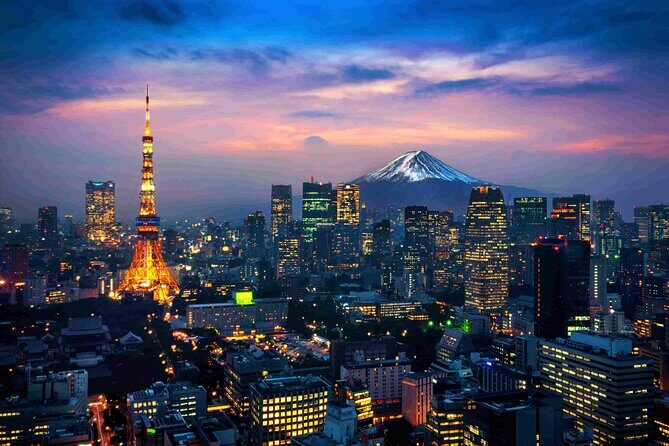
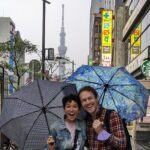
From there, you often head toward Tokyo Tower, the 333-meter red-and-white steel lattice landmark finished in 1958. It’s modeled after the Eiffel Tower and still serves as a broadcast antenna as well as a city symbol. Here’s the practical thing: the observation ticket isn’t included, so plan for that cost if you want the skyline view.
If the weather is clear, Tokyo Tower is a great pick because it gives you a classic Tokyo silhouette. If it’s hazy, you can still enjoy it for the structure and the views you can see.
Meiji Jingu and Shinjuku Observation Decks: Calm Shrines and Free Panoramas
Tokyo’s spiritual mood continues with Meiji Jingu Shrine, dedicated to the deified spirits of Emperor Meiji and Empress Shoken. Established in 1920, it commemorates their role in the Meiji Restoration era. Meiji Jingu feels like a pocket of calm inside a city that rarely stops.
This stop works especially well if you want a break from street-level crowds. It’s also a good place to reset your pace because shrine visits naturally slow you down—you walk, you observe, you take a moment.
Then you move to Shinjuku’s height game: the Tokyo Metropolitan Government Building observation decks. The key advantage is right there—admission is free, and you get panoramic city views from about 202 meters (663 feet). Two free decks is a nice bonus when you want a quick comparison of angles without paying an extra fee.
Practical advice: bring a light layer if you go up near evening. The air can feel cooler at elevation, and you’ll want to stay comfortable long enough to actually look at the city.
Shibuya Crossing: The World’s Scramble Intersection Moment
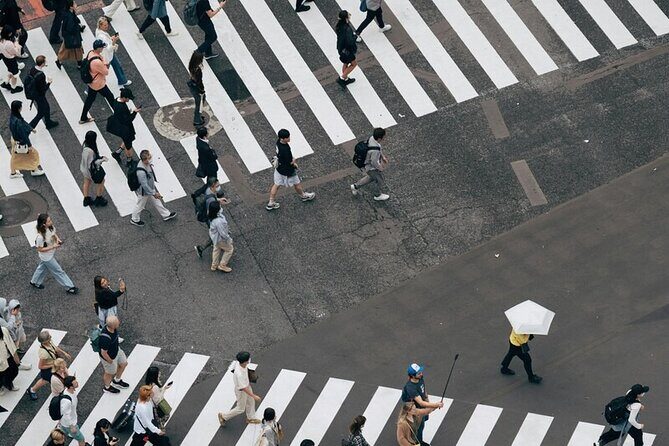
Finally, you hit Shibuya Crossing, the famous scramble crossing outside Shibuya Station. It’s widely described as one of the world’s busiest pedestrian crossings, with peak crowds reaching roughly 2,500 to 3,000 people. This is Tokyo as motion: everyone flows, and for a few minutes you get to stand still while the city moves around you.
If you’re thinking about where to watch from, trust the driver’s suggestion. They can point you toward a practical viewpoint based on timing and crowd flow. And because this is the last major icon stop, it’s often a good moment to decide if you want extra time nearby or just head on.
Price and Logistics: Is $349 per Group Good Value?
This tour costs $349 per group for up to 7 people. That pricing is what makes it smart for families and small groups, because it can end up being far cheaper per person than separate taxis or multi-ticket paid-guided options.
Here’s the value math in real life:
- If you fill it with 6–7 people, you’re looking at roughly $50 per person for a full 9–10 hour chauffeur-and-guide style day.
- If it’s just 2 people, it can feel more like a premium “comfort day,” but you still save time compared to DIY navigation and rerouting.
Also, the admission mix helps. Many stops are free, including major temple and shrine visits and observation decks in Shinjuku. The one big exception in your plan is Tokyo Tower, where the observation deck admission isn’t included.
For me, the decision comes down to one question: do you value time and comfort enough to pay for a car and a guide instead of figuring out trains all day? If yes, this is a good match.
Who This Chauffeur Day Adventure Fits Best
I’d steer this experience toward you if:
- You want a high-coverage Tokyo day without the strain of train navigation.
- You’re traveling with kids or anyone who needs more comfort between stops.
- You care about mixing the big-name icons—temples, shrines, markets, pop culture zones, and city viewpoints—into one plan.
- You like having a friendly guide presence that can keep the day moving while still staying flexible.
It’s also a strong choice if you hate the “What stop is next?” stress. Your driver handles routing while you enjoy being present at each place.
Should You Book This Private Chauffeur Day Adventure?
If your goal is to see a lot of Tokyo’s most recognizable spots in one day—without spending your holiday doing station math—this is a solid booking. The best reason to say yes is the combination of private comfort plus an itinerary that balances food culture, sacred sites, and modern Tokyo energy.
I’d think twice only if you prefer long, slow visits where you stay put for hours. This day moves. You’ll get highlights, not endless wandering.
One more practical note: the day includes pickup, uses a mobile ticket, and is private to your group only. If you’re traveling with kids, you can request a childseat, and service animals are allowed. Add that to the fact that you can cancel for a full refund if you cancel at least 24 hours ahead, and the risk feels lower than most paid excursions.
FAQ
How long is the Tokyo private chauffeur day adventure?
It runs about 9 to 10 hours.
How many people can the private group include?
The price is per group for up to 7 people.
Is pickup included?
Pickup is offered.
Do I need tickets for the stops?
A mobile ticket is provided, and many stops have free admission. Tokyo Tower observation deck admission is not included.
Which observation views are included that are free?
The Tokyo Metropolitan Government Building observation decks have free access.
Is this tour only for my group?
Yes. It’s private, so only your group participates.
Can a childseat be provided?
A childseat can be provided on request.
When will I get confirmation after booking?
Confirmation is received within 48 hours of booking, subject to availability.