REVIEW · TOKYO
Tokyo: Meiji Jingu Shrine & Inner Garden Guided Tour (2h)
Book on GetYourGuide →Operated by DeepExperience, Inc. · Bookable on GetYourGuide
Torii gates and quiet ritual beat the usual Tokyo pace. This 2-hour guided walk through Meiji Jingu Shrine and Shinen Garden is designed to help you read the place instead of just photographing it, with stops built around prayer, reflection, and garden calm. I especially like the way the guide breaks down the experience at each moment, including a traditional handwashing ritual, so you know what you are doing (and why). The other big win for me is the chance to slow down in the garden areas, like the South Pond and Kiyomasa’s Well, with context rather than guesswork. One possible drawback: if you mainly want a quick shrine photo run and zero ritual stops, this may feel more structured than you expect.
What really makes this tour work is the guide style. In past groups, Minoru-San brought extra anecdotes and careful explanations; Kai focused on both the shrine and broader Japanese culture; Takashi added plenty of historical background while staying friendly; and Kyo was the type who offers fresh angles on what you are seeing. That mix of clarity and personality is what turns a pretty setting into a story you can follow. You also get Shinen Garden time plus hands-on moments like fortune-telling, not just a walk-by tour.
If you are comfortable walking between key spots and you like respectful cultural activities, you will have an easy time with the flow. If your ideal Tokyo day is all spontaneity and no guidance, consider that you are paying for a script and a guide-led pace.
In This Review
- Key moments worth planning around
- Meeting at Ichinotorii: Find the guide fast and get calm early
- The torii-to-torii flow: How the 2-hour experience stays focused
- Sake barrel offering and the Eternal Forest stop
- Handwashing at the grand gate and how to pray at Meiji Jingu
- Omikuji fortune-telling and the charm option
- Shinen Garden: South Pond calm and Kiyomasa’s Well
- Price and value: Is $48 for this Meiji Jingu experience worth it?
- Should you book this Meiji Jingu Shrine & Shinen Garden tour?
- FAQ
- How long is the Meiji Jingu Shrine and Shinen Garden guided tour?
- Where do we meet for the tour?
- What language is the tour offered in?
- What is included in the $48 price?
- Is food or drinks included?
- Is transportation included?
- Can I get a refund if I cancel?
Key moments worth planning around
- Start at the first torii with a clear orientation so the grounds make sense right away.
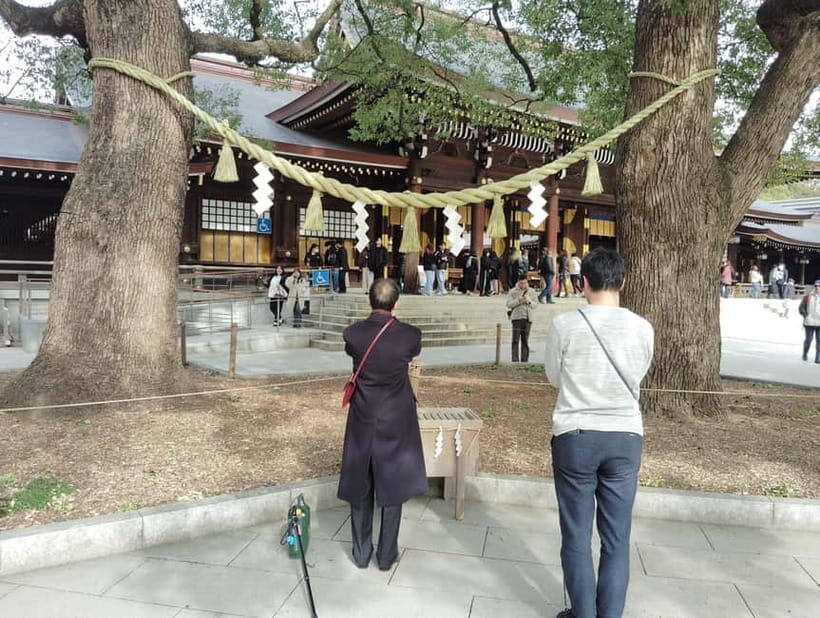
- Sake barrel offering and the Eternal Forest stop for photos and meaning, not just scenery.
- Handwashing at the grand gate to learn the rhythm before you step into the prayer area.
- Omikuji fortune-telling with the option of a protective charm if you want one.
- South Pond and Kiyomasa’s Well as your quiet payoff in Shinen Garden.
Meeting at Ichinotorii: Find the guide fast and get calm early
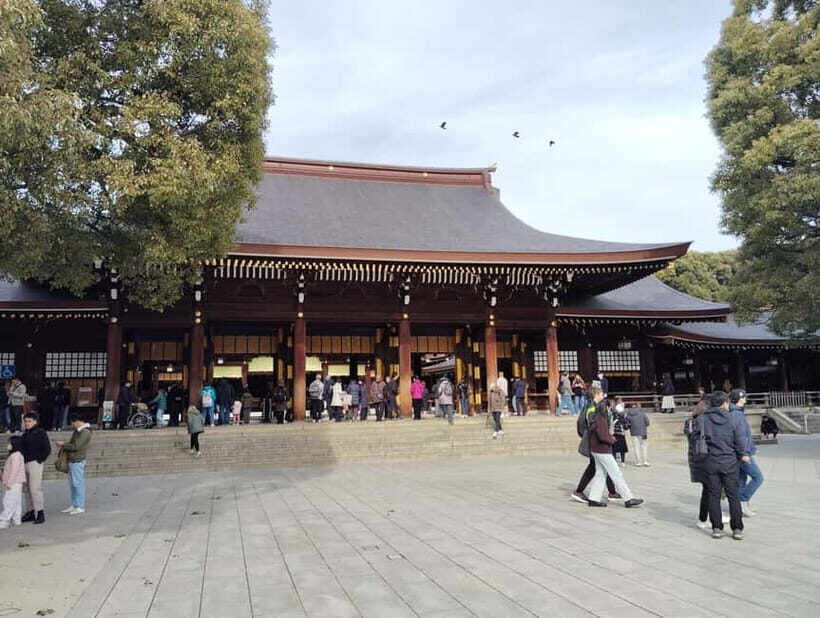
The tour begins in front of Ichinotorii, the first torii at Meiji Jingu Shrine. Your guide will be holding a yellow sign with the DeepExperience logo, so you can spot them quickly instead of lingering and hoping you guessed right. That matters more than it sounds, because Meiji Jingu is the kind of place where tiny timing slips can snowball into confusion.
I like that the meeting point is specific and tied to an obvious landmark. You are not hunting down a vague street corner. Once you link up, the tour starts with a short intro to the day’s journey at the first torii gate. That framing helps you notice things later, like why certain spots are treated like checkpoints rather than casual stops.
Since the tour runs about 2 hours, you are working with a compact timeline. That is a good thing if you want a focused cultural stop without losing half your day in transit or searching. It is also a reminder to wear shoes you are happy to walk in, because you will move through the shrine grounds and the garden on foot as part of the guided route.
This is an English-led experience, with the option of Japanese as well, so you can expect explanations that stay grounded in what you are about to see. In a city where signage is mixed, that kind of guided clarity is a real value add.
You can also read our reviews of more guided tours in Tokyo


The torii-to-torii flow: How the 2-hour experience stays focused
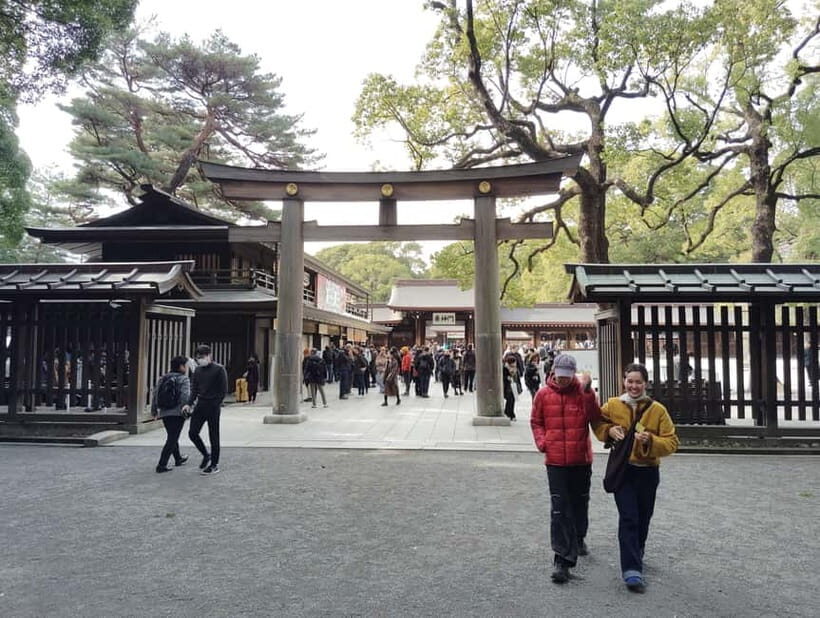
After you meet at the first torii, the tour follows a simple walking arc that keeps you moving from introduction to ritual to garden. You will have a photo stop and guided time around the shrine area early on, then another photo stop as you continue. That structure is practical: it gives you a moment to capture where you are, but it also prevents the classic problem of arriving at a shrine and spending the whole time wondering what to do next.
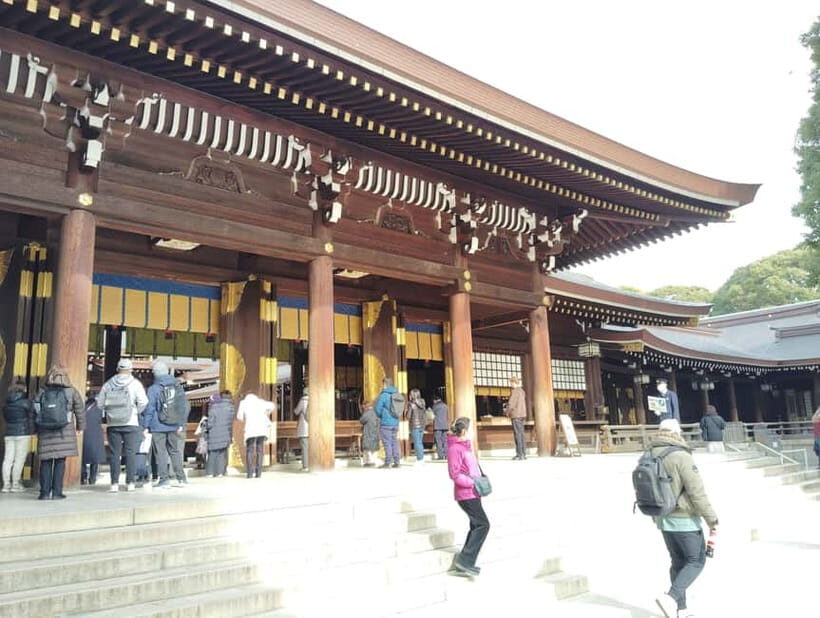
Then you reach the grand torii gate, which is where the experience pivots from sightseeing into participation. That is one of the best parts of the pacing. You do not get the ritual too early, and you do not get it too late. Instead, you walk in with enough context to understand that the next steps are about respect and focus.
You also get built-in time for a reflective moment at the shrine. The guide will walk you through the proper way to pray at Meiji Jingu and you will have a chance to pause afterward. That pause is not just sentimental. In places like this, a guided buffer turns what could be a rushed experience into something you can actually remember.
Finally, the tour circles back to the first torii gate to end. I like that the start and end point are the same obvious landmark, because it reduces stress when you want to keep exploring Tokyo afterward. You are not stuck trying to figure out where you walked off to.
If you are comparing this to self-guided wandering, the difference is the built-in sequence. It is not just the destination; it is the order of stops and what you learn at each one.
Sake barrel offering and the Eternal Forest stop
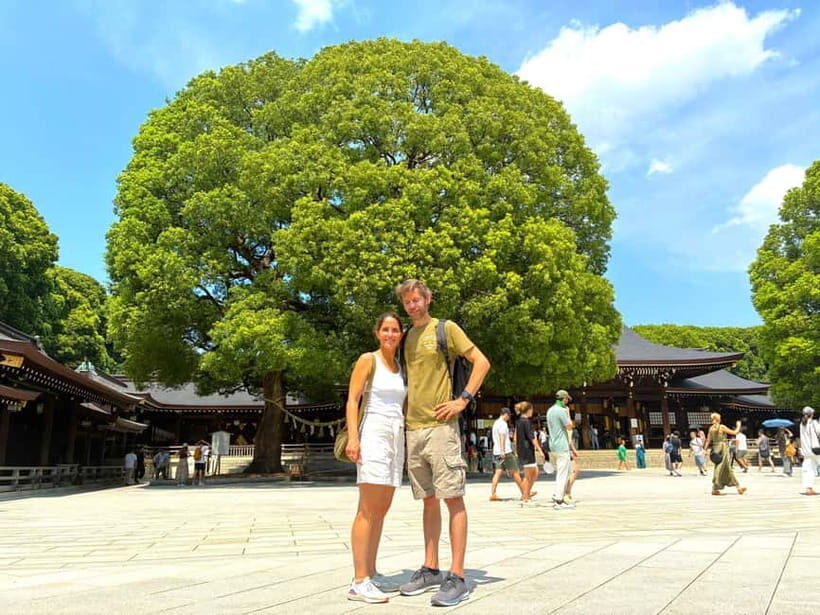
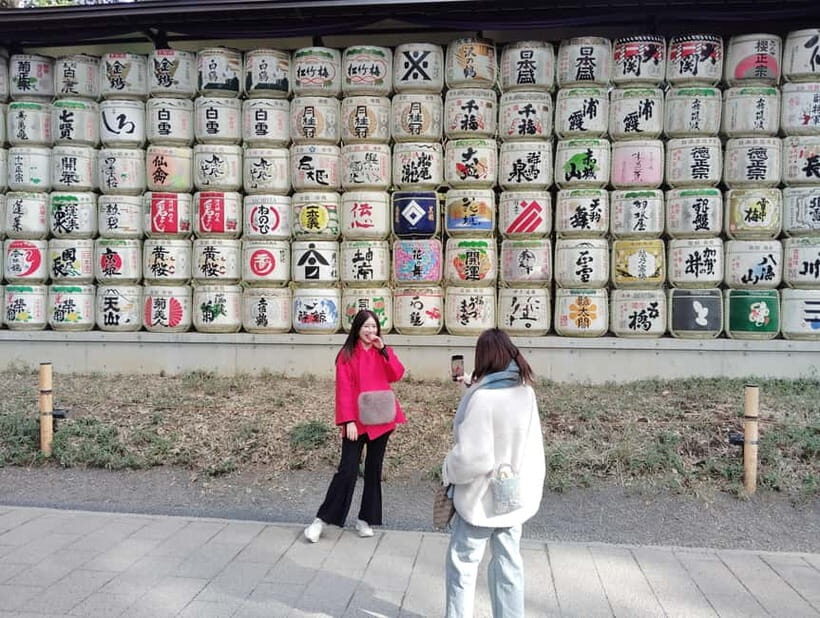
One of the tour’s signature moments happens near a sake barrel offering area. This is where you learn about the Eternal Forest and get time for photos. For me, this stop is valuable because it gives you a theme to hold onto: the experience is not only about structures and statues, it is about the spiritual ideas attached to the grounds.
The “Eternal Forest” concept is a key way the guide connects daily life to sacred space. Even if you do not consider yourself religious, you can still appreciate the cultural logic behind it: the grounds are meant to feel protected and enduring, not just scenic.
Practical bonus: this is also an easy place to reset your camera and your expectations. You get guided context first, then photo time. That order makes a difference. If you start taking pictures immediately, you miss the meaning. If you wait for explanation, your photos become souvenirs of something you understood.
You’ll also notice how the guide’s approach tends to shift your attention. Instead of scanning for what looks good, you learn what is worth looking at closely. That is a big reason the tour earns its spot on a Tokyo itinerary: it helps you slow down without feeling like you are trapped in rules.
Handwashing at the grand gate and how to pray at Meiji Jingu
The handwashing ritual is the moment most people remember, and with good reason. At the grand torii gate, the guide shows you how to participate in the traditional ritual before you go into the shrine area. That kind of guidance prevents the awkward feeling of standing in front of a ritual and not knowing what the steps are supposed to be.
I also like that the tour includes instruction on the proper way to pray at Meiji Jingu. Again, you are not left to guess. You get the method, then you get a moment to reflect. That combination matters: learning the steps gives you confidence, and the reflection gives your brain a breather.
It is easy to treat shrines like tourist sights, but this structure pushes you toward participation with respect. You are still sightseeing, you just do it differently. And because the guide sets expectations ahead of time, you can concentrate on your own experience instead of watching what everyone else is doing.
One small consideration: this portion is active. You are following along, moving through ritual space, and taking in a calm setting. If you are planning to sprint through Tokyo and want zero slow moments, you might find this section a little more time-conscious than your usual style.
But if you want your shrine visit to actually feel like a cultural encounter, the handwashing and prayer instruction are the payoff.
Omikuji fortune-telling and the charm option
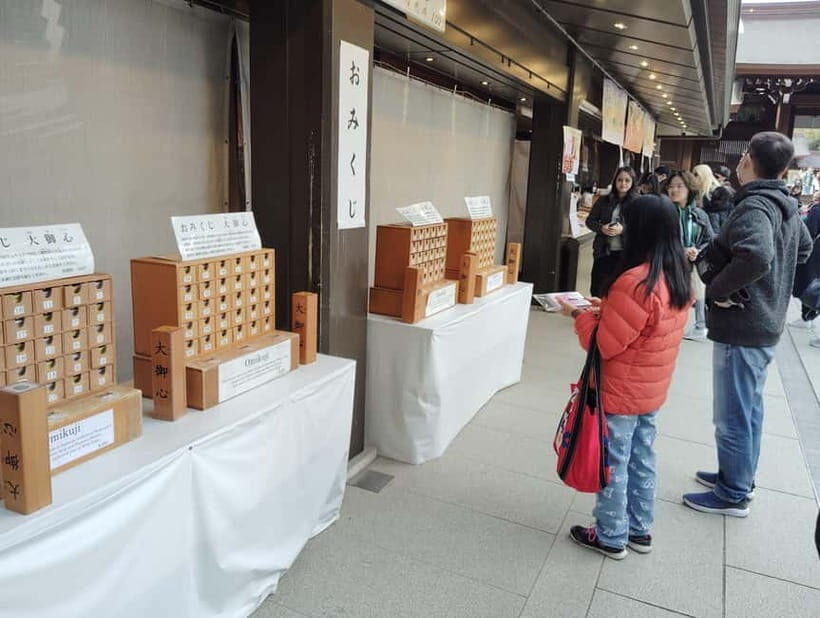
After the shrine time, the tour turns playful with fortune-telling. You will try fortune-telling during the experience, and you may also receive a protective charm if you would like one. This is where the tour balances solemn moments with something light and interactive.
Even for people who do not believe in luck as a system, fortune-telling can be fun because it turns the visit into a personal memento. It is also a way to learn about the practice in real time rather than reading about it later and forgetting the details.
This tour includes the entrance fee to Meiji Jingu Garden and Omikuji and other experience fees. Translation: you are not juggling extra payments or trying to find the right ticket lines mid-experience. You pay once (priced per person) and the guide handles the flow.
If you like small cultural activities you can take home with you, this section is worth leaning into. If you prefer not to buy or handle charms, you can still participate in the fortune-telling part without making it a major purchase moment.
The best way to think about this stop: it is a cultural bridge. You go from ritual to a practice that is social, personal, and easy to talk about afterward.
A few more Tokyo tours and experiences worth a look





Shinen Garden: South Pond calm and Kiyomasa’s Well
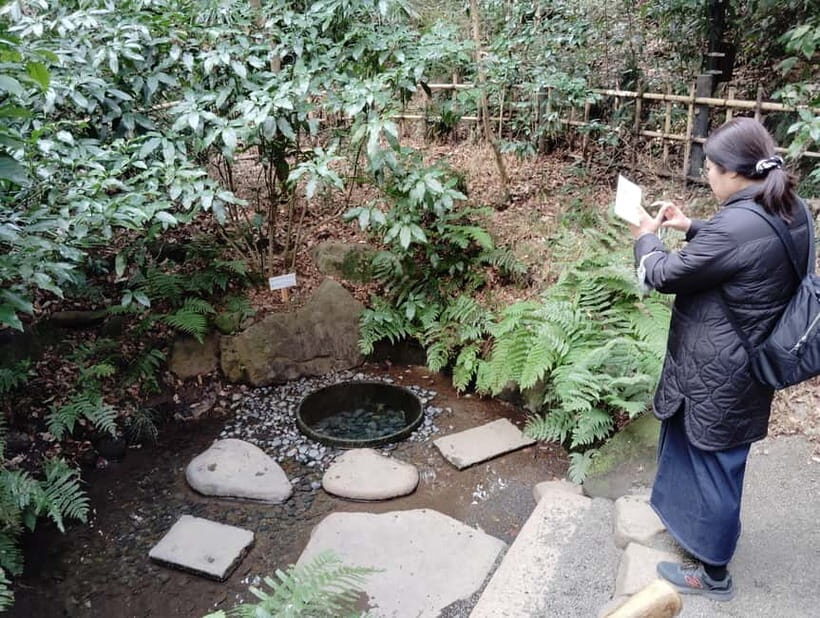
The final phase is a peaceful walk through Meiji Jingu Garden, with a focus on the South Pond area. This is where the tour earns its name in your schedule. You have already done the structured parts, so the garden time feels like the exhale.
You will walk through the Shinen Garden with guided attention. The focus on South Pond means you are not aimlessly wandering. You are paying attention to a specific area and learning how to appreciate it, not just passing through greenery.
If time allows, you may also visit Kiyomasa’s Well. That’s a nice bonus because it adds a distinct garden landmark rather than keeping the experience uniform. A well is the kind of feature you can easily miss if you are self-guiding without any plan.
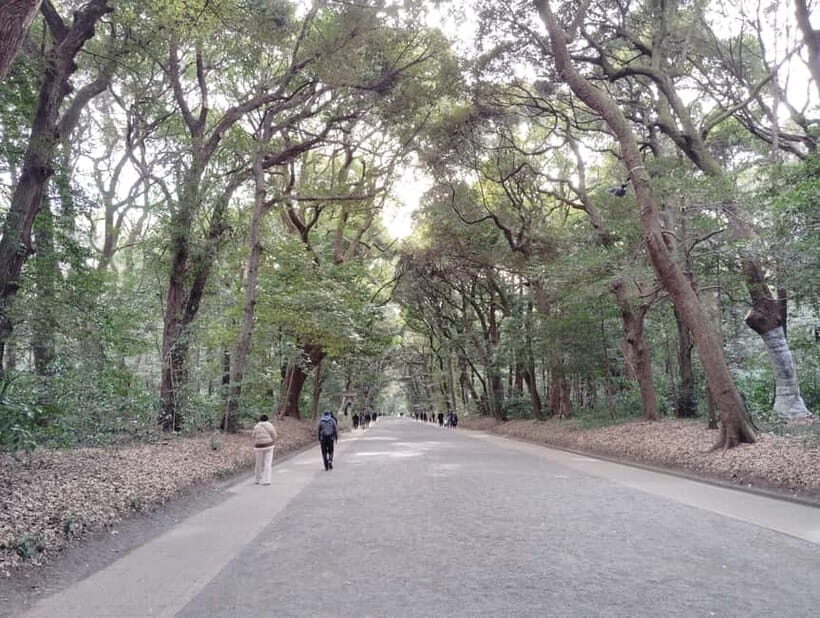
I love that the tour ends back at the first torii gate, with the chance to enjoy a peaceful walk through the forest as sunlight filters through the trees. That last stretch is small but important. It gives you time to enjoy the setting after the guided moments, without feeling rushed.
What you should expect overall in the garden: a calmer pace, more time to look and absorb, and less focus on stepping in and out of ritual spaces. It is the part of the tour that feels most like a reset for your Tokyo day.
Price and value: Is $48 for this Meiji Jingu experience worth it?
At $48 per person for a 2-hour guided tour, the value depends on what you want out of your visit. Here is why this price can make sense.
Included in the cost are the guide fee, the entrance fee to Meiji Jingu Garden, and Omikuji and other experience fees. You are not paying separate entry or trying to track down the experience costs on your own. For a short time window, that bundling is real convenience.
You are also paying for guided interpretation at the exact points where self-guiding often falls apart: the sake barrel offering area and Eternal Forest meaning, the handwashing ritual, and the proper way to pray. If those steps are where you want help, a guide earns its keep fast.
The experience is small or private-group friendly, and it is available in English. That matters because the guide-led pace keeps the 2 hours from turning into a frustrating loop of translating and guessing.
What you are not getting: food and drinks, and private transportation. If you are hungry, plan a meal before or after on your own. If you are traveling far, you will still need your transport plan into the Meiji Jingu area.
My simple rule for value: if you want cultural context plus hands-on participation in a limited time, this price is fair. If you are already fluent in shrine etiquette and you do not care about fortune-telling or guided explanations, you could do it on your own. But if you want the visit to feel organized and meaningful in one sitting, the inclusions make it easy to justify.
Should you book this Meiji Jingu Shrine & Shinen Garden tour?
I would book it if you want a structured, respectful shrine visit that also gives you garden calm and a couple of interactive cultural moments. The handwashing ritual, instruction on how to pray, and the omikuji fortune-telling are the kinds of parts that are hard to DIY confidently. The Shinen Garden time, especially around the South Pond, is a strong payoff for a short tour.
Skip it if your priority is speed, and you do not want ritual participation or guided pacing. Also consider skipping if you already have your own plan and you are comfortable going fully self-guided without interpretation support.
FAQ
How long is the Meiji Jingu Shrine and Shinen Garden guided tour?
The tour lasts 2 hours.
Where do we meet for the tour?
Meet in front of Ichinotorii (the first torii) of Meiji Jingu Shrine. The guide holds a yellow sign with the DeepExperience logo.
What language is the tour offered in?
The tour is offered with an English live guide, and the guide fee includes English and Japanese.
What is included in the $48 price?
The price includes the entrance fee to Meiji Jingu Garden and Omikuji and other experience fees, plus the guide fee.
Is food or drinks included?
No. Food and drinks are not included.
Is transportation included?
No. Private transportation is not included.
Can I get a refund if I cancel?
Yes. Free cancellation is available up to 24 hours in advance for a full refund.