REVIEW · TOKYO
Tokyo: Old Town Asakusa Guided Tour -Senso-ji Temple Visit
Book on Viator →Operated by gotcha · Bookable on Viator
Spiritual Tokyo hits fast in Asakusa. This guided Senso-ji Temple visit gives you the key landmarks in just 90 minutes, plus the cultural meaning behind what you’re seeing. I especially like how the tour keeps things moving while still explaining the rituals, not just the sights.
One big plus is the small size: max 10 people means you get a real guide moment, not a headset-free-for-all. The other standout for me is the guide talent—guests praised leaders like Yoshiko (and Yoshi san) for clear English and local detail, including how to shop and how to act respectfully.
One consideration: it’s short. If you want to wander for hours or chase every side alley on your own pace, this format may feel a little tight around the edges.
In This Review
- Key highlights worth knowing
- Why Senso-ji feels special even with only 90 minutes
- Where the tour starts: the Burger King Asakusa Azumabashi meetup
- Stop at Senso-ji: Kaminarimon, Nakamise-dori, and the main hall
- Kaminarimon Gate: your orientation point
- Nakamise-dori: shopping with context
- Main hall area: rituals, respect, and getting the meaning
- Nakamise-dori souvenirs: how to shop without getting derailed
- What makes this tour work: small group + a real guide voice
- Timing and pacing: what 1 hour 30 minutes really means
- Value check: is $43 a good deal for Senso-ji access?
- Who this tour suits best in Tokyo
- Should you book this Senso-ji guided tour?
- FAQ
- How long is the Tokyo Old Town Asakusa Guided Tour?
- What does the tour cost?
- How many people are in the group?
- Where does the tour start?
- What are the main stops during the visit?
- Is admission included for the temple?
- What if the weather is bad or I need to cancel?
Key highlights worth knowing
- Small-group max 10 so you can ask questions and follow the guide without losing the group
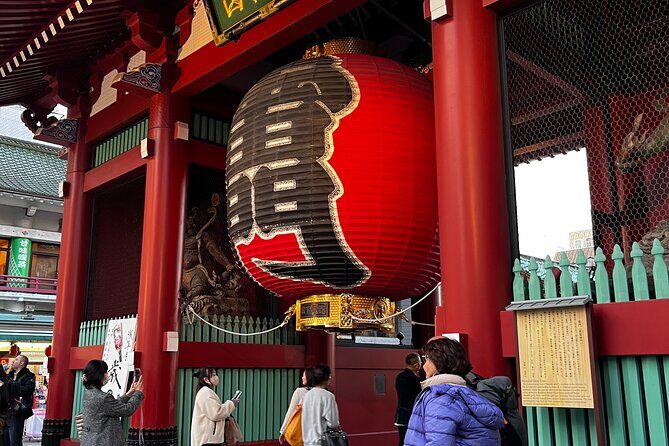
- Kaminarimon Gate + Nakamise-dori in one smooth flow, so you get the full Asakusa feel fast
- Temple rituals and etiquette explained, not just photo stops
- Fortunes and traditional practice time so you understand what you’re doing
- Nakamise-dori shopping help for souvenirs and even kimono purchases
- Admission-free for the tour’s temple entry, making the $43 price easier to justify
Why Senso-ji feels special even with only 90 minutes
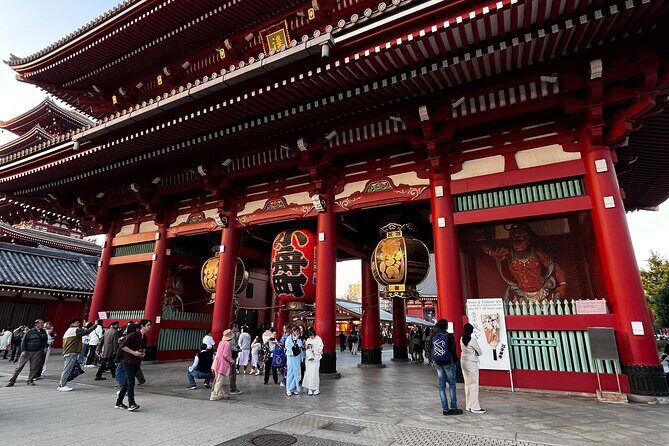
Asakusa is one of those Tokyo neighborhoods where history still shows up in daily life. And Senso-ji Temple is the center of that gravity. The biggest mistake people make is treating it like a pure photo mission. This tour nudges you in the right direction by framing what you’re looking at—especially the way people approach the grounds, what they do at key points, and how to show basic respect while you’re there.
You’re not expected to memorize a religion textbook. Instead, you get a guide who helps you make sense of the main landmarks and the rituals in plain language. That matters because Senso-ji can look confusing at first: gates, incense areas, halls, side features, and shoppers all mixing together. Having someone point out what’s important and why helps you feel oriented from the start.
You can also read our reviews of more guided tours in Tokyo


Where the tour starts: the Burger King Asakusa Azumabashi meetup
The meeting point is at Burger King Asakusa Azumabashi, Kaminarimon, 2-chōme, in the Taito City area (the address is listed in the tour details). The tour also ends back at that same meeting point, so you don’t have to worry about navigating back afterward.
Why this matters: Asakusa has lots of small streets and shortcuts, and it’s easy to lose time when you’re trying to get oriented. A fixed start and finish keeps your day simple. Add the fact that it’s near public transportation, and you can plug this tour into a busy Tokyo schedule without feeling like you’re building your day around a complicated commute.
Also, the tour uses a mobile ticket. That’s a small thing, but it helps on travel days when your phone already holds everything you need.
Stop at Senso-ji: Kaminarimon, Nakamise-dori, and the main hall
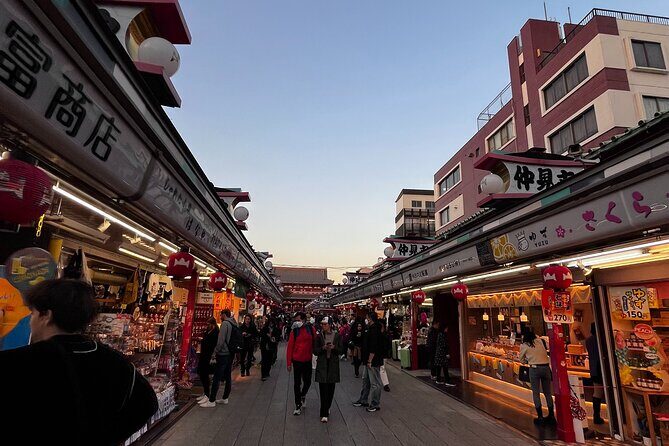
Senso-ji on this tour is built around three anchor points, which is exactly what you want if you’re short on time. You’ll see the iconic Kaminarimon Gate, the shopping corridor of Nakamise-dori, and then you’ll get to the temple’s main hall area.
Kaminarimon Gate: your orientation point
Kaminarimon is the big visual hook for Asakusa. It’s also a practical one: once you understand what this gate represents and how people move through that space, the rest of the temple visit makes more sense.
The guide’s job here is to help you recognize the flow—where people pause, where they look, and what they do next. That turns your visit from I hope I’m doing this right into you know what’s happening.
Nakamise-dori: shopping with context
Right after the gate, you hit Nakamise-dori, the classic street lined with traditional snacks and souvenirs. Yes, it’s tourist-friendly, but it’s also part of the experience. On a guided visit, Nakamise-dori becomes more than a strip of shops. You’re not just buying things—you’re learning the cultural logic of what people pick up here.
If you’re shopping for gifts, this is a smart moment to do it. You can look at options, ask questions, and decide what’s worth buying before you end up tired and rushed later in the day.






Main hall area: rituals, respect, and getting the meaning
The main hall segment is where the tour earns its keep. This is not a quick pass-by. You get explanations about the temple’s traditions, including how to be respectful while you’re on the grounds.
Guests specifically praised the way the guide explained the significance of the temple and shrines, plus how to behave in a culturally appropriate way. That’s the kind of guidance that improves your experience immediately—because you’re standing there doing something you actually understand, not just copying a motion you saw in a photo.
You may also draw fortunes during the visit. Even if you’re not a fortune person, doing this with context makes it feel like part of the place instead of a random activity. It’s also a great memory-maker because it’s tangible: you leave with a small piece of your day at Senso-ji.
Nakamise-dori souvenirs: how to shop without getting derailed
Nakamise-dori shopping can be fun. It can also eat your time. The tour structure helps because you’re shopping with a timebox and a guide who can steer you toward items that fit what you actually want to carry home.
One review highlighted that the guide helped with purchasing a beautiful kimono. Even if you’re not shopping for textiles, that’s an example of why a guide is useful here: they can help you navigate the practical side of buying in a busy, sensory-heavy street.
Here’s how I suggest you use the shopping time:
- Decide your shopping purpose first: snacks, small souvenirs, or something bigger like clothing
- Watch for items that are easy to transport and easy to explain as gifts
- Don’t wait until the very end of your day to buy—this tour gives you a timed slot while you’re still fresh
Also, remember that Nakamise-dori is part of a living cultural setting. Keep your pace respectful. If you slow down to browse, do it safely and don’t block the flow of people moving toward the temple.
What makes this tour work: small group + a real guide voice
This isn’t an audio-wand experience. You’re following a guide who knows the best corners and knows how to keep the information practical.
The small-group limit is huge for quality here. When the group is capped at 10, it’s easier to pause, ask questions, and get answers that actually fit your situation—like how to approach rituals respectfully, or what to look for on the street.
From the feedback provided, the standout praise centers on guides like Yoshiko and Yoshi san: clear English, kindness, and local insight. That combo matters because Asakusa isn’t just a monument. It’s a neighborhood where people still do things day-to-day. A local guide can explain that difference, which is what turns a standard temple stop into a more personal experience.
It also helps if you want to understand etiquette without feeling awkward. Even a simple explanation can save you from accidentally doing the wrong thing at the wrong time.
Timing and pacing: what 1 hour 30 minutes really means
The tour runs about 1 hour 30 minutes. In Tokyo, that’s not long—but it’s long enough to do something meaningful if the plan is tight.
The upside: you’ll hit the top landmarks—Kaminarimon, Nakamise-dori, and the main hall—without losing your whole day. This is a great option when Senso-ji is on your must-see list but you still want time for other neighborhoods after.
The downside: you won’t have unlimited time for every side area. If you like slow sightseeing, sketching, or getting lost on purpose, you may want extra independent time before or after the tour.
My practical take: treat the guided portion as your foundation. Then, if you want, add your own wandering afterward while everything is easier to understand.
Value check: is $43 a good deal for Senso-ji access?
At $43 per person for about 90 minutes, you’re paying for guided orientation, interpretation of rituals, and a structured visit that includes time on Nakamise-dori.
The admission ticket aspect is important. The tour notes admission ticket free, which reduces the “hidden cost” concern. You’re not paying extra on top just to enter what you came to see.
So where does the value come from?
- You’re buying context: you learn what you’re seeing and how to participate appropriately
- You’re buying efficiency: you hit the landmarks without getting tangled in the crowd flow
- You’re buying shopping guidance: not just browsing, but practical help deciding what to buy
If you’re the type who likes guided tours—especially for cultural sites—$43 for a small group and a focused route feels reasonable. If you already know exactly how you want to move through Senso-ji and you prefer self-paced wandering, then it may feel pricier than a simple train ride and a map. But for most first-time visitors, the guide-led format is what makes the experience click.
Who this tour suits best in Tokyo
This tour is a strong fit if:
- You’re visiting Asakusa for the first time and want the major highlights without confusion
- You care about doing temple visits respectfully and want plain guidance
- You want souvenir time that doesn’t turn into random impulse buying
- You prefer small groups and a guide who can answer questions
It may be less ideal if:
- You want a long, slow temple day where you roam for hours
- You’re already deeply familiar with Senso-ji rituals and etiquette and don’t need interpretation
Also, service animals are allowed, and most people can participate. The tour requires good weather, so plan around that if you’re traveling in a season with frequent rain.
Should you book this Senso-ji guided tour?
I’d book it if you want a clean, confidence-building way to experience Senso-ji and the Asakusa street culture in a short window. The combination of small-group size, clear guide communication, and meaningful explanations—picked up from guides like Yoshiko and Yoshi san in the feedback—makes it feel less like a checklist and more like a real understanding of the place.
Skip it if you’re the kind of traveler who wants to linger everywhere for as long as it takes and you don’t need help learning the etiquette or meaning behind what you’re doing.
If you’re on your first Tokyo trip and Asakusa is a priority, this is a smart, efficient choice.
FAQ
How long is the Tokyo Old Town Asakusa Guided Tour?
It runs about 1 hour 30 minutes.
What does the tour cost?
The price is $43.00 per person.
How many people are in the group?
The group is capped at a maximum of 10 travelers.
Where does the tour start?
The meeting point is Burger King Asakusa Azumabashi, Japan, 111-0034 Tokyo, Taito City, Kaminarimon, 2-chōme (the full address is provided in the booking details). The tour ends back at the meeting point.
What are the main stops during the visit?
You’ll visit Senso-ji Temple, including Kaminarimon Gate and Nakamise-dori street, and you’ll also reach the temple’s main hall area.
Is admission included for the temple?
The tour indicates that the admission ticket is free.
What if the weather is bad or I need to cancel?
The tour requires good weather. If it’s canceled due to poor weather, you’ll be offered a different date or a full refund. You can cancel up to 24 hours in advance for a full refund.