REVIEW · TOKYO
Tokyo: Private Walking Tour with a Local Guide
Book on Viator →Operated by Tokyo Vibes · Bookable on Viator
Tokyo makes sense with a local at your side. This private walking tour is built for real orientation: you get an actual guide story-by-story while you move around neighborhoods that often overwhelm first-timers. I especially like the customizable route, so you can steer toward temples, markets, anime, or shopping instead of being stuck on a fixed script. I also like the private, guide-led pacing, which helps you spend time seeing Tokyo instead of figuring out trains and stations.
One thing to consider: it’s a walking tour with transit between areas, so if you’re not into lots of steps (or you get tired after busy streets), plan your day carefully and pick the right tour length.
In This Review
- Key things you’ll enjoy most
- Private Tokyo walking tour with a local guide: how it changes your first day
- Asakusa and Senso-ji: old Tokyo, plus a smarter way to wander
- Ueno: temples, museums, and Ameya Yokocho’s 80s-feeling energy
- Akihabara: anime and electronics shopping with a guide’s street logic
- Shibuya crossing and Hachiko: pop-culture Tokyo with a real story
- Omoide Yokocho and Shinjuku nights: old alley energy and neon-side context
- Takeshita Street to Meiji Jingu: fashion chaos, then a quiet reset
- Tsukiji Fish Market and the East Garden: food energy and imperial calm
- How long is enough: 4 vs 6 vs 8 hours in Tokyo
- Price and value: what you’re really paying for (at $132.91)
- The guide factor: how Saya and Gabriel make logistics easier
- Who should book this tour
- Should you book Tokyo Vibes Private Walking Tour?
- FAQ
- FAQ
- How long is the Tokyo private walking tour?
- Is this tour private or shared?
- Can I customize the route during the tour?
- Do I need to arrange my own transportation between stops?
- Is pickup available?
- Are entrance tickets included?
- Are food and drinks included?
- What neighborhoods and sights are included?
- Is there a mobile ticket?
- What is the cancellation policy?
Key things you’ll enjoy most
- Private by design: it’s only your group, so your questions don’t get lost in a crowd.
- Route you can shape: you can tailor the tour around your interests and specific areas.
- Public transport with a guide: great for Tokyo station navigation, including transfers where signage can be intense.
- Classic Tokyo neighborhoods in one run: from Asakusa and Ueno to Akihabara, Shibuya, and beyond.
- Comfort with time choices: pick about 4, 6, or 8 hours to match your stamina.
Private Tokyo walking tour with a local guide: how it changes your first day
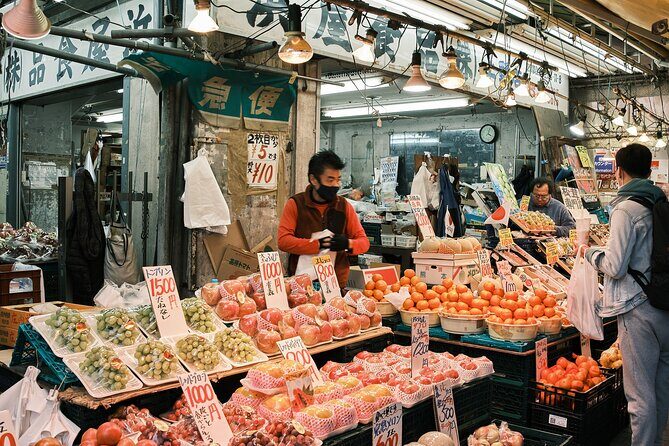
Tokyo is big, and it can feel like you’re constantly “catching up” on maps. The payoff here is simple: you’re walking with a local guide who understands how to flow between areas and how to explain what you’re actually looking at. That means less time asking which stop is correct and more time noticing details like shopfront rhythms, festival-style street layouts, and why certain temples sit where they do.
This is also the kind of tour that helps you build momentum. When you get a clear explanation of what you just saw, the next neighborhood feels easier. And because it’s private, you can slow down for photos, speed up when you’re ready, or pivot if your mood changes mid-day.
You can also read our reviews of more walking tours in Tokyo


Asakusa and Senso-ji: old Tokyo, plus a smarter way to wander
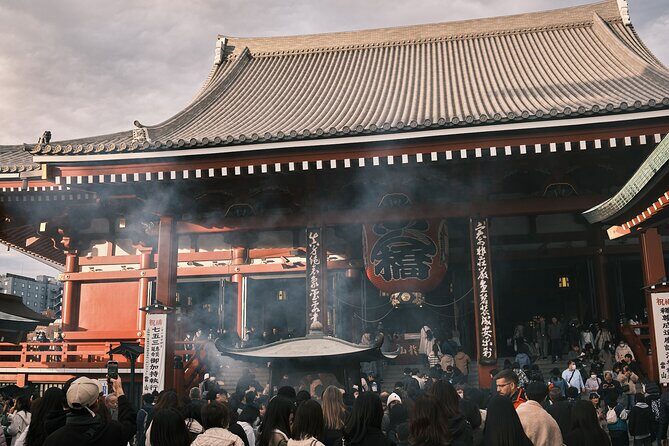
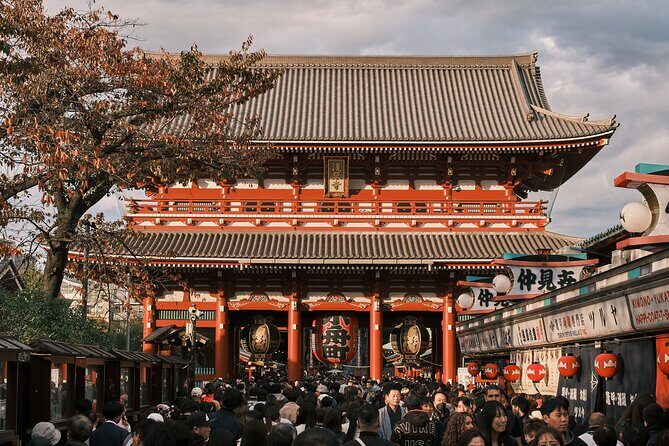
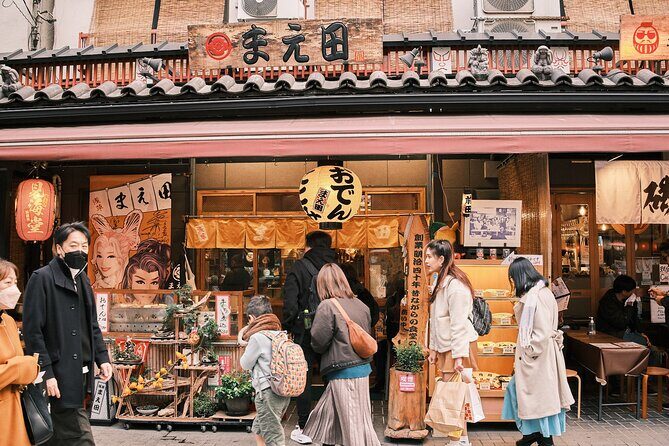
Asakusa is where Tokyo starts feeling historical. You’ll be in the historic district and visiting Senso-ji, which is Tokyo’s oldest temple. What makes this stop click is the combination of the landmark temple plus the street that surrounds it.
After Senso-ji, you’ll walk Nakamise-dori, a long shopping street known for traditional snacks and souvenir-style browsing. This is where you can test your “Tokyo senses” for the day: what smells good, what makes for a quick gift, and what you actually want to try. Even if you’re not a big shopper, this strip helps you understand how temple visits are part worship and part street culture.
A practical tip: since Nakamise-dori is a popular area, going with a guide keeps you from drifting into the same photo spots everyone crowds into. You’ll also be able to ask quick questions on what you’re seeing instead of trying to translate everything alone.
Ueno: temples, museums, and Ameya Yokocho’s 80s-feeling energy
Ueno is a “Tokyo that lives” district. You’ll pass by major cultural sites, including Tokyo National Museum, National Museum of Western Art, Ueno Zoo, and Ueno Toshogu Shrine. Even if you don’t go inside every museum, the area gives you context for how Tokyo values both education and public life.
Then comes Ameya Yokocho, an open-air market area known for street food and standing-bar vibes. The best part is the feel: you get that more local, slightly retro mood people often miss when they only stick to glossy shopping malls. This is a great place to snack lightly, take photos, and watch how people browse without making it a formal event.
If you’re short on time, Ueno can be a “choose your flavor” stop. If you love museums, you can linger. If you love street culture, you can focus your time around the market streets.
Akihabara: anime and electronics shopping with a guide’s street logic
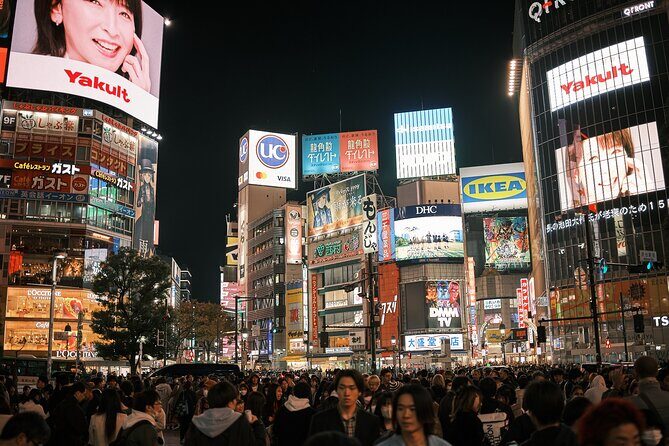
Akihabara is where Tokyo gets nerdy in the best way: anime figures, manga, retro game centers, and electronics shopping. You’ll walk through the area and explore shops that cater to both modern tech buyers and people hunting for older styles of games and collectibles.
This stop matters for travelers who want more than a photo of a neon sign. A local guide can point you toward what’s worth your time and how to shop efficiently. The tour also mentions tax-free shopping, which is a big deal if you’re planning to buy electronics or items that may not be available elsewhere.
Possible drawback to keep in mind: Akihabara can turn into a time sink if you’re browsing everything at once. If you care about buying something specific, decide your target first (figure type, system, brand) so you don’t lose the day to endless aisles.
Shibuya crossing and Hachiko: pop-culture Tokyo with a real story
Shibuya is busy, and that’s part of its identity. You’ll experience Shibuya Crossing, one of the world’s busiest intersections, and then you’ll do a brief stop at the Hachiko statue. The tour isn’t just pointing at a famous spot. It also explains Hachiko’s story, the loyal dog who became a symbol in Tokyo.
Why I think this pairing works: Shibuya is modern and fast, but Hachiko adds emotion and meaning. You go from lights and motion to a simple human-animal story that helps the city feel less like a theme park.
If crowds bother you, a private guide helps you time your look. You can also ask what area around the crossing is best for photos without standing in the loudest bottleneck.
You can also read our reviews of more guided tours in Tokyo



Omoide Yokocho and Shinjuku nights: old alley energy and neon-side context
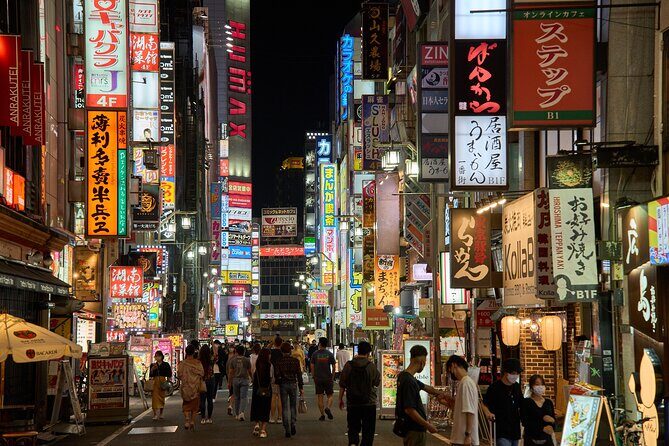
After Shibuya, you’ll move into Omoide Yokocho, a historic alley known for narrow lanes lined with classic izakayas and street-food-style stops. This is the part of Tokyo that feels like it survived multiple trends and still works today.
Next up is Shinjuku, Tokyo’s entertainment hub. You’ll walk through neon-lit streets with a mix of shopping, dining, and nightlife. This is where the city feels like it’s running on pure momentum.
For many people, Shinjuku is where they decide if Tokyo’s nightlife is their thing. If you’re not looking to drink, you can still enjoy the atmosphere and the variety of street signage. The guide’s context can also help you understand what you’re seeing without forcing you to interpret everything alone.
Takeshita Street to Meiji Jingu: fashion chaos, then a quiet reset
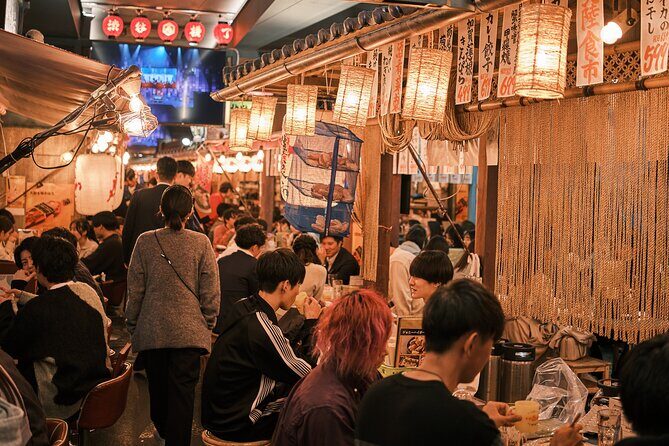
Takeshita Street is one of Tokyo’s most famous pedestrian lanes. The vibe is youth fashion, snack stops, and quick photo moments. You’ll be walking through the chaos of trendy boutiques and quirky shops, and it’s the kind of area where everything looks designed for street-style pictures.
Then the tour shifts gears to Meiji Jingu Shrine, a calm oasis in the middle of the city. You’ll explore the peaceful grounds with towering torii gates and forested surroundings. This contrast is not an accident. It’s a smart rhythm: loud energy first, then a reset that helps you breathe and think.
If you only visit one shrine, Meiji Jingu is a strong pick because the setting does a lot of the work. The guide can help you focus on what matters there—why the space feels ceremonial, not just scenic.
Tsukiji Fish Market and the East Garden: food energy and imperial calm
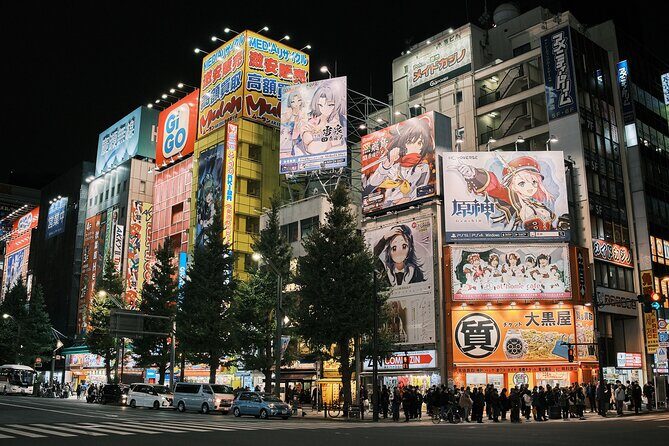
Tokyo’s food culture can be overwhelming, but Tsukiji Fish Market is one of the easiest ways to understand it. You’ll visit the seafood hub area and wander through busy aisles where fresh ingredients and local delicacies are front and center. Even if you don’t buy much, the market teaches you how food is part of the city’s everyday rhythm.
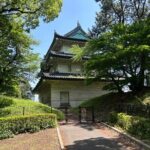
Then you’ll close the tour with the East Garden of the Imperial Palace. This is a very different kind of Tokyo: landscaped gardens, ancient stone walls, and historic ruins. The effect is “slow down” time, which matters because by the end of a full-day walk, your feet will appreciate a calmer pace.
This ending also gives your day a satisfying shape. You go from markets and crowds to a place built for stillness.
How long is enough: 4 vs 6 vs 8 hours in Tokyo
The tour offers about 4, 6, or 8 hours, and the length really changes your experience quality. In a shorter version, you’ll likely concentrate on fewer neighborhoods—enough to get the main flavor without trying to cover the entire map. In the longer options, you can connect the dots across more districts, including both the city’s modern icons and its quieter ritual spaces.
I’d choose based on your travel style:
- If you’re jet-lagged or new to transit, a shorter plan can still feel like a win.
- If you want photos, snacks, and time for questions, 6 hours often hits the sweet spot.
- If you want a full sampler across Tokyo districts and a calm ending at the Imperial East Garden, 8 hours is the best fit.
Also remember: travel time between locations can vary. Tokyo is not always “direct,” even when two neighborhoods feel close on a map. The guide’s job is to keep you moving efficiently.
Price and value: what you’re really paying for (at $132.91)
At about $132.91 per person, the headline number is the start, not the whole story. You’re paying for a private guide, private walking flow, and public transit guidance—plus temples and shrines entrance tickets included. That matters because those tickets and the guide’s explanations are the hard parts to replicate on your own when you’re juggling language, directions, and timing.
You’re also getting real flexibility. Being able to customize matters most in Tokyo, where the “perfect itinerary” depends on your mood. One traveler wants more anime shopping. Another wants more shrine time. The tour is designed to shift.
What’s not included is also clear: food and drinks are on you. That’s normal, but you should budget for snacks in markets and meals if you’re out most of the day. Trains are included in the sense that you’re using public transportation, but the tour doesn’t include private car rides or airport pickup/drop-off.
The guide factor: how Saya and Gabriel make logistics easier
The biggest difference on a tour like this is often the guide’s rhythm. The names that come up—Saya and Gabriel—share a theme: they help you move through the city without losing your day to confusion.
One practical example: Tokyo’s stations can be enormous. A good guide helps you pick the right exits, understand transfer flow, and avoid the stress of walking wrong corridors just because a sign is slightly confusing. That’s not glamorous, but it’s what saves hours.
In at least one case, a guide like Gabriel also accommodated an extra-stress situation by meeting at the airport. That kind of flexibility isn’t guaranteed for every booking, but it shows the tour can be handled thoughtfully if your plan gets messy.
Who should book this tour
This private Tokyo walk is ideal if:
- you want a guided orientation across multiple districts in one day
- you like customizing what you see
- you’re okay with walking and using public transport
- you’d rather buy time with a guide than spend that time figuring out stations
It may be less ideal if:
- you hate walking or have limited stamina
- you only want one or two specific sights and don’t care about the rest of Tokyo’s contrasts
- you’re looking for a food-only experience, since food and drinks aren’t included
Should you book Tokyo Vibes Private Walking Tour?
Yes, if you want a first-day Tokyo plan that feels flexible, not rigid. The private format, the ability to tailor the route, and the guide’s help with station navigation make it a strong value—especially when entrance tickets for temples and shrines are included.
If you’re the type who likes to wander completely solo, you can DIY these neighborhoods. But if you want your time in Tokyo to feel organized and meaningful, this tour is a smart way to start.
FAQ
FAQ
How long is the Tokyo private walking tour?
It runs for about 4 to 8 hours, depending on which option you choose.
Is this tour private or shared?
It’s private. Only your group will participate.
Can I customize the route during the tour?
Yes. The tour is designed so you can customize based on your interests and around specific areas.
Do I need to arrange my own transportation between stops?
The tour uses walking plus public transportation. The guide helps you get from place to place.
Is pickup available?
Pickup is offered, and there’s a convenient hotel or accommodation meet-up.
Are entrance tickets included?
Yes. Temples and shrines entrance tickets are included.
Are food and drinks included?
No. Food and drinks aren’t included.
What neighborhoods and sights are included?
You’ll cover areas such as Asakusa (including Senso-ji), Ueno (including major museum areas and Ueno Toshogu Shrine), Ameya Yokocho market, Akihabara, Shibuya (including Shibuya Crossing and the Hachiko statue), Omoide Yokocho, Shinjuku, Takeshita Street, Meiji Jingu Shrine, Tsukiji Fish Market, and the East Garden of the Imperial Palace.
Is there a mobile ticket?
Yes. The experience includes a mobile ticket.
What is the cancellation policy?
You can cancel for a full refund up to 24 hours in advance of the experience start time. If you cancel less than 24 hours before, the amount paid isn’t refunded.