REVIEW · TOKYO
Tokyo Shinjuku Sumo Show and Experience with Drinks and Photo
Book on Viator →Operated by Shinjuku Sumo Club · Bookable on Viator
Shinjuku sumo feels surprisingly personal. The small Shinjuku Sumo Club show puts you around the dohyo with a bilingual MC who makes the rules, rituals, and match flow easy to follow, even if you’re new to sumo. I love the intimate setup, and I also really like the hands-on Sumo Challenge and end-of-show photo time with the wrestlers. One thing to consider: the format is more like an exhibition-style demonstration than a full tournament day, so if you expect lots of long, traditional bouts, your time may feel short.
This is built for international visitors without turning into a boring lecture. You get live action, simple explanations of what you’re seeing, and moments where you’re invited to participate rather than just sit there. The whole program runs about 1 hour 30 minutes, and the venue caps it at roughly 50 people, so you won’t be lost in a crowd.
In This Review
- Key Highlights You’ll Feel Immediately
- A Small Club in Shinjuku: Why This Sumo Feels Different
- The Bilingual MC: How the Rituals Become Clear
- Live Demonstrations and Matches: What to Watch Up Close
- The Sumo Challenge: Strength Test and Real Photo Time
- About the Drink: Included Water, Then Drinks for Sale
- Location and Timing: A Convenient Shinjuku Night Plan
- Who This Sumo Show Is Perfect For
- Who Might Want to Rethink It
- How Much Value Are You Really Getting for $70?
- Practical Tips So Your Night Goes Smoothly
- Should You Book Shinjuku Sumo Show and Experience with Drinks and Photo?
- FAQ
- How long is the Shinjuku sumo show and experience?
- What is the price per person?
- Where is the meeting point for the show?
- Is there a limit on group size?
- Is it in an easy-to-reach area?
- Does the ticket include a drink?
- Will I be able to participate in the challenge and take photos?
- What is the cancellation policy?
Key Highlights You’ll Feel Immediately
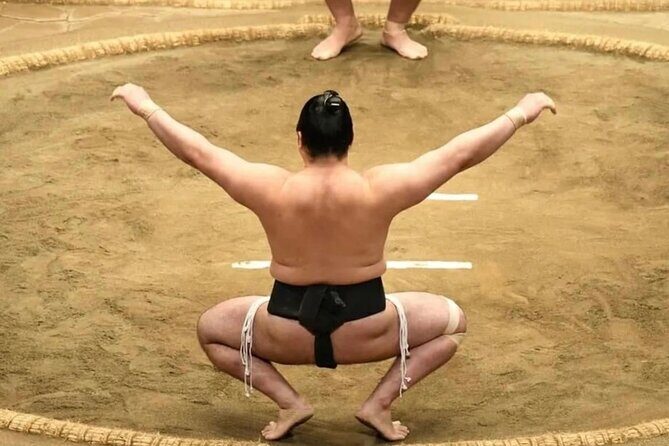
- Around-the-ring seating (about 50 spots) makes it easy to see footwork, grip changes, and body control
- Bilingual MC turns sumo rules and rituals into something you can actually remember
- Interactive Sumo Challenge lets you step in and test your strength with real wrestlers
- Photo moment + meet-and-greet vibe so you leave with more than just memories
- Short, structured program (~90 minutes) that fits well into an evening in Shinjuku
A Small Club in Shinjuku: Why This Sumo Feels Different
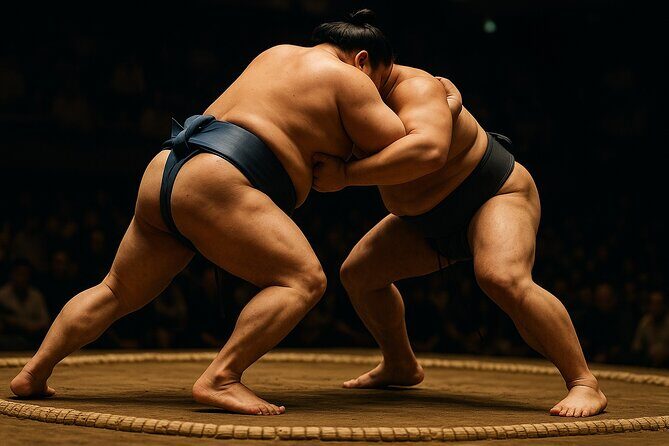
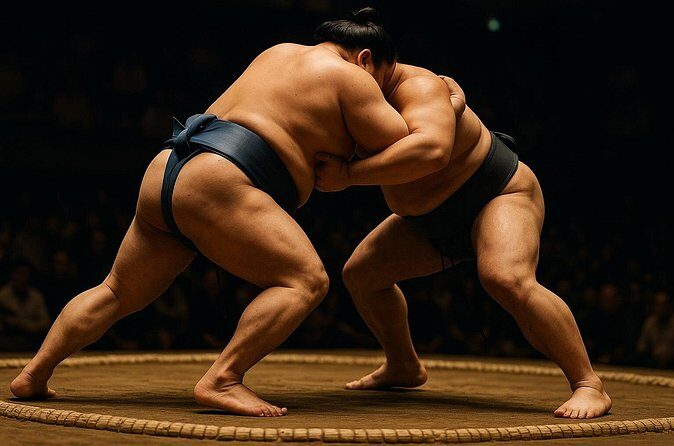
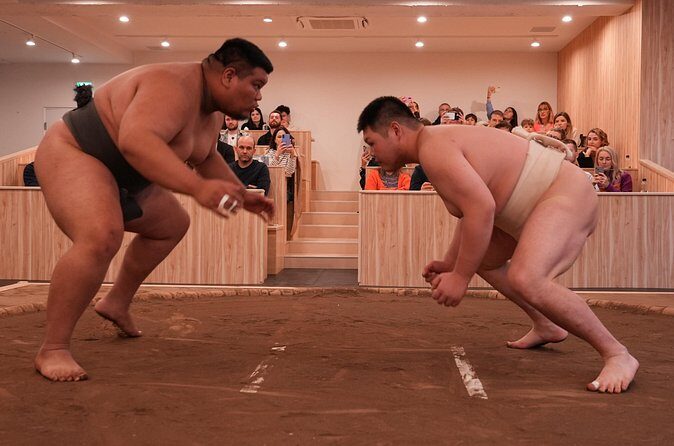
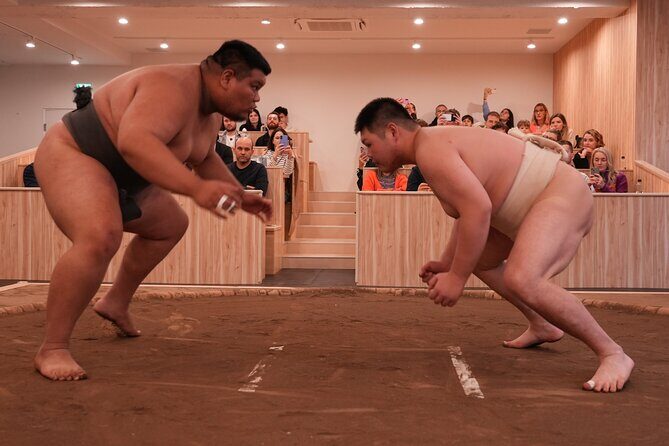
Official sumo tournaments have huge arenas, thick smoke of noise, and rows of seats you can’t really read. Here, the Shinjuku Sumo Club is built for closeness. Seating is limited to about 50, and you sit near the ring so you’re watching the bout mechanics—not just the final outcome.
That matters for first-timers. Sumo moves are subtle when you’re far away. With a close view, you can spot the moments that decide a match: the first step, the hand placement, the balance shift, and the sudden push that turns defense into surrender. Even if you don’t know all the vocabulary yet, you start to recognize patterns fast.
This is also why the entertainment lands. When the wrestlers step close and the MC calls attention to what’s happening, it doesn’t feel like you’re watching through a screen of distance. It feels like you’re in the room with the sport.
A few more Tokyo tours and experiences worth a look
The Bilingual MC: How the Rituals Become Clear
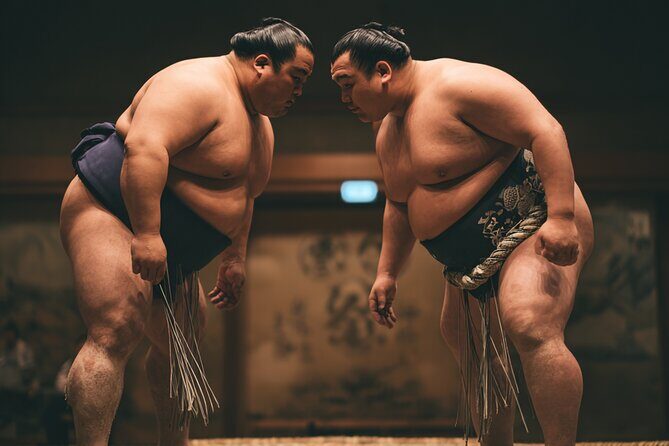
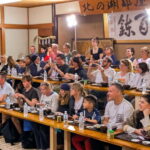
The biggest reason this works for newcomers is the MC. A bilingual host explains what you’re seeing in plain language—history, rituals, and the meaning behind common sumo actions. If you’ve ever watched sumo and wondered why there’s so much ceremony around something that looks like pushing, this is exactly the answer.
You can expect a guided intro that ties together the basics:
- What the match format is actually trying to do
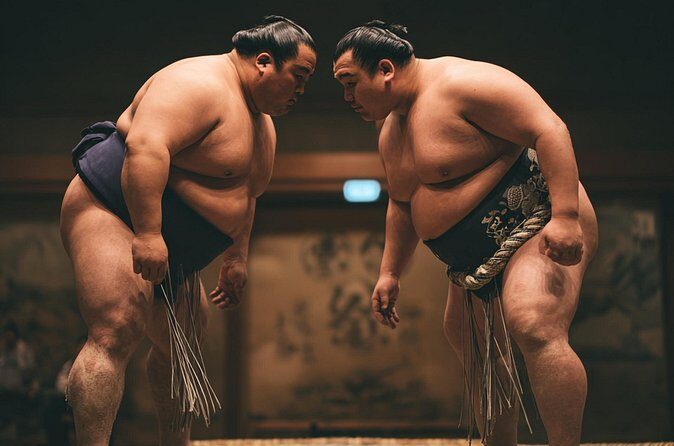
- Why certain pre-bout rituals matter
- What different stances and grips are for
From the show’s structure, you’ll likely notice the MC doesn’t just narrate. They point out what to watch next, so the explanations land while the action is happening. That’s a rare thing in sports tourism, where you often get either pure performance or pure lecture. Here, you get both in a controlled, easy pace.
Also, the MC brings humor. Multiple people highlight the host as funny and engaging, which helps keep the energy up during the teaching parts. It’s not only educational; it’s designed to keep you paying attention.
Live Demonstrations and Matches: What to Watch Up Close
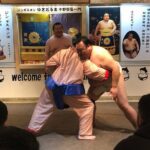
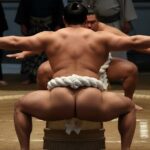
After the intro, you’ll see professional wrestlers demonstrate powerful bouts with live commentary. Even when the action is staged for the show format, it’s still real sumo muscle and real technique.
A close-up view helps you “read” the fight. Here’s what I’d watch for during the demonstrations and quick match segments:
- Footwork shifts: tiny steps that change your angle
- Grip battles: hands move, then suddenly lock into a plan
- Balance control: the wrestler who stays stable usually wins the next exchange
- Timing: the moment one push starts a chain reaction
One caution from experience patterns like this: some people were surprised by how short the match segments were, especially if they expected a full exhibition of longer bouts. The show still delivers action, but it’s structured and condensed. If you come with the right expectation—introduction + demonstrations + participation—you’ll enjoy it much more.
The Sumo Challenge: Strength Test and Real Photo Time
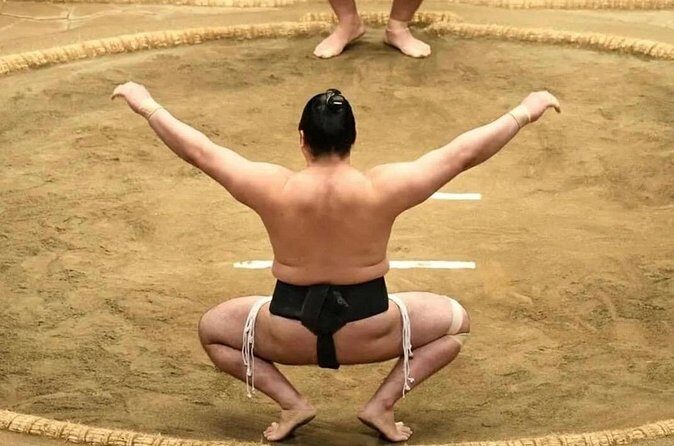
This is the part that most people remember, because it turns spectators into participants.
You’ll be invited into the ring area for the Sumo Challenge. The goal isn’t to become a sumo wrestler overnight. It’s a fun strength-and-balance test that makes you understand what the sport actually demands: staying upright, pushing with good leverage, and dealing with someone else’s timing.
A few useful details from what’s been described:
- Not everyone gets selected for every challenge moment, and selection can feel lottery-style
- People who do get picked often end up with a satisfying close-up interaction
- The wrestlers come across as friendly and patient in how they handle the audience participation
Then comes the photo session and meet-and-greet at the end. Multiple reviews mention everyone gets a chance for photos with the wrestlers, and that the wrestlers are friendly. That’s a big deal in Japan tourism, where some “photo moments” are rushed or feel like a checkbox. This one sounds more like a real send-off.
One review in particular highlights even the chance to fight one of the wrestlers at the end. While that may not happen the same way every night, the overall takeaway is clear: the show is willing to let you get close to the sport.
About the Drink: Included Water, Then Drinks for Sale
Let’s talk value, not just cost.
The ticket price includes a drink, but what you get is a bottle of water. That’s the kind of “included” detail that can make or break your satisfaction. If you’re expecting an alcoholic drink or something more substantial, you’ll be disappointed. If you’re fine with a simple included bottle of water, it’s a small line item.
Other drinks may be available for purchase. So, the real way to think about your budget is:
- $70 for the show + participation + photo moment
- plus whatever extras you choose to buy
At this price, you’re mostly paying for the access: small venue, bilingual explanation, ring-level viewing, and the chance to interact. If any one of those is your top priority, the ticket makes sense. If you only want long match action like a tournament, it may feel pricey.






Location and Timing: A Convenient Shinjuku Night Plan
Shinjuku is a great base for this kind of activity because you can fit it between dinner plans and sightseeing without losing half the evening commuting.
The meeting point is at SEKISAKU BLDG. in Shinjuku (Ōkubo, 2-chōme area). The tour ends back at the meeting point. It’s also described as near public transportation, so you can usually connect quickly once you’re already in Shinjuku.
The program runs about 1 hour 30 minutes, so you don’t need to build a whole day around it. This is the kind of activity that works well if you want one “Japan culture” moment that’s not a long multi-hour commitment.
One practical note from a review: stairs can be steep, but an elevator exists to reach the floor. If stairs are an issue for you, it’s worth asking staff when you arrive so you don’t waste time.
Who This Sumo Show Is Perfect For
This is a smart pick if you match at least one of these:
- You’re a first-time sumo watcher and want the rituals explained
- You want a cultural activity that’s easy to enjoy in English
- You love interactive experiences where you do more than sit and watch
- You want ring-level photos with real wrestlers
- You’re visiting Shinjuku and want something compact yet memorable
It’s also a good fit for couples and friends because the small group size keeps the vibe relaxed. It’s not the kind of experience where you feel lost in a stadium.
Who Might Want to Rethink It
This show won’t please everyone, and that’s fair. The main reasons some people feel let down are expectation-related:
- The event is not a full tournament format with lots of long bouts
- The match segments can feel brief compared to tournament viewing
- The drink included may be only water, not something more exciting
- Some people felt the staff presence outside the wrestlers was limited, which can reduce the “pure cultural immersion” feeling
If you want sumo like you’d see on TV during a tournament day, you might want to look for a more tournament-style experience instead. But if you want a short, guided, interactive sumo night with strong showmanship, this is exactly that.
How Much Value Are You Really Getting for $70?
Here’s the balanced way I’d judge the price.
You’re paying for four things that are hard to replicate cheaply in Tokyo:
- Intimate seating near the ring (about 50 people)
- Bilingual explanation that helps you understand the sport quickly
- Live wrestlers demonstrating technique, not videos
- Participation + photo time that turns the night into a personal memory
The included bottle of water isn’t the reason to buy the ticket. It’s the access and interaction that justify the cost. Also, if you’re traveling with friends and can share the vibe, it tends to feel more worth it than paying for a passive show.
So the best question is not Is it cheap? It isn’t trying to be. The question is: Do you want a close-up sumo experience with explanations and photos in a short evening window? If yes, $70 starts to feel reasonable.
Practical Tips So Your Night Goes Smoothly
- Go in with the right expectation: it’s a guided exhibition + audience participation, not a full tournament schedule.
- Pay attention to the MC’s pointers: the sport becomes easier to follow when you know what to watch.
- Plan your photo time: the end photo/mingle moment is the payoff. Don’t rush out early.
- Bring realistic drink expectations: included drink is a bottle of water; other drinks can cost extra.
- If you’re worried about stairs, ask about the elevator when you arrive.
Should You Book Shinjuku Sumo Show and Experience with Drinks and Photo?
I’d book this if you want a compact, friendly sumo night in Shinjuku where you get more than watching. The intimate ring-level setup, the bilingual MC, and the hands-on Sumo Challenge plus wrestler photos are the ingredients that make it memorable—and they’re the same pieces that people praise most.
Skip it (or at least reconsider) if you’re chasing long, tournament-style bouts or you want a more elaborate drink package. Also, if you’re very sensitive to venue atmosphere and prefer a polished, upscale setting, be aware the surrounding area is described as a bit scuzzy by one person.
If you’re in Tokyo for the first time and you want one activity that teaches you while you have fun, this is a strong choice.
FAQ
How long is the Shinjuku sumo show and experience?
The program runs about 1 hour 30 minutes (approximately).
What is the price per person?
It costs $70.00 per person.
Where is the meeting point for the show?
The meeting point is SEKISAKU BLDG. at Tokyo, Shinjuku City, Ōkubo, 2-chōme522.
Is there a limit on group size?
Yes. The activity has a maximum of 50 travelers.
Is it in an easy-to-reach area?
The experience is near public transportation.
Does the ticket include a drink?
Yes. The included drink is described as a bottle of water. Other drinks may be available for purchase.
Will I be able to participate in the challenge and take photos?
You’ll have a chance to step into the ring for the Sumo Challenge, and there is a photo session and meet-and-greet at the end. Participation for the challenge can involve selection among volunteers.
What is the cancellation policy?
You can cancel for a full refund if you cancel at least 24 hours before the experience starts. If you cancel less than 24 hours before, the amount paid is not refunded.