REVIEW · TOKYO
Tokyo Tsukiji Fish Market Food&Culture Walking Tour With a LOCAL!
Book on Viator →Operated by 38TOURS · Bookable on Viator
Tsukiji is a maze on purpose. This tour uses a small group (up to six) and a short survival Japanese lesson to help you move with confidence through the fish-market streets, while still keeping the experience relaxed and personal. You start at a real temple setting and build local know-how before you ever reach the busiest aisles.
My second big reason I like this format: you get guided structure without forcing a fixed tasting menu. You’ll choose what you want to eat as you go, and the guide helps you pick dishes that fit the day. One thing to plan for is that there are no preset food inclusions, so your final cost depends on how much you snack and what you order.
In This Review
- Key highlights you’ll care about
- Tsukiji Morning Start at Hongwanji Temple
- Getting Organized: Luggage Storage and a Survival Japanese Lesson
- Tsukiji Jogai Market: Knives, Tools, and Fresh Ingredients
- What to watch for
- The Culture Bridge: Etiquette, Customs, and Market Flow
- Namiyoke Shrine Stop: A Quick Pause With Meaning
- Lunch at 38KIOSK: Party-Style Meal in a Quiet Alley
- How to get the most from lunch
- Price and Value: Is $75 Worth It?
- Who This Tour Is Best For
- Tips to Make Your Tsukiji Walk Smoother
- Should You Book This Tsukiji Food & Culture Walking Tour?
Key highlights you’ll care about
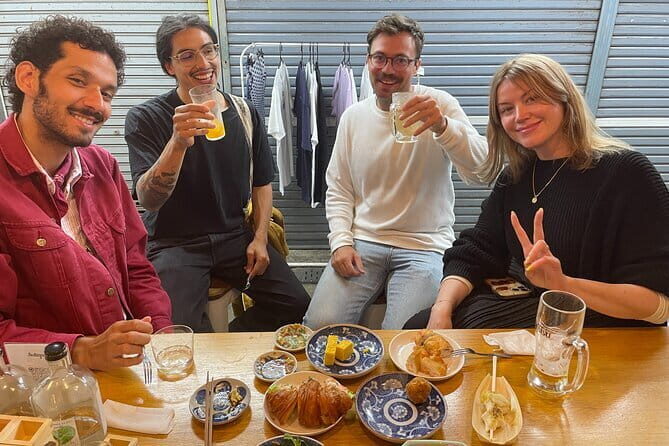
- Up to six people means more time for questions, and you’re less likely to get separated in a tight market corridor
- Quick Japanese lesson + etiquette tips help you read signs, ask simply, and avoid awkward ordering moments
- Temple and shrine entry included (Tsukiji Hongwanji Temple and Namiyoke Shrine) adds cultural context beyond food
- Free luggage storage during the walk makes it easier to travel light and not drag bags through crowded lanes
- You pay for what you want to eat, so you can tailor the tour to your budget and dietary needs
Tsukiji Morning Start at Hongwanji Temple
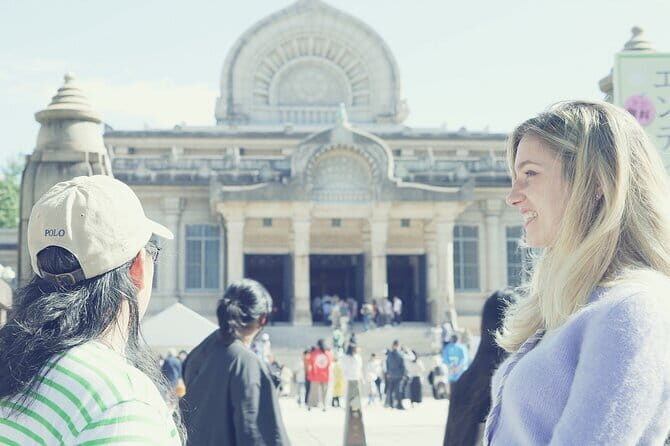
The meeting point is Tsukiji Hongwanji Temple, and I like that the tour doesn’t begin with a food free-for-all. Instead, you start in a calmer space and learn a few basic Buddhist ritual points from your guide, which sets the right tone for what you’ll see later in the neighborhood.
Practically, it also helps you mentally switch modes. Tsukiji is sensory overload—sounds, movement, seafood smells, and fast talk from vendors. Starting at the temple gives you a quick reset and a framework for reading the area like a local, not like a tourist sprinting for the next photo.
If your goal is understanding Japanese daily life, this stop matters. It’s not just a “photo moment.” You’re learning what to notice—simple ritual behaviors and respectful ways to observe—so the rest of the walk feels more intentional.
You can also read our reviews of more walking tours in Tokyo
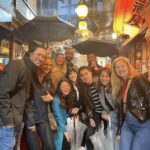
Getting Organized: Luggage Storage and a Survival Japanese Lesson
Right after the temple start, you get a tour intro at 38KIOSK and there’s a free luggage storage service for small suit cases during the tour. That’s a small detail with big payoff. If you’ve ever tried to maneuver through narrow market streets with a rolling bag, you know how fast it becomes tiring and stressful.
Then comes a survival Japanese lesson. The tour description frames it as quick and useful, and that’s the right kind of prep for Tsukiji. You don’t need a long language course. You need phrases that help with ordering, basic questions, and polite interactions—so you can spend your attention on food rather than guessing.
This combination is especially valuable because Tsukiji can feel confusing even when you speak a little Japanese. Having a short language boost before you hit the maze-like lanes makes the day feel less chaotic and more controllable.
Tsukiji Jogai Market: Knives, Tools, and Fresh Ingredients
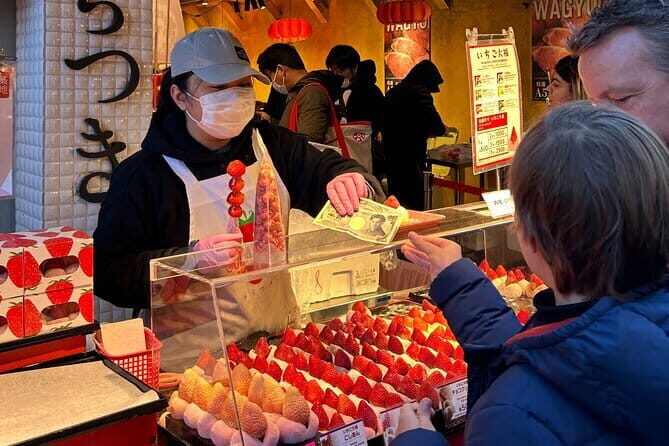
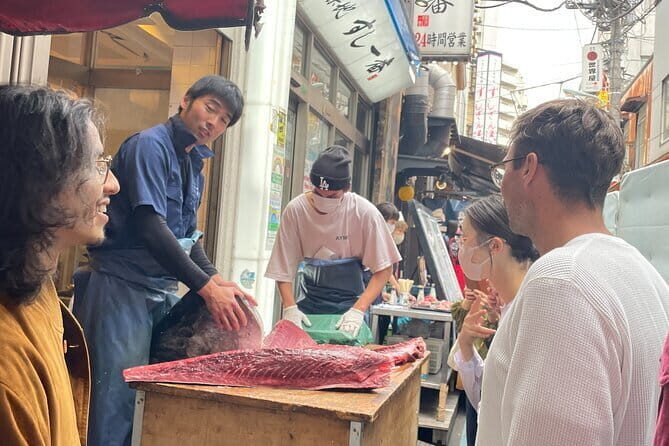
The main food-and-culture heavy lift happens at the Tsukiji Jogai Market. This is where the walking tour earns its keep: you’re not just being pointed toward stalls. You’re guided through a place where the details behind the food matter.
One highlight is the focus on handcrafted knives and tools passed down through generations. That might sound niche, but it changes how you look at the market. When you understand that these tools are part of a long tradition—sharpening, craftsmanship, and the right equipment for specific cuts—you stop thinking of the market as only a place to buy snacks. It becomes a place that teaches a craft.
At the same time, you’re also learning how fresh ingredients link to what you’ll actually eat. The guide’s job is to translate that into choices you can make in real time. You’ll find yourself thinking about seasonality and quality, not just chasing the famous items.
What to watch for
This part of Tsukiji rewards patience. The lanes don’t give you “big sign” clarity, and the best spots can be easy to miss if you’re walking on your own. With a guide, you get a smoother path—and you get context for what you’re seeing—without having to study a map like it’s an exam.
The Culture Bridge: Etiquette, Customs, and Market Flow
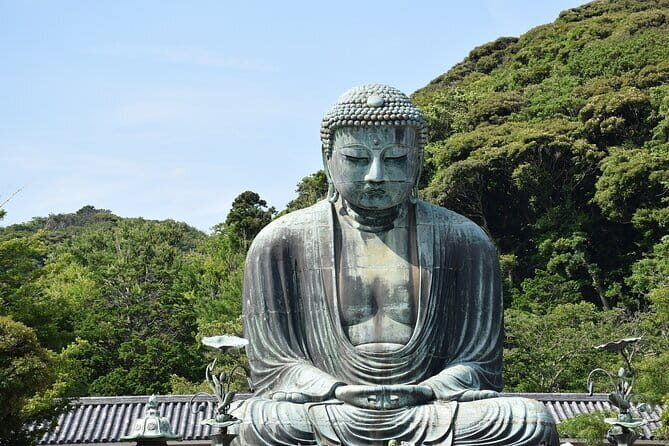
Along the way, the tour includes lessons about local etiquette and customs. In a market setting, that’s not fluff. Small things—how to move, how to ask, when to stop, when to step aside—make the difference between feeling welcome and feeling in the way.
The tour’s pacing also helps. It’s designed as a guided walk rather than a sprint to a list of foods. That matters because Tsukiji isn’t just crowded; it’s also fast. Vendors work quickly, and the area expects you to keep moving thoughtfully.
A key benefit of the small-group cap (six people) shows up here. In a bigger crowd, you’d be stuck behind people blocking the flow. In a smaller group, your guide can adjust speed and keep everyone oriented without dragging you through dead ends.
You can also read our reviews of more food & drink experiences in Tokyo

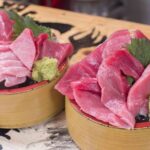
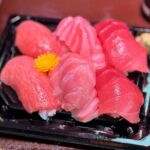

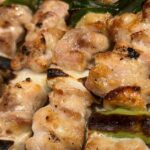
Namiyoke Shrine Stop: A Quick Pause With Meaning
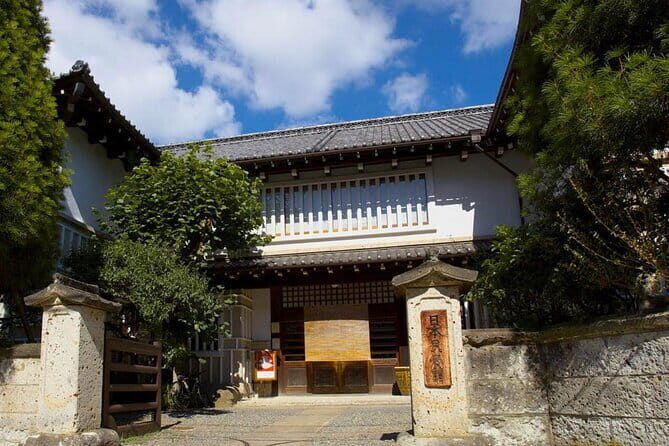
The tour includes entry to Tsukiji Namiyoke Shrine. I like this kind of stop because it balances the strong sensory pull of the market with something reflective. You’re not only tasting; you’re also seeing how belief and everyday routine sit side-by-side in Tokyo neighborhoods.
It’s also a helpful “reset” in the middle of the walk. Even if you’re primarily there for food, a short cultural pause keeps the experience from turning into constant stimulation.
This matters for value, too. When an activity includes both food and place-based meaning, it feels longer and more complete even if it’s only a few hours.
Lunch at 38KIOSK: Party-Style Meal in a Quiet Alley
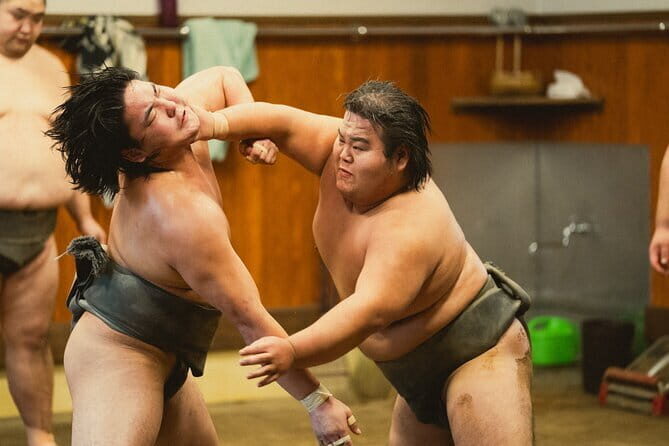
After the market sections, you end up back at 38KIOSK for lunch. The location is described as a charming, tucked-away spot in a serene alley, favored by locals for a calmer break after work.
Here’s the key detail to plan around: lunch isn’t listed as included. The tour sets you up at 38KIOSK, and your foodie guide helps steer you toward what to order based on what you found earlier in the market. So you’re not paying extra for a guaranteed fixed lunch package—you’re paying for guidance that helps you choose.
The “party-style meal” setup is interesting because it often works better than a single-person plate in food tours. You can share, try more variety, and keep the meal from becoming repetitive if you’ve been grazing market snacks.
How to get the most from lunch
If you’re watching your budget, treat lunch like the anchor meal of your day. Pick one or two standout items, then add a few smaller sides. That way you avoid accidentally spending market snack money twice.
If you have dietary restrictions, this stop is also where the guide’s help is most useful. The tour notes that vegetarian, gluten-free, allergy, and religious needs can be accommodated if you specify them when booking.
Price and Value: Is $75 Worth It?
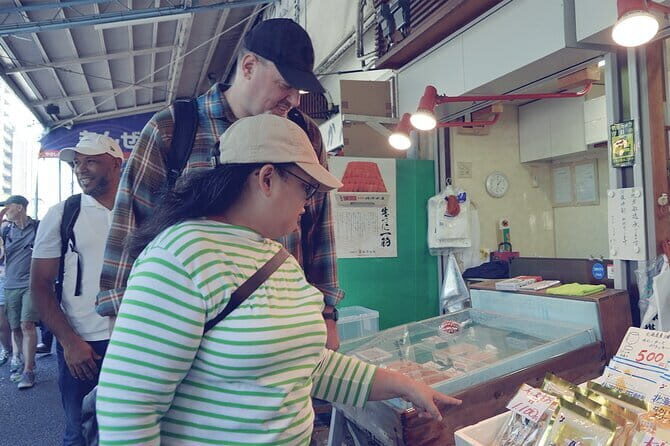
At $75 per person for about 3 hours, this tour is not a bargain snack walk, but it can be strong value if you factor in what you’re getting.
You’re paying for:
- Local professional guides (the real reason Tsukiji feels doable)
- Entrance fees for Tsukiji Hongwanji Temple, Namiyoke Shrine, and access related to the fish-market areas
- Free luggage storage during the tour
- A survival Japanese lesson
- A small group format that reduces navigation stress
If you DIY Tsukiji, you usually save money upfront. But you also take on the risk: getting lost, misunderstanding etiquette, and missing the best small stalls or food stops. For many people, that’s a trade they don’t realize until they’re inside the lanes.
The “no preset food inclusions” part is the only thing that can surprise you. It means you’ll pay for what you eat. That can be a drawback if you expected the price to cover most bites. But it can also be an advantage. You can control your spend, skip things you don’t like, and build a meal that fits you instead of being pushed into a set tasting path.
Who This Tour Is Best For
This is a good pick if:
- You want food + culture in the same morning
- You don’t want to map your way through Tsukiji alone
- You’d rather pay for guidance than gamble on random stall luck
- You travel with luggage and appreciate free storage
It’s less ideal if:
- You have difficulty walking for extended periods (the tour notes it may not suit those who struggle with extended walking, around 2 hours)
- You’re expecting a completely included tasting menu with no extra food costs
For families or mixed groups, the cap of six can also help keep everyone together without the chaos of larger tours.
Tips to Make Your Tsukiji Walk Smoother
You’ll get the most out of this tour if you come ready for movement and choices.
Bring:
- Comfortable shoes. You’re walking a lot more than you think.
- An appetite for variety, but also a budget plan. Since you choose what to eat, decide ahead of time how many bites you want to splurge on.
- Any dietary notes at booking time, especially if you’re gluten-free or have allergies.
And go in with the right mindset: the guide isn’t just feeding you facts. They’re helping you interpret a functioning food ecosystem—where the tools matter, the etiquette matters, and the best stops aren’t always the most obvious.
Should You Book This Tsukiji Food & Culture Walking Tour?
I’d book it if you want a guided Tsukiji experience that feels more like learning Tokyo food life than collecting snacks. The combination of temple and shrine entry, a practical Japanese lesson, and the small-group format makes the biggest difference in comfort and confidence. Plus, the guide-led path helps you spend less time guessing and more time eating what you actually want.
I’d skip it (or adjust expectations) if your main goal is a fully included food tasting package with minimal extra spending. Since there are no preset food inclusions, your total cost can rise depending on what you order. Also, if walking for about two hours is an issue, you’ll want to consider a shorter, less movement-heavy option.
If you want Tsukiji to feel less confusing and more meaningful, this is a solid way to do it.