REVIEW · KYOTO
Traditional Japanese Flower Styling Workshop – Ikebana in Kyoto
Book on Viator →Operated by Fooraku · Bookable on Viator
You can arrange flowers like a Zen poet. This hands-on ikebana workshop at Sogetsu WEST in Kyoto shows you how the art works, not just how to copy a pretty picture. I like that you’ll learn the history and philosophy alongside practical methods for making arrangements that still look right after you get home. You also practice with the idea that you don’t need special vases or rare flowers to get started.
The other thing I really liked: Fooraku is the kind of teacher who keeps it calm and clear. One moment you’re learning the logic behind the shapes; the next you’re making your own arrangement while he coaches you step by step. A possible drawback to keep in mind: it’s a compact session (about 1 hour 45 minutes), so you’ll create one main piece and then wrap up—great for beginners, but not a long multi-project course.
In This Review
- Quick Highlights You’ll Care About
- Arriving At Sogetsu WEST In Shimogyo Ward
- What You Actually Learn: More Than Flower “Decorating”
- Your Instructor, Fooraku: The Calm Coaching Factor
- Why Sogetsu WEST Feels Practical, Not Museum-Like
- The Hands-On Part: Building Your Own Arrangement
- Photo Moment and the Take-Home Piece of Confidence
- What You Can Ask About Japan While You’re There
- Price and Value: Is $104.24 Worth It?
- Who This Workshop Suits Best (And Who Might Skip It)
- FAQ
- FAQ
- Do I need special tools or traditional Japanese containers to participate?
- How long is the ikebana workshop in Kyoto?
- Where do I go for the start of the experience?
- Is this class in a group or just for my party?
- What will I make during the session?
- Do I get a photo of my arrangement?
- Can I receive lesson slides after the workshop?
- What kind of instruction will I get beyond arranging flowers?
- Is the location easy to reach?
- What’s the cancellation policy?
- Should You Book This Ikebana Workshop?
Quick Highlights You’ll Care About
- Make ikebana at home: learn styles and techniques you can repeat without special vases
- A real ikebana space: Sogetsu WEST has over 300 flower container types for inspiration
- Expert instruction, relaxed pace: learn from Fooraku, with strong English and decades of study
- Learn the why: history, philosophy, and the secrets behind arranging—not just steps
- Freshness tips: you’ll cover techniques for keeping flowers looking good
- You leave with proof: you’ll take a photo of your arrangement and can request emailed slides
Arriving At Sogetsu WEST In Shimogyo Ward
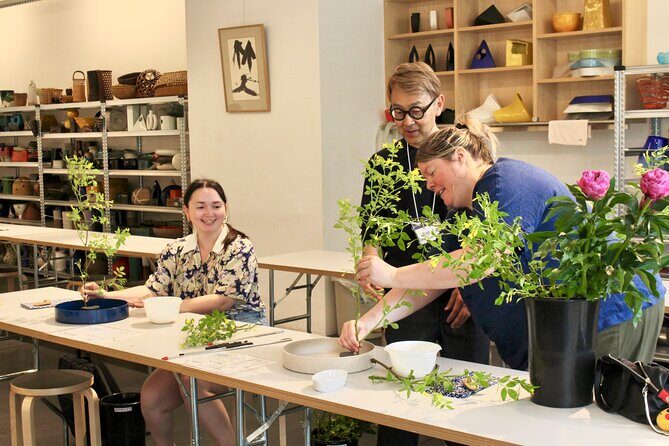
You’ll meet at Sogetsu WEST at 20-4 Sujakudōnokuchichō in Shimogyo Ward, Kyoto. The location is close to public transportation, which matters in Kyoto: you don’t want a workshop turning into a mini quest just to get there.
This is a private tour/activity, so it’s only your group with the instructor. That changes the vibe fast. Instead of being one person in a big class, you get more time for your questions and more targeted help while you arrange.
The workshop is about 1 hour 45 minutes, so it fits neatly into a busy travel schedule. Plan it like a focused cultural workshop rather than a slow afternoon: come ready to work with your hands, then enjoy the talk afterward.
A few more Kyoto tours and experiences worth a look

What You Actually Learn: More Than Flower “Decorating”
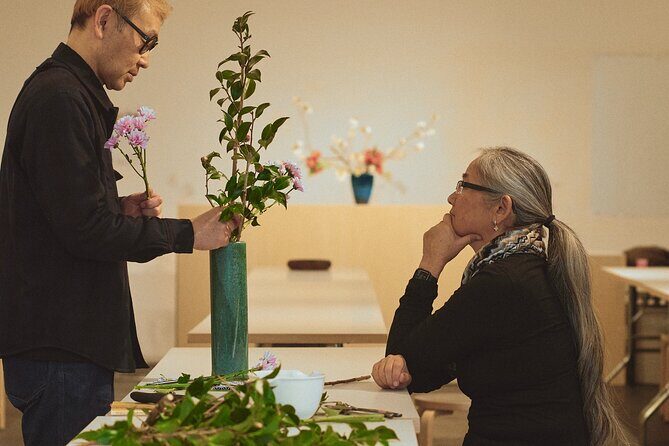
This experience is built around ikebana fundamentals, but the real value is that it connects aesthetic choices to practical technique. You’re not just picking stems and calling it done. You’re learning how ikebana thinks—through structure, balance, and the changing seasons.
Expect three layers:
1) History and philosophy
You’ll get the background behind ikebana—why it matters and how it evolved. That context helps you understand why certain shapes and spacing are valued, even when you’re using everyday materials.
2) The arranging methods (multiple styles)
You’ll learn the basics of creating arrangements in different styles. The important part for you as a visitor: the workshop emphasizes that you can do this later without special tools or traditional Japanese containers.
3) Care and freshness techniques
Flowers look good for only so long. The session includes guidance on keeping them fresh, so your arrangement stays presentable after you finish the class—and longer when you’re home.
One detail I appreciated in the way this is taught: the goal isn’t making you dependent on a specific vase. Instead, you learn the logic that still works when your setup is simpler.
Your Instructor, Fooraku: The Calm Coaching Factor
The biggest quality jump in this workshop is the instructor. Fooraku has studied ikebana for over 30 years, and his English is described as good. In plain terms, that makes the difference between a fun craft class and a cultural workshop where you actually understand what you’re doing.
The teaching style is also relaxed. You’re guided, but you’re not rushed or put on the spot. That matters because ikebana can feel intimidating at first. The instructor helps you feel like the steps have reasons—so you can adjust without panicking.
If you enjoy learning in a patient environment, you’ll likely feel comfortable from the start.
Why Sogetsu WEST Feels Practical, Not Museum-Like
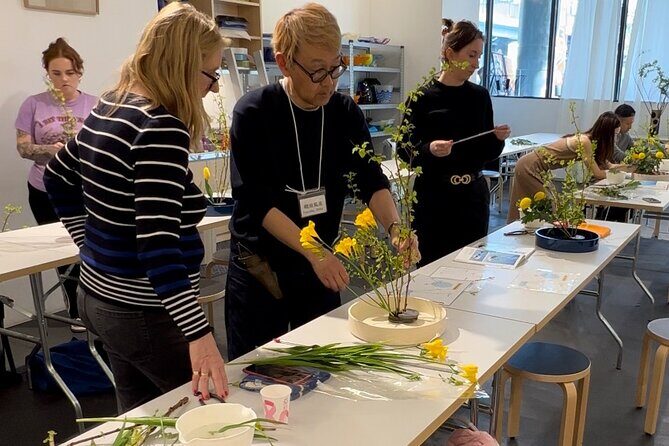
Sogetsu WEST isn’t just a room where someone teaches. It’s described as a premier ikebana space in western Japan and home to over 300 types of flower containers. That number sounds big because it is.
Here’s what that means for your experience: even though the workshop focuses on learning basics you can recreate at home, you’re surrounded by real examples of how containers shape the final look. You’ll see how different forms affect lines, height, and balance.
And yes, they emphasize that you can create arrangements without needing traditional Japanese containers or special tools. The containers you see onsite act more like “visual education”—you understand the choices, then you learn how to reproduce the principles later.
The Hands-On Part: Building Your Own Arrangement
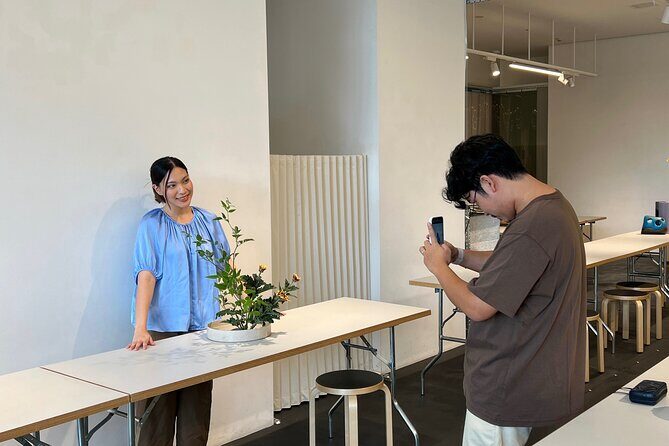
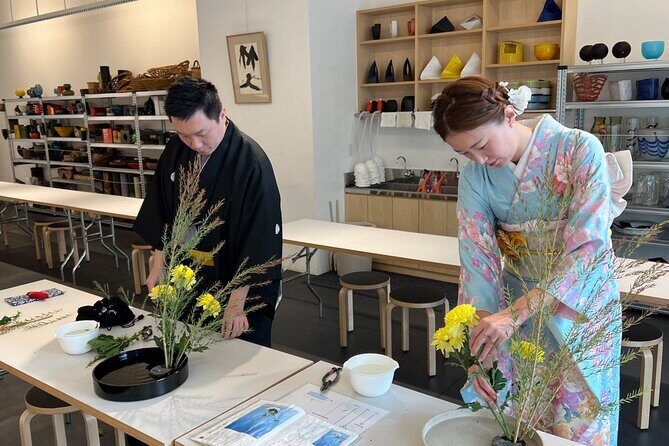
After learning the foundations, you’ll create your own ikebana masterpiece under guidance. In a workshop like this, the tricky part is usually translating theory into a piece that looks intentional.
Here’s how you can think about it while you work:
- Start with structure: ikebana is about lines and form, not just fullness
- Choose stems deliberately: less random picking, more intentional placement
- Adjust spacing: the negative space matters as much as the flowers
- Keep it seasonal in feel: the session connects the aesthetic to the changing seasons
Also, the experience is designed for visitors: most travelers can participate, and the format doesn’t require special prior skill. If you’ve never done anything like this, treat it as learning a visual language. You don’t need artistic talent—just willingness to follow guidance and make small adjustments.



Photo Moment and the Take-Home Piece of Confidence
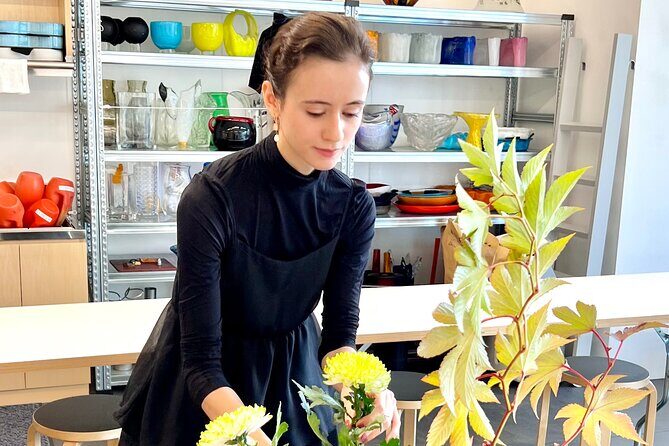
When your arrangement is done, you’ll take a photo to commemorate what you made. This might sound like a small thing, but it’s actually helpful. Ikebana is easier to recreate when you can look back at your own structure later.
You’ll also have the option to request session slides by email. That’s a smart add-on for travel learning. It gives you a way to refresh what you learned without trying to reconstruct it from memory on day three of your trip.
And after the photo, you’ll relax and chat. This is where you can get practical. If you’re worried about getting flowers to last after transport or how to find suitable materials at home, this is the right time to ask.
What You Can Ask About Japan While You’re There
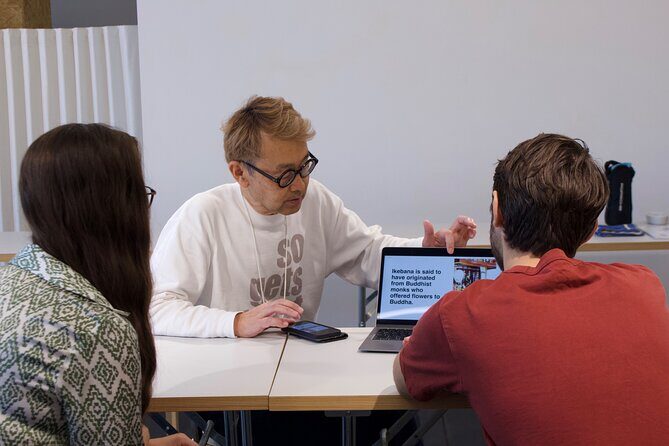
The workshop sets up room for conversation. If you’re curious about Japanese food, culture, or traditions, you can ask the instructor.
That’s not fluff. A good ikebana teacher can explain the cultural mindset behind the craft—how everyday aesthetics work in Japan, why seasonal awareness shows up in art, and how people think about beauty through ordinary objects.
If you’re comfortable sharing a bit about your country and background, the interaction tends to feel more personal. This kind of guided Q&A is often what makes a short workshop memorable.
Price and Value: Is $104.24 Worth It?
At $104.24 per person for about 1 hour 45 minutes, this isn’t the cheapest souvenir-style activity in Kyoto. But it’s also not overpriced for what you receive.
Here’s the value math that matters:
- You’re paying for hands-on instruction from Fooraku with decades of study
- You get structured learning (history, philosophy, and technique), not just a one-time craft outcome
- You’re taught with an emphasis on techniques you can reproduce at home without specialized containers or tools
- You’ll leave with a photo of your work and can request emailed slides
If you like cultural workshops where you come away with something usable, this pricing makes sense. If you mainly want a quick activity with minimal explanation, you might feel the time could be better spent elsewhere.
Who This Workshop Suits Best (And Who Might Skip It)
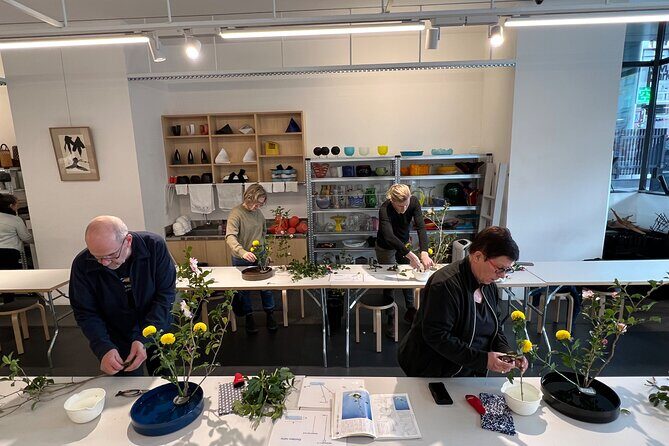
This is a great fit if you:
- want a calmer, hands-on Kyoto experience away from the loudest tourist circuits
- like learning cultural practices with practical home takeaways
- enjoy making something you can reference later (photo + slides)
- want a beginner-friendly class with clear guidance
You might consider skipping if you’re:
- only interested in buying things rather than learning techniques
- looking for a long, multi-arrangement course (this is one main creation)
- hoping for a full day activity where you’ll keep practicing with lots of different materials
FAQ
FAQ
Do I need special tools or traditional Japanese containers to participate?
No. The workshop is designed so you can create ikebana styles without special tools or traditional Japanese containers, and you can also practice at home afterward with simpler materials.
How long is the ikebana workshop in Kyoto?
It runs about 1 hour 45 minutes.
Where do I go for the start of the experience?
You’ll meet at Sogetsu WEST, 20-4 Sujakudōnokuchichō, Shimogyo Ward, Kyoto, 600-8842, Japan.
Is this class in a group or just for my party?
It’s a private tour/activity, meaning only your group participates.
What will I make during the session?
You’ll create your own ikebana arrangement during the workshop with guidance from the instructor.
Do I get a photo of my arrangement?
Yes. After you finish, you’ll take a picture to commemorate your ikebana piece.
Can I receive lesson slides after the workshop?
You can request session slides by email.
What kind of instruction will I get beyond arranging flowers?
You’ll learn the history, philosophy, and secrets of ikebana, plus techniques for keeping flowers fresh.
Is the location easy to reach?
The meeting point is near public transportation.
What’s the cancellation policy?
You can cancel for a full refund up to 24 hours before the experience starts.
Should You Book This Ikebana Workshop?
Book it if you want a Kyoto activity that teaches you something you can actually use later. The best part is the blend: you learn ikebana fundamentals (not just a single craft), and you’re coached by Fooraku with years of study and a relaxed teaching style. Add in the photo, the option for emailed slides, and the focus on techniques that work without special containers—and you’ve got real value for the price.
Skip it if you want a purely scenic or low-effort experience. This workshop asks you to participate, think, and build a piece carefully. If you’re good with that, you’ll likely leave proud of what you made and confident you can recreate the basics back home.