REVIEW · TOKYO
Traditional Japanese Music ZAKURO SHOW in Tokyo
Book on Viator →Operated by Traditional Japanese Music Events ZAKURO SHOW · Bookable on Viator
A tiny concert, huge cultural payoff. In Tokyo’s Omotesando, the ZAKURO SHOW turns traditional Japanese music into an easy, up-close experience you can understand in real time. You’ll hear classics performed live, plus clear commentary in English that helps you follow what’s going on and why it matters.
I especially love the close-range sound of the instruments (the wagakki feel right there, not distant) and the way the performers explain each instrument between pieces. The host-style dialogue makes the music feel personal, not like a museum exhibit.
One heads-up: it’s about 1 hour, so if you want a long concert night, you may wish it ran longer.
In This Review
- Key things I’d mark on your mental map
- Entering ZAKURO SHOW in Omotesando (Tokyo)
- The instruments you’ll actually hear (and what makes them special)
- The host and English commentary: the part that makes it click
- How the program works: ancient traditions, modern notes, and a Western cover
- Making it fit your Tokyo day (without stress)
- Price and value: what $39.64 buys you in Tokyo
- Who should book ZAKURO SHOW (and who might want something longer)
- Final call: should you book ZAKURO SHOW?
- FAQ
- How long is the ZAKURO Traditional Japanese Music Show?
- Where does the show take place?
- What instruments will I see during the show?
- Is there English translation?
- Do I get a mobile ticket?
- What does the ticket cost?
- Can I cancel for free?
Key things I’d mark on your mental map
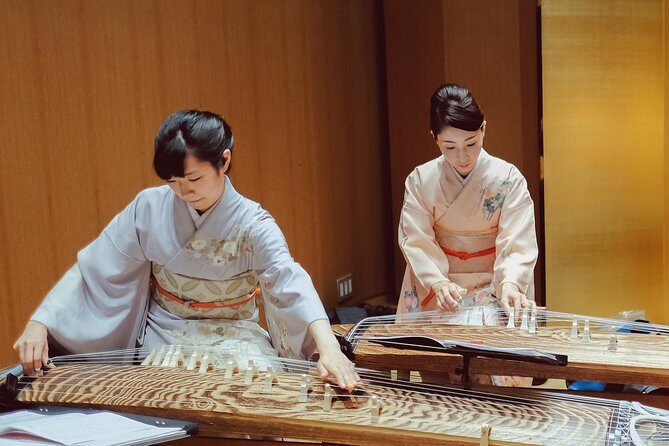
- Omotesando setting: a cozy, beautiful performance space in a convenient Tokyo neighborhood
- English translation throughout: explanations land clearly between musical numbers
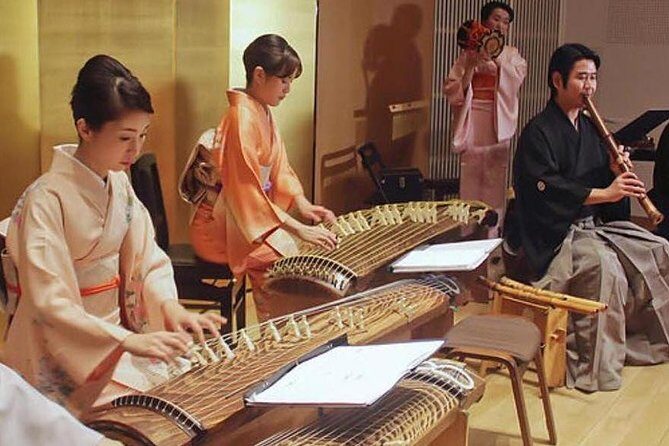
- Up-close traditional instruments: koto, shamisen, shakuhachi flute, and taiko drums in one program
- Old and new mix: traditional pieces alongside modern elements, plus a Western song cover
- Accessible format: short show length that fits easily into a packed day
- Mobile ticket: simpler last-mile logistics than paper ticket hunts
Entering ZAKURO SHOW in Omotesando (Tokyo)
Tokyo can be a lot. Bright lights, long lines, and plans that multiply. This show is a nice counterweight because it keeps things compact and human-sized. You’re in Omotesando, a central area that’s easy to reach using public transport, and the performance happens in a setting described as cozy and welcoming. That matters because traditional music can feel intimidating if you’re not sure what you’re listening for. Here, you’re given the keys early.
The format also feels designed for non-experts. The performers don’t just play and vanish into the back of a stage. They talk, explain, and interact, and the explanations are translated into English. That means you can spend your attention on the music itself instead of doing detective work afterward.
If you’re building a Tokyo day, this one is a practical win. It’s about 1 hour, which makes it easy to schedule before dinner plans or as an early evening cultural stop.
A few more Tokyo tours and experiences worth a look
The instruments you’ll actually hear (and what makes them special)
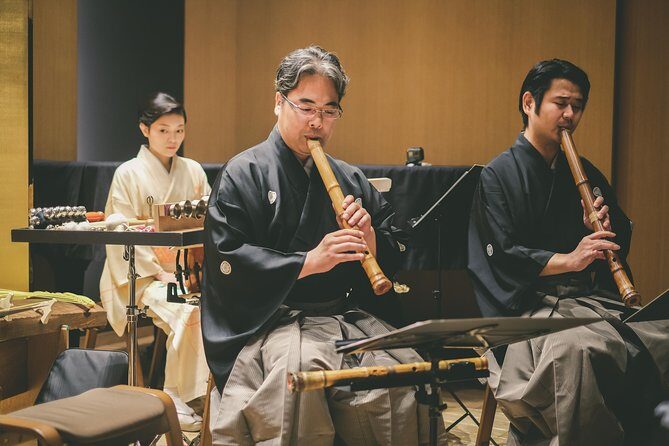
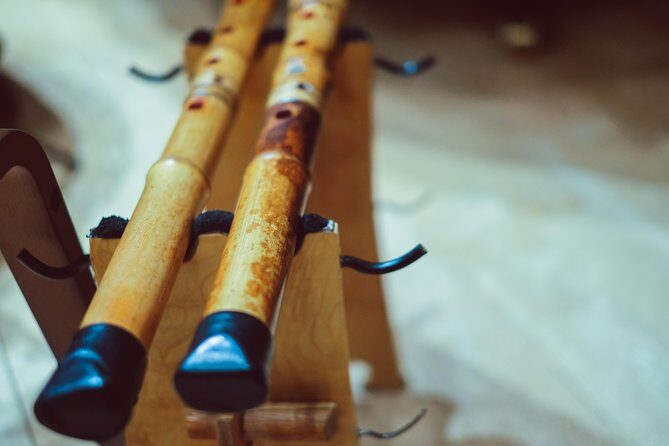
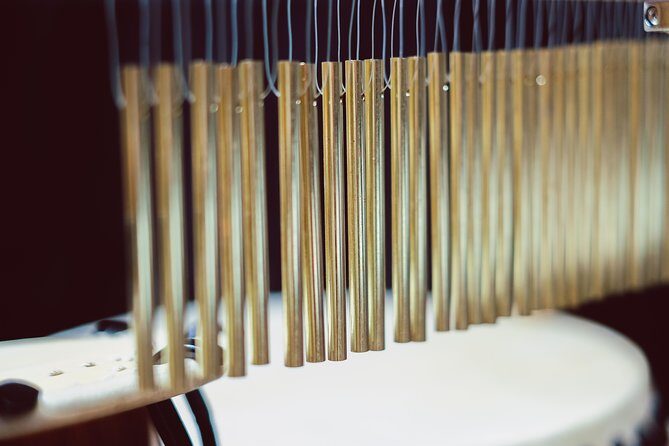
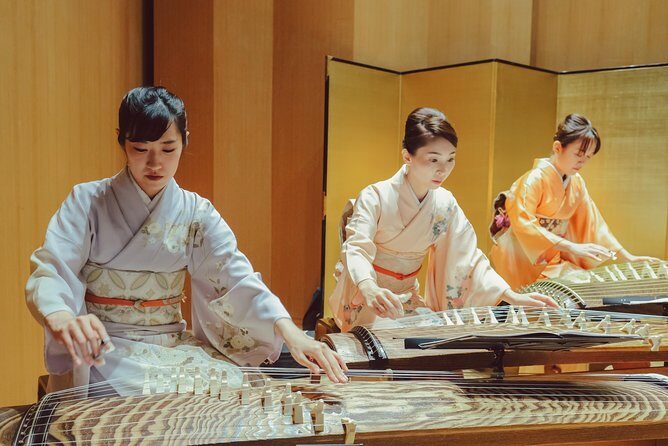
This show focuses on traditional Japanese instruments, and you get a real mix rather than a one-instrument showcase. Expect to encounter the koto (harp-like plucked tones), the shamisen (a three-string instrument known for its lively, expressive sound), the shakuhachi (bamboo flute with a breathy, haunting quality), and taiko (drums that can go from deep and steady to loud and thrilling).
What I like about seeing these together is that it lets you compare sound worlds. Plucked strings feel precise and controlled. Flute notes can sound like air turning into music. Taiko can feel physical, like rhythm you feel in your chest. When these instruments sit in the same show, you start hearing patterns: how each instrument shapes tempo, emotion, and pacing.
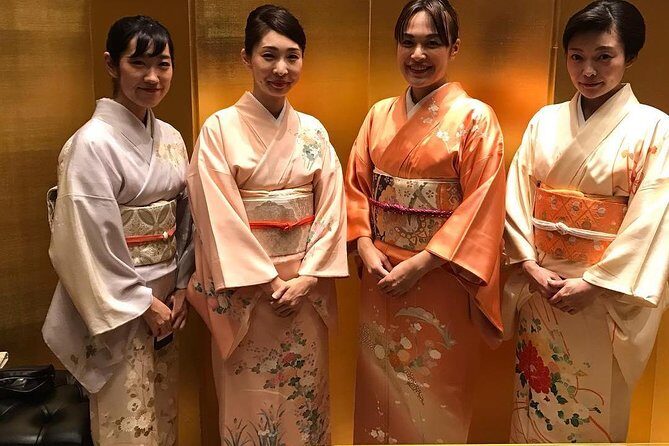
And because the performers wear colorful kimono and the instruments are placed close to the audience, you’re not watching from a distance. You’re following hands, posture, and technique. That visual layer helps you understand what you’re hearing, especially when the host fills in details between pieces.
The host and English commentary: the part that makes it click
The biggest reason this show earns such strong ratings is the storytelling. Between musical numbers, the performers and host provide explanations about the instruments and the craft behind what you’re hearing. The show uses dialogue and translation so the context lands for international audiences.
Here’s what that really means for you in the seat:
- You’re not guessing. The music comes with guidance.
- The technical details feel usable, not academic.
- You get a sense of musical history and how traditions connect to performance today.
Several reviews highlight how strong the interpreter and explanations are, and that matches what you’re looking for. A lot of cultural shows fail when the language barrier is too big. ZAKURO doesn’t try to solve it with subtitles alone. It explains directly as the program progresses, so you stay oriented.
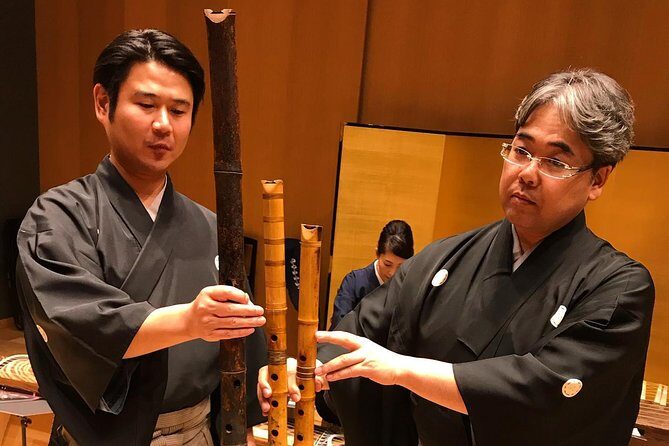
Also, the performers talk about the secrets of their craft. That phrase matters because it signals this isn’t just “here’s an instrument.” It’s closer to “here’s how artists make this sound and why it’s done this way.”
How the program works: ancient traditions, modern notes, and a Western cover
A useful part of the experience is the way the program is built to teach. Pieces are selected to provide context, and the show doesn’t pretend traditional music is one single era or one single style. You’ll hear both ancient and modern traditional music, which helps you understand that Japanese musical traditions keep living and changing.
One standout detail: there’s a cover of a Western hit. This isn’t just a gimmick. It’s a practical way to help your ear map familiar melodies onto different Japanese instruments. When you hear a tune you recognize played on koto, shamisen, shakuhachi, or taiko, your brain updates fast. You realize these instruments aren’t limited to historical replicas. They can carry new material and still sound unmistakably Japanese.
The show also includes a range of instruments under the umbrella of wagakki (traditional Japanese instruments). That variety makes the program feel like a guided tour where each stop has a point, instead of a single mood that blurs together.
Making it fit your Tokyo day (without stress)
This experience is built for easy scheduling. It’s about 1 hour (approx.), which is short enough to slot between other plans. The location is near public transportation, so you’re not spending half your evening navigating from the nearest station.
And it uses a mobile ticket. That sounds minor, but it’s one less thing to juggle on a travel day. Tokyo is great, but it’s also a place where small logistics can pile up. Mobile ticketing keeps the “start of the experience” friction low.
In terms of pacing, you’re also set up for success as long as you show up on time. Since it’s a compact show, late arrivals aren’t the moment to test your sense of adventure.






Price and value: what $39.64 buys you in Tokyo
At $39.64 per person, this isn’t the cheapest activity in Tokyo, but it’s also not in the pricey category for a live performance. For the value, I’d focus on what’s included, not just the ticket number.
You’re paying for:
- live performance by top-level musicians
- a mix of multiple traditional instruments in one sitting
- English explanations and dialogue between pieces
- an intimate format where you can see the performers and instruments up close
- a show that fits into an hour, which is huge when time is your real cost in Tokyo
If you’ve spent money on concerts before and felt like you were watching without understanding, this addresses that directly. The explanations are part of the product. You’re not just buying sound, you’re buying meaning.
Who should book ZAKURO SHOW (and who might want something longer)
This is a great choice if you want a first taste of traditional Japanese music without needing background knowledge. The English translation and between-song explanations are built for people who want to learn while they listen. It’s also a strong pick for couples, solo travelers, and anyone who enjoys structured cultural experiences where the hosts do the heavy lifting.
It can also work well as a “goodbye Japan” experience because it feels like a focused summary of what makes Japanese instruments distinct, delivered in one hour.
The one group I’d caution: if you’re the type who likes long concerts or wants a full evening of uninterrupted performance, you might feel a little rushed. A review sentiment you’ll likely share is that you may want more time with the musicians. The fix is simple: treat it as your short, high-impact cultural stop, then plan the rest of your night around it.
Final call: should you book ZAKURO SHOW?
I’d book it if you care about traditional Japanese music, want the instruments in the spotlight (koto, shamisen, shakuhachi, taiko), and you appreciate English commentary that helps you understand what you’re hearing.
I would not book it if you only want long-form performances or you prefer experiences where you’re mostly on your own with audio and signage. This show is guided. If you want guided, it’s very strong for the time.
FAQ
How long is the ZAKURO Traditional Japanese Music Show?
It runs for about 1 hour (approx.).
Where does the show take place?
The performance is in Tokyo, in the Omotesando area.
What instruments will I see during the show?
The show features traditional Japanese instruments including taiko drums and koto, along with other traditional instruments such as shamisen and shakuhachi flute.
Is there English translation?
Yes. The show includes English translation, with explanations and dialogue designed for international audiences.
Do I get a mobile ticket?
Yes. It includes a mobile ticket.
What does the ticket cost?
The price is listed as $39.64 per person.
Can I cancel for free?
Yes, free cancellation is offered. You can cancel up to 24 hours in advance for a full refund.