REVIEW · TOKYO
Tsumami Zaiku Japanese Fabric Flower Class
Book on Viator →Operated by somenova · Bookable on Viator
Pinch-dyed silk in Tokyo. This tsumami-zaiku workshop in Nihonbashi lets you dye small bits of silk yourself, then turn them into a flower-style brooch under close instruction. It is a rare chance to experience both the dyeing step and the signature pinching technique in one smooth, short class.
I like the way the session is structured for real learning: you start with choosing a color, then you do two dye styles (speckled and dip-dye), and only after that you move to assembling the flower. I also like the teaching pace—there is enough time to understand what you are doing, not just rush through steps.
One consideration: because the class runs about 2 hours, you’ll focus on producing your finished flower piece rather than experimenting endlessly with lots of designs or variations.
In This Review
- Key things to know before you go
- Entering Nihonbashi and finding somenova (without stress)
- The two-step magic: dyeing first, then tsumami-zaiku pinching
- Choosing your color: what you control on day one
- Speckled dyeing vs dip-dyeing: why both are worth your time
- Pinch and glue: turning dyed silk into a flower brooch
- The folding and dyeing washi paper add-on
- What you’ll make, and what it’s like to leave with it
- Price and value: what $105.68 buys you in real skill time
- Timing, meeting point, and how long you’ll really be busy
- Who this class is best for (and who might want something else)
- Should you book this tsumami zaiku flower class?
- FAQ
- Where is the Tsumami Zaiku Japanese Fabric Flower Class held?
- How much does it cost?
- How long is the workshop?
- What time does the class start?
- What will I make in the class?
- What dyeing techniques are included?
- Is Japanese washi paper included?
- How many people are in a group?
- What is the cancellation policy?
Key things to know before you go
- Nihonbashi location: the workshop takes place in a central Tokyo neighborhood with easy access by public transport.
- Two dye methods in one class: speckled dyeing and dip-dyeing using your chosen color.
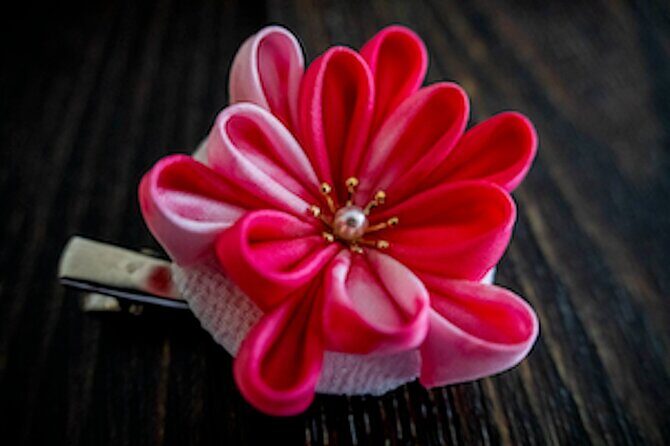
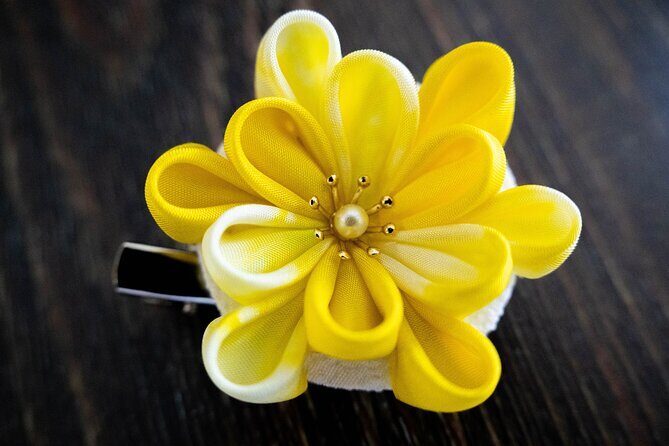
- Tsumami-zaiku assembly: you pinch and glue small silk pieces to build a flower brooch (originally a kanzashi hair ornament).
- Washi paper bonus: you also get folding and dyeing time with Japanese washi paper.
- Small class size: maximum 4 travelers, which helps keep the attention personal.
- Mobile ticket: you’ll use a mobile ticket for this experience.
Entering Nihonbashi and finding somenova (without stress)
Nihonbashi is one of those Tokyo areas that feels practical: lots of transit options, lots of streets laid out for people who want to get moving quickly. This class starts at somenova (染色体験スペース そめのば), located at 14-7, 5F in Nihonbashikobunachō, Chuo City.
Plan to arrive a little early so you can settle in. The class is short—about 2 hours—so getting comfortable at the start helps you enjoy the hands-on flow instead of feeling like you’re racing the clock. Since this is held at street-level access up to a studio floor, it is worth checking which exit you’ll use and giving yourself a buffer.
Also, keep in mind the group size: it’s limited to up to 4 travelers. That typically means fewer people in the room and more time for instructors to guide you through tricky steps like pinching tiny pieces into shape.
A few more Tokyo tours and experiences worth a look


The two-step magic: dyeing first, then tsumami-zaiku pinching
This workshop centers on tsumami-zaiku, a traditional craft passed down since the Edo period. The most important thing to understand is that the beauty isn’t only in the final flower brooch—it’s in how the silk looks after dyeing, because that texture and color variation become part of the finished form.
In your session, you’ll start with dyeing small pieces of silk. Then you’ll move into the signature tsumami-zaiku process: separating the silk into tiny sections, pinching them, and gluing them into place. The end product is a flower brooch made from your own dyed silk pieces.
If you like crafts where you can see cause-and-effect, this is a strong fit. You choose a color, apply it through two different techniques, and then you literally construct the flower from the results.
Choosing your color: what you control on day one
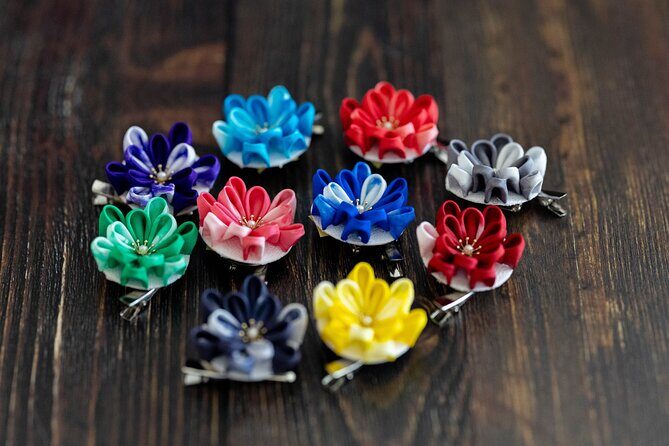
You begin by selecting one color you want to use. That choice matters more than you might think, because you’ll apply it through two methods with different visual outcomes.
The workshop gives you the structure to make color decisions confidently:
- You pick your color once.
- Then the studio guides you through the dye application styles.
- After the silk is prepared, your assembly phase uses those dyed sections.
This is part of what makes the class good value for first-timers. You’re not stuck guessing every detail. You get to make one meaningful decision, then you get coached through the craft steps.
Speckled dyeing vs dip-dyeing: why both are worth your time
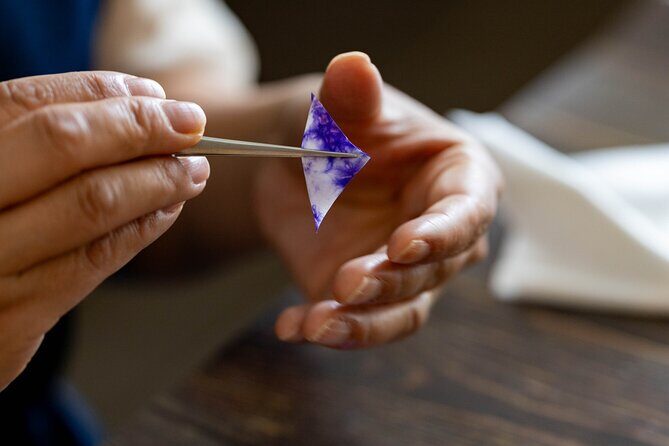
A lot of dyeing experiences focus on only one look. Here, you do two:
- Speckled dyeing
This gives you a more mottled, speck-like surface texture. It’s the kind of effect that can add depth to the flower petals once you pinch and arrange the silk.
- Dip-dyeing
This creates a clearer, more solid color transition. In the flower assembly, that contrast can help shapes read better.
Because you’re seeing the silk change in real time, you’ll start to understand the design logic behind tsumami-zaiku: the craftsmen don’t just color cloth. They prepare tiny color fields that make the finished flower look dimensional.
If you’re the kind of person who likes results you can explain, watch for how the speckled pieces and dip-dyed pieces behave differently in the final pinched layout. It’s a small workshop, so you want to stay present during the dye steps.
Pinch and glue: turning dyed silk into a flower brooch
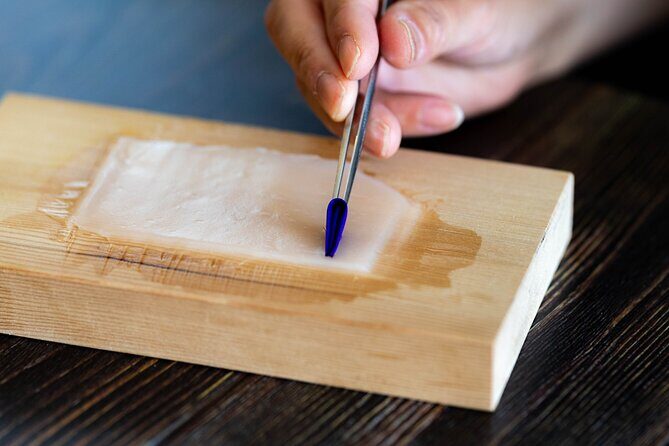
Once your silk is ready, the class shifts from dyeing to construction. This is where tsumami-zaiku earns its reputation.
You will:
- Separate the silk cloth into small pieces
- Pinch them into shape
- Glue them together to form your flower brooch
The brooch is described as a flower-shaped piece that connects back to the original purpose of kanzashi, which were hair ornaments. That context helps you understand the silhouette: it is meant to look like a crisp, decorative bloom up close.
Two practical tips to make this step feel easier:
- Take your time with pinching. The goal is shape consistency more than speed.
- Stay aware of placement. Since everything is tiny, the exact location of each piece affects how the petals read as a flower rather than random bits of silk.
The class is only about 2 hours, so the pacing matters. The instruction approach is designed to keep you learning without feeling rushed, which is exactly what you need in a technique-heavy craft.





The folding and dyeing washi paper add-on
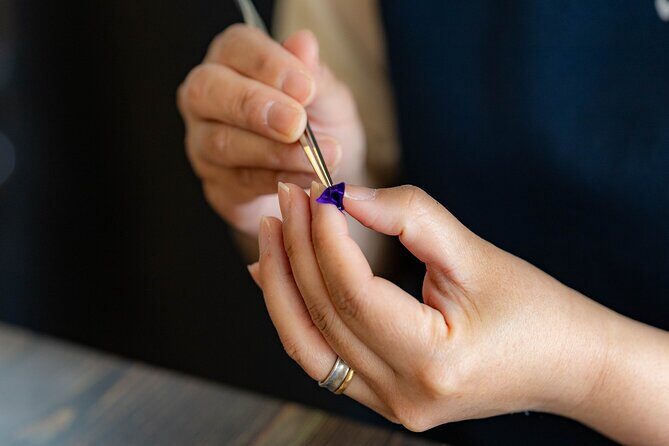
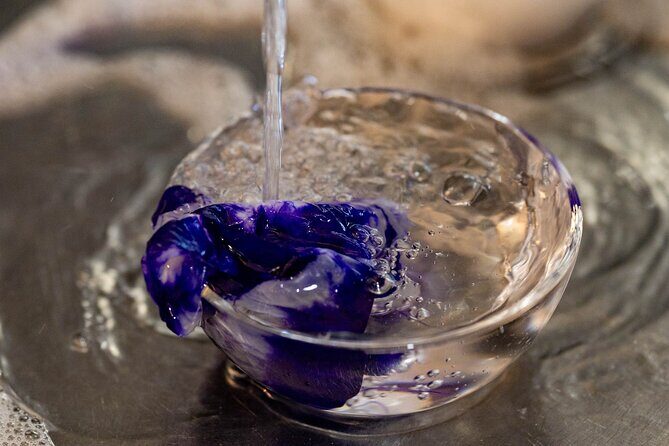
In addition to the silk flower work, you also get time for Japanese washi paper folding and dyeing. This is a nice bonus for two reasons.
First, it gives you another way to experience dye behavior—paper takes color differently than silk. Second, folding adds a design element that complements the pinching work. Even if your washi piece comes out more abstract than the flower brooch, it still teaches you the same core idea: how small technique choices create visible patterns.
Don’t treat this as filler. If you want good photos later (and trust me, you will), spend a moment watching the dye react during the washi step.
What you’ll make, and what it’s like to leave with it
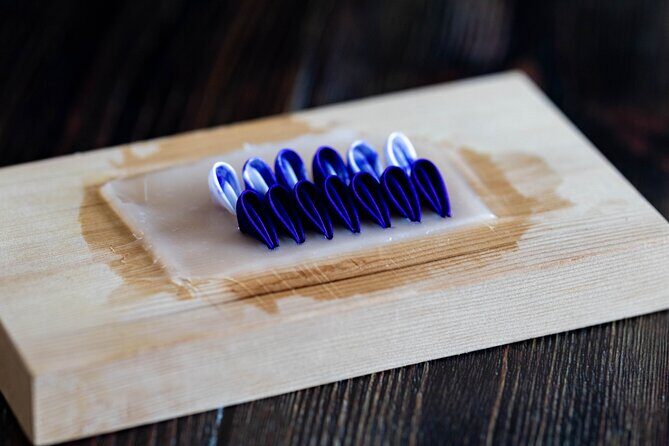
Your main finished item is a flower brooch created from the silk pieces you dyed. Because the class limits group size to a maximum of 4 people, you’ll have support through both the dye and assembly phases—useful when you’re working with tiny materials.
From the class design, I’d expect you to leave with a piece you can actually use rather than something purely decorative and fragile. A brooch is wearable, giftable, and easy to show off. If you like taking home a craft souvenir that isn’t just a stamp or a keychain, this is the right kind of project.
Also, because you’re using a process that combines dyeing and tsumami-zaiku, the finished work feels personal. You chose the color and performed the steps, so even small differences in your technique become part of your story.
Price and value: what $105.68 buys you in real skill time
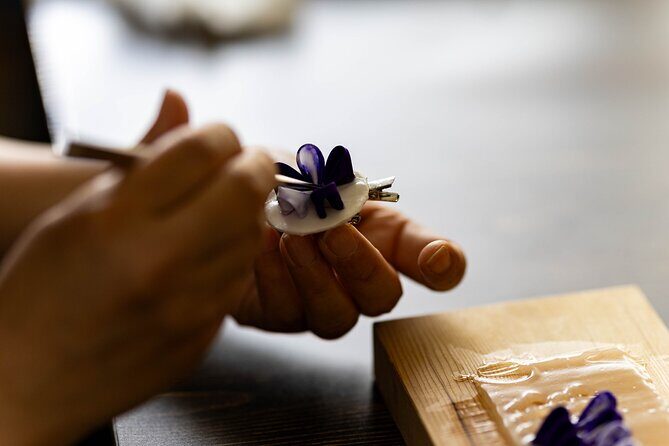
The price is $105.68 per person for roughly 2 hours. On paper, that might sound like “just a workshop.” In practice, it’s more like buying a fast, guided pass through two craft stages that are often separate.
You’re paying for:
- Hands-on dyeing of silk, including speckled dyeing and dip-dyeing
- Instruction in tsumami-zaiku pinching and gluing
- Time and guidance for washi paper folding and dyeing
- A setup designed for small groups (max 4), which usually means better attention than you get in large classes
The value angle here is not just materials. It’s time with an instructor while you learn a technique that takes patience. The pacing is specifically described as not rushed, and that matters because pinching and assembling is the kind of skill where rushed teaching usually leads to frustration and lower-quality results.
If you want a craft souvenir, but you also care about learning technique, this is a fair price for what you get.
Timing, meeting point, and how long you’ll really be busy
The class starts at 1:00 pm and is about 2 hours. The experience ends back at the meeting point, so you don’t need to plan a second destination.
What to do with your day:
- Keep the lead-up simple. Arrive near the start so you can get seated and begin without waiting.
- After the class, you’ll likely want time to look closely at your finished piece and take photos. Also give yourself time to relax—this kind of fine work uses your hands and attention.
Since a mobile ticket is involved and confirmation happens within 48 hours based on availability, plan to check your details ahead of time so there are no last-minute surprises.
Who this class is best for (and who might want something else)
This workshop is a great match if you:
- Want a craft with visible, satisfying steps
- Like learning both technique and material behavior (dyeing and assembly)
- Prefer small groups and hands-on guidance
- Want to take home a wearable souvenir like a flower brooch
You might consider a different activity if:
- You’re hoping for a long, deep craft session with multiple design variations. This is focused and short by design.
- You want a fully self-directed studio experience. You will be guided step-by-step, which is a plus for most people, but not everyone wants that.
Most people can participate, and the class allows service animals. It’s also described as being near public transportation, which helps a lot in a city like Tokyo.
Should you book this tsumami zaiku flower class?
If you want one of those Tokyo experiences that’s hands-on, visual, and genuinely different from typical sightseeing, I’d say yes. The strongest reason to book is the combination: you dye silk yourself and then use that dyed result immediately in tsumami-zaiku pinching and gluing. Add the wash-paper folding and dyeing, and you get multiple craft pathways in a single, manageable session.
Book it especially if you enjoy workshops where the instructor’s pace makes a technical process feel doable. The class is short, but it is not framed as a fast photo-op. It’s set up so you can learn, make something you like, and leave feeling proud of the result.
FAQ
Where is the Tsumami Zaiku Japanese Fabric Flower Class held?
It starts at somenova (染色体験スペース そめのば), 14-7 5F, Nihonbashikobunachō, Chuo City, Tokyo 103-0024.
How much does it cost?
The price is $105.68 per person.
How long is the workshop?
The duration is about 2 hours.
What time does the class start?
The start time is 1:00 pm.
What will I make in the class?
You’ll create a flower-shaped brooch using the tsumami-zaiku process. The brooch is originally related to kanzashi (a hair ornament).
What dyeing techniques are included?
You’ll do two types: speckled dyeing and dip-dyeing, using a color you choose.
Is Japanese washi paper included?
Yes. You can experience folding and dyeing Japanese washi paper during the workshop.
How many people are in a group?
The maximum group size is 4 travelers.
What is the cancellation policy?
You can cancel for a full refund up to 24 hours before the experience starts. Confirmation is received within 48 hours of booking, subject to availability.