REVIEW · KYOTO
Uji Walking Tour – Byodo-in temple and Tea Ceremony from Kyoto
Book on Viator →Operated by JTB Global Marketing & Travel Inc. · Bookable on Viator
Uji is small, but it packs serious calm—and great tea. This tour is a clean combo of Ujibashi Bridge views, a Kyoto-area train ride, and a guided tea ceremony at Taihoan. I like that it mixes quick must-sees with an activity that slows you down.
My favorite part is the temple finale at Byōdō-in, famous for its Heian-era setting and the Phoenix Hall image you’ll recognize from the 10 yen coin. One thing to consider: the timing can feel tight at Byodo-in, and the overall pace is brisk if you want lots of extra photo stops along the way.
In This Review
- Key highlights worth centering your day around
- Why Uji feels like Kyoto’s calmer cousin
- Kyoto Station to Uji: the train rhythm that keeps things efficient
- Ujibashi Bridge and Nakanoshima Park: the “walk-to-views” portion
- Taihoan tea ceremony: the etiquette details you should know
- Byōdō-in: UNESCO-level temple grounds with a timing caveat
- The pace and logistics: who this tour really suits
- Price and value: what $96.06 is buying you
- Quick tips so you get the most out of every stop
- Should you book Uji Walking Tour with Byōdō-in and Tea from Kyoto?
- FAQ
- What is the duration of the tour?
- What time does the tour start and when does it end?
- Where do I meet for the tour?
- Where does the tour end?
- How do the train tickets work?
- Is the tour mostly walking?
- What happens during the tea ceremony?
- Can I enter the Phoenix Hall at Byōdō-in?
- What is included in the price?
- How many people are in the group?
- What is the cancellation policy?
Key highlights worth centering your day around
- Ujibashi Bridge and san-no-ma: walk to a classic photo spot and a viewpoint.
- Nakanoshima Park by the river: a scenic pause in historic Uji.
- Taihoan tea ceremony: a structured experience, usually matcha or sometimes sencha.
- Byōdō-in admission included: Heian-era temple grounds plus the famous Phoenix Hall area.
- Small group size (max 12): easier walking flow than bigger tours.
- Train logistics included: JR rapid/local with non-reserved seats.
Why Uji feels like Kyoto’s calmer cousin
If Kyoto is your big city with big vibes, Uji is the “pause button.” It’s close enough for a half-day escape, but it still feels like its own place. You’ll move through old-town streets, do a river-side walk, and then end at a temple complex people travel specifically for.
What I like about the design here is that you’re not just “looking at buildings.” You’re seeing how the day flows in a real order: arrive, walk the highlights, slow down for tea, then visit Byōdō-in before heading back. That order matters, because tea and temple visits are both best when you’re not too rushed at the start.
You can also read our reviews of more walking tours in Kyoto

Kyoto Station to Uji: the train rhythm that keeps things efficient
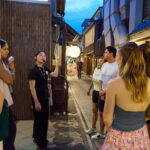
You start at the JTB desk at the AVANTI building near Kyoto Station, with the tour running from 8:20 am and ending near Kyoto Station around 12:30 pm. The timing is built for one morning loop, so you’ll board a JR rapid/local train from Kyoto Station to Uji Station.
Two practical notes you’ll want to plan around:
- Seats are non-reserved, and seating isn’t guaranteed. This is normal for Japan commuter-style train service, but it’s good to know so you’re not caught off guard.
- The whole day assumes you can walk comfortably. This isn’t a bus tour, so you’ll want shoes that are easy on your feet.
This part is also where the value shows. You’re getting transport plus guided context, instead of just buying a one-way ticket and trying to stitch the rest together yourself.
Ujibashi Bridge and Nakanoshima Park: the “walk-to-views” portion
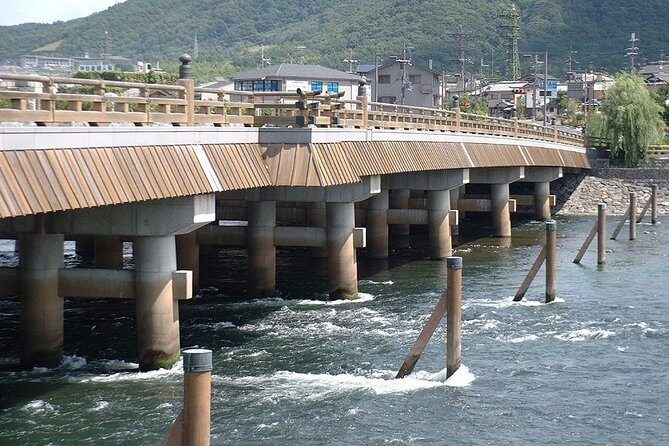
Once you’re in Uji, the first big visual moment is the area around Ujibashi Bridge. The bridge is thought to have origins going back to the 7th century, and it’s counted among Japan’s oldest bridges. That’s the kind of fact that makes your photos feel more meaningful, because you’re not just taking pictures of scenery—you’re standing on something ancient.
You’ll also get attention on the side feature called san-no-ma, a small protrusion off one side that offers great views. If you’ve ever felt like a bridge is just a bridge, san-no-ma is the reminder that details in Japanese design often matter.
From there, you walk through to Nakanoshima Park. This is your river-side breather—green space and open views that make Uji feel like a real day away from traffic and crowds. One caveat: dropping by Nakanoshima Park depends on conditions, like high water levels in the Uji River, so you may not always get the full river-park moment.
What to do with this segment:
- Keep your camera ready, because this is also the part where stopping for photos competes with the group pace.
- If you want one really good bridge shot, pick your spot early instead of moving around too much.
Taihoan tea ceremony: the etiquette details you should know
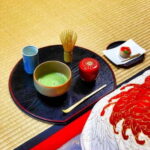
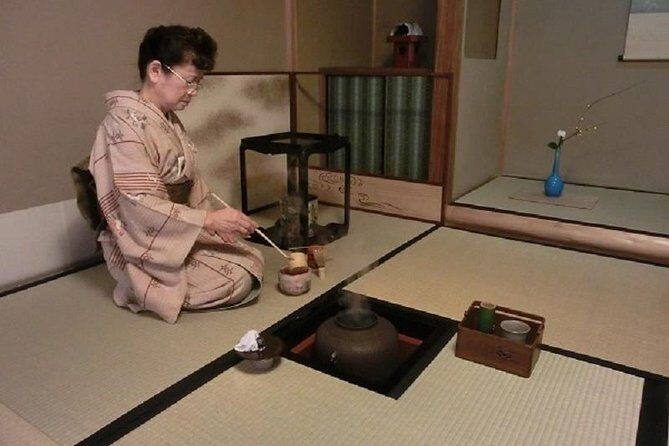
Then comes the part you’ll likely remember longer than you expect: time in the Taihoan tea room. This is one of the tour’s main reasons to book, because it’s not just “a tasting.” It’s an organized tea ceremony experience with time set aside for how matcha-style tea culture is taught and practiced.
A few details matter here:
- You’ll be in a tatami room, and you’ll need to wear socks.
- Video recording isn’t allowed inside the tea room.
- The tea procedure can vary. On some days it’s matcha green tea, and on other days it may be sencha green tea. You might not be able to choose in advance, and it may be done with other customers.
For me, that variability is actually part of the honest value. You’re not paying for a performance that guarantees one script. You’re getting the real-world tea rhythm that day, in that space, with the rules followed.
Also, this is where a guide helps. Tea ceremonies can be intimidating if you don’t know what’s coming next. Even when you don’t understand every word, you can still pick up the flow—when to pay attention, when to observe, and how the process is paced.
Tip: keep your socks in your day bag so you don’t realize too late that you forgot them.
Byōdō-in: UNESCO-level temple grounds with a timing caveat
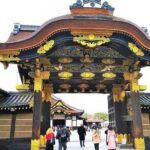
The tour’s last major stop is Byōdō-in Temple. Built near the end of the Heian Era, it’s known for its Buddha statue, other images, and a garden setting that frames the temple experience. It’s also tied to a broader Kyoto heritage story because it’s part of the Historic Monuments of Ancient Kyoto (a UNESCO World Heritage listing).
If you like recognizing landmarks through popular culture, you’ll catch the Phoenix Hall reference quickly: an image of Byōdō-in’s Phoenix Hall appears on the 10 yen coin. That connection is a great way to make the site click fast once you’re standing in the right area.
Now the important consideration: the tour notes that you might not be able to enter the Phoenix Hall if there’s congestion. If that happens, you’ll get a JPY 300 refund at the location. In other words, you’re not paying full-price for a guaranteed interior moment. You’re paying for temple admission plus the chance to see the key features, with a realistic plan for crowds.
A second timing issue shows up in real-world experiences: the pace at Byōdō-in can feel rushed because the schedule is tight. That means you may not get long wandering time through every angle, path, and museum area. If Byōdō-in is your one must-see and you hate missing details, plan to treat this visit as a highlight pass rather than a slow, indepth study session.
Still, it’s worth it. Byōdō-in is the kind of place where even a shorter visit feels meaningful, because the setting is designed to guide your attention, not just house objects.
The pace and logistics: who this tour really suits
This tour works best if you’re comfortable with a “one morning, multiple stops” style day.
Here’s what the day asks of you:
- You’ll walk through Uji’s highlights on foot.
- You’ll follow a guide’s timing from point to point.
- You’ll likely move quickly through each stop, especially around photo moments and temple entry.
What helps is that the group size is limited to up to 12 travelers, and that tends to make moving through narrow streets and temple entrances smoother. The train segments also keep things organized, since you’re not figuring out transit on the fly.
Where people can feel friction:
- If you stop a lot for photos, the group can feel fast-paced.
- If you want extra time inside Byōdō-in’s structures, the schedule might not match your preferred pace.
Who should book:
- You want Uji in half a day without doing route planning.
- You care about a tea ceremony experience with guidance and proper etiquette.
- You like a small-group walking tour with a set itinerary.
Who might skip:
- If you’re the type who wants to linger 45–60 minutes at a single site, this schedule can feel too tight.
- If you’re very sensitive to rushing in temple/museum spaces, consider independent time in Uji instead.
Price and value: what $96.06 is buying you
At $96.06 per person, you’re paying for more than sightseeing. You’re buying an efficient structure:
- Licensed English-speaking guide interpreter
- Train transportation costs included for the Kyoto Station ↔ Uji Station loop
- Tea ceremony at Taihoan
- Byōdō-in admission
When you compare that to piecing together transit, paying temple entry on your own, and booking a tea ceremony separately, the math often starts to make sense fast—especially if you don’t want to manage reservations and timing yourself.
One more subtle value point: the tour’s small size and guided flow reduce friction. In Japan, that matters. The best tour days aren’t just about what you see. They’re about how smoothly you get from moment to moment.
If you’re worried about availability, note that this tour is typically booked well in advance (on average 214 days ahead). That’s a sign it’s not a last-minute-only plan.
Quick tips so you get the most out of every stop
- Wear easy walking shoes. This is not a bus tour, and the day includes walking between sights.
- Bring socks for the tea room.
- Treat photo stops as planned moments, not free roaming. You’ll get better results if you pick locations you truly care about.
- At Byōdō-in, focus on the main flow first. If you can enter Phoenix Hall, great. If you can’t due to congestion, you’ll still have a lot to see.
Should you book Uji Walking Tour with Byōdō-in and Tea from Kyoto?
I’d book it if you want a tight, guided introduction to Uji that includes both a temple visit and a real tea ceremony. The combination is the strength: Ujibashi Bridge and river views on the walk, then Taihoan tea as a cultural reset, and finally Byōdō-in as the high-impact finale.
I wouldn’t book it if your top priority is slow temple wandering or if you dislike schedule pressure. The day is designed to cover multiple key points in a morning window, and timing is part of the trade-off.
If your goal is a well-organized Uji hit from Kyoto, with the practical pieces handled and the cultural moments built in, this is a strong choice.
FAQ
What is the duration of the tour?
The tour runs about 4 hours 10 minutes.
What time does the tour start and when does it end?
It starts at 8:20 am and ends around 12:30 pm near Kyoto Station.
Where do I meet for the tour?
You meet at the JTB Sunrise Tours desk at AVANTI near Kyoto Station.
Where does the tour end?
It ends near Kyoto Station.
How do the train tickets work?
The tour includes JR rapid/local train rides with non-reserved seating. Seats are not guaranteed.
Is the tour mostly walking?
Yes. Sightseeing is done on foot, not by bus, so comfortable walking shoes help.
What happens during the tea ceremony?
You’ll have a tea ceremony experience at Taihoan. The day’s procedure may be matcha or sencha, and it may be shared with other customers. The tea room is tatami, so you’ll need socks, and video recording isn’t allowed.
Can I enter the Phoenix Hall at Byōdō-in?
Entry to the Phoenix Hall may depend on congestion. If it’s not possible, JPY 300 is refunded on site.
What is included in the price?
Included are a licensed English guide interpreter, other transportation costs, the Taihoan tea ceremony experience, and Byōdō-in temple admission fees.
How many people are in the group?
The group size is limited to a maximum of 12 travelers.
What is the cancellation policy?
Free cancellation is available up to 24 hours before the experience’s start time for a full refund.