REVIEW · KYOTO
Arashiyama & Nara Highlights: One-Day Private Tour Adventure
Book on Viator →Operated by Ahmed Abu Tayeh · Bookable on Viator
One-day tours in Japan can feel like a sprint. This one pairs Arashiyama and Nara in a single, private car day, with a simple flow that gets you to bamboo, then deer, then major UNESCO stops without you wrestling transit schedules. I especially like that you get a clear clock-based plan (hotel pickup at 09:00, back by 19:00) and that the experience is built around top sites like Todaiji and Tenryu-ji rather than random stops. One thing to consider: the tour price covers guiding and management and driver arrangement, but you still pay for the car cash to the driver and you’ll budget for entry fees on the UNESCO sites.
I also like that the day is paced enough to do more than just stand at the gate. You’re not only seeing the famous places; you’re getting time inside them and time for the setting—Tenryu-ji’s garden stroll and Kasuga Shrine’s lantern-filled atmosphere are the kind of moments you remember later. That said, you’ll want to plan ahead and communicate clearly if you have a larger group, since the car cash amount changes when you have more than 5 passengers, and booking close to your date can leave less room for smooth adjustments.
In This Review
- Key Highlights You’ll Feel Immediately
- Price and Logistics: What Your Money Actually Buys
- 09:00–19:00 Kyoto Timing: How to Think About the Day
- Arashiyama Bamboo + Tenryu-ji Garden: Kyoto’s Calm Counterweight
- Nara Deer Park: The Stop Everyone Talks About
- Todaiji Temple: Big Buddha Time Without the Rush
- Kasuga Grand Shrine Lantern Atmosphere
- What You’ll Notice About the Guide: Names You Can Spot
- Who This Tour Suits Best (and Who Might Want Something Else)
- Should You Book This One-Day Nara–Arashiyama Tour?
- FAQ
- What’s included in the tour price?
- Is transportation included?
- How long is the tour?
- Which sites do we visit?
- Are admission tickets included?
- Where do we meet the guide?
- Is this a private tour?
- How many people can be in the group?
- Is there a mobile ticket?
- Can I bring a service animal?
- What’s the cancellation window?
Key Highlights You’ll Feel Immediately
- Two UNESCO sites in one day: Todaiji (Great Buddha Hall) and Tenryu-ji (Zen garden) are included on the route.
- Car timing that actually holds together: hotel pickup at 09:00 and return to Kyoto by 17:30, tour finish listed for 19:00.
- Family-friendly, kid-pleasing animals: Nara deer are a major draw, and some guides also manage to work in extra animal watching depending on your preferences.
- Flexible stops with real guide input: you can customize based on what you want, as long as you align with the day’s pacing.
- Guides with strong English and local passion: names like Ahmed, Kingo, Moto, and Miyako show up in the standout guide experiences.
- Simple ticketing: a mobile ticket is used, so you’re not scrambling for paper.
Price and Logistics: What Your Money Actually Buys
This is priced at $490 per group (up to 8 people) for an about 8-hour private day. You’re paying for the human part—guiding, management, and driver arrangement—and you’re buying into a single-day route that links Kyoto’s famous Arashiyama area with Nara’s top sights.
But here’s the practical part you should budget for up front, because it affects your real cost:
- Transportation is not included in the price. On tour day, you pay cash to the driver for the van/car rental.
- The cash amount is listed as ¥110,000 for up to 5 passengers. If you have more than 5, you’re asked to let the operator know in advance.
- Entry fees are not included and are listed as ¥4,800 per person. Nara Park and Kasuga Shrine are listed as free, while Todaiji and Tenryu-ji garden are not.
So is it good value? For a group of up to 8, yes—because you’re compressing two big day trips into one and buying the convenience of a private car schedule. If you were trying to do this with trains and transfers, you’d likely spend more time moving around and less time actually inside the places. The private structure also helps if you want a calmer pace, photo breaks, or a bit of customization.
One more logistics note: it’s a “within a day of your stay in Kyoto” style tour. That’s great for people who don’t want to plan a separate Nara overnight. It also means you should confirm your preferred meeting time early, so the day starts on time and doesn’t turn into a waiting game.
You can also read our reviews of more private tours in Kyoto

09:00–19:00 Kyoto Timing: How to Think About the Day
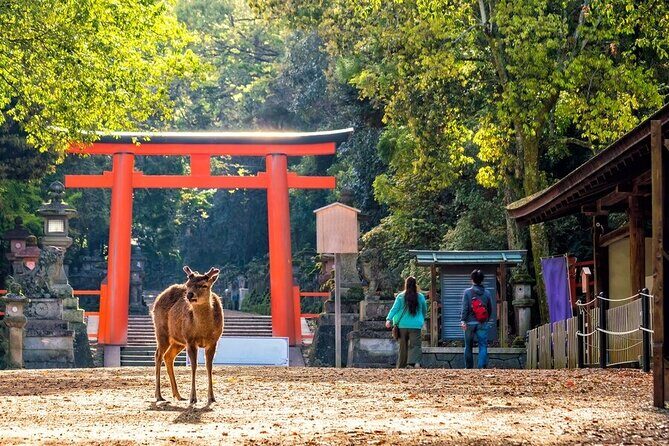
The itinerary has a clear backbone, which is exactly what you want when you’re trying to fit major sights into one long day.
- 09:00 meet at your Kyoto hotel
- 10:00 Bamboo area and Tenryu-ji garden time
- 11:00 along the Hozu-gawa river and Togetsu Bridge
- 13:00 transfer to Nara
- 14:30 Nara Deer Park
- 15:30 Todaiji Temple
- 16:30 Kasuga Grand Shrine
- 17:30 back to Kyoto
- 19:00 tour finish
What I like about this timing: the day isn’t stuffed evenly. Arashiyama is heavier in the earlier part of the day, then Nara takes over in the afternoon when you can linger. You also get the sequence that makes sense visually—bamboo and temple garden first, then big UNESCO awe in Todaiji, then the shrine atmosphere at Kasuga.
What can be tricky: this is weather-dependent and runs on real-world driving time. If your hotel is far from the main pickup corridors, or if there’s unexpected traffic, the whole clock can shift. The good news is that the day is built with multiple stops that are meaningful even if you need to shorten a little. The guide can adjust within the day’s structure based on what you want.
Practical tip: wear comfortable shoes and bring layers. Bamboo areas and temple grounds can feel cooler or warmer than the street, and you’ll be outside at several points.
Arashiyama Bamboo + Tenryu-ji Garden: Kyoto’s Calm Counterweight
Arashiyama is where the day starts to feel like Kyoto rather than just sightseeing. The plan includes:
- Bamboo Forest street time
- Tenryu-ji Temple Sogenchi Teien (garden)
This pairing works because bamboo gives you the instantly recognizable Kyoto visual, while Tenryu-ji gives you the quiet payoff. Bamboo can be crowded and loud. A temple garden is where you slow down. That’s why I think Tenryu-ji is the heart of this early segment.
Tenryu-ji is a UNESCO World Heritage site, and the garden stop is listed as 30 minutes. That’s enough time to see the garden layout and take in the Zen-style design without turning the visit into a long drag. If you’re the type who likes to look carefully at details—path lines, pond views, and how the garden frames the surroundings—this will land well.
Also, your route connects the bamboo time to scenic river viewing:
- Hozu-gawa river
- Togetsu Bridge
This is the part where photos are easy and you don’t feel guilty about stopping often. It also breaks up the schedule before the big drive to Nara.
Guide factor: people in the guide feedback highlight that English and passion vary by guide, but standout guides like Ahmed, Kingo, Moto, and Miyako are praised for making the sights click. If you can, ask your guide how the garden view is meant to be read. Even a short explanation can change your whole walk through it.
Nara Deer Park: The Stop Everyone Talks About
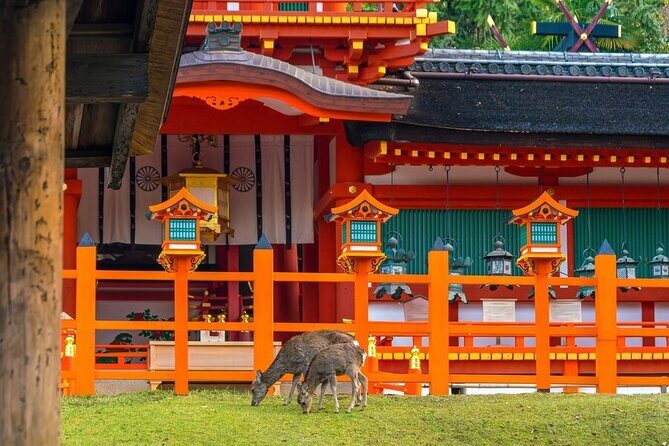
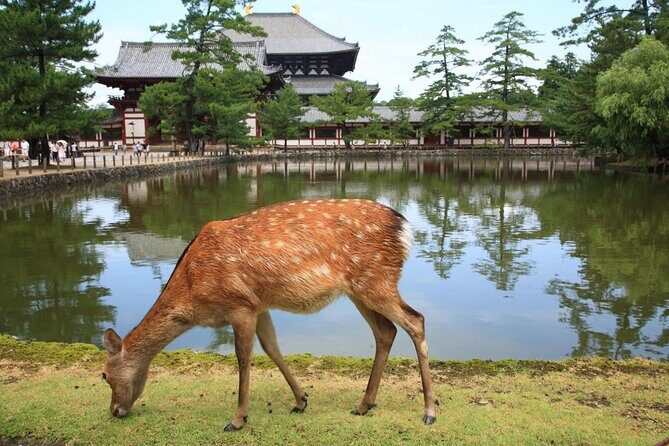
At 14:30, you shift gears and arrive at Nara Deer Park. The big selling point here is simple: deer roam freely in a park setting, and the admission for Nara Park is listed as free.
This is the part that makes the day feel more alive. Temples are impressive, yes. Deer are interactive. They move, they pause, they wander close. If you’re traveling with kids, this is usually the easiest “wow” moment because it doesn’t require deep explanation to enjoy.
Practical advice for this stop:
- Keep your belongings secure. Deer can get curious.
- Follow what your guide tells you in the moment, because the safest behavior is always the one your guide observes on-site.
The stop is listed at 1 hour, which is a good length. You get time for a photo set, a slow walk through the grounds, and a buffer before the next UNESCO stop.
If you care about small surprises in Arashiyama—like monkey viewing—this is a good day to mention your interests early. Some guide experiences reference animal sightings beyond what the basic sequence lists, and guides may be able to adjust based on timing and your preferences.
Todaiji Temple: Big Buddha Time Without the Rush
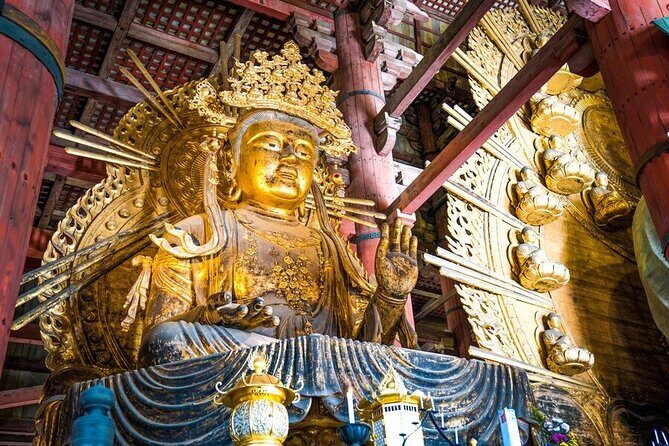
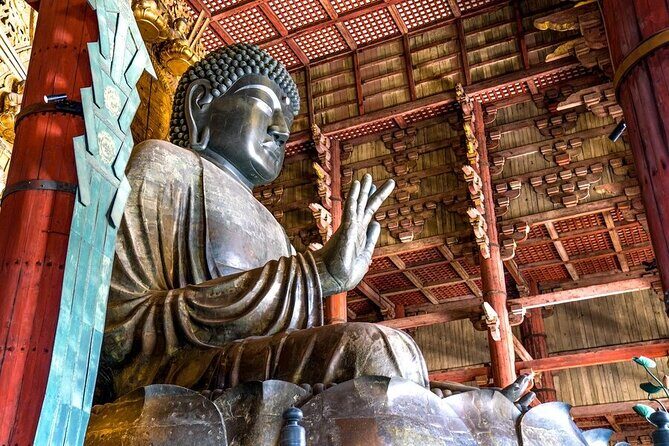
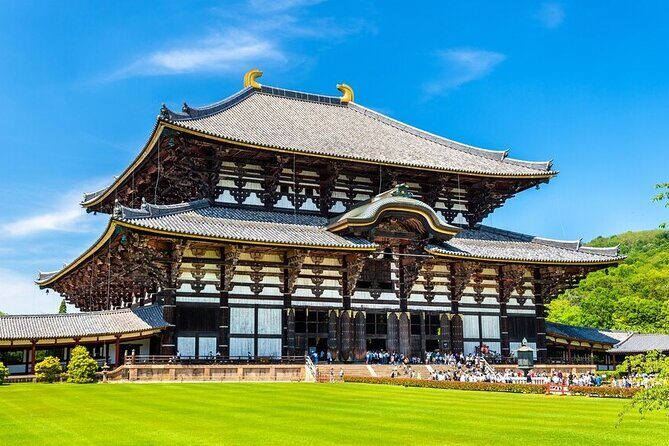
Next comes Todaiji Temple with a dedicated 1 hour slot, and it’s a UNESCO site. The headline here is the Great Buddha Hall and one of the world’s largest bronze Buddha statues, as described in the tour info.
This stop is the reason many people choose the Nara pairing. It’s not just a temple building; it’s scale. When you walk in, the space and the statue dominate the room. That dominance is exactly why the stop length matters. If you only pass through quickly, you miss the effect. With a full hour, you get a real chance to take it in at an unhurried pace.
One practical reality: Todaiji’s entry fee is not included, and the tour lists entry fees as ¥4,800 per person. So don’t plan to arrive thinking everything is covered. Budget for that, and you’ll have a smoother experience.
Also, if you’re thinking about photos: the best images usually require waiting for just enough foot traffic to clear. An organized guide helps you time your shots without rushing you or forcing you into a single angle.






Kasuga Grand Shrine Lantern Atmosphere
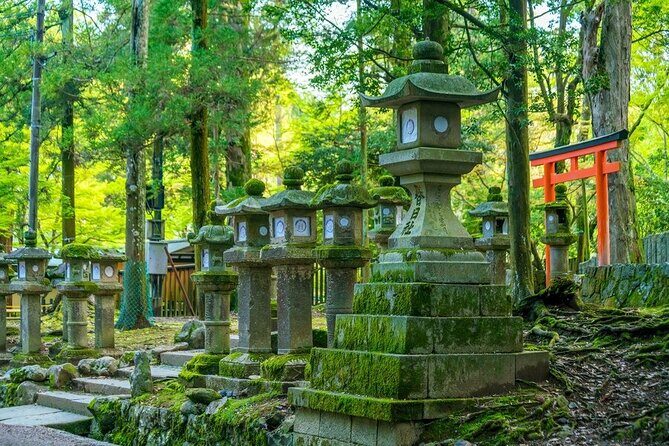
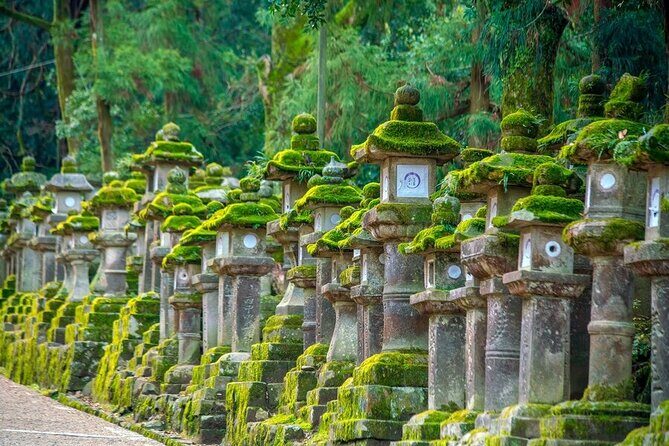
At 16:30, the day shifts again to Kasuga Grand Shrine. The tour lists a 30-minute visit and notes it’s famous for hundreds of bronze and stone lanterns. Admission is listed as free.
Kasuga works well near the end of a long day because it feels different from the big hall structure of Todaiji. It’s more atmospheric. You’re not surrounded by one huge focal point; you’re surrounded by the shrine’s details—lanterns, paths, and the feeling that this place is built for slow walking.
In a one-day schedule, 30 minutes is a solid chunk if your guide helps you focus on what to see. If you have a strong interest in Shinto spaces and shrine symbolism, ask the guide to point out what you’re looking at so it doesn’t become just “pretty lights.”
What You’ll Notice About the Guide: Names You Can Spot
This tour is private, so the guide can make or break your day. The guide experiences connected to this offering include:
- Ahmed (praised for fluent English and local knowledge)
- Kingo (praised for passion and knowledge)
- Moto (praised for professionalism)
- Miyako (praised as kind and highly supportive)
Even if you don’t get the exact same guide, the pattern is clear: the best days are the ones where your guide doesn’t just recite dates—they help you connect what you see to what it means, and they manage pacing so you’re not constantly hurrying.
If you’re picky about timing or want specific photo moments, tell your guide what matters most in the first 15 minutes after pickup. The tour info also says you can customize based on your will, so give your preferences early and you’ll likely get a better result.
Who This Tour Suits Best (and Who Might Want Something Else)
This is a great fit if:
- You want Nara + Arashiyama in one day without splitting plans.
- You like UNESCO highlights and want both Todaiji and Tenryu-ji included.
- You’re traveling with family and want a mix of temples and lively animal viewing.
- You prefer a private setup where your pace and priorities matter.
It may be less ideal if:
- You want to handle everything independently, including entrance tickets and transport.
- You’re trying to keep costs as low as possible, because transportation and entry fees add on top of the base price.
- You have very tight timing constraints on your Kyoto schedule, since this is designed as a full-day block (09:00–19:00 finish).
One more word of caution based on real-world experience with private tour logistics: if you book very close to your date, confirm your pickup time and the guide arrangement clearly. The tour info says confirmations happen at booking time, and it also notes flexible customization. Still, private days can be sensitive to last-minute changes, especially when guide assignments or timing shift.
Should You Book This One-Day Nara–Arashiyama Tour?
If your goal is a high-impact Kyoto day that mixes bamboo, Zen garden time, deer, and two UNESCO anchors, I’d say yes, book it. The biggest strength is the pairing: Arashiyama brings the atmosphere, Nara brings the grand scale, and your schedule leaves room to actually experience both instead of just ticking boxes.
Before you click confirm, do two things:
- Budget for transportation cash to the driver and entry fees around ¥4,800 per person.
- Make sure your group size is clear so the van/car cash amount is correct for your headcount.
If you want a one-day solution that feels like Kyoto, not chaos, this is a strong option.
FAQ
What’s included in the tour price?
The tour price covers guiding and management plus driver arrangement. Transportation cost and entry fees are not included.
Is transportation included?
No. You pay the van/car rental in cash to the driver on tour day: up to 5 passengers is listed as ¥110,000, and if you have more than 5 passengers you should let the operator know in advance.
How long is the tour?
It’s listed as about 8 hours. The schedule runs from 09:00 meeting in Kyoto to a finish around 19:00, with return to Kyoto targeted for 17:30.
Which sites do we visit?
The plan includes Bamboo Forest and Tenryu-ji garden, Togetsu Bridge and the Hozu-gawa river area, Nara Deer Park, Todaiji Temple, and Kasuga Grand Shrine.
Are admission tickets included?
Some stops are free (Nara Park and Kasuga Grand Shrine are listed as free), but entry fees are not included overall, and the tour lists entry fees as ¥4,800 per person.
Where do we meet the guide?
You meet at your hotel in Kyoto at 09:00. The tour is marked as near public transportation, and it starts and ends in Kyoto.
Is this a private tour?
Yes. It’s a private tour/activity, and only your group participates.
How many people can be in the group?
The price is per group up to 8 people.
Is there a mobile ticket?
Yes. The tour uses a mobile ticket.
Can I bring a service animal?
Service animals are allowed.
What’s the cancellation window?
You can cancel for a full refund up to 24 hours before the experience start time. The tour can also be canceled due to poor weather, with an alternate date or full refund offered.
If you tell me your group size and your exact travel dates, I can help you sanity-check the real total cost and whether the timing works for how fast you like to move.